Introduction
In today’s competitive manufacturing landscape, the ability to create precise models quickly is a decisive advantage. Rapid prototyping has fundamentally changed how products are designed, tested, and brought to market. It bridges the gap between digital concepts and physical objects, enabling teams to test ideas earlier, iterate faster, and launch with confidence. This guide explores how rapid prototyping accelerates the creation of precise models—through advanced technologies, streamlined iteration, and customization—and how it is transforming industries.
What Makes Rapid Prototyping Revolutionary?
Rapid prototyping is a technology-enabled process that creates physical models from digital designs in hours or days, not weeks or months. Traditional methods involved drafting, mold-making, and subtractive manufacturing that could take weeks. Modern techniques like 3D printing, CNC machining, and laser sintering have compressed timelines dramatically.
A complex prototype that once took weeks can now be produced in hours. This speed enables:
- Earlier testing and flaw detection
- Better communication through tangible models
- Faster response to market trends
How Do Advanced Technologies Enable Precision?
The precision of rapid prototypes comes from the integration of advanced technologies.
Laser Technology
Lasers play a crucial role in high-precision prototyping.
Selective Laser Sintering (SLS) uses a high-power laser to sinter powdered materials—plastics, metals, ceramics. The laser scans the powder bed according to cross-sectional data, fusing particles layer by layer.
- Precision: Tolerances of ±0.1–0.2 mm for small to medium parts
- Application: Aerospace engine components with internal lattice structures that reduce weight while maintaining strength
Stereolithography (SLA) uses a low-power UV laser to cure liquid photopolymer resin. The laser traces each cross-section, solidifying the resin.
- Precision: Layer thickness as thin as 0.05–0.1 mm
- Application: Jewelry design—intricate wax models for casting with delicate details
Numerical Control (NC) Technology
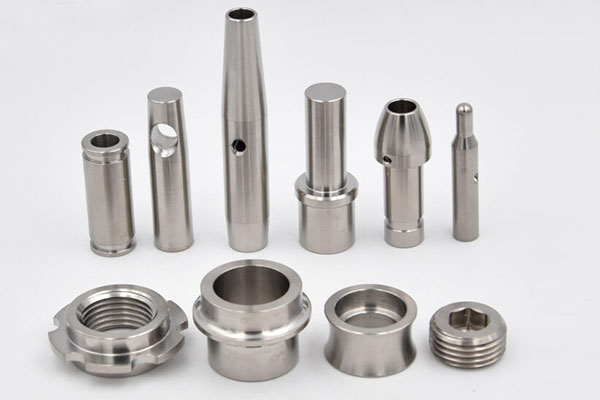
CNC machining uses computer-controlled tools to remove material from a workpiece with exceptional accuracy.
- Precision: Tolerances of ±0.01–0.05 mm
- Application: Mechanical parts with complex geometries
- Control: Spindle speed, feed rate, and cutting depth are precisely controlled
How Does Streamlined Design Iteration Accelerate Development?
Rapid prototyping transforms the iteration process.
Faster Testing Cycles
Designers can now test and refine ideas quickly. A consumer electronics company developing a new smartphone can produce a 3D-printed mock-up of the exterior within a day or two. Designers evaluate ergonomics, button placement, and aesthetics immediately.
Adjustments are made to the digital design, and another prototype is produced quickly. A study by a leading design research firm found that companies using rapid prototyping reduce design cycles by 30–40%.
Real-World Example: Medical Device Startup
A startup developing a new diagnostic device used 3D printing to go from initial concept to functional prototype in two weeks. They tested functionality, made improvements, and had a refined prototype ready for further testing in another week.
This rapid iteration brought their product to market six months earlier than planned—a significant competitive advantage.
How Does Rapid Prototyping Enable Customization?
Customization is where rapid prototyping outshines traditional manufacturing.
Traditional vs. Rapid Prototyping for Customization
| Aspect | Traditional Manufacturing | Rapid Prototyping |
|---|---|---|
| Setup Cost | Tens of thousands (molds) | Low (printer + materials) |
| Lead Time | Weeks | Hours to days |
| Batch Size | High volume required | One-off or small batch |
Orthotics Example
Custom-made orthotics traditionally required taking impressions, creating a mold, and manufacturing—a process taking days. With rapid prototyping, a 3D scan of the patient’s foot is taken, and a custom orthotic is 3D-printed in hours. Perfect fit, faster delivery.
Automotive Example
Car manufacturers use rapid prototyping to create customized interior components for high-end or concept cars. Instead of expensive molds suited only for mass production, they produce unique parts for each vehicle quickly and cost-effectively.
What Challenges Does Rapid Prototyping Face?
Despite its advantages, rapid prototyping has hurdles.
Cost
High-end equipment like industrial SLS 3D printers can cost upwards of $100,000. Specialized materials—high-performance polymers, premium metals—add significant expense. A single prototype’s materials can cost hundreds of dollars.
Material Limitations
3D-printed plastics may have lower mechanical strength and heat resistance than injection-molded parts. This restricts applications in high-performance industries like aerospace and automotive.
Printing Speed
Complex, detailed 3D models can take days to print. Large-scale prototypes with intricate features can become bottlenecks in fast-paced development cycles.
Accuracy and Surface Finish
Small errors in printing or machining can cause deviations from the intended design. Rough surface finishes often require additional post-processing.
How Are These Challenges Being Solved?
Continuous innovation is addressing these limitations.
Reducing Cost
- Shared resources: Makerspaces and prototyping centers allow multiple businesses to share expensive equipment
- Declining costs: Equipment and material costs are gradually decreasing as technology matures
- Cost-effective choices: Selecting appropriate materials and equipment models for specific needs
Expanding Material Options
New materials are constantly developed. High-strength 3D-printing filaments now serve more demanding applications. Collaboration between material scientists and technology providers creates customized materials for specific requirements.
Increasing Speed
- Hardware improvements: Newer printers with faster mechanisms
- Multi-nozzle systems: Print multiple parts or deposit different materials simultaneously
- Optimized tool paths: CNC machining with high-speed spindles
Improving Accuracy and Finish
- Advanced calibration: Automated systems ensure optimal operation
- Post-processing: Sanding, polishing, chemical treatments enhance surface quality for functional testing and presentation
How Does Yigu Technology Approach Precision Prototyping?
At Yigu Technology, we combine advanced technologies with engineering expertise to deliver precise prototypes that accelerate your development.
We Leverage Multiple Technologies
- SLS: Durable parts with complex geometries
- SLA: High-detail, smooth-surface prototypes
- CNC machining: Precision metal and plastic parts with tight tolerances
We Focus on Iteration
We work with you through multiple design cycles. A medical device client used our SLS service to produce functional prototypes for surgeon testing. Feedback led to refinements, and a second iteration was produced within days. The result: a validated design ready for production.
We Customize
Whether you need a one-off orthotic or a small batch of automotive interior components, we handle custom projects efficiently.
We Solve Challenges
Our engineers provide DFM feedback upfront. We suggest material alternatives to balance cost and performance. We offer post-processing services to achieve the surface finish your application requires.
Conclusion
Rapid prototyping has revolutionized the creation of precise models. Through advanced technologies like lasers and numerical control, it delivers accuracy previously unachievable. Streamlined design iteration accelerates development and reduces costs. Customization opens new possibilities across healthcare, automotive, and beyond.
While challenges in cost, materials, speed, and finish remain, continuous innovation is overcoming them. As technology evolves and becomes more accessible, rapid prototyping will become an indispensable part of product development—enabling more complex, efficient, and customized products that meet ever-changing market demands.
Frequently Asked Questions
What is the most accurate rapid prototyping technology?
Stereolithography (SLA) is often considered one of the most accurate. It achieves layer thicknesses as thin as 0.05–0.1 mm, enabling highly detailed, smooth prototypes with tight tolerances. For metal parts, CNC machining achieves tolerances of ±0.01–0.05 mm.
How can I reduce the cost of rapid prototyping?
Reduce costs by sharing equipment in makerspaces or prototyping centers, choosing cost-effective materials and equipment models, and optimizing your design to minimize material usage. As technology advances, equipment and material costs are gradually decreasing.
Can rapid prototyping be used for mass production?
Rapid prototyping is primarily for development, but technologies like SLS and Multi-Jet Fusion can produce functional parts for small-batch production (50–5,000 units). For large-scale mass production, traditional methods like injection molding remain more cost-effective due to higher volume capabilities and lower per-unit costs.
What is the typical tolerance for SLS and SLA prototypes?
SLS typically achieves tolerances of ±0.1–0.2 mm for small to medium parts. SLA achieves layer thicknesses of 0.05–0.1 mm, with overall tolerances dependent on part size and geometry. For tighter tolerances, CNC machining is recommended.
How long does it take to produce a rapid prototype?
Timelines vary by technology. Simple FDM parts: 1–3 days. Complex SLA or SLS parts: 3–7 days. CNC-machined parts: 5–10 days. Rapid tooling with molded parts: 2–4 weeks. Multi-nozzle printers and optimized workflows continue to reduce these times.
Contact Yigu Technology for Custom Manufacturing
Ready to accelerate your product development with precise rapid prototyping? Yigu Technology offers SLS, SLA, and CNC machining services for plastic and metal parts. Our engineers help you select the right technologies and materials for your project. Contact us today to discuss your design and get started.