Introduction
Product development has always been a race between vision and execution. The gap between a great idea and a market-ready product is filled with risk, cost, and time. Prototype manufacturers have emerged as essential partners in closing this gap. They bridge the divide between digital designs and physical reality, enabling companies to test, refine, and validate concepts before committing to production. According to a 2024 industry report, companies leveraging professional prototype manufacturers reduce development costs by 40% and cut design iteration time by 60% compared to in-house efforts. At Yigu Technology, we see this transformation daily. This article explores how prototype manufacturers are revolutionizing product development through speed, technical capability, and strategic partnership.
How Do Prototype Manufacturers Accelerate Design Iteration?
From CAD to Physical Model in Days
The journey from CAD model to physical prototype once took weeks or months. Traditional methods—injection molding, die casting—required expensive molds. Any design change meant re-engineering the mold, adding time and cost.
Prototype manufacturers have transformed this process through advanced technologies.
| Technology | Process | Speed | Best For |
|---|---|---|---|
| FDM 3D printing | Extrudes thermoplastic filament | Hours to days | Simple concepts, low-cost iterations |
| SLA 3D printing | Laser-cures liquid resin | Hours to days | High detail, smooth surfaces |
| SLM 3D printing | Laser-melts metal powder | Days | Complex metal parts |
| CNC machining | Subtractive from solid block | Days | Precision parts, metals |
Example: A consumer electronics startup needed a functional prototype of an ergonomic smartphone case. Partnering with a prototype manufacturer, they received an ABS-printed prototype with working hinges in 48 hours. Traditional injection molding would have taken 2–3 weeks just for the mold.
Iterative Validation Reduces Late-Stage Errors
Iterative validation is the cornerstone of modern product development. Prototype manufacturers enable multiple test-and-refine cycles before production.
A study by the Product Development and Management Association found:
- Companies using external prototype manufacturers identify design flaws 70% earlier in the development process
- These companies experience a 55% reduction in post-launch defects
| Aspect | Traditional Approach | Agile Prototyping |
|---|---|---|
| Time to first prototype | 14–21 days | 3–7 days |
| Cost per prototype (complex) | $10,000–$30,000 | $1,500–$5,000 |
| Defect detection rate | 40% (post-prototyping) | 90% (during iterative testing) |
Case example: A medical device startup developing a laparoscopic tool created 10 rapid prototypes at $500 each instead of investing $50,000 in a single production mold. Surgeon feedback led to grip refinements. The final design met medical standards without expensive rework.
What Technical Capabilities Do Prototype Manufacturers Offer?
Advanced Prototyping Technologies
Leading prototype manufacturers offer a range of technologies to handle complex geometries.
3D printing (additive manufacturing): Builds objects layer by layer. Ideal for complex internal structures and lattice designs. Materials include:
- TPU: Flexible, used in soft robotics
- PEEK: High-temperature resistance, used in industrial applications
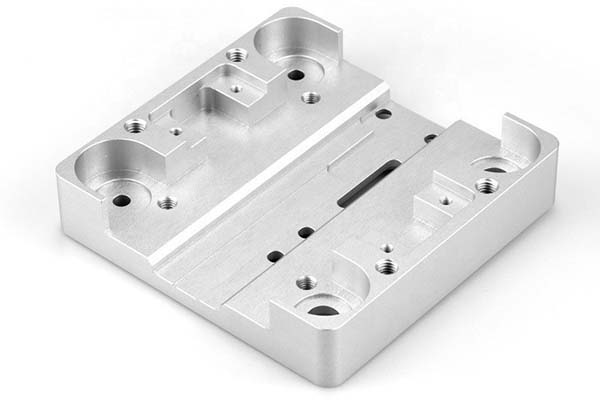
CNC machining: Subtractive process achieving tolerances as tight as ±0.01 mm. Essential for metal prototypes:
- Aluminum brackets for automotive applications
- Titanium implants for medical devices
Vacuum casting: Low-pressure casting for small-to-medium batches (10–50 parts). Ideal for functional testing before injection molding.
Material Expertise
Prototype manufacturers are versed in over 100 different materials, selecting the right one for each application.
| Material Category | Examples | Applications |
|---|---|---|
| Polymers | ABS, PLA, nylon | Concept models, early testing |
| Engineering plastics | POM, polycarbonate, PETG | Mechanical parts, housings, functional testing |
| Metals | Aluminum, stainless steel, titanium | High-strength, heat-resistant, biocompatible applications |
Case example: Tesla Cybertruck Motor Bracket
Tesla partnered with a prototype manufacturer to produce a 3D-printed Inconel 718 motor bracket. Results:
- 25% weight reduction compared to traditionally machined versions
- 40% faster heat dissipation
- Critical for high-performance electric vehicle operation
How Do Prototype Manufacturers Bridge Design and Production?
Design for Manufacturing (DFM) Expertise
Prototype manufacturers bring decades of manufacturing experience to the design phase. Their DFM feedback helps optimize designs for efficient production.
| DFM Consideration | Impact |
|---|---|
| Draft angles | Enables easier mold release |
| Uniform wall thickness | Prevents warping and sink marks |
| Radii instead of sharp corners | Reduces stress concentrations |
| Tolerance analysis | Ensures assembly fit |
A consumer electronics company saved 30% in production tooling costs by incorporating DFM feedback from their prototype manufacturer before finalizing the design.
Scalability: From Prototype to Production
Prototype manufacturers offer scalable solutions that grow with your project.
| Stage | Approach | Benefits |
|---|---|---|
| Single prototype | 3D printing or CNC | Fast, no tooling investment |
| Low-volume production (10–100) | Vacuum casting, rapid tooling | Production-like parts without high tooling cost |
| Medium-volume production (100–1,000) | Aluminum molds, rapid injection molding | Economical for market testing |
| High-volume production | Hard steel tooling | Lowest per-part cost |
What Do Industry Case Studies Reveal?
Aerospace: Boeing 787 Dreamliner
Boeing faced the challenge of designing fuel-efficient wing sections from advanced composite materials. Before investing $10 million in production tooling, they created full-scale composite prototypes.
Testing:
- Wind tunnel tests measured lift, drag, and pressure distribution
- Structural tests applied simulated flight loads to validate integrity
Results:
- Reduced program delays by 6 months
- Ensured FAA safety compliance
- Identified design issues before production
Medical Devices: Stryker Patient-Specific Knee Implants
Stryker uses prototype manufacturers to produce customized knee implants from patient CT scans.
Process:
- CT scan captures patient anatomy
- Digital model created in CAD
- Titanium implant 3D printed with porous surface for bone integration
Results:
- Surgery time reduced by 20%
- Revision rate 15% lower compared to generic implants
- Better patient outcomes with fewer complications
Consumer Electronics: Apple iPhone Development
Apple works with prototype manufacturers to create hundreds of high-fidelity prototypes for each iPhone model.
Testing areas:
- Ergonomics: Grip, button placement, weight balance
- Wireless signal interference: Material selection, internal layout
- Drop resistance: Repeated tests from various heights and angles
Results:
- User feedback incorporated before production
- Industry-leading durability and user experience
- Consistent market leadership
What Should You Look for in a Prototype Manufacturer?
Experience and Industry Focus
Prioritize manufacturers with experience in your industry and material requirements. Aerospace demands titanium expertise. Medical requires biocompatible materials. Consumer goods values aesthetics and cost.
Technical Capabilities
Ensure the manufacturer offers the technologies and materials your project requires. A partner with multiple technologies can recommend the optimal approach for each stage.
DFM and Design Support
Look for manufacturers who provide design feedback, not just production quotes. Their experience can save significant time and money.
Confidentiality and IP Protection
Reputable manufacturers sign non-disclosure agreements (NDAs) and implement security measures for confidential designs. Verify their track record in protecting intellectual property, especially in competitive sectors.
Scalability
Choose a partner who can support you from prototype to production. Switching manufacturers between stages introduces risk and delay.
Yigu Technology's Perspective
As a custom manufacturer of plastic and metal parts, Yigu Technology serves as a prototype manufacturer for clients across industries. We see the revolution firsthand.
What we have learned:
- Speed enables iteration: Rapid turnaround allows clients to test more concepts and refine designs before production.
- Technical capability expands possibilities: Advanced technologies and material expertise enable designs that were previously impossible.
- DFM feedback saves money: Early input on manufacturability prevents costly production issues.
- Partnership matters: The best results come from collaboration, not transactions.
We view ourselves as strategic partners in our clients' innovation processes—not just vendors.
Conclusion
Prototype manufacturers have revolutionized product development by accelerating iteration, enabling complex geometries, and bridging the gap between design and production. They reduce development costs by 40% , cut iteration time by 60% , and help companies identify design flaws 70% earlier in the development cycle.
From Boeing's wing prototypes to Stryker's patient-specific implants to Apple's iPhone refinements, prototype manufacturers are essential partners in bringing innovative products to market. Their technical capabilities, material expertise, and DFM insights turn concepts into reality faster, cheaper, and with higher quality.
For companies developing new products, the choice is clear: partnering with experienced prototype manufacturers is not just an option—it is a strategic necessity.
Frequently Asked Questions
How do I choose a prototype manufacturer for my project?
Prioritize manufacturers with experience in your industry and material requirements. Review their portfolio, ask for references, and evaluate their ability to provide DFM feedback and scalable solutions. Look for a partner who communicates clearly and understands your development stage.
What is the difference between low-fidelity and high-fidelity prototypes?
Low-fidelity prototypes (e.g., 3D-printed plastic models) focus on form and basic functionality—ideal for early-stage design reviews. High-fidelity prototypes mimic final materials and finishes (e.g., CNC-machined metal with surface coatings)—used for user testing, marketing, and regulatory submissions.
Can prototype manufacturers handle confidential designs?
Yes. Reputable manufacturers sign non-disclosure agreements (NDAs) and implement security measures like restricted file access and facility controls. Look for partners with proven experience in protecting intellectual property, especially in competitive sectors like electronics and medical devices.
How much does professional prototyping cost?
Costs vary widely based on complexity, material, and quantity. A simple 3D-printed prototype may cost $50–$500. A complex CNC-machined metal prototype may cost $1,000–$5,000. The investment is typically a fraction of the cost of production tooling and late-stage design changes.
How many prototypes should I plan for?
Most products require 3–7 iterations from concept to production-ready design. Plan for multiple cycles in your timeline and budget. The first prototype reveals major issues. Subsequent iterations refine details. Final validation ensures production readiness.
Contact Yigu Technology for Custom Manufacturing
At Yigu Technology, we specialize in prototyping and custom manufacturing for plastic and metal parts. Our capabilities include FDM, SLA, SLS, CNC machining, vacuum casting, and injection molding. We serve aerospace, medical, automotive, and consumer goods industries.
If you are developing a new product and need a strategic prototyping partner, contact our engineering team. Let us help you accelerate development, reduce risk, and bring better products to market faster.