From aerospace components requiring microscale cooling channels to jewelry needing intricate designs, industries face a common challenge: creating detailed, permanent patterns without damaging materials. Stamping lacks fine detail. Machining struggles with delicate surfaces. Printing wears off over time. A medical device might need a serial number that survives sterilization cycles. A circuit board could require precise conductive pathways measured in microns. These tasks demand accuracy down to 0.01 mm. This is where surface treatment etching & engraving excels. By selectively removing material to create patterns, text, or textures, these processes deliver unmatched detail, consistency, and versatility. In this guide, we will explore how etching and engraving work, their main types, key properties, and how they transform surfaces for both function and aesthetics.
Introduction
Etching and engraving are surface treatments that remove material to create intentional patterns. While they differ in technique, their goals overlap significantly.
Definition: Etching uses chemicals, lasers, or abrasives to dissolve or ablate material. Engraving uses mechanical tools or lasers to cut into the surface. Both create recessed designs. Etching often suits finer details, while engraving works better for deeper, more tactile patterns.
Basic principles: Both processes follow three steps:
- Defining the pattern via masks, digital files, or stencils
- Removing material chemically, mechanically, or with lasers
- Finishing through cleaning, deburring, or coating
The key is selective material removal. You protect areas to keep while removing others to create the design.
Industrial significance: The global etching and engraving market exceeds $5 billion. Demand comes from part traceability in aerospace and medical sectors, decorative finishes in jewelry and consumer goods, and functional patterns like heat sinks and anti-slip textures. Laser etching alone grows at 7% annually, driven by precision needs in electronics and automotive applications.
Environmental considerations: Modern processes prioritize sustainability. Chemical etching uses recyclable acids like ferric chloride with closed-loop filtration. Laser systems consume minimal energy. Mechanical engraving recycles metal shavings. Water-based cleaning replaces toxic solvents, complying with EPA and REACH standards.
How Do Etching and Engraving Compare to Other Methods?
Different pattern-making methods offer varying levels of precision, depth, and material compatibility. The table below shows how etching and engraving stack up:
| Feature | Etching (Chemical/Laser) | Engraving (Mechanical/CNC) | Stamping |
|---|---|---|---|
| Detail Resolution | 0.01–0.1 mm | 0.05–0.5 mm | 0.5–2 mm |
| Material Compatibility | Metals, glass, polymers | Metals, wood, stone | Metals (thick, rigid) |
| Depth Control | 0.001–0.5 mm | 0.1–5 mm | 0.5–10 mm |
| Curved Surface Ability | Excellent | Good (with CNC) | Poor |
| Setup Time | Minutes to hours | Minutes to hours | Hours to days (tooling) |
A real-world example: a European aerospace supplier needed 0.5 mm cooling holes in turbine blades. Stamping distorted the thin metal. Mechanical engraving left burrs that required post-processing. Chemical etching produced clean, precise holes with ±0.01 mm tolerance—and no secondary operations.
What Are the Main Types of Etching and Engraving?
These processes vary by tool and method. Each type suits specific materials and design needs.
Chemical Etching
This uses acidic or caustic solutions—like ferric chloride or nitric acid—to dissolve unprotected areas. It is ideal for thin metals (0.01–1 mm thick) and complex patterns. Examples include medical stents with 0.1 mm holes and electronics with microchannels. It is cost-effective for high-volume runs and leaves no burrs.
Photochemical Etching
This combines photography and chemical etching. A photosensitive film (photoresist) is exposed to UV light through a pattern mask. It is then developed to protect areas from etching. This method achieves 0.01 mm resolution. It is used for semiconductor lead frames and precision filters.
Laser Etching
This uses a focused laser beam to ablate material without contact. Fiber lasers (1064 nm wavelength) excel at metals for engraving serial numbers. CO₂ lasers (10.6 μm) work on polymers and glass. Laser etching is fast—up to 10,000 mm/min—and ideal for small batches or variable designs.
Mechanical Engraving
This uses rotating cutters or diamond tips to carve into surfaces. It creates deep, tactile patterns. CNC engraving machines follow digital files, ensuring consistency across batches. Applications include signs, dies, and metal molds where depth (0.5–5 mm) and durability matter.
Electrochemical Etching
This uses an electric current to dissolve material in a conductive solution. It works like reverse plating. The process is gentle on thin materials. It is used for etching fragile parts like aerospace turbine blades without causing stress.
Sandblast Etching
This blasts abrasive particles—such as aluminum oxide—at high pressure to erode unprotected areas. It creates frosted or textured finishes. Common applications include glass windows, awards, and stone where a matte pattern contrasts with a smooth surface.
Hand Engraving
Artisans use gravers and chisels to create custom designs. This method is valued for its uniqueness in jewelry, firearms, and luxury goods. It offers artistic flexibility but lacks the consistency of automated methods.
What Properties Make Etched and Engraved Surfaces Valuable?
The properties of etched and engraved surfaces are tailored to both functional and aesthetic needs.
Detail Resolution
Chemical and laser etching achieve 0.01–0.1 mm line widths. Photochemical etching reproduces features as small as 5 μm. This is critical for microfluidic devices and circuit boards. Mechanical engraving handles 0.05–0.5 mm details, balancing precision with depth.
Dimensional Accuracy
CNC and laser systems control depth within ±0.001 mm. This ensures patterns align with tolerances in aerospace parts. For example, 0.1 mm deep cooling channels hold ±0.01 mm variance. Such precision prevents performance issues in functional components.
Surface Finish
Etched surfaces are often smoother—Ra 0.1–0.5 μm—than engraved ones (Ra 0.5–2 μm). Chemical or laser processes avoid mechanical tool marks. This smoothness is vital for medical devices, where it reduces bacterial adhesion.
Depth Control
Etching typically removes 0.001–0.5 mm. This suits thin films or decorative patterns. Engraving can go 0.1–5 mm deep. This is ideal for creating grooves in tooling or raised lettering on signs.
Adhesion
Etched textures, such as micro-grooves, improve coating adhesion by 30–50% compared to smooth surfaces. The pattern creates mechanical interlocks. Automotive parts use this where paint or plating must withstand wear.
Corrosion Resistance
When done properly—with all etchant residues removed—etched surfaces resist corrosion as well as unprocessed material. For example, passivated stainless steel etched parts survive 5000+ hours of salt spray testing (ASTM B117).
Aesthetic Appeal
Engraved patterns have a tactile, 3D quality. Jewelry with 0.5 mm deep designs offers texture you can feel. Etched patterns offer subtlety, like matte logos on smartphone backs. Both can be colored via oxidation or plating to enhance contrast.
Where Are Etching and Engraving Used?
These processes solve diverse challenges across industries, from functionality to branding.
Aerospace
Laser etching marks turbine blades with part numbers for traceability. Chemical etching creates microscale cooling holes (0.5 mm diameter) in engine components to prevent overheating. Electrochemical etching adds anti-icing textures to wing surfaces.
Case example: A North American aerospace manufacturer reduced inspection time by 40% after switching from mechanical stamping to laser etching for part identification. The clean, readable marks passed first-pass quality checks consistently.
Medical Devices
Photochemical etching produces precision meshes for implants, such as hernia patches, with 0.1 mm pores. Laser engraving adds unique identifiers to surgical tools. This enables tracking through sterilization cycles—a requirement under FDA regulations.
Electronics
Chemical etching creates conductive pathways on flexible circuits, like smartwatch bands, with 0.1 mm line widths. Laser etching trims resistors to exact values, ensuring circuit accuracy.
Jewelry
Hand engraving adds intricate patterns to gold and silver pieces. Laser etching creates detailed designs on titanium or stainless steel. Sandblast etching textures watch cases for a premium look.
Automotive
CNC engraving adds VIN numbers to engine blocks. Chemical etching creates anti-glare textures on instrument panels. Laser etching marks tires with DOT codes for safety compliance.
Signage
Mechanical engraving produces durable metal signs, such as building plaques, with 1 mm deep lettering. Sandblast etching creates frosted glass signs for offices and restaurants.
Tooling
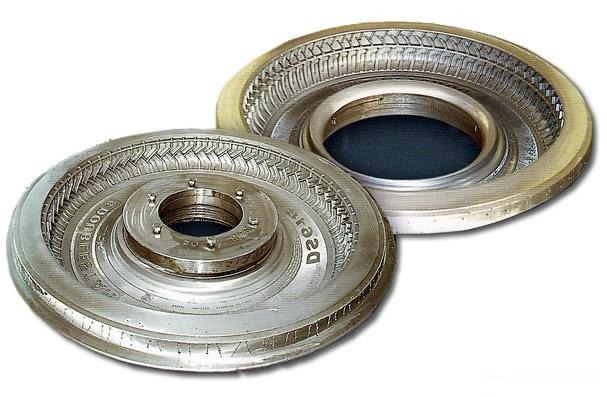
Engraved molds for plastic injection have precision cavities (±0.01 mm) that replicate textures onto consumer goods. Examples include smartphone buttons with grip patterns. Etched dies stamp consistent designs onto metal parts.
What Equipment and Processes Are Involved?
The equipment and processes for etching and engraving vary by method but share core steps.
Etching Tanks
Chemical etching uses polypropylene or PVC tanks ranging from 10 to 1000 liters. Heated solutions (40–60°C) ensure consistent etching. Agitation systems—air or mechanical—maintain uniform contact between chemical and substrate.
Laser Etching Machines
- Fiber lasers (1064 nm): For metals
- CO₂ lasers (10.6 μm): For non-metals
- UV lasers (355 nm): For high-resolution work on glass
Power ranges from 10 to 1000 W. Beam diameters can be as small as 10 μm.
CNC Engraving Machines
Computer-controlled routers with spindles running 10,000–60,000 RPM use interchangeable tools like carbide or diamond. They follow CAD files, achieving positional accuracy of ±0.002 mm. This precision is critical for mold alignment.
Photoresist Materials
Light-sensitive films or liquids—dry film or liquid resist—are used in photochemical etching. Application happens via lamination or spraying. UV light exposure through a mask defines protected areas.
Chemical Solutions
Common etchants include:
- Ferric chloride: For copper and steel
- Nitric acid: For aluminum
- Hydrofluoric acid: For glass
Concentrations range from 10–40%. Temperature controls etch rate between 0.01–0.1 mm/min.
Pre-Treatment Processes
Substrates are degreased with alkaline cleaners and polished to remove oxides. This ensures uniform etching. Masking—using tape, photoresist, or stencils—protects areas not being processed.
Post-Treatment Processes
Etched parts are rinsed with water and neutralizing agents like baking soda to stop chemical reactions. Deburring through electropolishing or abrasive blasting removes sharp edges. Coatings like paint or powder can fill recessed areas for contrast.
Safety Equipment
Operators use chemical-resistant gloves, goggles, and fume hoods for etchants. Laser safety glasses are wavelength-specific. Dust collectors for mechanical engraving protect operators and maintain air quality.
How Do You Ensure Quality and Maintain Equipment?
Rigorous quality control ensures patterns meet design specs and processes remain reliable.
Dimensional Inspection
Optical comparators and coordinate measuring machines (CMM) verify pattern dimensions—line width and spacing—within ±0.005 mm. For microscale features, scanning electron microscopy (SEM) checks accuracy.
Depth Measurement
Profilometers and depth gauges confirm etch or engraving depth. Tolerances can be as tight as ±0.001 mm for aerospace components. Laser confocal microscopy maps 3D surface profiles for complex patterns.
Adhesion Testing
For masked areas, tape tests (ASTM D3359) ensure resist or masking materials do not lift during processing. This prevents undercutting or uneven patterns.
Defect Detection
Visual inspection under 10–50x magnification identifies issues like:
- Incomplete etching (resist residues)
- Over-etching (pattern distortion)
- Tool marks in engraving
Automated vision systems check high-volume parts at 1000+ units per hour.
Equipment Maintenance
- Laser lenses: Cleaned daily to prevent beam distortion
- CNC tool changers: Calibrated weekly for positional accuracy
- Chemical etching tanks: Stripped and re-lined every 6–12 months to prevent corrosion
Process Control
Etch time, temperature, and chemical concentration are logged for each batch. For laser etching, power and speed are monitored within ±5% tolerance to ensure consistent ablation.
Quality Standards
Compliance with ISO 9001 (general manufacturing), ISO 13485 (medical devices), and ASTM B809 (chemical etching of metals) ensures reliability. Aerospace parts meet AS9100 for traceability and performance.
Yigu Technology’s Perspective
As a leading custom manufacturing supplier in China, Yigu Technology offers precision etching and engraving services for aerospace, medical, and electronics industries.
Our capabilities include:
- Photochemical etching: Down to 0.01 mm detail
- Fiber laser engraving: For metals
- CNC mechanical engraving: For deeper patterns
We handle materials from stainless steel and aluminum to polymers and glass. Our quality lab features CMM and optical inspection for rigorous testing.
Our processes use eco-friendly etchants and energy-efficient lasers. We comply with ISO 9001 and medical ISO 13485 standards.
Whether creating microchannels for sensors or serial numbers for traceability, we deliver consistent, on-time results tailored to client specifications—balancing precision with cost-effectiveness.
Conclusion
Etching and engraving provide unmatched precision, durability, and versatility for creating patterns on metal, glass, and polymer surfaces. They solve the limitations of stamping and machining by delivering burr-free, high-resolution details—down to 0.01 mm—on both flat and curved surfaces. From aerospace cooling channels to medical device traceability and decorative jewelry designs, these processes combine functional performance with aesthetic appeal. With controllable depth, excellent adhesion properties, and environmentally sustainable options, etching and engraving stand as proven solutions for manufacturers seeking precise, permanent surface treatments. Whether you need microscale patterns or deep, tactile engravings, these technologies deliver results that last.
FAQs
Can etching or engraving be done on curved surfaces?
Yes. Laser etching and electrochemical etching work well on curved surfaces because they require no mechanical contact. For example, laser systems can engrave serial numbers on cylindrical aerospace parts or curved smartphone cases with ±0.01 mm accuracy.
Which process is better for high-volume production?
Chemical etching and photochemical etching excel at high volumes (10,000+ parts). Masks are reusable, and processing happens in batches. Laser etching is faster for small batches (1–1000 parts) due to quick setup. Mechanical engraving suits medium runs requiring deep patterns.
How durable are etched or engraved patterns?
Both processes create permanent patterns. Chemical etching bonds with the material's structure. Engraving cuts below the surface. Designs resist wear, fading, and peeling. In automotive tests, laser-etched VINs survive 10+ years of weathering and cleaning without degradation.
What is the difference between etching and engraving?
Etching removes material through chemical, laser, or abrasive action. It typically achieves shallower depths (0.001–0.5 mm) and finer details. Engraving cuts into the surface mechanically or with lasers. It creates deeper patterns (0.1–5 mm) with a more tactile feel. Etching suits precision; engraving suits durability and depth.
Can both processes be used on the same part?
Yes. Hybrid approaches are common. For example, a mold may use chemical etching for fine surface textures and CNC engraving for deep identification marks. Combining processes leverages the strengths of each—precision from etching, depth from engraving.
Contact Yigu Technology for Custom Manufacturing
Looking for precision etching or engraving for your components? Yigu Technology specializes in custom surface treatment solutions tailored to your industry—whether aerospace, medical, electronics, or consumer goods. Our photochemical etching, fiber laser, and CNC engraving capabilities deliver high-resolution patterns with fast turnaround and strict quality control. Contact us today to discuss your project requirements and receive a customized manufacturing proposal.