Introduction
You need something specific. Not a mass-produced item off a shelf, but something made exactly for you—a custom part for a project, a personalized gift, or a prototype of your invention. In the past, "custom" meant expensive molds, long lead times, and minimum quantities that made no sense for a single item. Custom 3D printing services have changed all that. By building objects layer by layer from digital files, these services can create virtually anything you can imagine—no tooling, no minimums, no compromise. This article explores the benefits of custom 3D printing, how it works across different industries, and what you need to know to get the most from these services.
What Are Custom 3D Printing Services?
Definition and Purpose
Custom 3D printing services use additive manufacturing technologies to produce objects tailored to specific design specifications. Unlike traditional manufacturing that cuts away material or forces it into molds, 3D printing builds objects layer by layer from a digital model.
This approach enables:
- Bespoke solutions: Products designed for individual needs
- Complex geometries: Shapes impossible with traditional methods
- No tooling costs: Each part can be different without extra expense
- Rapid turnaround: From digital file to physical object in days or hours
The primary purpose is to offer customization without the traditional penalties—long lead times, high setup costs, and design constraints.
Industries Served
Custom 3D printing serves an incredibly diverse range of industries:
| Industry | Applications |
|---|---|
| Manufacturing | Rapid prototyping, small-batch production, custom tooling, jigs and fixtures |
| Healthcare | Patient-specific implants, prosthetics, surgical guides, dental devices |
| Aerospace | Lightweight components, complex geometries, replacement parts |
| Automotive | Custom parts, prototypes, tooling, restoration components |
| Consumer Goods | Personalized jewelry, phone cases, home décor, eyewear |
| Education | Teaching aids, anatomical models, engineering prototypes |
| Art and Design | Sculptures, installations, custom furniture, fashion accessories |
| Architecture | Scale models, custom fixtures, design verification |
What Are the Key Benefits of Custom 3D Printing?
Uniqueness and Personalization
The most obvious benefit: you get exactly what you want. Not what a manufacturer decided to stock, but what you actually need.
For individuals, this means:
- Custom jewelry: Rings sized to your finger, with designs you create
- Personalized gifts: Items that carry meaning—a model of someone's first home, a figurine of a beloved pet
- Custom fit: Eyewear frames that match your face, phone cases with your name
For businesses, personalization drives value:
- Brand differentiation: Unique products stand out
- Customer loyalty: People remember when you deliver exactly what they wanted
- Premium pricing: Custom items command higher prices
Real-world example: A hospital needed a custom prosthetic arm for a young amputee. Traditional prosthetics come in standard sizes—adequate but not perfect. Using 3D printing, they created a bespoke device from scans of the patient's residual limb. The fit was perfect. The child's mobility and quality of life improved dramatically.
Speed and Cost-Effectiveness
Traditional manufacturing has a rhythm: design, create tooling, set up production, then finally make parts. Tooling alone can take weeks and cost thousands. For custom items, this rhythm is disastrous—you pay all that cost for one part.
Custom 3D printing eliminates the tooling step entirely. The digital file goes directly to the printer. For a single part, this means:
| Factor | Traditional Manufacturing | Custom 3D Printing |
|---|---|---|
| Lead time | Weeks to months | Days to hours |
| Tooling cost | $5,000–$50,000+ | $0 |
| Minimum quantity | Often hundreds or thousands | One |
| Cost per unit | High for small batches | Same for one or one hundred |
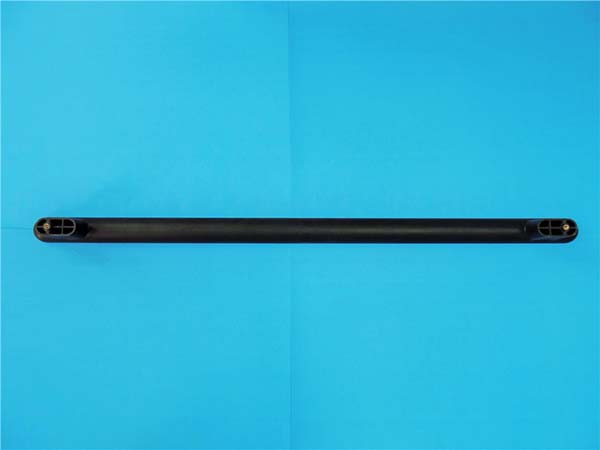
Real-world example: A product designer needed to test three variations of a new handle design. Traditional method: machine each prototype—$2,000 and three weeks. 3D printing: print all three overnight—$150. The designer tested, refined, and finalized the design in days instead of months.
Design Freedom and Complexity
Traditional manufacturing imposes rules. Draft angles for molds. Tool access for machining. Undercuts that require complex slides. These constraints limit what you can create.
3D printing removes these rules. You can design:
- Internal channels that follow curves instead of straight lines
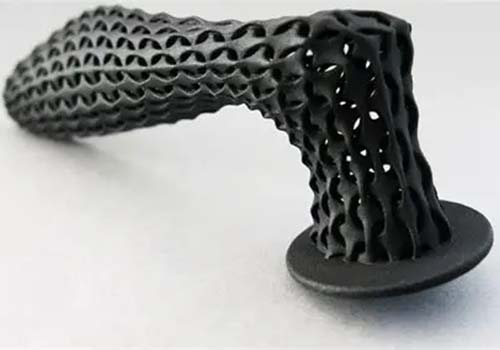
- Lattice structures that reduce weight while maintaining strength
- Organic shapes that flow like living forms
- Consolidated assemblies that replace multiple parts with one
Real-world example: An aerospace company needed a bracket with internal cooling channels. Traditional machining would require drilling straight holes and welding covers—multiple parts, potential leak paths. 3D printing created the entire bracket as one piece with curved internal channels following the optimal path. Weight reduced by 30%. Performance improved.
Rapid Prototyping and Iteration
Product development is iterative. You design, test, learn, repeat. Each cycle with traditional methods costs time and money. You hesitate to make changes. Compromises accumulate.
With custom 3D printing, iteration costs little. Found a flaw? Modify the CAD file and print a new version tomorrow. Test five variations instead of one. Learn faster. Design better.
The impact:
- More design exploration: Try options you wouldn't risk with expensive tooling
- Earlier user feedback: Show real parts to customers before committing
- Faster problem detection: Find issues when changes are cheap
- Shorter development cycles: Get to market months sooner
Material Variety
Custom 3D printing services offer an expanding palette of materials, each with specific properties:
| Material Type | Examples | Key Properties | Typical Applications |
|---|---|---|---|
| Standard Plastics | PLA, ABS, PETG | Easy to print, low cost | Prototypes, decorative items |
| Engineering Plastics | Nylon, Polycarbonate | Strong, durable, heat resistant | Functional parts, mechanical components |
| Flexible Materials | TPU, TPE | Rubber-like elasticity | Gaskets, soft-touch parts, wearables |
| Resins | Standard, tough, castable, dental | High detail, smooth finish | Jewelry, dental models, miniatures |
| Metals | Stainless steel, titanium, aluminum | High strength, heat resistant | Aerospace, medical, automotive |
| Biocompatible | Medical-grade resins, titanium | Safe for tissue contact | Implants, surgical guides |
| Ceramics | Alumina, zirconia | Hard, heat resistant, chemically stable | High-temperature applications, dental |
This variety means you can match material properties precisely to your application—not settle for whatever the process requires.
Reduced Waste
Traditional subtractive manufacturing can waste 70–90% of material. A titanium bracket machined from solid starts as 10 kg and ends as 1 kg. The 9 kg of chips represent lost value.
3D printing adds material only where needed. Waste typically under 10%. Unused powder in powder bed systems recycles. For expensive materials, this is enormous savings.
On-Demand Production
No inventory. No warehousing. No obsolescence. Need a part? Print it. Need another? Print it again. Digital files replace physical stock.
This transforms supply chains:
- Spare parts: Print when needed, not years in advance
- Seasonal products: Produce only what sells
- Custom orders: Make to order, not to forecast
What Should You Consider When Using Custom 3D Printing?
Material Selection
Choosing the right material is critical. Consider:
Mechanical requirements:
- Does the part need to bear load? (Consider nylon, polycarbonate, metals)
- Will it flex? (Consider TPU, flexible resins)
- Must it resist heat? (Consider polycarbonate, PEEK, metals)
Environmental factors:
- Will it be outdoors? (Consider UV-resistant materials)
- Will it contact chemicals? (Consider chemical resistance)
- Will it need sterilization? (Consider autoclavable materials)
Aesthetic requirements:
- Does surface finish matter? (Resins offer smooth surfaces)
- Will it be painted? (Most materials accept paint)
- Does it need to be transparent? (Clear resins available)
Regulatory requirements:
- Medical applications need biocompatible materials
- Aerospace may need certified materials
- Food contact has specific requirements
Consult with your service provider. They can recommend materials based on your application.
Print Quality and Resolution
Resolution affects both appearance and function:
| Resolution | Layer Height | Best For |
|---|---|---|
| Low | 0.2–0.3 mm | Large parts, functional prototypes where appearance doesn't matter |
| Standard | 0.1–0.2 mm | Most applications, good balance of speed and quality |
| High | 0.05–0.1 mm | Detailed models, jewelry, parts requiring smooth surfaces |
| Ultra-high | <0.05 mm | Miniatures, dental models, master patterns |
Higher resolution means:
- Smoother surfaces
- Better detail capture
- Longer print times
- Higher cost
Choose resolution based on your needs. Not every part needs ultra-high detail.
Post-Processing Requirements
Printed parts rarely go straight to use. Common post-processing steps:
Support removal: Break or dissolve temporary structures that held overhangs during printing.
Cleaning: Remove uncured resin (for SLA) or loose powder (for SLS).
Sanding and polishing: Smooth surfaces, remove layer lines, achieve desired finish.
Painting: Add color, protect surfaces, improve appearance.
Heat treatment: Relieve stress, improve mechanical properties (especially for metals).
Assembly: Combine multiple printed components.
Coating: Apply protective or decorative finishes.
Understand what post-processing your part will need. Factor this into timeline and budget.
Cost Factors
Custom 3D printing costs depend on:
- Part size and volume: Larger parts use more material and take longer
- Material: Specialty materials cost more
- Complexity: Supports and intricate features add time
- Quantity: Setup costs spread across multiple parts
- Resolution: Higher resolution takes longer
- Post-processing: Additional steps add cost
Get detailed quotes. Compare not just price but what's included.
How Do Different Industries Benefit?
Healthcare
Custom 3D printing has transformed medicine:
- Implants: Patient-specific hip replacements, spinal cages, cranial plates from CT scans. Better fit, faster recovery.
- Prosthetics: Custom sockets, adjustable features, affordable options. A child outgrowing a prosthetic gets a new one quickly and economically.
- Surgical guides: Patient-specific tools ensure precise implant placement. Shorter surgery, better outcomes.
- Anatomical models: Surgeons practice on replicas before operating. Reduced risk, improved planning.
Success story: A hospital used custom 3D printing to create a bespoke prosthetic arm for a young amputee. The personalized fit improved mobility and quality of life far beyond what standard prosthetics could achieve.
Aerospace
Aerospace demands lightweight, high-strength components:
- Weight reduction: Lattice structures remove material where not needed. A 30% lighter bracket saves fuel over the aircraft's life.
- Complex geometries: Internal cooling channels in turbine blades improve efficiency.
- Part consolidation: 20-piece assemblies become one, reducing failure points and assembly time.
- Rapid prototyping: Test designs quickly before committing to production.
Success story: An aerospace company used custom 3D printing to reduce the weight of a critical aircraft component by 30%, enhancing fuel efficiency and performance.
Automotive
Automakers and modifiers benefit from:
- Prototyping: Test designs before tooling. Iterate daily instead of monthly.
- Custom parts: Limited edition models with unique interior panels. Restoration parts for vintage vehicles.
- Tooling: Printed jigs and fixtures improve assembly efficiency.
- Performance parts: Custom intake manifolds, brackets, and components optimized for specific vehicles.
Success story: A car manufacturer produced a limited edition model featuring custom 3D-printed interior panels, giving customers a unique and personalized driving experience.
Consumer Goods
Personalization drives value:
- Jewelry: Custom designs, intricate details, perfect fit.
- Eyewear: Frames matching individual face measurements.
- Home décor: Vases, lamps, ornaments tailored to your taste.
- Gifts: Truly one-of-a-kind items with personal meaning.
Success story: A jewelry designer uses custom 3D printing to create engagement rings based on customer sketches. Each ring is unique. Customers pay premium prices for something no one else has.
Education
Hands-on learning improves outcomes:
- Teaching aids: Anatomical models, historical artifacts, molecular structures.
- Engineering projects: Students design and test their own creations.
- Research: Custom experimental apparatus, scale models for testing.
Success story: A biology department started using 3D-printed models of cells and organs. Students who learned with physical models scored 15% higher on exams about cell structure.
How to Choose a Custom 3D Printing Service Provider?
Key Selection Criteria
Experience and Expertise
- Have they worked in your industry?
- Can they show relevant examples?
- Do they understand your requirements?
Material Options
- Do they offer the materials you need?
- Can they advise on material selection?
- Do they have specialty materials (biocompatible, high-temp)?
Print Quality
- What resolution can they achieve?
- Can they show samples?
- Do they have quality control processes?
Turnaround Time
- How quickly can they deliver?
- Do they offer rush services?
- Can they meet your deadline?
Cost
- Are their quotes transparent?
- How do they compare to alternatives?
- Is value aligned with price?
Customer Support
- Are they responsive?
- Do they answer questions clearly?
- Will they help with design issues?
Questions to Ask
- What 3D printing technologies do you use?
- What materials do you offer? Can you provide a material list with properties?
- Can you review my file before I commit?
- What post-processing options do you provide?
- What is your typical turnaround time?
- Can you provide examples of similar projects?
- What happens if the print fails or doesn't meet specifications?
Reading Reviews
Customer feedback reveals:
- Reliability: Do they deliver on time?
- Quality: Do parts match expectations?
- Communication: Are they easy to work with?
- Problem resolution: How do they handle issues?
Look for detailed reviews, especially from clients in your industry.
How Does Yigu Technology Approach Custom 3D Printing?
As a non-standard plastic and metal products custom supplier, Yigu Technology offers custom 3D printing as a core service. We help clients across industries turn their ideas into reality.
Our Experience in Action
Medical: A device company needed patient-specific surgical guides. Each unique, each needed quickly. We printed them in biocompatible resin from CT data. Surgeons reported perfect fit and reduced surgery time.
Aerospace: A client required titanium brackets with complex internal geometries for weight reduction. Traditional machining impossible. We printed them via SLM. Weight reduced 30%. Parts passed all qualification testing.
Consumer: An artist wanted to create a large sculpture with repeating organic forms. Hand-carving would take years. We printed components in sections. The artist assembled and finished. The installation now stands in a public park.
Our Capabilities
We maintain a range of technologies:
- FDM: Large parts, functional prototypes, engineering materials
- SLA: High-detail models, smooth surfaces, jewelry patterns
- SLS: Durable nylon parts, complex geometries
- Metal printing: Production-grade metal components
- Material variety: Plastics, resins, metals, and specialty materials
Our Commitment
- Expert guidance: We help you select the right material and process
- Quality assurance: Every part inspected before shipping
- Clear communication: We'll tell you if your file needs work
- Fair pricing: Transparent quotes with no hidden fees
Conclusion
Custom 3D printing services offer benefits that traditional manufacturing cannot match. They enable:
- Uniqueness and personalization: Get exactly what you want
- Speed and cost-effectiveness: Parts in days, no tooling costs
- Design freedom: Create geometries impossible otherwise
- Rapid iteration: Test and refine quickly
- Material variety: Match properties to your application
- Reduced waste: Material only where needed
- On-demand production: No inventory, no obsolescence
From medical implants that save lives to custom gifts that create memories, from aerospace components that fly to prototypes that launch products—custom 3D printing is transforming how we make things.
Understanding the benefits, considering material and process options, and choosing the right service provider helps you get the most from this technology. Whether you're an individual with a creative idea or a business with production needs, custom 3D printing can deliver solutions tailored exactly to you.
Frequently Asked Questions
Q1: What are the primary benefits of custom 3D printing services?
Key benefits include: uniqueness and personalization (get exactly what you want), faster turnaround (days instead of weeks), cost savings (no tooling, reduced waste), design freedom (complex geometries possible), and rapid iteration (test and refine quickly).
Q2: How do I choose the right material for my custom 3D printing project?
Consider: mechanical requirements (strength, flexibility), environmental factors (temperature, chemicals, UV), aesthetic needs (surface finish, transparency), and regulatory requirements (biocompatibility, certifications). Consult with your service provider—they can recommend based on your application.
Q3: What post-processing techniques are commonly used in custom 3D printing?
Common techniques include: support removal, cleaning, sanding and polishing, painting, heat treatment (for metals), assembly, and coating. The extent of post-processing depends on your part's requirements.
Q4: How much does custom 3D printing cost?
Costs vary by size, material, complexity, and quantity. Small plastic parts: $10–$100. Medium complex parts: $100–$500. Metal parts: $200–$2,000+. Always request a quote with your specific file.
Q5: How long does custom 3D printing take?
Simple parts: hours. Complex parts: days. Large industrial parts: a week or more. Your service provider can give an estimate based on your specific file and requirements.
Q6: Can I get design help if I only have a rough idea?
Yes. Many services offer design assistance. Their designers can help turn your sketches, descriptions, or rough concepts into printable 3D models. This is especially helpful if you're not familiar with CAD software.
Q7: What industries benefit most from custom 3D printing?
Healthcare (custom implants, prosthetics), aerospace (lightweight components), automotive (prototypes, custom parts), consumer goods (personalized products), and education (teaching aids) all benefit significantly. The technology's versatility means virtually any industry can find applications.
Contact Yigu Technology for Custom Manufacturing
Ready to experience the benefits of custom 3D printing for yourself? At Yigu Technology, we combine printing expertise with broader manufacturing capabilities. Our team helps you select the right materials, optimize designs for printability, and deliver quality parts on schedule.
Visit our website to see our capabilities. Contact us today for a free consultation and quote. Let's create something uniquely yours.