Introduction
If you've been paying attention to manufacturing over the past decade, you've heard the buzzwords: 3D printing, additive manufacturing, rapid prototyping. But beyond the hype, what do additive manufacturing solutions actually mean for someone trying to make real products? At Yigu technology, we get this question every day from clients who want to know whether this technology can solve their specific problems.
Here's the straightforward truth: additive manufacturing isn't magic, and it isn't the answer to every manufacturing challenge. But for the right applications, it's transformative. It lets you build parts that would be impossible to machine, produce them faster than waiting for tooling, and customize every single unit without cost penalties.
In this article, we'll walk through what additive manufacturing solutions really are, break down the key components you need to understand, and help you figure out when and how to use them. We'll draw on real projects, hard data, and the lessons we've learned helping clients across industries.
Part 1: What Exactly Are Additive Manufacturing Solutions?
How Is It Different from What We've Always Done?
Think about how we've made things for most of human history. We start with a block of material—wood, metal, stone, plastic—and we cut away everything that isn't the part. Carpenters do it. Machinists do it. Sculptors do it. This is subtractive manufacturing, and it's been the default for thousands of years.
Additive manufacturing flips this completely. Instead of cutting away, you build up. You start with nothing and add material only where you need it, layer by layer, until the part is complete. It's the difference between carving a statue from marble and building one from clay coils.
Here's a simple analogy: traditional manufacturing is like making a cake by carving it from a giant block of cake. You'd waste most of the cake, and you'd be limited by your carving tools. Additive manufacturing is like baking the cake by carefully placing each layer—first the base, then the filling, then the next layer—until you have exactly the cake you wanted, with no waste and no carving limitations.
What Makes It a "Solution" Rather Than Just a Technology?
The word "solutions" matters here. A 3D printer by itself isn't a solution. It's a tool. The solution comes from combining the right machine, the right material, the right design approach, and the right expertise to solve a specific problem.
A true additive manufacturing solution includes:
- Hardware that's appropriate for your application
- Materials with the properties your product needs
- Software for design and process control
- Expertise to optimize designs for the process
- Post-processing capabilities to finish parts properly
- Quality systems to ensure consistency
When a medical device company needs custom titanium implants that match each patient's anatomy, they don't just need a metal printer. They need a complete solution: scanning to capture patient geometry, software to convert scans to printable models, expertise to design for biocompatibility and bone ingrowth, validated processes for sterile implants, and regulatory documentation. That's what "additive manufacturing solutions" really means.
Part 2: What Are the Key Components You Need to Understand?
What Machines Should You Know About?
Additive manufacturing machines come in dozens of varieties, but for industrial applications, a few dominate. Here's what you need to know:
Metal 3D Printers
These are workhorses for industries that need strong, functional metal parts. Two technologies lead the market:
- Selective Laser Melting (SLM) uses a high-power laser to melt metal powder completely, layer by layer. It produces fully dense parts with properties similar to wrought metal.
- Electron Beam Melting (EBM) uses an electron beam instead of a laser. It runs hotter and faster, but with slightly lower resolution.
Here's a comparison of two typical industrial metal printers:
| Feature | Printer A (SLM) | Printer B (EBM) |
|---|---|---|
| Build Volume | 250 x 250 x 325 mm | 350 x 350 x 380 mm |
| Power Source | 400W laser | 3000W electron beam |
| Layer Thickness | 20–100 microns | 50–150 microns |
| Surface Finish | Smoother | Rougher |
| Best For | Aerospace, medical implants | Aerospace, large parts |
| Cost Range | $500k–$1M | $600k–$1.2M |
Plastic 3D Printers
For plastics, the range is even wider. From desktop machines costing a few hundred dollars to industrial systems over $100,000.
- Fused Deposition Modeling (FDM) extrudes melted plastic filament. Simple, reliable, and versatile. Great for prototyping, jigs, fixtures, and some end-use parts.
- Selective Laser Sintering (SLS) uses a laser to fuse plastic powder. No supports needed, so complex geometries are easier. Parts are strong and durable.
- Multi Jet Fusion (MJF) is HP's technology. It's faster than SLS for many parts and produces consistent mechanical properties.
A typical industrial FDM printer might have a build volume of 400 x 400 x 400 mm, work with engineering materials like polycarbonate or ULTEM, and cost $50,000–$150,000. A desktop printer for prototyping might cost $500 and work with PLA only.
What Materials Can You Actually Use?
Material choice often determines whether a project succeeds or fails. Here's what's available:
Metals
| Material | Key Properties | Typical Applications |
|---|---|---|
| Stainless Steel (316L) | Corrosion resistant, strong, biocompatible | Medical tools, food equipment, marine parts |
| Titanium (Ti6Al4V) | Highest strength-to-weight, biocompatible | Aerospace brackets, medical implants |
| Aluminum (AlSi10Mg) | Lightweight, good thermal conductivity | Automotive parts, heat exchangers |
| Inconel 718 | Extreme heat resistance | Turbine components, rocket engines |
| Tool Steel | Hard, wear-resistant | Molds, cutting tools |
Plastics
| Material | Key Properties | Typical Applications |
|---|---|---|
| PLA | Biodegradable, easy to print, low cost | Prototypes, hobbyist parts |
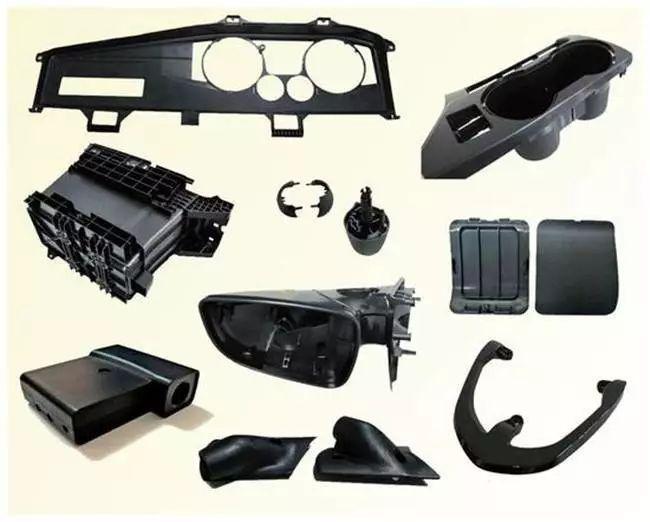
| ABS | Strong, heat-resistant, impact-resistant | Functional prototypes, automotive interior |
| Nylon | Tough, wear-resistant, flexible | Gears, hinges, moving parts |
| Polycarbonate | Very strong, impact-resistant | Tooling, structural parts |
| PEKK/PEEK | High-temperature, chemical-resistant | Aerospace, medical, oil and gas |
Ceramics and Specialties
- Alumina - Hard, wear-resistant, electrically insulating
- Zirconia - Tough, high-temperature, used in dental and medical
- Carbon fiber composites - Extremely stiff, lightweight
The material you choose drives everything: which printer you need, what post-processing is required, and what properties your final part will have. At Yigu technology, we spend significant time with clients on material selection—it's that important.
What Services Should You Expect?
A complete additive manufacturing solution includes more than just printing. Here are the services that separate good providers from great ones:
Design Optimization
This is where additive manufacturing truly shines—or fails. A design that works for machining often needs significant changes for 3D printing. Good optimization includes:
- Consolidating assemblies - Can 20 separate parts become one printed piece?
- Adding lattice structures - Where can you remove material without losing strength?
- Creating internal channels - Cooling lines, fluid paths that couldn't be drilled
- Orienting for strength - Positioning parts so loads align with strong directions
- Minimizing supports - Designing self-supporting geometries to save post-processing time
We worked with an aerospace client who had a bracket assembly with 12 machined parts and 28 fasteners. After optimization, it printed as a single piece, weighed 40% less, and took half the time to produce. That's the power of design for additive manufacturing.
Prototyping
Rapid prototyping is where most companies start with additive. The ability to hold a physical part hours after finishing a design changes everything about product development.
Good prototyping services include:
- Multiple iterations at low cost
- Material options that approximate final properties
- Fast turnaround—days, not weeks
- Feedback on manufacturability
Production
For the right applications, additive manufacturing moves beyond prototyping into full production. This works best when:
- Volumes are low to medium (1–1,000 parts)
- Parts are complex or customized
- Lead time matters
- Tooling costs would be prohibitive
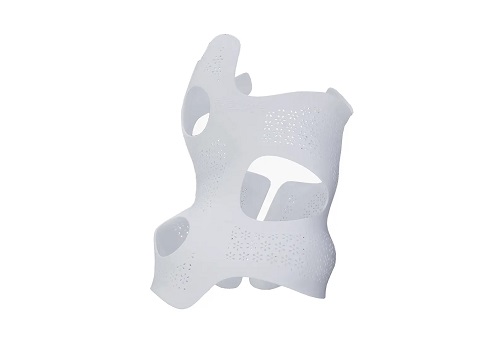
A medical device company we work with produces custom orthopedic implants. Each implant matches a specific patient's anatomy. Traditional manufacturing would require custom tooling for every implant—impossible. Additive manufacturing makes each one unique at no extra cost, improves surgical outcomes, and has grown their market share significantly.
Part 3: When Does Additive Manufacturing Make Sense?
What Problems Does It Solve Best?
Additive manufacturing isn't for everything. But for certain problems, nothing else comes close.
Problem 1: Parts That Can't Be Made Any Other Way
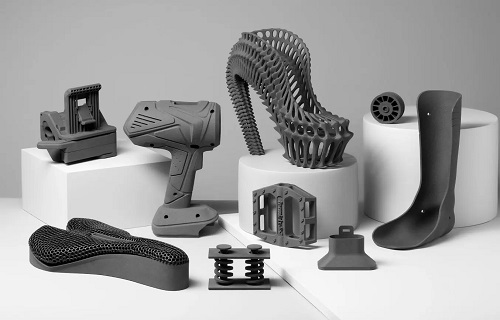
Some geometries are impossible to machine. Internal cooling channels that follow complex curves. Lattice structures that save weight. Organic shapes that mimic bone. Additive manufacturing handles these easily.
Problem 2: Parts You Need Right Now
Waiting weeks for tooling or machining kills projects. When you need a part tomorrow, additive manufacturing delivers. A client's production line went down because a critical fixture broke. Traditional replacement: 3 weeks and $2,000. Printed replacement: 8 hours and $150 in materials.
Problem 3: Parts That Need to Be Different Every Time
Customization usually means high costs. Molds need changing. CNC programs need rewriting. With additive, customization is free. Every part can be different without slowing production or increasing cost.
Problem 4: Parts You're Not Sure About Yet
Product development is iterative. You design, test, learn, revise. Traditional tooling punishes changes. Additive manufacturing encourages them. Print a prototype, test it, revise the design, print again. The cycle is fast and cheap.
When Should You Stick with Traditional Methods?
Honesty matters here. Additive manufacturing has limitations:
High volumes favor traditional methods - If you need 100,000 identical simple parts, injection molding will be faster and cheaper. The economics don't lie.
Large parts can be challenging - Build volumes limit size. While full-scale printers exist, they're expensive. Sometimes machining or casting makes more sense.
Surface finish requirements matter - As-printed surfaces are often rough. If you need mirror finishes, plan for post-processing or consider other methods.
Material properties vary - While metal printing approaches wrought properties, it's not identical. For some critical applications, this matters.
Part 4: How Do You Choose the Right Additive Manufacturing Solution?
What Questions Should You Ask?
Before investing in equipment or engaging a service provider, work through these questions:
1. What are you trying to make?
Sounds obvious, but be specific. Material? Size? Quantity? Complexity? Criticality? Each factor points toward different solutions.
2. What properties does the final part need?
Strength, temperature resistance, chemical compatibility, electrical properties, biocompatibility—all drive material and process selection.
3. What's your timeline?
Need parts next week? Additive manufacturing can deliver. Have six months? Traditional methods might work.
4. What's your volume?
One part? One hundred? Ten thousand? The economics shift dramatically with volume.
5. What's your budget for setup?
Zero tooling cost is attractive, but per-part cost might be higher. Run the numbers both ways.
6. Who has the expertise?
Do you have in-house knowledge, or will you rely on partners? This affects everything from machine selection to design approach.
Should You Buy or Outsource?
This is one of the biggest decisions companies face. Here's how we help clients think about it:
Buy your own equipment if:
- You have ongoing, predictable demand
- You need quick turnaround regularly
- You have the technical expertise in-house
- You can justify the capital investment
- You want to build internal capability
Outsource to a service provider if:
- Your needs are occasional or unpredictable
- You want access to multiple technologies
- You don't want to manage maintenance and training
- You need expertise in design optimization
- You're not sure yet about long-term commitment
Most companies start with outsourcing, learn what works, and then evaluate bringing capability in-house. This approach minimizes risk while building knowledge.
Part 5: What's Yigu Technology's Perspective?
At Yigu technology, we've watched additive manufacturing evolve from a curiosity to a critical capability for our clients. As a non-standard plastic and metal products custom supplier, we've found that additive manufacturing complements our traditional capabilities beautifully.
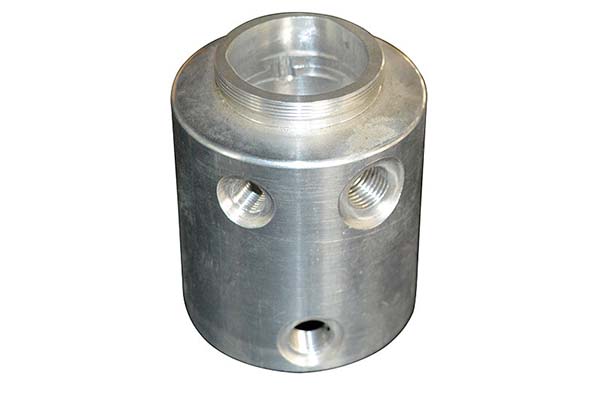
For custom-made production, additive manufacturing lets us create highly customized products with complex geometries that would be difficult or impossible through traditional methods. A client needed a series of custom fluid-handling components with internal channels that followed specific paths. Machining would require splitting the part and welding—expensive and prone to leaks. We printed them as single pieces, and they worked perfectly.
The technology also reduces production lead times dramatically. Without waiting for tooling, we can move from design to production in days rather than weeks or months. This matters enormously for clients with urgent needs or iterative development processes.
For plastic and metal products, additive manufacturing also expands our material options. We can match material properties to application requirements more precisely. Need biocompatibility? We have materials. Need high-temperature resistance? We have options. Need lightweight strength? We can deliver.
But we're also realistic about limitations. We don't push additive manufacturing where it doesn't belong. For high-volume simple parts, we still recommend traditional methods. Our job is to find the right solution for each client's unique situation, not to force a technology that doesn't fit.
The companies that succeed with additive manufacturing are the ones that approach it thoughtfully. They start with good candidates. They invest in design expertise. They partner with experienced providers. They measure results and learn continuously.
Conclusion
Additive manufacturing solutions aren't magic, and they aren't for everyone. But for the right applications—complex parts, customized products, rapid iterations, low volumes—they're transformative. The technology has matured enough to deliver production-quality parts in engineering materials. Standards exist. Success stories multiply. Costs continue to decline.
What you need to know is simple: additive manufacturing is another tool in the manufacturing toolbox. It's a powerful one, but it needs to be used appropriately. Understand what it does well and where it struggles. Match it to the right problems. Build expertise through partnerships and projects. And measure results to guide future decisions.
At Yigu technology, we're here to help you navigate this landscape. Whether you're exploring additive for the first time or looking to expand your capabilities, we bring experience, expertise, and honest advice to the table.
FAQ
Q1: What types of materials can be used in additive manufacturing?
Common materials include plastics like PLA, ABS, nylon, and polycarbonate; metals such as stainless steel, titanium alloy, and aluminum alloy; and ceramics like alumina and zirconia. Material choice depends on your application's requirements—strength, temperature resistance, biocompatibility, and cost all factor in.
Q2: How accurate are additive manufacturing solutions?
Accuracy varies by technology. Desktop FDM printers typically achieve ±0.1–0.4 mm. Industrial metal printers reach ±0.05–0.2 mm. Factors affecting accuracy include printer quality, material properties, model complexity, and post-processing. For critical dimensions, consider machining after printing.
Q3: Is additive manufacturing suitable for mass production?
It depends. For complex or customized products, additive manufacturing can be cost-effective even at higher volumes. For simple, high-volume products, traditional methods like injection molding usually win on speed and per-part cost. The crossover point varies by part complexity and material.
Q4: How much do additive manufacturing services cost?
Costs vary widely. A simple plastic prototype might cost $50–$500. A complex metal part could run $500–$5,000 or more. Factors include material cost, print time, post-processing requirements, and complexity. Many service providers offer instant quoting online for standard parts.
Q5: Do I need special training to design for additive manufacturing?
Yes, design for additive manufacturing (DfAM) is different from design for traditional methods. Key concepts include orienting for strength, minimizing supports, consolidating assemblies, and using lattices efficiently. Many service providers offer design guidance or optimization services to help.
Contact Yigu Technology for Custom Manufacturing
Ready to explore how additive manufacturing solutions can work for your products? At Yigu technology, we combine deep engineering expertise with production-grade additive capabilities. We help clients navigate material selection, design optimization, and production scaling.
Whether you need one custom prototype or a thousand production parts, we deliver quality, consistency, and performance. Our team has experience across aerospace, automotive, medical, and industrial applications. We don't just print parts—we solve problems.
Contact Yigu technology today for a free consultation. Let's discuss your project, explore what's possible, and build something extraordinary together. Visit our website, call our engineering team, or email us to start the conversation. Your manufacturing challenges deserve real solutions.