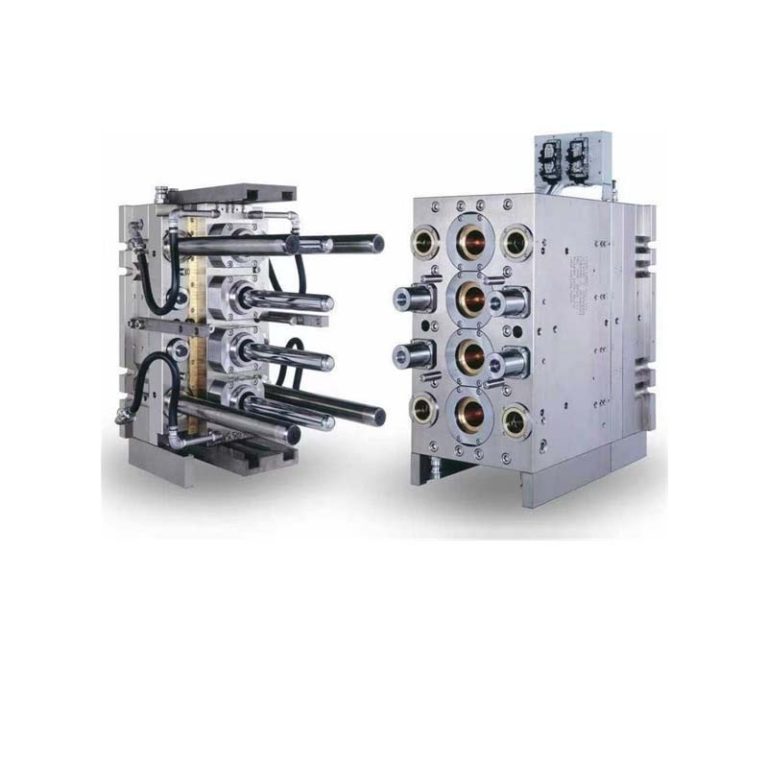
Introduction
You need a mold for a new product. Production volume is moderate—not a few hundred prototypes, not millions of parts. You want reliability without overpaying for features you don’t need. What steel do you choose?
For thousands of manufacturers worldwide, the answer is P20 (1.2311) . It’s the most widely used plastic mold steel—found in over 60% of medium-volume injection molds globally. Not because it’s the hardest or most wear-resistant. But because it strikes the perfect balance: affordable, easy to machine, and durable enough for hundreds of thousands of cycles.
This guide explores why P20 (1.2311) has earned its reputation as a reliable workhorse, its properties, applications, and how to get the most from this versatile material.
What Is P20 (1.2311) Steel?
A Pre-Hardened Plastic Mold Steel
P20 is a chromium-molybdenum alloy steel designed specifically for plastic mold making. Its German equivalent, 1.2311, adheres to DIN standards, ensuring consistent quality across manufacturers.
| Property | Value |
|---|---|
| Hardness (pre-hardened) | 28–32 HRC |
| Composition | 0.35% carbon, 1.7% chromium, 0.4% molybdenum |
| Toughness | 20–25 J (Charpy impact) |
| Thermal stability | Up to 300°F (149°C) |
| Machinability | Excellent; up to 100 SFM with HSS tools |
Standard Specifications
- AISI (US): P20
- DIN (German/European): 1.2311
Both standards specify pre-hardened hardness of 28–32 HRC, eliminating the need for post-machining heat treatment. This saves time and reduces distortion risk.
How Does P20 Compare to Other Mold Steels?
| Material | Hardness (HRC) | Cost | Machinability | Wear Resistance | Best For |
|---|---|---|---|---|---|
| P20 (1.2311) | 28–32 | Low | Excellent | Moderate | Medium-volume; general-purpose |
| 718 (1.2738) | 32–36 | +30–40% | Good | Good | Higher-volume; precision |
| NAK80 | 40–42 | High | Moderate | Good | High-gloss; optical |
| S136 (stainless) | 48–52 | Very High | Moderate | Excellent | Corrosive environments; food-grade |
| D2 (cold work) | 55–60 | Medium | Poor | Very High | High-wear; abrasive materials |
Key takeaway: P20 costs 30–40% less than 718H while offering about 80% of its performance for general applications. For medium-volume runs (50,000–500,000 cycles) with non-abrasive plastics, P20 is the most cost-effective choice.
What Properties Make P20 So Popular?
Hardness: The Sweet Spot
At 28–32 HRC, P20 is hard enough to resist scratching and wear for non-abrasive plastics (polyethylene, polypropylene, ABS)—yet soft enough for easy machining. This balance is what makes it so versatile.
Toughness: Forgiving in Complex Geometries
P20’s toughness (20–25 J in Charpy impact tests) prevents cracking in molds with thin walls, sharp corners, or complex details. It’s more forgiving than brittle cold work steels—important for intricate part designs.
Wear Resistance: Sufficient for Most Plastics
For non-filled plastics, P20 lasts 100,000–500,000 cycles —plenty for most medium-volume production runs. For glass-filled or abrasive materials, life shortens; in those cases, consider higher-grade steels.
| Plastic Type | Expected P20 Mold Life |
|---|---|
| PP, PE, ABS (non-filled) | 100,000–500,000 cycles |
| 10% glass-filled | 50,000–100,000 cycles |
| 30%+ glass-filled | Not recommended |
Corrosion Resistance: Moderate
P20 offers moderate corrosion resistance—adequate for water-based coolants and normal shop environments. It’s not recommended for:
- Aggressive mold release agents
- Humid production environments without proper maintenance
- Food-grade or medical applications (use stainless steels instead)
Machinability: A Standout Feature
P20 machines excellently. With HSS tools, cutting speeds up to 100 SFM are possible. This reduces production time by 15–20% compared to stainless steels or harder pre-hardened grades.
Real impact: A mold maker producing a medium-complexity consumer goods mold reported 18% faster machining time with P20 vs. 718H—translating directly to lower fabrication cost.
Thermal Stability: Handles Standard Plastics
P20 maintains dimensional stability at temperatures up to 300°F (149°C) —suitable for most thermoplastics. For higher-temperature materials like nylon or PBT, additional cooling channels are recommended to prevent warping.
Where Is P20 Used in Mold Making?
Injection Molding (60–70% of Applications)
P20 is the go-to steel for:
- Consumer goods: Toys, household items, storage containers
- Packaging: Lids, closures, thin-wall containers
- Automotive interior: Non-cosmetic brackets, underhood components
- Consumer electronics: Internal parts (chargers, cable housings) where surface finish is less critical
Blow Molding
For producing bottles, containers, and hollow parts, P20’s toughness and machinability make it a top choice. It handles low-abrasion materials like PET with ease.
Compression Molding
In thermoset compression molding (phenolic resins, electrical components), P20 performs well at moderate temperatures up to 300°F.
Automotive Molds
P20 is used for non-cosmetic automotive parts like interior brackets, clips, and underhood components. Production volumes of 50,000–200,000 units are typical—right in P20’s sweet spot.
Consumer Electronics
For internal components where surface finish is less critical, P20 provides a cost-effective solution. Its machinability allows tight tolerances (±0.0005 inches ) needed for precise fits.
How Do You Machine and Fabricate P20?
Precision Machining
| Operation | Cutting Speed (SFM) | Tool Recommendation |
|---|---|---|
| Roughing | 80–100 | HSS or carbide |
| Finishing | 60–80 | Carbide for best surface |
| Drilling | 40–60 | Standard twist drills; carbide for cooling channels |
P20’s excellent machinability reduces tool wear and lowers production costs compared to harder steels.
CNC Milling
3-axis and 5-axis CNC milling create complex mold cavities. P20’s consistency ensures minimal tool deflection—maintaining tight tolerances even in deep pockets or thin walls.
EDM (Electrical Discharge Machining)
EDM works well for intricate details difficult to mill—small ribs, texturing, sharp corners. P20’s uniform structure produces a smooth EDM finish with minimal recast layer (≤0.0001 inches).
Grinding
Final grinding achieves flatness and dimensional accuracy. Use a resin-bonded aluminum oxide wheel with feed rate of 10–15 inches per minute to avoid overheating.
Surface Finishing
| Finish Level | Process |
|---|---|
| General-purpose | 400-grit polish |
| Better finish (Ra 0.4 μm) | 600-grit sandpaper + buffing with aluminum oxide compound |
P20 polishes more easily than cold work steels but not as smoothly as NAK80.
Can P20 Be Heat Treated?
Pre-Hardened: Ready to Use
P20 is supplied pre-hardened to 28–32 HRC. For most applications, no post-machining heat treatment is needed —saving time and eliminating distortion risk.
Optional Hardening
If additional hardness is required (e.g., for slightly abrasive plastics):
- Heat to 1550–1600°F (843–871°C)
- Oil quench
- Temper to achieve 35–40 HRC
Note: This may reduce toughness. Only do this if wear resistance is more critical than impact strength.
Tempering After Welding
If welding is required, temper at 1000–1100°F (538–593°C) for 2 hours to relieve stress without significant hardness loss.
Surface Treatments
Nitriding at 950°F (510°C) for 20–30 hours creates a hard surface layer (50–55 HRC), extending mold life by 30–40% in applications with mild abrasion.
How Do You Maintain and Repair P20 Molds?
Mold Cleaning
Clean with mild detergents and soft cloths. Avoid abrasive cleaners that could scratch the surface.
Repair Welding
P20 welds well with matching filler rods. Post-weld tempering (1000°F / 538°C for 2 hours) is essential to relieve stress and ensure the repaired area matches base material properties.
Preventive Maintenance
- Inspect for wear or damage after each production run
- Check cooling channels for blockages
- Monitor surface finish for degradation
Yigu Technology’s Perspective
At Yigu Technology, we recommend P20 (1.2311) for clients with medium-volume production needs—typically 50,000–500,000 cycles. Its balance of machinability and durability makes it a cost-effective choice for general plastic molds.
We frequently use P20 for:
- Automotive interior parts
- Consumer goods molds
- Non-cosmetic electronics components
Our machining team appreciates P20’s consistency, which ensures tight tolerances (±0.0005 inches) and reduces scrap rates. For clients new to mold making, P20 is an excellent starting point due to its forgiving properties and widespread availability.
Conclusion
P20 (1.2311) has earned its reputation as the workhorse of plastic mold making. It offers:
- Hardness: 28–32 HRC—balanced for wear and machinability
- Toughness: 20–25 J—prevents cracking in complex geometries
- Wear resistance: 100,000–500,000 cycles for non-abrasive plastics
- Machinability: Excellent—reduces fabrication time by 15–20%
- Cost: 30–40% less than higher-grade pre-hardened steels
For medium-volume production runs with standard thermoplastics, P20 delivers the reliability you need at a price that makes sense. It’s not the steel for every application—but for the vast majority of general-purpose molds, it’s the right choice.
FAQ
How long does a P20 mold last in injection molding?
For non-abrasive plastics like PP, PE, and ABS, a P20 mold typically lasts 100,000–500,000 cycles. For filled plastics (e.g., 10% glass-filled), life shortens to 50,000–100,000 cycles. For highly abrasive materials, consider cold work steels like D2.
Can P20 be welded if damaged?
Yes. P20 welds well with matching filler rods. Post-weld tempering at 1000°F (538°C) relieves stress and ensures the repaired area matches the base material’s hardness and toughness.
Is P20 suitable for food-grade plastic molds?
No. P20 lacks the corrosion resistance required for food-grade applications. Use stainless steels like S136 or 420 stainless, which meet FDA requirements for food contact.
Does P20 require heat treatment after machining?
No. P20 is supplied pre-hardened to 28–32 HRC. This eliminates post-machining heat treatment, saving time and eliminating distortion risk. Only specialized applications requiring higher hardness need additional treatment.
What’s the difference between P20 and 1.2311?
They are functionally identical. P20 is the AISI (North American) designation. 1.2311 is the DIN (German/European) designation. Both refer to the same chromium-molybdenum alloy steel with identical properties and performance.
Contact Yigu Technology for Custom Manufacturing
At Yigu Technology, we specialize in precision mold manufacturing using P20 (1.2311) and other grades. Our team helps clients select the right steel for their application—balancing upfront cost with long-term performance.
We offer:
- Custom mold design and manufacturing
- P20 and 1.2311 material expertise
- In-house CNC machining and EDM
- Quality inspection with CMM documentation
[Contact Yigu Technology today] to discuss your medium-volume mold project. Let’s build reliable tools that deliver consistent quality at the right price.