Introduction
In product development, speed and precision often determine success. Companies that iterate quickly, test early, and refine based on feedback gain competitive advantage. Rapid prototyping is the engine that drives this process. It enables designers and engineers to transform digital concepts into tangible prototypes quickly—testing form, fit, and function before committing to mass production. From automotive to aerospace, medical devices to consumer goods, rapid prototyping bridges the gap between concept and reality. At Yigu Technology, we see its transformative power daily. This article explores the true meaning of rapid prototyping, how it works, the key technologies, and why it matters for modern product development.
What Is the True Meaning of Rapid Prototyping?
Rapid prototyping is the fast creation of physical models directly from digital designs using additive manufacturing (3D printing) and other advanced techniques. It enables:
- Speed: Prototypes in hours or days, not weeks or months
- Iteration: Test, refine, repeat—quickly
- Risk reduction: Identify design flaws early—when cheap to fix
- Cost-effectiveness: No expensive tooling for prototypes
Why it matters: According to industry data, companies that prioritize rapid prototyping reduce development cycles by 30–50% and achieve a 25% higher success rate in product launches.
How Does Rapid Prototyping Work?
The General Process
| Step | Description |
|---|---|
| 1. Digital design | Create 3D model using CAD software (SolidWorks, AutoCAD)—precise geometric and dimensional information |
| 2. File conversion | Convert CAD model to STL (Stereolithography) format—breaks model into triangular facets for machine interpretation |
| 3. Slicing | Import STL into machine software; slice model into thin layers (microns to millimeters)—layer thickness affects resolution and quality |
| 4. Printing/fabrication | Machine builds prototype layer by layer using selected technology |
| 5. Post-processing | Cleaning, support removal, curing, finishing |
What Are the Key Additive Manufacturing Technologies?
Stereolithography (SLA)
| Factor | Details |
|---|---|
| Process | UV laser cures liquid photopolymer resin layer by layer |
| Materials | Photosensitive liquid resin |
| Layer thickness | 0.05–0.2 mm |
| Accuracy | ±0.1 mm (small parts) |
| Surface finish | Smooth—suitable for detailed models |
| Build speed | Moderate |
| Cost | High equipment cost; relatively high material cost |
| Best for | High-detail models, jewelry, dental, concept prototypes |
Selective Laser Sintering (SLS)
| Factor | Details |
|---|---|
| Process | Laser sinters powdered material (nylon, metal) layer by layer; unsintered powder supports part |
| Materials | Powdered materials—nylon, metal powders (aluminum, titanium), ceramic powders |
| Layer thickness | 0.08–0.15 mm |
| Accuracy | ±0.1–0.2 mm |
| Surface finish | Rough—may require post-processing |
| Build speed | Moderate to fast |
| Cost | High equipment cost; material cost varies |
| Best for | Functional prototypes, complex geometries, durable parts |
Fused Deposition Modeling (FDM)
| Factor | Details |
|---|---|
| Process | Heated nozzle extrudes thermoplastic filament layer by layer |
| Materials | Thermoplastic filaments—ABS, PLA, PETG, nylon |
| Layer thickness | 0.1–0.4 mm |
| Accuracy | ±0.2–0.5 mm |
| Surface finish | Visible layer lines—may need post-processing |
| Build speed | Slow to moderate |
| Cost | Low equipment cost; low-cost materials available |
| Best for | Low-cost prototypes, educational models, early iterations |
Selective Laser Melting (SLM)
| Factor | Details |
|---|---|
| Process | High-powered laser melts fine metal powder layer by layer |
| Materials | Fine metal powders—titanium, aluminum, stainless steel, cobalt-chrome alloys |
| Layer thickness | 0.02–0.05 mm |
| Accuracy | ±0.05–0.1 mm |
| Surface finish | Smooth for metal parts—may need post-processing |
| Build speed | Slow—due to high-precision melting |
| Cost | Very high equipment cost; high-cost materials |
| Best for | High-strength metal parts, medical implants, aerospace components |
What Other Manufacturing Technologies Are Used?
| Type | Processes | Best For |
|---|---|---|
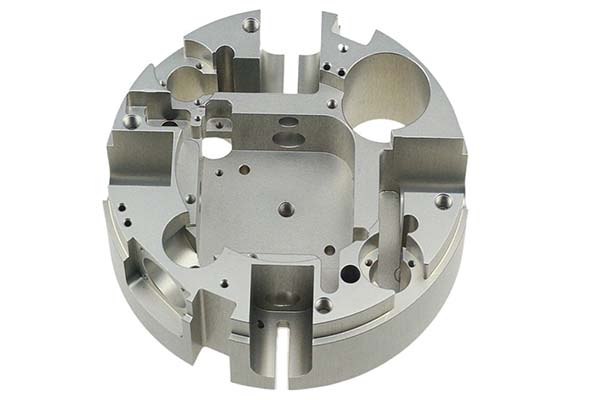
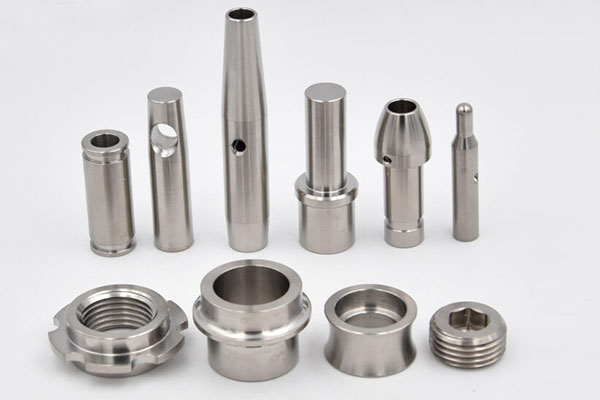
| Subtractive manufacturing | Milling, grinding, turning | High precision, smooth surface finish, tight tolerances—time-consuming, material waste |
| Compressive manufacturing | Casting, compressive sintering, molding (injection molding) | Large-scale prototypes, complex external shapes, rapid tooling for low-volume production |
How Do These Technologies Compare?
| Technology | Materials | Layer Thickness | Accuracy | Surface Finish | Build Speed | Cost | Best For |
|---|---|---|---|---|---|---|---|
| SLA | Liquid resin | 0.05–0.2 mm | ±0.1 mm | Smooth | Moderate | High equipment | High-detail models, jewelry |
| SLS | Nylon, metal powders | 0.08–0.15 mm | ±0.1–0.2 mm | Rough | Moderate–Fast | High | Functional prototypes, complex geometries |
| FDM | ABS, PLA, PETG | 0.1–0.4 mm | ±0.2–0.5 mm | Layer lines | Slow–Moderate | Low | Low-cost concepts, early iterations |
| SLM | Titanium, aluminum, stainless steel | 0.02–0.05 mm | ±0.05–0.1 mm | Smooth (metal) | Slow | Very high | High-strength metal parts, medical implants |
Why Does Rapid Prototyping Matter?
Accelerated Development Cycles
| Traditional | Rapid Prototyping |
|---|---|
| Weeks to months for first prototype | Hours to days |
| Expensive design changes | Low-cost iteration |
| Limited testing cycles | Multiple iterations feasible |
Cost Reduction
- Before: Expensive molds, tooling, and setup
- After: No tooling required for prototypes
- Impact: Identify design flaws early—cost to fix: $100–$1,000 vs. $10,000–$100,000+ in production
Improved Product Quality
- Test form, fit, and function before production
- Identify ergonomic issues, assembly problems, performance limitations
- Refine based on real-world feedback
Design Freedom
- Complex geometries impossible with traditional methods
- Internal channels, lattice structures, organic shapes
- Explore more design alternatives at lower cost
Competitive Advantage
- Faster time-to-market
- Respond quickly to market changes
- Higher success rate in product launches
What Are the Applications Across Industries?
| Industry | Applications | Benefits |
|---|---|---|
| Automotive | Engine components, body panels, interior parts | Test fit and function; multiple design concepts faster; more fuel-efficient, safer vehicles |
| Aerospace | Turbine blades, structural components, lightweight parts | Complex geometries; weight reduction; improved performance |
| Healthcare | Custom implants (hip replacements), surgical guides, prosthetics | Patient-specific; tailored to unique anatomy; better outcomes |
| Consumer goods | Phone cases, electronics housings, toys | Rapid iteration; faster time-to-market; competitive advantage |
Yigu Technology's Perspective
As a custom manufacturer of non-standard plastic and metal parts, Yigu Technology leverages rapid prototyping daily.
How rapid prototyping benefits our work:
- Faster development: Concepts to prototypes in days
- Better communication: Tangible prototypes improve client understanding
- Customization: Unique parts with complex geometries—once difficult, now routine
- Competitiveness: New opportunities; enhanced market position
Our view: Rapid prototyping is not just a manufacturing technique—it is a powerful enabler of innovation, efficiency, and competitiveness. It bridges the gap between design and production quickly and cost-effectively, making it a key factor in the success of companies across industries.
Conclusion
Rapid prototyping has revolutionized product development by:
| Factor | Impact |
|---|---|
| Speed | Prototypes in hours or days—not weeks or months |
| Cost | Eliminates expensive tooling; early flaw detection saves millions |
| Quality | Test, iterate, refine—higher-quality end products |
| Design freedom | Complex geometries impossible with traditional methods |
| Competitive advantage | Faster time-to-market; higher success rates |
Key technologies:
- SLA: High detail, smooth finish—jewelry, dental, concept models
- SLS: Functional parts, complex geometries—automotive, aerospace
- FDM: Low-cost concepts, early iterations—consumer goods, education
- SLM: High-strength metal parts—medical implants, aerospace
Other methods:
- Subtractive manufacturing (milling, grinding): High precision, tight tolerances
- Compressive manufacturing (casting, molding): Large-scale prototypes, complex external shapes
By enabling rapid iteration, early testing, and design freedom, rapid prototyping helps companies bring better products to market faster—making it an essential tool for modern product development.
Frequently Asked Questions
What is the difference between rapid prototyping and traditional prototyping?
Traditional prototyping involves expensive molds and tooling—weeks or months, thousands of dollars. Rapid prototyping (3D printing) produces prototypes directly from digital designs—days or hours, no tooling required. Rapid prototyping allows more design flexibility and lower cost for small-scale prototyping.
How accurate are rapid prototyping methods?
Accuracy varies by technology. SLA: ±0.1 mm (small parts)—high precision. SLS: ±0.1–0.2 mm—good accuracy. FDM: ±0.2–0.5 mm—moderate. SLM: ±0.05–0.1 mm—very high precision for metal parts.
What types of materials can be used in rapid prototyping?
FDM: ABS, PLA, PETG, nylon. SLA: Photosensitive liquid resins. SLS: Nylon, metal powders (aluminum, titanium, stainless steel), ceramic powders. SLM: Fine metal powders—titanium, aluminum, stainless steel, cobalt-chrome alloys. Subtractive methods: metals, plastics, woods. Compressive methods: molten metals, plastics, liquid silicone rubber.
How does rapid prototyping reduce costs?
Eliminates expensive molds and tooling for prototypes. Enables early design flaw detection—cost to fix: $100–$1,000 during prototyping vs. $10,000–$100,000+ during production. Reduces development time, allowing faster time-to-market.
What industries benefit most from rapid prototyping?
Automotive: Engine components, body panels—test fit and function. Aerospace: Complex, lightweight parts—improve performance. Healthcare: Custom implants, surgical guides—patient-specific. Consumer goods: Phone cases, electronics—rapid iteration, faster time-to-market.
Contact Yigu Technology for Custom Manufacturing
At Yigu Technology, we specialize in rapid prototyping and custom manufacturing. Our capabilities include SLA, SLS, FDM, SLM, CNC machining, and injection molding. We serve automotive, aerospace, medical, and consumer goods industries.
If you are developing a new product and want to leverage rapid prototyping to accelerate development, reduce costs, and improve quality, contact our engineering team. Let us help you turn concepts into reality—faster and with greater design freedom.