Finding the right sheet metal for your project can feel like navigating a maze. Different materials, various thicknesses, and multiple processing methods all matter. This guide breaks down everything you need to know to make a confident choice.
Introduction
Sheet metal is everywhere. It forms your car’s body, your kitchen appliances, and even the roof over your head. But sheet metal is not just one material. It comes in many types, each with unique strengths and weaknesses.
In this guide, you will learn what sheet metal really is. You will understand its key properties. You will explore common types like steel, aluminum, and copper. And you will discover how to choose the right one for your specific needs. By the end, you will have the knowledge to make smart decisions for your next project.
What Exactly Is Sheet Metal?
Defining the Material
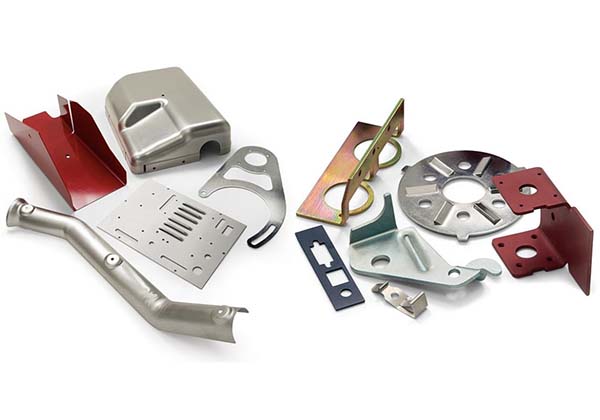
Sheet metal starts as metal that has been rolled into thin, flat pieces. It is one of the most basic forms in metalworking. Its versatility makes it essential across countless industries.
Thickness defines sheet metal. Extremely thin sheets are often called foil or leaf. Pieces thicker than 6mm (0.25 inches) are usually considered plate. Everything in between is sheet metal.
The material comes in a wide range of metals. Steel, aluminum, copper, and stainless steel each offer distinct benefits. For example, steel gives you high strength at a low cost. Aluminum is lightweight and resists corrosion. Copper conducts electricity and heat exceptionally well.
Why Sheet Metal Matters
Sheet metal serves as the raw material for countless everyday objects. Your car’s body panels come from sheet metal. Your refrigerator doors do too. Even the structural frames of buildings rely on it.
Its malleability allows it to be cut, bent, and formed into complex shapes. This flexibility explains why sheet metal plays such a crucial role in modern manufacturing.
Key Properties to Understand
Physical Properties
Sheet metal’s physical properties determine how it behaves in different environments.
| Property | What It Means | Real-World Impact |
|---|---|---|
| Strength | Ability to withstand force without deforming | Determines load-bearing capacity |
| Conductivity | How well it transfers electricity or heat | Critical for electronics and heat exchangers |
| Density | Weight per unit volume | Affects overall product weight |
Strength is often the first property people consider. High-strength steel can handle significant forces. According to industry standards, high-strength low-alloy (HSLA) steel offers yield strength from 345 to 690 MPa. That is much higher than regular mild steel. This strength allows for taller buildings and safer vehicles.
Conductivity matters for electronics and thermal management. Copper leads the pack with electrical conductivity around 5.96×10⁷ S/m at 20°C. Aluminum follows with good thermal conductivity at 237 W/(m·K) for pure aluminum. These properties make them ideal for circuit boards and heat sinks.
Density affects weight. Steel weighs about 7,850 kg/m³. Aluminum is much lighter at roughly 2,700 kg/m³. This difference explains why aircraft use aluminum. Every kilogram saved improves fuel efficiency.
Mechanical Properties
Mechanical properties influence how sheet metal behaves during processing and in use.
Ductility refers to how much the metal can stretch without breaking. Copper is highly ductile. You can draw it into thin wires or stamp it into complex shapes without cracking. This property is essential for forming operations like deep drawing.
Hardness measures resistance to indentation and wear. Hardened steel can reach HRC 40-60 on the Rockwell scale. This hardness makes it suitable for cutting tools and gears that face constant abrasion.
Toughness is the ability to absorb energy without fracturing. In the automotive industry, tough steel sheet metal protects passengers during collisions. It bends rather than shatters, absorbing impact energy.
Common Types of Sheet Metal
Steel Sheet Metal
Steel comes in several forms, each with distinct characteristics.
Cold-Rolled Steel is processed below the metal’s recrystallization temperature. This creates a smooth surface and tight dimensional accuracy. It has a higher strength-to-weight ratio than hot-rolled steel. Car makers love it for body panels. The smooth surface takes paint beautifully. Appliance manufacturers use it for refrigerator and washing machine bodies.
Hot-Rolled Steel is rolled at high temperatures. This makes production faster and more energy-efficient. The surface texture is rougher, but the cost is lower. Construction projects often use hot-rolled steel for structural supports and roof decks. Industrial buildings rely on it for framework because it combines strength with affordability.
Galvanized Steel has a protective zinc coating. This coating provides excellent corrosion resistance. The zinc acts as a sacrificial anode. It corrodes first, protecting the steel underneath. This makes galvanized steel ideal for roofing, gutters, and outdoor signage. In coastal areas, it is the go-to choice for preventing rust from salt-laden air.
Aluminum Sheet Metal
Aluminum stands out for its light weight. At about one-third the density of steel, it is ideal for weight-sensitive applications. The aerospace industry uses it extensively. Aircraft fuselages and wings rely on aluminum sheet metal to reduce weight and improve fuel efficiency.
Aluminum also forms a thin, self-healing oxide layer when exposed to air. This layer protects against corrosion. That is why you see aluminum siding on houses and aluminum hulls on boats. In the automotive industry, high-end cars now use aluminum body panels to cut weight without sacrificing safety.
Copper Sheet Metal
Copper offers unmatched electrical conductivity. Only silver performs better. Its conductivity of 5.96×10⁷ S/m makes it indispensable for electronics. Printed circuit boards use copper sheets etched into conductive pathways. Electrical wires and connectors rely on copper for efficient power transmission.
Copper also conducts heat well. This makes it valuable for heat exchangers in air conditioners and refrigerators. In construction, copper roofing provides both durability and beauty. Over time, it develops a distinctive green patina that many architects prize.
Applications Across Industries
Automotive Industry
Sheet metal forms the backbone of automotive manufacturing. Car body shells are primarily made from cold-rolled steel. The material stamps precisely into complex shapes. These shapes give cars their aerodynamic curves.
Studies show that optimized body shells using high-strength sheet metal can reduce air resistance by up to 10%. That directly improves fuel efficiency.
Engine components also use sheet metal. Steel manifolds withstand high-temperature exhaust gases. Car doors, hoods, and fenders all rely on sheet metal. Safety standards require these parts to absorb impact forces during collisions.
Aerospace Industry
The aerospace industry depends heavily on sheet metal. Aircraft bodies and wings use aluminum sheet metal for its excellent strength-to-weight ratio.
A commercial airliner’s fuselage consists of numerous aluminum panels. These panels form a strong yet lightweight structure. Industry estimates show that every 10% reduction in aircraft weight cuts fuel consumption by 8-10%.
Wing skins face constant stress cycles during takeoff, flight, and landing. Aerospace-grade aluminum alloys achieve tensile strength over 500 MPa. This ensures structural integrity throughout the aircraft’s service life.
Construction Industry
Sheet metal appears throughout modern construction. Galvanized steel roofing provides long-term protection against rain and snow. Aluminum roofing offers a lightweight alternative that reduces structural loads.
Building facades often feature stainless steel. Its sleek appearance and corrosion resistance make it perfect for decorative panels and curtain walls. Steel doors provide security. Aluminum window frames offer energy efficiency when combined with proper glazing.
How Sheet Metal Is Processed
Cutting Methods
Cutting is the first step in transforming sheet metal into finished products.
| Method | Precision | Best For | Limitations |
|---|---|---|---|
| Laser Cutting | ±0.1mm | Complex shapes, thin materials | Higher equipment cost |
| Plasma Cutting | ±0.5mm | Thick materials up to 100mm | Rougher cut surface |
| Mechanical Cutting | Lower precision | Simple shapes, high volume | May cause burrs |
Laser cutting uses a high-power beam to melt or vaporize metal. It offers extremely high precision. Electronic components often require laser-cut parts that fit together perfectly. The cut edges are clean and usually need little post-processing.
Plasma cutting creates a high-temperature arc to melt and blow away metal. It handles thick materials well. Shipbuilding operations frequently use plasma cutting for thick steel plates. The cut surface is rougher than laser cutting, but the speed is impressive.
Mechanical cutting includes shearing and punching. Shearing cuts straight lines in large sheets. Punching creates holes or simple shapes. These methods cost less for high-volume production of simple parts.
Bending Techniques
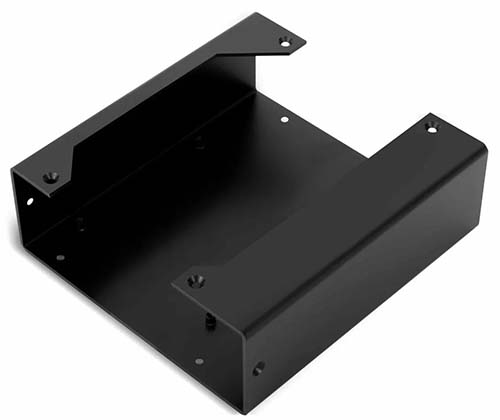
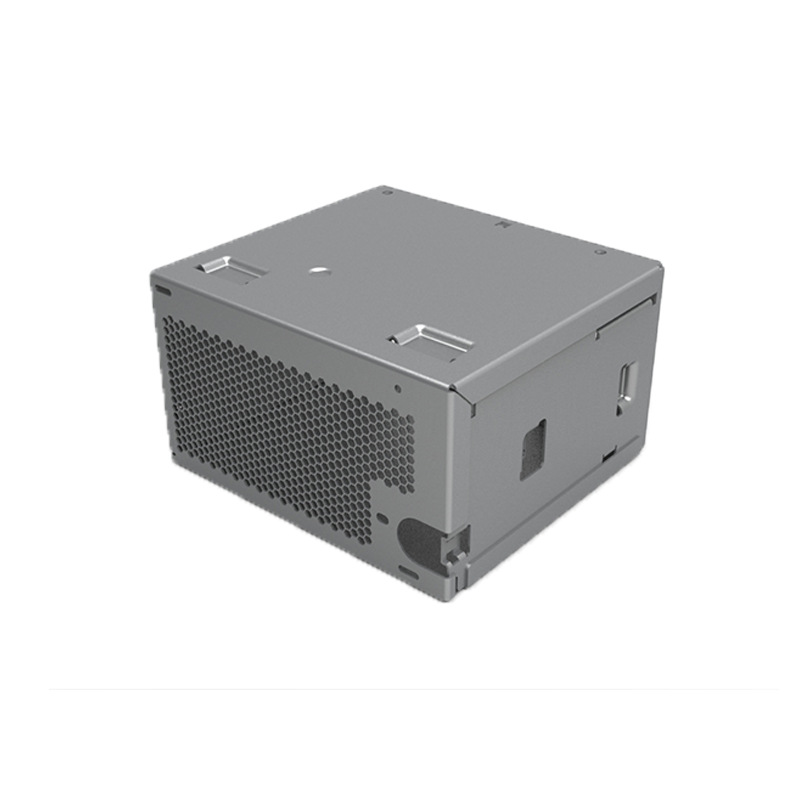
Bending changes sheet metal shape by applying force. Press braking uses a die and punch to create sharp angles. Metal boxes and enclosures often take shape this way. Roll bending uses multiple rolls to create cylindrical or curved shapes. This method works well for pipes and curved panels.
The bending radius matters greatly. A general rule: the minimum bending radius should be at least 1-2 times the sheet metal thickness. Going tighter risks cracking or wrinkling.
Welding Methods
Welding joins sheet metal parts into complete structures.
Arc welding uses an electric arc to melt metal at the joint. Shielded metal arc welding (SMAW) works well for on-site construction. Gas metal arc welding (GMAW), also called MIG welding, offers faster speeds and better quality for industrial manufacturing.
Resistance welding passes current through the metal. The resistance generates heat that melts and joins the parts. Spot welding is common in automotive assembly lines. It creates strong joints quickly.
Laser welding uses a focused beam for high precision. The heat-affected zone is very narrow. Aerospace applications use laser welding for aluminum components. It minimizes impact on material properties while ensuring strong joints.
Welding quality directly affects product performance. Defects like porosity, cracks, or insufficient penetration can weaken structures. For pressure vessels, poor welding could lead to leaks or even explosions. That is why manufacturers use non-destructive testing methods like ultrasonic and radiographic inspection.
Yigu Technology’s Viewpoint
As a custom manufacturer of non-standard plastic and metal products, Yigu Technology works with sheet metal daily. We have seen how material selection makes or breaks projects.
One client came to us needing enclosures for outdoor telecommunications equipment. They initially specified standard carbon steel to save money. After reviewing their coastal installation site, we recommended galvanized steel instead. The zinc coating would resist salt corrosion. Three years later, those enclosures remain rust-free.
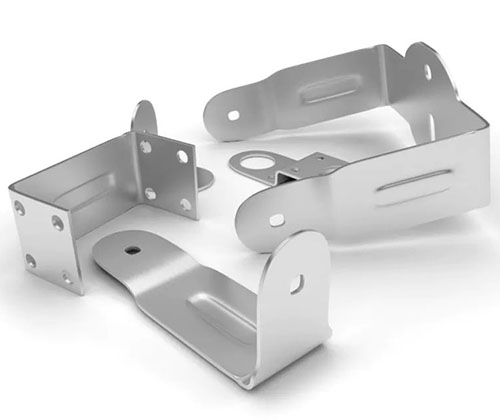
We have also seen the importance of matching processing methods to requirements. A medical device startup needed thin stainless steel components with complex cutouts. Laser cutting gave them the precision they needed without expensive tooling. For another client producing high-volume automotive brackets, stamping delivered consistent quality at a much lower per-unit cost.
Our experience shows that success comes from understanding both the material and the process. Every project is unique. The right solution balances performance, cost, and manufacturability.
Conclusion
Sheet metal is more than just flat pieces of metal. It is a versatile material family that powers modern manufacturing. From the steel in your car to the aluminum in aircraft wings, sheet metal shapes our world.
Understanding the properties of different metals helps you choose wisely. Steel offers strength and affordability. Aluminum provides light weight and corrosion resistance. Copper delivers unmatched conductivity. Each has its place.
Processing methods matter too. Laser cutting delivers precision. Bending creates shapes. Welding builds structures. Choosing the right combination ensures your project succeeds.
Take time to evaluate your needs. Consider the environment, the loads, and the required lifespan. Then match those requirements to the right material and process.
FAQ
What thickness range defines sheet metal?
Sheet metal typically ranges from foil thickness up to 6mm (0.25 inches). Materials thicker than 6mm are usually called plate. The exact dividing line can vary by industry, but this range covers most common applications.
Which sheet metal type offers the best corrosion resistance?
Stainless steel and galvanized steel both provide excellent corrosion resistance. Stainless steel contains chromium that forms a protective oxide layer. Galvanized steel has a zinc coating that corrodes sacrificially to protect the base metal. For coastal or chemical environments, stainless steel grade 316 offers the highest protection.
How do I choose between steel and aluminum sheet metal?
Choose steel when you need maximum strength at lower cost. Choose aluminum when weight reduction matters more. Steel is about three times denser than aluminum. If your application involves moving parts or fuel efficiency, aluminum’s lighter weight often wins. If structural strength and budget are priorities, steel is usually the answer.
What is the most precise way to cut sheet metal?
Laser cutting offers the highest precision, with tolerances as tight as ±0.1mm. It produces clean edges and handles complex shapes well. For very thick materials, plasma cutting is an alternative, though precision is lower. For high-volume production of simple shapes, mechanical cutting methods are more cost-effective.
Contact Yigu Technology for Custom Manufacturing
Need sheet metal components made to your exact specifications? Yigu Technology specializes in custom non-standard metal and plastic products. Our team helps you select the right materials and processes for your project. From prototyping to production runs, we deliver quality and precision. [Contact us today] to discuss your requirements.