Introduction
You've got a product that's ready to go. Maybe it's a custom part for a client, a new gadget you're launching, or a replacement component for existing equipment. You need quantity—not just one prototype, but dozens, hundreds, or even thousands.
Traditional manufacturing says: invest in molds, wait weeks, hope your design is right.
Bulk 3D printing says: start printing today, iterate as needed, scale when ready.
At Yigu technology, we've helped businesses of all sizes use bulk 3D printing to produce parts faster, cheaper, and with more flexibility than traditional methods allow. This guide explains what bulk 3D printing is, how it works, and what it can do for your business.
What Is Bulk 3D Printing Service?
The Basic Idea: Production Without Tooling
Bulk 3D printing—also called mass 3D printing or production-scale additive manufacturing—uses multiple printers (or large-format machines) to produce quantities of parts in a single run or over a short period.
Instead of creating expensive molds or tooling, you work from digital files—STL, OBJ, or other 3D model formats. The printers build parts layer by layer, directly from your designs.
This changes the economics of production:
- No mold costs (save $5,000–50,000 upfront)
- No minimum order quantities (print exactly what you need)
- Design flexibility (changes cost nothing)
- Complex geometries (internal features, lattices, organic shapes)
How It's Different from Traditional Manufacturing
| Factor | Bulk 3D Printing | Injection Molding | CNC Machining |
|---|---|---|---|
| Upfront cost | Low (no tooling) | High (molds $5k–50k+) | Medium (fixturing, programming) |
| Per-part cost | Higher for simple parts | Very low at volume | Moderate |
| Lead time | Days | Weeks (mold making) | Days to weeks |
| Design changes | Free, instant | Costly retooling | Reprogramming cost |
| Complexity | Unlimited | Limited by mold design | Limited by tool access |
| Material options | Wide (plastics, metals, composites) | Very wide | Very wide |
| Best for volumes | 1–5,000 units | 10,000+ units | 1–100 units |
Bulk 3D printing fills the gap between prototyping and mass production. It's ideal for quantities where tooling costs can't be justified, but you need more than a handful of parts.
What Are the Main Technologies for Bulk 3D Printing?
FDM: Cost-Effective for Large Parts
Fused Deposition Modeling (FDM) extrudes melted plastic filament layer by layer. It's the most common 3D printing technology—and for good reason.
How it works: Filament feeds into a heated nozzle, melts, and deposits in precise paths. Each layer bonds to the one below.
Advantages for bulk production:
- Low cost: Materials like PLA and ABS run $15–30/kg
- Large build volumes: Print big parts or many small ones at once
- Easy operation: Less skilled operators can manage multiple machines
- Wide material choice: Engineering plastics, composites, flexible materials
Best applications:
- Functional prototypes
- Large parts (up to meter scale)
- Jigs, fixtures, tooling
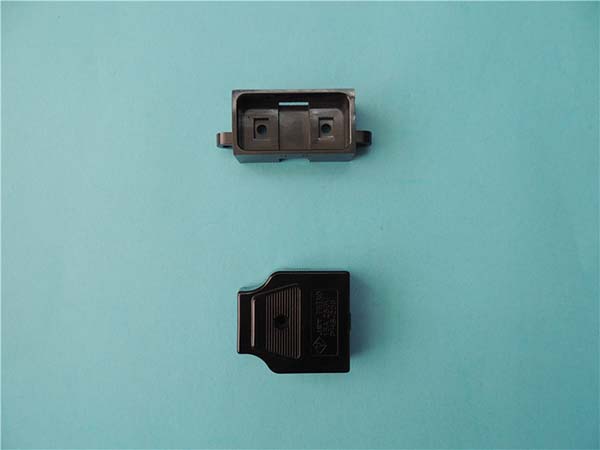
- Consumer goods, toys, housings
Typical accuracy: ±0.1–0.5 mm
SLA: High Detail, Smooth Surfaces
Stereolithography (SLA) uses UV light to cure liquid resin. It delivers the finest details and smoothest surfaces of any plastic 3D printing technology.
How it works: A laser or projector traces each layer on the surface of liquid resin. Light cures the resin, turning it solid. The build platform lowers, fresh resin flows over, and the next layer cures.
Advantages for bulk production:
- Exceptional detail: Layer heights down to 0.025 mm
- Smooth surfaces: Almost no visible layer lines
- Fine features: Captures intricate details
- Variety of resins: Standard, tough, flexible, castable, dental
Best applications:
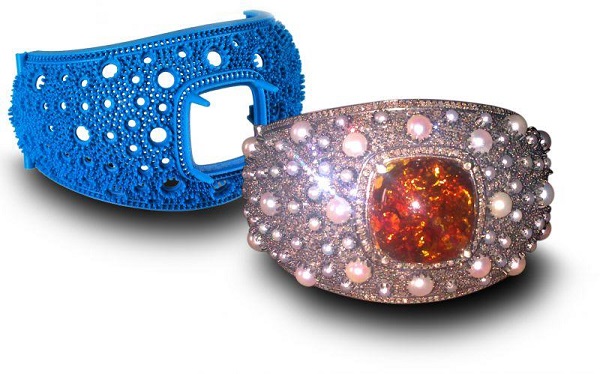
- Jewelry patterns
- Dental models and surgical guides
- High-detail prototypes
- Small, intricate consumer products
Typical accuracy: ±0.05–0.15 mm
3DP (Binder Jetting): Fast, Full-Color
Three Dimensional Printing (3DP) —often called binder jetting—deposits liquid binder onto powder, layer by layer.
How it works: A roller spreads thin powder. A printhead jets binder onto areas that should become solid. The platform lowers, new powder spreads, and the process repeats.
Advantages for bulk production:
- High speed: No melting means fast layer times
- Full color: Print in multiple colors simultaneously
- No supports: Powder supports overhangs
- Wide materials: Plastics, metals, ceramics, sand
Best applications:
- Architectural models
- Full-color prototypes
- Art and design pieces
- Metal parts (with sintering post-processing)
Note: Metal binder jetting requires post-print sintering, adding steps but enabling faster printing.
SLS: Strong, Functional, No Supports
Selective Laser Sintering (SLS) uses a laser to fuse powder into solid parts. No supports needed—the powder itself holds up overhangs.
How it works: Powder spreads across the build platform. A laser scans each layer, sintering particles together. Unfused powder remains, supporting the part.
Advantages for bulk production:
- No supports: Complex geometries print easily
- Strong parts: Near injection-molded properties
- Durable materials: Nylon, glass-filled, carbon-filled
- Batch efficiency: Pack multiple parts in one build
Best applications:
- Functional prototypes
- End-use parts
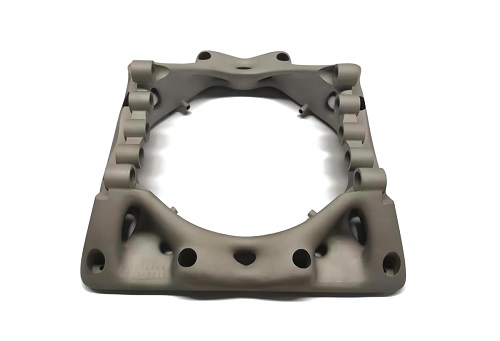
- Gears, housings, brackets
- Medical devices, aerospace components
Typical accuracy: ±0.1–0.3 mm
What Can Bulk 3D Printing Do for Your Business?
Reduce Upfront Costs
The biggest barrier to new products is often tooling cost. A single injection mold can cost $5,000–50,000. For a startup or small business, that's often impossible.
Bulk 3D printing eliminates this barrier. No molds. No tooling. You pay only for the parts you print.
This means:
- Test new products with minimal investment
- Launch limited editions without huge risk
- Serve niche markets that can't justify tooling
- Iterate designs based on real feedback
Shorten Time to Market
Traditional production: design, make molds (4-8 weeks), produce samples, test, maybe redo molds. Months gone.
Bulk 3D printing: design, print (days), test, modify, print again. Weeks total.
A study by McKinsey found companies using 3D printing reduce time-to-market by up to 50%. In fast-moving industries, this is everything.
Enable Complex Geometries
Some designs can't be molded or machined. Internal channels, lattice structures, organic shapes—traditional methods struggle or fail.
3D printing doesn't care. If you can model it, you can print it.
This enables:
- Lightweight parts with internal lattices
- Cooling channels following part contours
- Assembly consolidation (multiple parts into one)
- Optimized shapes that save weight and material
Support Customization and Personalization
With traditional manufacturing, each different part costs more—different molds, different setups, different programs.
With 3D printing, customization is free. The printer reads a different file and makes a different part.
This enables:
- Patient-specific medical devices from CT scans
- Custom-fit products for individual customers
- Personalized consumer goods (names, unique designs)
- Tailored ergonomics for tools and equipment
Reduce Inventory and Storage
Traditional production often means making large batches to amortize tooling costs. Then you store thousands of parts, hoping they sell.
Bulk 3D printing enables on-demand production. Print what you need, when you need it.
Benefits:
- No inventory costs (warehousing, insurance, obsolescence)
- No minimum orders (print exactly what customers order)
- Fast response to demand changes
- Less waste (no unsold inventory)
What Are Real-World Examples?
Automotive: Custom Parts at Scale
A European tuner needed 500 custom intake manifolds for a limited-edition sports car. Traditional casting would cost $15,000 in tooling plus $80 per part—$55,000 total.
SLS printing in glass-filled nylon produced the same parts for $45 each, no tooling cost. Total: $22,500. Saved over 50%, delivered in 2 weeks instead of 10.
Medical: Patient-Specific Implants
A hospital needed 50 custom titanium implants for patients with unusual anatomy. Machining each from billet would cost $3,000–5,000 and take weeks.
SLM printing produced all 50 in one batch for $1,800 each, with perfect fit from CT data. Patients recovered faster, surgeons saved time.
Consumer Goods: Limited Edition Success
A new beverage company wanted to test three bottle designs before committing to glass molds. They printed 200 bottles of each design in PETG using FDM bulk printing.
Total cost: $3,000. Market testing revealed the winning design. Glass molds cost $25,000—but now they knew which design to mold.
Aerospace: Production Parts
A satellite manufacturer needed 200 lightweight brackets for a constellation of small satellites. Machining from aluminum would waste 80% of material and cost $400 each.
SLM printing in titanium produced the same brackets with optimized lattice structures—30% lighter, $350 each, and ready in 3 weeks.
How Do You Choose the Right Technology?
| Technology | Best For | Material Cost | Equipment Cost | Accuracy | Speed |
|---|---|---|---|---|---|
| FDM | Large parts, functional prototypes, jigs | Low | Low–Medium | ±0.1–0.5 mm | Medium |
| SLA | High detail, smooth surfaces, jewelry | Medium | Medium | ±0.05–0.15 mm | Medium |
| 3DP | Full-color models, architectural, art | Medium | Medium–High | ±0.1–0.3 mm | Fast |
| SLS | Strong functional parts, complex geometries | Medium–High | High | ±0.1–0.3 mm | Medium |
Considerations:
- Part requirements: Strength, detail, surface finish
- Quantity: Some technologies scale better than others
- Material: What properties does your part need?
- Budget: Balance per-part cost against upfront investment
- Timeline: Some processes are faster than others
Yigu Technology's Perspective
At Yigu technology, we've seen bulk 3D printing transform how businesses approach production. Here's what we've learned:
Start with the problem, not the technology. Know what you need—quantity, material, timeline, budget—then choose the right process.
Design for the process. Each technology has strengths and limitations. Designing with them in mind yields better parts, faster, at lower cost.
Test before scaling. Print a small batch, verify quality, then scale. It's cheap insurance.
Consider the whole lifecycle. How will parts be used? In what environment? For how long? Material choice affects all of these.
We help clients navigate these decisions every day. From material selection to design optimization to production planning, we guide projects from concept to completion.
The key insight: Bulk 3D printing isn't about replacing traditional manufacturing. It's about doing things traditional methods can't—customization, complexity, speed, and low-volume economics.
Conclusion
Bulk 3D printing brings real advantages to businesses:
- Lower upfront costs: No tooling, no molds, no minimum orders
- Faster time-to-market: From design to parts in days, not months
- Complex geometries: Designs impossible to machine or mold
- Customization: Each part can be different at no extra cost
- Reduced inventory: Print on demand, not in advance
Technologies like FDM, SLA, 3DP, and SLS each serve different needs—from large functional parts to high-detail models to full-color prototypes.
Applications across automotive, medical, consumer goods, and aerospace prove the value. Companies are saving money, launching faster, and making products they couldn't make before.
For quantities from dozens to thousands, bulk 3D printing is often the smartest choice. It's not the answer for everything. But for the right applications, it's transformative.
FAQ
What types of materials can be used in bulk 3D printing?
Common materials include plastics (PLA, ABS, PETG, nylon, TPU), metals (aluminum, titanium, stainless steel, Inconel), ceramics, and composites (glass-filled, carbon-filled). Each offers different properties—strength, flexibility, heat resistance, biocompatibility. Material choice depends entirely on your application requirements.
How accurate is bulk 3D printing?
Accuracy varies by technology. FDM: ±0.1–0.5 mm. SLA: ±0.05–0.15 mm. SLS: ±0.1–0.3 mm. 3DP/binder jetting: ±0.1–0.3 mm. Factors affecting accuracy include machine calibration, material properties, and part design. Critical dimensions can often be improved through post-processing machining.
Can bulk 3D printing be used for mass production?
Yes, for certain applications. Bulk 3D printing is excellent for low-to-medium volumes (up to thousands of units) where tooling costs can't be justified. It's also ideal for highly complex or customized parts that can't be made any other way. For high-volume simple parts (tens of thousands+), traditional methods like injection molding remain more economical.
How much does bulk 3D printing cost per part?
Costs vary widely based on material, complexity, and quantity. Examples:
- Simple plastic part (FDM): $5–20
- Complex plastic part (SLS): $20–100
- Metal part (SLM): $100–1,000+
Per-part cost drops significantly with quantity due to batch efficiency. Always request quotes based on your specific design and volume.
What's the best technology for functional parts?
SLS (nylon) and SLM (metal) produce the strongest, most durable parts, approaching injection-molded or cast properties. FDM with engineering materials (PETG, ABS, polycarbonate) also produces functional parts at lower cost. Choose based on strength requirements, environment, and budget.
How do I get started with bulk 3D printing?
- Define your requirements: Quantity, material, timeline, budget
- Create or finalize your 3D model (CAD file)
- Contact a service provider with your design and specifications
- Review quote and timeline
- Order a sample if needed to verify quality
- Scale to full production
Many providers, including Yigu technology, offer free quotes within 24 hours and design review to optimize your parts for manufacturing.
Contact Yigu Technology for Custom Manufacturing
Ready to use bulk 3D printing for your production needs? Yigu technology specializes in custom manufacturing with all major technologies and materials.
We help with:
- Design for manufacturing—optimizing your parts for success
- Technology selection—matching process to requirements
- Material choice—finding the right properties
- Production—from prototypes to thousands of units
- Post-processing—finishing to your specifications
Contact us to discuss your project. Send your CAD file, tell us what you're making and what it needs to do. We'll provide a free quote within 24 hours and help you bring your product to market—faster, cheaper, and with less risk.