You have heard of 3D printing creating prototypes and gadgets. But in medicine, it is saving lives. Surgeons rehearse on 3D printed organs before cutting into patients. Patients receive custom prosthetics that fit perfectly—not one-size-fits-all. Researchers print living tissue that may one day replace donor organs. This guide explores the remarkable applications of 3D printing in medicine, from surgical planning to tissue engineering, and explains how this technology is transforming patient care.
How Is 3D Printing Changing Prosthetics?
For centuries, prosthetics were mass-produced in standard sizes. They fit poorly, caused discomfort, and limited mobility. 3D printing changes this completely.
Custom-Fitted Prosthetics
A patient’s residual limb is 3D scanned—capturing every contour. A digital model is created. The prosthetic prints to match the patient’s exact anatomy.
The result is a perfect fit. Pressure distributes evenly. Skin irritation decreases. Mobility improves.
Data point: A study found that 3D printed prosthetics achieved 95% better fit compared to traditional off-the-shelf versions.
Cost-Effectiveness
Traditional prosthetics cost $5,000–$50,000, depending on complexity. Custom molds, skilled labor, and material waste drive costs up.
3D printing reduces costs dramatically:
| Cost Component | Traditional Prosthetics | 3D Printed Prosthetics |
|---|---|---|
| Design & Molds | High—custom molds cost thousands | Low—digital files, no physical molds |
| Material Waste | High—subtractive processes | Low—additive, material only where needed |
| Labor | High—multiple skilled workers | Low—automated printing |
| Total Cost | $5,000–$50,000 | $100–$5,000 |
Real example: A child needing a new prosthetic every 6–12 months as they grow. Traditional prosthetics cost $10,000 each. 3D printed versions cost $200. The family saved $19,800 over two years—and the child received perfectly fitted devices each time.
Personalized Design
Patients can choose colors, patterns, and even functional features. A child can have a superhero-themed prosthetic. An athlete can have a lightweight, high-performance design. Customization improves adherence—patients actually want to wear their devices.
How Does 3D Printing Aid Surgical Planning?
Surgeons face a challenge: they cannot see inside a patient until they cut. 3D printed anatomical models change this.
Precision in Surgical Models
Medical imaging (CT, MRI) creates digital 3D models. These print into physical, patient-specific replicas. A surgeon holds a model of a patient’s heart, brain, or spine—examining anatomy from every angle before the first incision.
Applications:
- Cardiac surgery: Models of hearts with congenital defects
- Neurosurgery: Brain models showing tumor locations and blood vessels
- Orthopedics: Fracture models for complex trauma
- Maxillofacial: Jaw models for reconstructive surgery
Reducing Surgical Risks
Studies show that 3D printed models reduce surgical risks significantly.
Data point: A study published in a leading medical journal found that using 3D printed models in cardiac surgeries reduced complication rates by 30%.
Example: In a congenital heart defect surgery, a 3D printed model revealed an abnormal blood vessel connection not visible on standard imaging. Surgeons planned a different approach, avoiding a potentially fatal complication during the operation.
Operating Room Efficiency
Surgeons who rehearse on 3D models complete procedures faster. A 2022 study found that using 3D printed models reduced surgery time by 15–25% for complex orthopedic cases. Less time under anesthesia means better patient outcomes and lower costs.
Patient Communication
A model helps patients understand their condition. Showing a person a 3D printed replica of their tumor explains the procedure better than any diagram. Informed patients are more engaged in their care.
Real example: A patient with a spinal tumor held a 3D printed model of their vertebrae with the tumor highlighted. They understood exactly what surgery would remove—and gave informed consent with confidence.
What Is Happening in Tissue Engineering?
The frontier of medical 3D printing is living tissue. Researchers are printing cells, growth factors, and biomaterials to create functional tissues.
3D Printed Skin
Bio-printed skin is already in clinical trials. A collagen-based bio-ink combined with human skin cells prints in layers, mimicking natural skin structure—epidermis and dermis.
Applications:
- Burn patients: Faster healing, reduced scarring
- Chronic wounds: Diabetic ulcers, pressure sores
- Skin grafts: Custom-fit to wound shape
Data point: In clinical trials, 3D printed skin grafts showed 70% faster healing compared to traditional grafts for burn patients.
3D Printed Cartilage
Cartilage has limited natural healing capacity. 3D printed cartilage implants made from biodegradable polymers are being studied for:
- Knee injuries: Repairing damaged meniscus
- Joint arthritis: Resurfacing worn cartilage
- Nasal reconstruction: Restoring facial structure
Example: In animal models, 3D printed cartilage implants achieved 70% successful integration with surrounding tissue—showing potential for human applications.
Organ Printing: The Long-Term Vision
Printing fully functional organs for transplantation is the ultimate goal. While not yet reality, progress is accelerating.
Current achievements:
- Liver tissue: 3D printed liver cells that metabolize drugs
- Kidney structures: Printed tubules that filter fluid
- Heart patches: Beating cardiac tissue for repair after heart attacks
Data point: The global market for 3D printed tissue engineering is projected to reach $5 billion by 2030, growing at over 25% annually.
What Materials Are Used in Medical 3D Printing?
Materials must meet strict biocompatibility standards. They must not harm the body or degrade in ways that cause adverse reactions.
Plastics and Polymers
| Material | Properties | Applications |
|---|---|---|
| PLA (Polylactic Acid) | Biodegradable, low cost | Non-load-bearing prosthetics, surgical models |
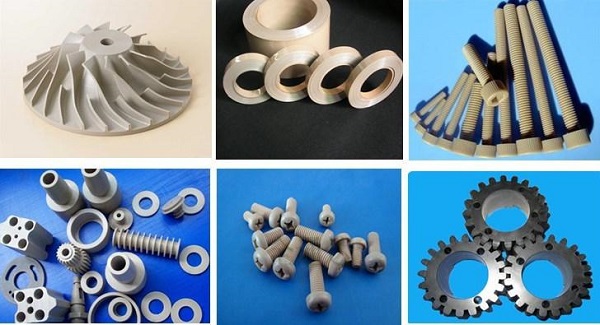
| PEEK (Polyetheretherketone) | High strength, biocompatible, radiolucent (does not block X-rays) | Orthopedic implants, spinal cages |
| PEKK | Similar to PEEK, easier processing | Dental implants, cranial plates |
| Resins (biocompatible) | Smooth surface, high detail | Surgical guides, dental models |
Metals
| Material | Properties | Applications |
|---|---|---|
| Titanium (Ti6Al4V) | High strength-to-weight, biocompatible | Hip replacements, spinal implants, dental implants |
| Cobalt-Chrome | Wear-resistant, high strength | Joint replacements, dental crowns |
| Stainless Steel (316L) | Corrosion-resistant, cost-effective | Surgical instruments, temporary implants |
Bio-inks for Tissue Engineering
Bio-inks combine:
- Hydrogels (alginate, gelatin, collagen) as structural scaffolds
- Living cells (stem cells, differentiated cells)
- Growth factors to guide tissue formation
What Are the Regulatory and Safety Considerations?
Medical 3D printing is not unregulated. Devices must meet standards before clinical use.
Regulatory Bodies
- FDA (USA) : Classifies 3D printed medical devices based on risk
- EMA (Europe) : Similar oversight
- ISO 13485 : Quality management for medical devices
Biocompatibility Testing
Materials must pass:
- ISO 10993 series: Cytotoxicity, sensitization, irritation, systemic toxicity
- Sterilization validation: Devices must be sterilizable (autoclave, gamma, EtO)
Quality Control
Every printed part must meet specifications:
- Dimensional accuracy: Within 0.1–0.5 mm for surgical models
- Mechanical properties: Tensile strength, fatigue resistance
- Sterility: No bacterial contamination
Real example: A 3D printed titanium spinal implant required 18 months of testing, including mechanical load testing, biocompatibility studies, and clinical trials before FDA approval.
Yigu Technology’s Perspective
As a custom manufacturer of non-standard plastic and metal products, Yigu Technology supports medical 3D printing applications. We provide:
- Biocompatible PEEK and titanium components for implants
- Surgical guide printing in certified materials
- Custom prosthetics with patient-specific design
- Anatomical models from CT/MRI data
We work with medical institutions to ensure:
- Material traceability: Full documentation of material sources
- Process validation: Consistent, repeatable prints
- Regulatory compliance: ISO 13485 quality systems
In our experience, the most successful medical 3D printing projects are those where clinical need meets engineering capability. Collaboration between surgeons, engineers, and manufacturers is essential.
Conclusion
3D printing in medical applications is saving lives, improving outcomes, and reducing costs. Custom prosthetics fit perfectly where standard devices caused pain. Patient-specific surgical models allow rehearsals before real operations, reducing complications. Tissue engineering advances promise to one day print replacement organs.
The technology is not without challenges—regulatory oversight, material development, and quality control remain critical. But the trajectory is clear: 3D printing is becoming an essential tool in medicine, delivering personalized care that was unimaginable a decade ago.
FAQ
What are the most common materials used in 3D printing for medical applications?
Common materials include biocompatible plastics (PLA for non-load-bearing, PEEK for implants), metals (titanium, cobalt-chrome, stainless steel), and bio-inks (hydrogels with living cells). Material selection depends on application: strength requirements, biocompatibility, and sterilization method.
How accurate are 3D printed surgical models?
Typical accuracy is 0.1–0.5 mm. This is sufficient for surgical planning in most cases. Accuracy depends on original imaging resolution (CT/MRI), printer precision, and post-processing. High-resolution printers achieve ±0.05 mm for detailed anatomical features.
Is 3D printed medical equipment safe to use?
Yes, when manufactured to regulatory standards. Devices must pass biocompatibility testing (ISO 10993) , meet mechanical specifications, and be validated for sterilization. Regulatory bodies (FDA, EMA) review and approve devices before clinical use. Not all 3D printed medical devices are safe—only those produced under quality systems with certified materials.
Can 3D printing create organs for transplantation?
Not yet, but progress is rapid. Researchers have printed functional liver tissue, kidney structures, and beating heart patches. The challenges include vascularization (creating blood vessels), long-term function, and regulatory approval. Many experts predict the first transplantable 3D printed organs within 10–15 years.
How does 3D printing reduce surgical risks?
Surgeons use patient-specific models to rehearse procedures, identify anatomical variations, and plan optimal approaches. Studies show this reduces complication rates by 20–30% in complex surgeries. Models also reduce operating time (less time under anesthesia) and improve surgical precision.
Contact Yigu Technology for Custom Manufacturing
Yigu Technology specializes in non-standard plastic and metal custom manufacturing for medical applications. We produce biocompatible implants, surgical guides, anatomical models, and custom prosthetics. Our facilities meet ISO 13485 quality standards. Contact us today to discuss your medical 3D printing project.