Introduction
You have a great idea for a 3D printed project. You've designed the model. You're ready to print. But then comes the question: how much will it cost? The answer isn't simple. Plastic 3D printing costs vary wildly based on material, printer type, part size, complexity, and dozens of other factors. A small keychain might cost $1 in material. A large functional prototype could cost $200. Understanding these costs helps you budget accurately, choose the right materials, and avoid surprises. This guide breaks down everything that affects the cost of 3D printing plastic, from material prices to printer operation, and gives you practical tools for estimating your project's cost.
What Factors Affect the Cost of 3D Printing Plastic?
Type of Plastic Material
The material you choose is the most significant cost factor. Different plastics have different price points based on raw materials, production complexity, and properties.
| Material | Cost per kg | Key Properties | Typical Applications |
|---|---|---|---|
| PLA | $20–$50 | Biodegradable, easy to print, low heat resistance | Prototypes, decorative items, hobbyist projects |
| ABS | $30–$60 | Strong, heat resistant, durable | Functional parts, automotive components, electronics enclosures |
| PETG | $40–$80 | Tough, chemical resistant, slightly flexible | Mechanical parts, food containers, outdoor items |
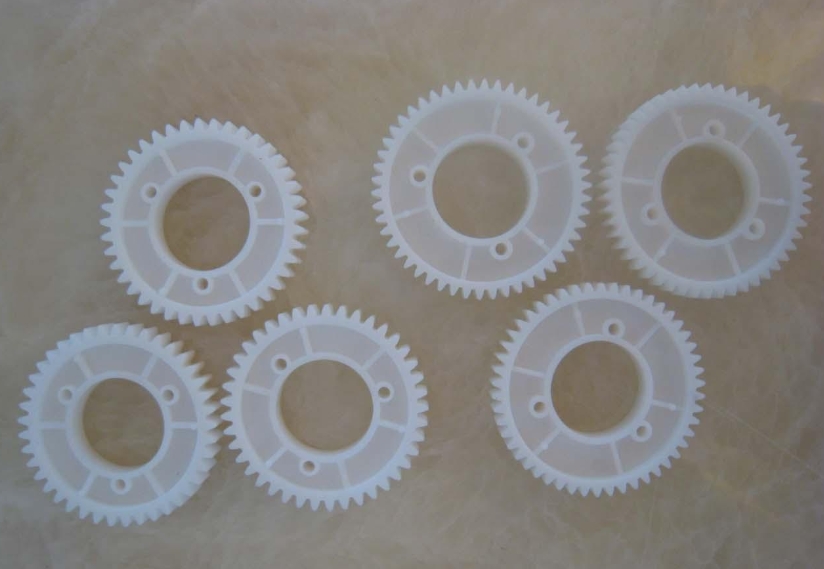
| Nylon | $50–$100 | Strong, durable, wear resistant | Gears, bearings, functional parts |
| TPU | $60–$120 | Flexible, elastic, rubber-like | Phone cases, gaskets, wearable devices |
| Polycarbonate | $60–$100 | Very strong, heat resistant, impact resistant | Engineering applications, protective gear |
| PEEK | $300–$500+ | High-performance, high-temperature | Aerospace, medical implants, industrial |
PLA is the cheapest because:
- Raw materials (corn starch, sugarcane) are renewable and inexpensive
- Production process is straightforward
- Wide availability, many manufacturers
ABS costs more because:
- Petroleum-based raw materials
- Requires more precise manufacturing
- Better mechanical properties justify higher price
Specialty materials (nylon, TPU, polycarbonate) cost more due to:
- Complex production processes
- Specialized properties (flexibility, strength, heat resistance)
- Smaller production volumes
Printer Type and Quality
The printer you use affects cost in two ways: equipment investment and per-print operating costs.
Consumer-grade printers ($200–$5,000):
- Lower initial investment
- Slower print speeds
- Less reliable, higher failure rates
- Limited material compatibility
- Per-print cost: mostly material + electricity
Industrial-grade printers ($10,000–$500,000+):
- High initial investment (often amortized over many prints)
- Faster speeds
- Higher reliability, lower failure rates
- Wide material range
- Per-print cost: material + machine time + labor + overhead
For occasional use, consumer printers or service bureaus are most cost-effective. For high-volume production, industrial machines may be justified.
Print Volume
Larger parts use more material. Simple geometry:
Material needed = Part volume × Material density
- PLA density: ~1.24 g/cm³
- ABS density: ~1.04 g/cm³
- PETG density: ~1.27 g/cm³
Example:
- Small figurine (50 cm³): ~62g PLA = $1.24–$3.10
- Large bracket (500 cm³): ~620g PLA = $12.40–$31.00
Print Complexity
Complexity affects cost through:
- Print time: Intricate designs take longer to print. More time = more machine hours = higher cost.
- Support material: Overhangs need supports. Supports use extra material and require removal time.
- Infill: Higher infill percentages use more material. 100% infill uses 3–5x more material than 20% infill.
Example: Two parts with same bounding box (100mm cube):
- Simple cube: 1 hour print, no supports, 20% infill
- Complex lattice: 8 hours print, extensive supports, 50% infill
Cost difference: 8x or more for same material volume.
Post-Processing
Printed parts rarely go straight to use. Post-processing adds cost:
| Post-Processing | Typical Added Cost | When Needed |
|---|---|---|
| Support removal | $5–$50 | Most FDM prints with overhangs |
| Sanding/polishing | $10–$100+ per hour | When smooth surfaces required |
| Painting | $20–$200+ | Aesthetic finishes, color matching |
| Vapor smoothing | $20–$100 | For ABS parts needing glossy finish |
| Assembly | $10–$100+ | Multi-part prints needing joining |
Quantity
Quantity affects per-unit cost through economies of scale:
| Quantity | Per-Unit Cost Behavior | Typical Savings |
|---|---|---|
| 1 | Full price—setup costs covered by single part | Baseline |
| 10 | Some sharing of setup, batch printing possible | 10–30% discount |
| 50 | Efficient nesting, reduced handling per part | 30–50% discount |
| 100 | Significant economies of scale | 50–70% discount |
How Much Do Different Plastics Cost Per Kilogram?
| Plastic | Cost per kg | Cost per cm³ | Relative Cost |
|---|---|---|---|
| PLA | $20–$50 | $0.025–$0.062 | 1x (baseline) |
| ABS | $30–$60 | $0.031–$0.062 | ~1.2x |
| PETG | $40–$80 | $0.051–$0.102 | ~2x |
| Nylon | $50–$100 | $0.062–$0.124 | ~2.5x |
| TPU | $60–$120 | $0.076–$0.152 | ~3x |
| Polycarbonate | $60–$100 | $0.076–$0.127 | ~2.5x |
| PEEK | $300–$500+ | $0.38–$0.64+ | ~10x+ |
Why the Range?
Within each material category, prices vary based on:
- Brand: Premium brands charge more for quality assurance
- Color: Standard colors cheapest; specialty colors may cost more
- Diameter tolerance: Tighter tolerances = higher cost
- Spool size: Larger spools often have lower per-kg cost
- Quantity: Bulk discounts for multiple spools
Cost per Printed Part Example
Let's calculate material cost for a typical part:
Part: 100 cm³ volume (about the size of a small smartphone)
Material: PLA (density 1.24 g/cm³)
Material mass: 100 cm³ × 1.24 g/cm³ = 124 g = 0.124 kg
Material cost:
- PLA at $25/kg: 0.124 kg × $25 = $3.10
- PLA at $50/kg: 0.124 kg × $50 = $6.20
Total cost including overhead (machine time, electricity, etc.):
- Consumer printer: $5–$10 total
- Service bureau: $20–$50 total
How Do You Calculate the Cost of a 3D Printed Plastic Part?
Step 1: Determine Material Volume
Use slicing software to get an accurate volume estimate. Most slicers report:
- Filament length needed
- Estimated weight
- Print time
Example from Cura/PrusaSlicer:
- Part volume: 85 cm³
- Filament length: 8.5m (1.75mm PLA)
- Estimated weight: 105g
- Print time: 4 hours
Step 2: Calculate Material Cost
Material cost = Weight (kg) × Price per kg
105g = 0.105 kg
PLA at $30/kg: 0.105 × $30 = $3.15
Step 3: Add Machine Time Cost
For in-house printing:
- Electricity: 0.1–0.5 kWh per hour × $0.15/kWh = negligible ($0.02–$0.10 per hour)
- Printer depreciation: Cost of printer ÷ estimated print hours over lifetime
Example:
- Printer cost: $500
- Estimated lifetime: 2,000 hours
- Depreciation: $0.25 per hour
- 4-hour print: $1.00 depreciation
For service bureau printing, machine time is built into their pricing.
Step 4: Add Post-Processing Costs
- Support removal: DIY (free) or service ($10–$50)
- Sanding/painting: DIY or service ($20–$200+)
Step 5: Add Any Other Costs
- Design revisions: If you need help modifying the file
- Shipping: For service bureau prints
- Failed prints: Factor in 10–20% for learning curve
Total Cost Example
| Cost Component | In-House | Service Bureau |
|---|---|---|
| Material | $3.15 | $3.15 |
| Machine time | $1.00 (depreciation) | Included |
| Electricity | $0.10 | Included |
| Post-processing | DIY (free) | $15 (support removal + light sanding) |
| Shipping | $0 | $8 |
| Total | $4.25 | $26.15 |
How Can You Reduce 3D Printing Plastic Costs?
Design Optimization
- Reduce infill: 20% is often sufficient for non-structural parts
- Hollow out solid areas: Use shells with internal lattice
- Eliminate unnecessary details: Simplify where function allows
- Reduce supports: Design self-supporting angles (<45° overhangs)
Material Selection
- Use PLA when possible: It's cheapest and easiest to print
- Match material to requirements: Don't over-specify
- Buy in bulk: Larger spools have lower per-kg cost
- Consider quality: Cheap filament may cause failed prints, wasting more
Print Optimization
- Nest multiple parts: Print several parts at once
- Optimize orientation: Reduce height to minimize layers
- Use proper settings: Correct temperature, speed, retraction reduces failures
- Recycle failed prints: Some materials can be recycled (though not back into filament easily)
Batch Printing
- Combine orders: Print all needed parts at once
- Share with others: Split spool costs with friends
- Use services for occasional prints: Cheaper than buying printer for one project
What Are Typical Price Ranges for Common 3D Printed Plastic Parts?
| Item | Typical Size | Material | Material Cost | Total Cost (Service) |
|---|---|---|---|---|
| Keychain | 50 x 30 x 5 mm | PLA | $0.20–$0.50 | $5–$15 |
| Phone case | 150 x 80 x 10 mm | TPU or PLA | $2–$5 | $20–$50 |
| Small figurine | 100 mm tall | PLA or resin | $1–$3 | $15–$40 |
| Functional bracket | 100 x 100 x 50 mm | ABS or PETG | $3–$8 | $30–$80 |
| Large prototype | 300 x 200 x 100 mm | PLA or ABS | $10–$30 | $100–$300 |
| Gear set | Various | Nylon | $5–$15 | $50–$150 |
| Cosplay armor piece | 500 x 300 x 100 mm | PLA | $20–$50 | $200–$500+ |
These are estimates. Actual prices vary by service, location, and specific requirements.
How Does Yigu Technology Approach 3D Printing Plastic Costs?
As a non-standard plastic and metal products custom supplier, Yigu Technology helps clients control costs while achieving quality results.
Our Approach
Material guidance: We recommend cost-effective materials that still meet your requirements. If PLA works, we'll suggest it. If you need nylon's strength, we'll explain why.
Design optimization: Our engineers review your files and suggest changes that reduce material use, minimize supports, and shorten print time—all reducing cost.
Volume discounts: For larger orders, we offer bulk pricing. The more you print, the lower the per-part cost.
Transparent quotes: We break down costs so you understand what you're paying for—material, machine time, post-processing, shipping. No hidden fees.
Our Experience
Startup client: Needed 50 prototypes of a new product. Initial design used 40% infill unnecessarily. We suggested 20% infill with optimized wall thickness—saved 30% on material cost without affecting performance.
Hobbyist: Wanted a single custom figurine. We recommended PLA instead of their requested ABS. Result: 40% lower cost, faster turnaround, and the part looked great.
Business: Needed 200 functional brackets in nylon. We optimized orientation to print 4 at once instead of 2—cut production time in half, reduced per-part cost by 35%.
Conclusion
3D printing plastic costs vary widely based on:
- Material: PLA $20–$50/kg, specialty materials $100+/kg
- Part size: Larger parts use more material
- Complexity: Supports, infill, and print time add cost
- Printer type: Consumer vs. industrial affects per-print cost
- Quantity: Volume discounts reduce per-unit cost
- Post-processing: Finishing adds time and money
Typical ranges:
- Small simple parts: $5–$20 via service
- Medium parts: $20–$80
- Large complex parts: $100–$500+
Cost-saving strategies:
- Choose PLA when possible
- Optimize design (reduce infill, hollow out, minimize supports)
- Batch print multiple parts
- Use services for occasional prints
- Get quotes from multiple providers
Understanding these factors helps you budget accurately, avoid surprises, and get the best value for your 3D printing projects.
Frequently Asked Questions
Q1: Which 3D printing plastic is the cheapest?
PLA (Polylactic Acid) is generally the cheapest, ranging from $20–$50 per kilogram. It's ideal for hobbyist projects, prototypes, and decorative items where high heat resistance isn't required.
Q2: Does the color of 3D printing plastic affect the cost?
For most common colors, no. Manufacturers produce standard colors at similar cost. Some specialty or limited-edition colors might be slightly more expensive due to unique pigments or smaller production runs, but the difference is usually minimal.
Q3: How can I accurately calculate the cost of a 3D printed plastic object?
- Determine part volume using slicing software
- Calculate material mass (volume × material density)
- Multiply by material cost per kg
- Add machine time (depreciation + electricity)
- Add post-processing costs
- Factor in any failed prints (10–20% for learning curve)
Q4: Is it cheaper to buy a 3D printer or use a service?
For occasional use (a few prints per year), services are cheaper. No equipment cost, no learning curve, no maintenance. For frequent printing (multiple times per week), owning a printer becomes more economical. The breakeven point depends on how much you print.
Q5: How much does it cost to 3D print a small figurine?
Material cost: $1–$3 for PLA. Total cost from a service: $15–$40 including machine time, post-processing, and shipping.
Q6: Can I reduce costs by using less infill?
Yes. Reducing infill from 100% to 20% can cut material use by 80% for non-structural parts. For most prototypes and decorative items, 15–20% infill is sufficient.
Q7: Why are some 3D printing plastics so expensive?
Specialty materials like nylon, TPU, and polycarbonate cost more due to:
- Complex production processes
- Specialized properties (flexibility, strength, heat resistance)
- Smaller production volumes
- Higher raw material costs
Contact Yigu Technology for Custom Manufacturing
Ready to get a fair, transparent 3D printing plastic cost for your project? At Yigu Technology, we provide detailed quotes with full breakdowns—no hidden fees, no surprises. Our team helps you select the right materials, optimize designs for cost, and deliver quality parts on schedule.
Visit our website to see our capabilities. Contact us today for a free consultation and detailed quote. Let's bring your designs to life at a fair price.