Discover how New Zealand businesses use 3D printing services for manufacturing, healthcare, and creative projects. Real cases, expert tips, and how to choose the right provider.
Introduction
Think 3D printing is just for hobbyists making plastic toys? Think again. Across New Zealand, 3D printing services are quietly revolutionising how businesses operate—from racing engine manufacturers in Auckland to jewelers in Wellington and surgeons in Dunedin. The technology has matured beyond prototyping into full-scale production, custom medical solutions, and artistic expression that wasn't possible five years ago.
This guide walks you through the real-world applications of 3D printing in NZ, backed by actual案例 and data. You'll learn how different industries leverage this technology, what to look for in a service provider, and whether 3D printing makes sense for your specific needs. No fluff—just practical insights from someone who's been in the trenches of product development and custom manufacturing.
How Is 3D Printing Reshaping Manufacturing in NZ?
From Racing Engines to Production Lines
The manufacturing sector has embraced 3D printing not as a replacement for traditional methods, but as a powerful complement. Take Hartley Engines, a renowned racing engine manufacturer in New Zealand. They've integrated 3D printing directly into their production workflow—not just for prototypes, but for functional engine components.
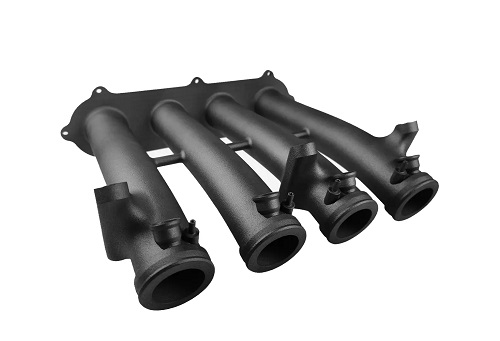
Here's what they did differently: Instead of machining intake manifolds from metal blocks (which takes weeks and wastes material), they now print these parts using carbon-fiber-reinforced nylon. The result? A significant reduction in heat transfer through the intake system. Cooler air enters the engine, combustion improves, and performance jumps—all because 3D printing allowed geometries that traditional manufacturing simply couldn't achieve.
Key benefits manufacturers report:
| Benefit | Real Impact |
|---|---|
| Complex geometries | Create internal channels and lattice structures impossible with CNC machining |
| Faster iterations | Test design variations in days instead of months |
| Lower inventory costs | Print spare parts on-demand, not in bulk |
| Material efficiency | Reduce waste by up to 90% compared to subtractive manufacturing |
The Numbers Don't Lie
Research from the University of Auckland tracked manufacturers who adopted 3D printing for prototyping and found they reduced product development cycles by 30–40% on average. That's not incremental improvement—that's game-changing speed.
One local manufacturer told us they went from "design to first functional test" in three weeks using 3D-printed prototypes, compared to four months when they relied on traditional tooling. When you're bringing new products to market, that speed advantage translates directly to revenue.
What Can 3D Printing Do for Healthcare in NZ?
Custom Prosthetics That Actually Fit
Healthcare might be where 3D printing delivers the most profound human impact. The Auckland District Health Board has been pioneering customized prosthetics using 3D scanning and printing technology.
Here's the traditional problem: Off-the-shelf prosthetics fit nobody perfectly. Patients endure discomfort, skin irritation, and limited functionality. The 3D-printed approach flips this entirely. Clinicians scan the patient's residual limb, design a socket that matches every contour, and print it in materials that combine flexibility where needed with rigidity where it matters.
One patient's experience: After receiving a 3D-printed prosthetic leg, they reported being able to walk for hours without discomfort—something they hadn't done in years with their conventional prosthetic. The custom fit wasn't just about comfort; it enabled better weight distribution and more natural gait.
Beyond Prosthetics: Surgical Models and Implants
Medical education has also transformed. At the University of Otago, researchers now create 3D-printed organ models for teaching anatomy. These aren't just visual aids—they're printed with materials that mimic the texture and response of real tissue. Medical students can practice surgical techniques on models that bleed (simulated) and cut like the real thing.
A survey of NZ medical professionals found that over 80% believe 3D-printed anatomical models significantly improve surgical planning and patient education. When patients can hold a exact replica of their own organ and see exactly what the surgeon plans to do, anxiety drops and comprehension improves.
Emerging applications:
- Custom surgical guides that fit precisely to a patient's bone structure
- Patient-specific implants for craniofacial reconstruction
- Bioprinting research—though still experimental, NZ researchers are exploring printed tissues
How Are Artists and Designers Using 3D Printing in NZ?
Jewelry With Impossible Detail
Wellington jewelry designer Jane Thompson represents a growing community of creatives who've abandoned traditional limitations. Her signature pieces feature lace-like patterns so delicate they'd be impossible to create by hand—at least not without months of labour and constant risk of breakage.
With 3D printing, Jane designs intricate patterns in CAD software, prints them in wax or resin, and then uses traditional casting techniques to transform them into precious metals. The result? Pieces that are simultaneously lightweight, structurally sound, and visually stunning. One of her necklaces, featuring interwoven geometric patterns that appear to float, recently sold at auction for four times her typical price.
Large-Scale Installations and Public Art
At a recent Christchurch art exhibition, visitors encountered a kinetic sculpture that moved and shifted in response to air currents. What they didn't see was the hundreds of interlocking 3D-printed components that made the movement possible.
The artist explained that without 3D printing, the project would have required custom machining of each moving part—budget: over $50,000, timeline: impossible. With 3D printing, total material cost was under $2,000, and assembly took two weeks.
Designer survey findings:
- 40% more innovative concepts brought to life since adopting 3D printing
- 70% faster prototype iterations compared to traditional model-making
- 60% reduction in design-to-market time for new products
How to Choose the Right 3D Printing Service in NZ?
What Equipment Should They Have?
Not all 3D printers are created equal. The technology your provider uses determines what they can actually produce for you. Here's a practical breakdown:
| Printer Type | Best For | Resolution | Materials |
|---|---|---|---|
| FDM | Large prototypes, functional parts | 0.1–0.4 mm | PLA, ABS, nylon, carbon-fiber composites |
| SLA | Jewelry, dental models, high-detail art | 0.025–0.1 mm | Photopolymers, castable resins |
| SLS | Engineering parts, complex geometries | 0.1–0.2 mm | Nylon, TPU, composites |
| Metal printing | Aerospace, automotive, medical implants | 0.05–0.1 mm | Stainless steel, titanium, aluminum |
Red flags to watch for:
- Provider can't explain why they'd recommend one technology over another
- Limited material options without clear reasoning
- No examples of similar projects in their portfolio
Does Experience Really Matter?
Absolutely. A provider who's been printing for five years has already made the mistakes you don't want to make. They understand design for additive manufacturing—how to orient parts for strength, where to add supports, which materials actually work for your application.
Check their portfolio for:
- Projects similar to yours
- Evidence of problem-solving (not just pretty prints)
- Industry-specific experience (medical, aerospace, etc.)
One cautionary tale: A local startup chose the cheapest provider they could find for a critical product component. The parts looked fine initially but failed under load because the provider didn't understand layer adhesion requirements. The startup lost three months and $15,000. The lesson? Price matters, but expertise matters more.
What About Cost, Accuracy, and Materials?
Cost Breakdown: What Should You Expect?
3D printing pricing in NZ varies significantly based on several factors:
- Material choice: Basic PLA runs $50–100 per kg; titanium can exceed $1,000 per kg
- Part size: Larger parts consume more material and machine time
- Complexity: Intricate designs may require support structures and slower print speeds
- Post-processing: Sanding, dyeing, or sterilisation adds labour costs
Typical price ranges:
- Small plastic part (FDM): $5–50
- Detailed resin prototype (SLA): $50–300
- Functional nylon part (SLS): $100–500
- Metal component: $300–2,000+
Accuracy: How Precise Is Precise Enough?
For many applications, standard accuracy is perfectly adequate. A bracket that holds a shelf doesn't need micron-level precision. But if you're printing dental implants or interlocking mechanical parts, accuracy becomes critical.
What different technologies deliver:
- FDM: Good for large parts where ±0.2mm is acceptable
- SLA: Excellent for fine features, smooth surfaces (jewelry, models)
- SLS: No supports needed, good mechanical properties
- Metal printing: Aerospace-grade precision with proper post-processing
Materials Available in NZ
The New Zealand market now offers an impressive range of printing materials:
- Standard plastics: PLA, ABS, PETG—for prototypes and consumer products
- Engineering materials: Nylon, polycarbonate, carbon-fiber composites—for functional parts
- Flexible materials: TPU, TPE—for gaskets, grips, wearable items
- Medical-grade: Biocompatible resins, titanium alloys—for implants and surgical guides
- Specialty: Castable wax for jewelry, ceramic-filled resins, high-temperature materials
Yigu Technology's View on 3D Printing in NZ
As a non-standard plastic and metal products custom supplier, we've watched New Zealand's 3D printing landscape evolve with keen interest. The technology addresses precisely the challenges our clients face: the need for custom solutions without massive tooling investments, the desire to iterate quickly, and the demand for complex geometries that traditional methods can't deliver.
We see three areas where 3D printing and custom manufacturing converge powerfully:
- Rapid prototyping of non-standard components before committing to production tooling
- Bridge manufacturing while traditional tooling is being produced
- Complex custom parts that combine multiple functions into single printed pieces
The opportunity isn't either/or—it's both/and. Smart manufacturers use 3D printing for what it does best (complexity, customization, speed) and traditional methods for what they do best (volume, specific materials, surface finishes).
We're actively exploring how to integrate 3D printing into our custom manufacturing workflow, particularly for clients who need prototypes of non-standard plastic or metal parts quickly and cost-effectively. The goal isn't to replace what works—it's to add another powerful tool to the toolbox.
Conclusion
3D printing services in New Zealand have matured far beyond the hobbyist stage. From Hartley Engines boosting racing performance with carbon-fiber printed components to Auckland hospitals creating life-changing custom prosthetics, the technology delivers real, measurable value across industries.
The key takeaways:
- For manufacturers: 3D printing cuts development time by 30–40% and enables geometries you simply can't machine
- For healthcare: Custom solutions improve outcomes—over 80% of medical professionals see significant benefits
- For creatives: 40% more innovative designs reach the market, faster and cheaper than traditional methods
- For buyers: Choose providers based on equipment, experience, and proven results—not just price
Whether you're prototyping a new product, manufacturing custom components, or creating art that pushes boundaries, 3D printing services in NZ offer capabilities that were science fiction a decade ago. The technology is proven, the providers are experienced, and the results speak for themselves.
FAQ
What types of materials can be used for 3D printing in NZ?
New Zealand providers offer an extensive range: common plastics like PLA and ABS for prototyping; engineering materials like nylon and carbon-fiber composites for functional parts; flexible materials like TPU; medical-grade options including biocompatible resins and titanium; plus specialty materials for jewelry casting and high-temperature applications. Material availability continues expanding as the market grows.
How accurate are 3D printing services in NZ?
Accuracy depends on the technology. FDM printers typically achieve 0.1–0.4mm—fine for most prototypes. SLA printers reach 0.025mm precision, ideal for jewelry and detailed medical models. SLS offers 0.1–0.2mm with excellent mechanical properties. Metal printing can achieve aerospace-grade accuracy with proper calibration and post-processing. Always discuss your tolerance requirements with providers upfront.
What is the typical cost of 3D printing services in NZ?
Costs vary widely based on material, size, complexity, and post-processing needs. Small plastic parts start around $5–50. Detailed resin prototypes run $50–300. Functional nylon parts typically cost $100–500. Metal components range from $300–2,000+. Most providers offer free quotes—send your file and specifications for accurate pricing.
How long does 3D printing take in New Zealand?
Simple parts can print in hours; complex projects may take several days. Most service providers quote 3–7 business days turnaround for standard orders, plus shipping time. Rush services are often available for urgent projects at additional cost.
Can 3D printing replace injection molding for production?
Generally, no—for high volumes, injection molding remains more cost-effective. However, 3D printing excels for low-volume production (under 1,000 units), custom parts, and geometries impossible to mold. Many businesses use both: 3D printing for prototypes and initial runs, then transition to molding once design is finalised and volume justifies tooling investment.
Contact Yigu Technology for Custom Manufacturing
Need help turning your concept into reality? At Yigu Technology, we specialise in non-standard plastic and metal product manufacturing—from prototypes to production runs. Whether you're exploring 3D printing for complex components or need traditional custom fabrication, our team brings decades of engineering experience to your project.
We offer:
- Design consultation and DFM analysis
- Prototyping through multiple methods
- Custom manufacturing for unique requirements
- Hybrid approaches combining 3D printing with traditional techniques