Introduction
You have a product idea. You need a prototype to test, refine, and present. But before you start, one question looms: how much will it cost? The answer is never simple. Rapid prototyping costs vary widely based on materials, technology, design complexity, and quantity. A simple plastic part might cost $10 to print. A complex metal component could run $5,000 or more. Understanding these variables is essential for managing your development budget. At Yigu Technology, we help clients navigate these trade-offs daily. This article breaks down the factors that drive rapid prototyping costs, compares different methods, and offers practical strategies to optimize your budget without sacrificing quality.
What Factors Drive Rapid Prototyping Costs?
Material Selection
Materials are often the largest variable in prototyping cost. The choice between standard plastics, engineering plastics, and metals creates wide cost ranges.
| Material Category | Examples | Typical Cost Range | Best For |
|---|---|---|---|
| Standard plastics | PLA, basic resins | $20–$50/kg | Concept models, form studies |
| Engineering plastics | ABS, nylon, polycarbonate | $50–$150/kg | Functional testing, durable parts |
| High-performance plastics | PEEK, PEKK, glass-filled nylon | $200–$500/kg | Aerospace, medical, high-temperature applications |
| Metals (standard) | Aluminum, steel | $100–$300/kg | Automotive, structural parts |
| Metals (premium) | Titanium, Inconel | $1,000–$3,000/kg | Aerospace, medical implants |
Example: A small plastic bracket prototype in PLA might cost $5–$10 in material. The same bracket in PEEK for high-temperature testing could cost $50–$100 in material alone.
Prototyping Technology
Different technologies have different cost structures.
| Technology | Equipment Cost | Material Cost | Labor/Operation Cost | Best For |
|---|---|---|---|---|
| FDM 3D printing | Low ($200–$5,000) | Low ($20–$50/kg) | Low | Simple concepts, low-cost parts |
| SLA 3D printing | Moderate ($3,500–$20,000) | Moderate ($50–$200/L) | Moderate | High detail, smooth surfaces |
| SLS 3D printing | High ($50,000–$200,000) | High ($100–$300/kg) | Moderate | Functional parts, complex geometries |
| CNC machining | High ($50,000–$500,000) | Moderate–High | High (skilled operators) | Precision parts, metals, tight tolerances |
| Injection molding | Very high (mold: $2,000–$50,000) | Low per part | Low per part (after mold) | High volumes, production-like parts |
Example: A small, detailed jewelry prototype might cost $30–$80 with SLA. The same part machined in metal could cost $500–$2,000.
Design Complexity
Simple designs cost less. Complex designs cost more.
| Complexity Factor | Cost Impact | Example |
|---|---|---|
| Simple geometry | Low | Cube, cylinder, basic bracket |
| Moderate complexity | Moderate | Organic shapes, simple internal features |
| High complexity | High | Undercuts, internal channels, fine details, thin walls |
Example: A consumer electronics company simplified a smartwatch prototype design, removing unnecessary grooves and patterns. The cost dropped from $500 per unit to $200 per unit—a 60% reduction—due to shorter printing time and standard materials.
Quantity
Fixed costs (design, setup, programming) are spread across more units as quantity increases.
| Quantity | Cost Per Unit (Typical) | Notes |
|---|---|---|
| 1–10 | High | Fixed costs dominate |
| 10–100 | Moderate | Setup costs amortized |
| 100–1,000 | Low–Moderate | Economies of scale begin |
| 1,000+ | Low | Injection molding becomes cost-effective |
Example: A single 3D printed prototype might cost $80. Producing 100 units might drop the per-unit cost to $52 as fixed costs spread across the batch.
How Do Different Prototyping Methods Compare?
3D Printing (FDM, SLA, SLS)
FDM is the lowest-cost entry point. Entry-level printers start at $200–$1,500. A small prototype using PLA filament might cost $10–$30 total.
SLA offers higher detail at moderate cost. Desktop SLA printers start at $3,500. A detailed jewelry prototype might cost $30–$80 in resin and operation.
SLS delivers functional strength at higher cost. Industrial SLS systems cost $100,000+. A complex nylon part may cost $200–$500 depending on size and complexity.
CNC Machining
CNC machining costs are driven by machining time. Industrial machines cost $50,000–$500,000. Hourly rates (including machine, labor, overhead) typically range from $50–$150 per hour.
A complex metal part requiring 10–20 hours of machining might cost $500–$2,000 in machining alone, plus material.
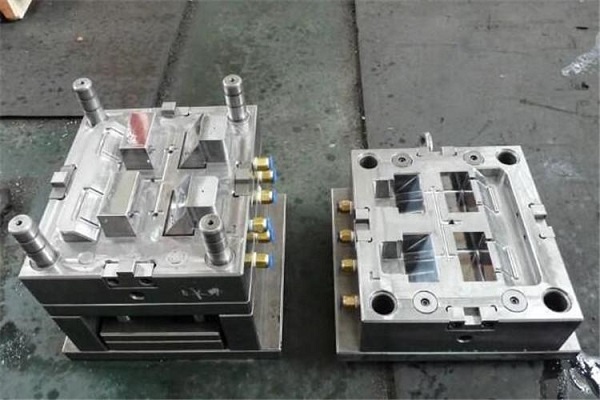
Injection Molding
Injection molding has high upfront costs but low per-part costs for high volumes.
| Mold Complexity | Mold Cost | Per-Part Cost (1,000+ units) |
|---|---|---|
| Simple | $2,000–$5,000 | $0.50–$2 |
| Moderate | $5,000–$15,000 | $2–$5 |
| Complex | $15,000–$50,000+ | $5–$10+ |
For 1–100 parts, injection molding is rarely cost-effective. For 10,000+ parts, it is often the lowest-cost option.
Vacuum Casting
Vacuum casting fills the gap between 3D printing and injection molding. A small batch of 10–50 parts might cost $50–$200 per part, including master pattern and silicone mold. It is ideal for small batches requiring production-like materials.
How Can You Estimate Your Prototyping Cost?
Step-by-Step Approach
- Define material: Identify the material needed for your testing objectives.
- Select technology: Match technology to your precision, complexity, and quantity requirements.
- Estimate volume: Calculate the approximate size of your part to estimate material usage.
- Consider complexity: Factor in additional time or cost for intricate features.
- Get quotes: Obtain estimates from multiple providers.
Cost Estimation Example
| Component | Simple PLA Prototype | Complex Metal Prototype |
|---|---|---|
| Material | PLA: $0.05/cm³ | Titanium: $2.00/cm³ |
| Part volume | 50 cm³ | 100 cm³ |
| Material cost | $2.50 | $200 |
| Technology | FDM | CNC machining |
| Machine time | 3 hours | 12 hours |
| Operation cost | $15 | $1,200 ($100/hr) |
| Total | $17.50 | $1,400 |
How Can You Reduce Rapid Prototyping Costs?
Simplify the Design
Complex designs increase cost. Focus on core functionality and eliminate unnecessary features.
Example: A consumer electronics company simplified a smartwatch prototype by removing decorative grooves and patterns. Cost dropped from $500 to $200 per unit—a 60% reduction.
Tips:
- Avoid unnecessary undercuts and internal features
- Use standard wall thicknesses
- Design for the manufacturing process
- Consider where detail is truly needed
Optimize Material Usage
Use only what you need.
- Choose appropriate stock sizes: For CNC machining, select material blocks close to final dimensions to reduce waste.
- Recycle waste material: Some 3D printing waste can be recycled. A startup reduced material costs by 30% by recycling PLA filament waste.
- Consider material alternatives: If a part does not require high-temperature resistance, use standard resin instead of high-temperature resin.
Choose the Right Technology for the Stage
Use low-cost methods early; reserve expensive methods for final validation.
| Development Stage | Recommended Technology | Cost Strategy |
|---|---|---|
| Concept exploration | FDM, foam, clay | Lowest cost; rough models |
| Form and fit testing | SLA, SLS | Moderate cost; accurate geometry |
| Functional testing | SLS, CNC | Higher cost; production-like materials |
| Final validation | CNC, injection molding | Production-equivalent materials |
Select the Right Service Provider
Price is important, but so is quality and experience.
- Get multiple quotes: Compare pricing across providers.
- Review portfolios: Look for experience with similar projects.
- Check quality systems: ISO 9001 certification indicates process discipline.
- Ask about design feedback: Experienced providers often suggest cost-saving design modifications.
Example: A company switched to a more experienced provider who suggested design modifications that reduced cost by 20% and improved production efficiency.
Plan for Iteration
Budget for multiple prototype cycles. The first prototype often reveals issues that require refinement.
| Iteration | Purpose | Cost Strategy |
|---|---|---|
| Iteration 1 | Validate concept, identify major issues | Low-cost materials, fast methods |
| Iteration 2 | Test fixes, refine design | Moderate-cost materials |
| Iteration 3 | Final validation | Production-equivalent materials |
Yigu Technology's Perspective
As a custom manufacturer of plastic and metal parts, Yigu Technology helps clients optimize prototyping costs daily.
What we have learned:
- Start simple, add complexity later: Use low-cost materials for early iterations. Save expensive materials for final validation.
- Design for manufacturability: DFM feedback during design reduces downstream costs. A design change that eliminates a support structure or simplifies a tool path can save hundreds of dollars.
- Match technology to stage: FDM for concepts. SLA for detail. SLS for function. CNC for precision. Each has a place.
- Communicate objectives: Tell your provider what you need to learn. They can recommend cost-effective approaches.
- Plan for iteration: The most successful clients budget for multiple cycles. They treat prototyping as an investment, not an expense.
We encourage clients to view prototyping cost not as a line item to minimize, but as a strategic investment. Spending wisely on prototypes reduces risk, accelerates time-to-market, and prevents far larger costs downstream.
Conclusion
Rapid prototyping costs vary widely based on material, technology, design complexity, and quantity. A simple PLA prototype may cost $10–$30. A complex metal prototype may cost $1,000–$5,000. Understanding these factors allows you to make informed decisions that balance cost, speed, and quality.
Cost optimization is not about choosing the cheapest option. It is about matching technology and materials to your development stage and learning objectives. Use low-cost methods early. Reserve expensive methods for final validation. Simplify designs where possible. Choose experienced partners who provide design feedback.
When approached strategically, rapid prototyping is not an expense. It is an investment that pays back many times over in reduced risk, faster market entry, and better products.
Frequently Asked Questions
How can I estimate the cost of my rapid prototyping project?
Start by defining material, technology, and part volume. Research material prices per kilogram or liter. Estimate machine time based on complexity. For 3D printing, calculate material volume from your CAD model. For CNC machining, estimate machining hours. Add labor, setup, and finishing costs. Obtain quotes from multiple providers to validate your estimate.
Is 3D printing always the cheapest option for rapid prototyping?
No. For simple parts, 3D printing is often the cheapest. For high-precision metal parts, CNC machining may be cost-effective even for low volumes. For high volumes (1,000+), injection molding has the lowest per-part cost. The cheapest option depends on your material, precision, complexity, and quantity requirements.
How can I ensure quality while reducing rapid prototyping cost?
Choose materials that meet your testing requirements—do not overspecify. Simplify designs without compromising function. Work with experienced providers who offer design feedback. Communicate quality expectations clearly. A well-designed part from an experienced provider often costs less than a poorly designed part from a low-cost provider that requires rework.
What is the most cost-effective way to iterate on a design?
Use low-cost methods for early iterations. FDM or SLA 3D printing allows rapid, low-cost iteration. Reserve expensive methods like CNC machining for final validation. Plan for multiple cycles—the first prototype is rarely the final design.
How do I choose between FDM, SLA, SLS, and CNC for my prototype?
Choose FDM for low-cost concept models. Choose SLA for high-detail, smooth-surface prototypes. Choose SLS for functional parts requiring strength and complex geometries. Choose CNC when you need production-grade materials, tight tolerances, or metal parts. Many projects use multiple methods across development stages.
Contact Yigu Technology for Custom Manufacturing
At Yigu Technology, we specialize in cost-effective rapid prototyping and custom manufacturing. Our capabilities include FDM, SLA, SLS, CNC machining, and injection molding. We help clients optimize their prototyping budgets without compromising quality.
If you are planning a prototyping project and want to balance cost, speed, and quality, contact our engineering team. Let us help you choose the right materials and technologies for your development stage and budget.