Introduction
Every great product begins as an idea. But between concept and market lies a critical gap—one filled with uncertainty, risk, and unanswered questions. Prototyping bridges this gap. It transforms abstract ideas into tangible objects that can be seen, touched, and tested. It reveals what works and what does not, often in ways that no simulation can predict. In product design, prototyping is not just a step—it is the process through which ideas become real. At Yigu Technology, we have seen prototyping revolutionize design cycles for startups and established companies alike. This article explores how prototyping can transform your product design process, from concept to market-ready product.
What Is Prototyping in Product Design?
Prototyping is the process of creating a preliminary model, sample, or mock-up of a product that embodies key features, functions, and form—before committing to full-scale production.
It is not about creating a finished product. It is about creating something you can test, learn from, and improve. Early prototypes may be rough. Late-stage prototypes may closely resemble final products. But at every stage, the goal is the same: answer questions, reduce risk, and move closer to a successful launch.
Example: When Apple developed the first iPhone, initial prototypes were basic models focused on demonstrating the concept of a touch-screen smartphone—not the sleek design and premium materials of the final product. Those early prototypes validated the core concept before millions were invested in refinement.
What Are the Types of Prototypes?
Different types of prototypes serve different purposes. Choosing the right type for each stage accelerates development.
| Type | Purpose | Methods | Typical Cost |
|---|---|---|---|
| Low-fidelity | Basic form/function validation | Sketching, clay modeling, foam, cardboard | $100–$500 |
| High-fidelity | Real-world performance testing | 3D printing, CNC machining, vacuum casting | $5,000–$20,000 |
| Interactive | User experience simulation | Software (Figma, Unity), functional electronics | $2,000–$15,000 |
Low-Fidelity Prototypes
Low-fidelity prototypes are quick and inexpensive. They focus on form, basic function, and early feedback.
Methods:
- Sketching: Paper drawings of concepts
- Clay modeling: Shaping clay to explore ergonomics and form
- Foam or cardboard mockups: Quick, tactile models for size and proportion
Best for: Early concept validation, ergonomic studies, stakeholder alignment
Example: A furniture designer creates foam models of a new chair to test seat height and back angle before investing in detailed CAD modeling.
High-Fidelity Prototypes
High-fidelity prototypes closely mimic the final product in materials, dimensions, and function. They are used for performance testing and user trials.
Methods:
- 3D printing (SLA, SLS, FDM): Complex geometries, functional testing
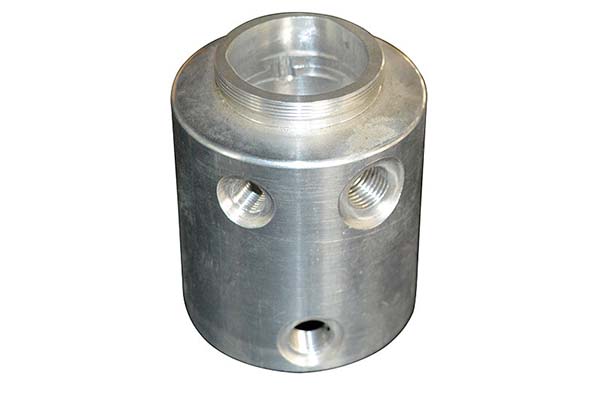
- CNC machining: High precision, production-grade materials
- Vacuum casting: Small batches with injection-molded appearance
Best for: Functional testing, durability validation, market testing
Example: An automotive engineer uses CNC-machined aluminum prototypes to test engine components under real operating conditions.
Interactive Prototypes
Interactive prototypes simulate user experience—button clicks, screen navigation, haptic feedback—without requiring full production hardware.
Methods:
- Software: Figma, Adobe XD for screen-based interactions
- Electronics: Arduino, Raspberry Pi for functional prototypes
- Mixed reality: VR/AR for immersive testing
Best for: User interface validation, user experience testing, investor demonstrations
Example: A medical device company creates an interactive prototype of a new infusion pump interface. Nurses test the interface, providing feedback before hardware development.
What Tools and Techniques Enable Effective Prototyping?
Additive Manufacturing (3D Printing)
3D printing builds parts layer by layer from digital models. It has revolutionized prototyping by enabling complex geometries at low cost.
Materials:
- PLA: Biodegradable, good for concept models
- ABS: Durable, heat-resistant—functional prototypes
- Nylon: Strong, flexible—mechanical parts
- Metals: Titanium, aluminum—high-performance applications
Advantages:
- Complex internal structures possible
- No tooling required
- Fast iteration (hours to days)
Example: Aerospace engineers use metal 3D printing to create lightweight engine components with intricate internal cooling channels.
Subtractive Manufacturing (CNC Machining)
CNC machining removes material from a solid block to create precise parts. It remains essential for high-precision metal and plastic prototypes.
Advantages:
- High precision (±0.01–0.05 mm)
- Wide material range (metals, engineering plastics)
- Production-grade surface finish
Best for: High-precision components, metal parts, final validation prototypes
Example: Medical device companies use CNC machining to create surgical instrument prototypes with tight tolerances and smooth finishes.
Rapid Tooling
Rapid tooling creates molds for small-batch production using materials like silicone or epoxy—faster and less expensive than traditional metal molds.
Advantages:
- Cost-effective for 10–100 parts
- Production-like material properties
- Quick turnaround (1–2 weeks for mold)
Best for: Bridge production, market testing, pre-production validation
Example: A consumer goods startup uses rapid tooling to produce 50 kitchen utensil prototypes for user testing before committing to high-volume tooling.
What Do Real-World Case Studies Reveal?
Medical Device Innovation: Custom Orthopedic Implants
Challenge: Every patient's bone structure is unique. Off-the-shelf orthopedic implants often do not fit perfectly, leading to loosening, poor integration, and longer recovery times.
Solution: A medical device company used FDM 3D printing with biocompatible PLA to create patient-specific implant prototypes.
Process:
- High-resolution CT scans of the patient's affected area
- Conversion to 3D models using specialized software
- FDM printing layer by layer to build the implant prototype
- Rapid iteration based on surgeon feedback
Result:
- FDA approval secured 6 months early
- 90% patient satisfaction in clinical trials
- Precise fit improved bone-implant integration
- Shorter recovery times
Consumer Electronics Breakthrough: Smartphone Thermal Management
Challenge: A leading electronics company needed a lightweight smartphone prototype that could manage heat from powerful processors and 5G components—without adding bulk.
Solution: SLA 3D printing created smartphone casings with embedded cooling channels.
Process:
- Thermal simulation software analyzed heat distribution
- Cooling channels were optimized and integrated into the casing design
- SLA printed the complex casing with internal channels
- Testing validated heat dissipation performance
Result:
- Production costs reduced by 25%
- Improved heat dissipation—maintained peak performance longer
- Sleeker design without thermal throttling
How Does Prototyping Revolutionize Product Design?
Accelerates Learning
Prototypes answer questions that simulations cannot. A CAD model shows how a part should fit. A physical prototype shows how it actually fits. Early prototypes reveal issues early, when they are cheap to fix.
Reduces Risk
The cost of fixing a design flaw increases exponentially the later it is discovered. A change during prototyping costs $500–$5,000. The same change after production tooling can cost $50,000–$500,000. Prototyping catches issues early.
Enables User Feedback
A physical prototype in users' hands reveals what works and what does not. A smartphone case that looks perfect on screen may feel wrong in hand. Prototyping allows real-world testing before production.
Unlocks Design Freedom
Modern prototyping tools—3D printing, CNC machining—remove the constraints of traditional manufacturing. Internal channels, lattice structures, and organic shapes become possible. Designers can explore ideas that were previously impossible.
Aligns Stakeholders
A tangible prototype communicates more clearly than any specification document. Investors, executives, and team members can see, touch, and understand the product. Alignment happens faster, with fewer misunderstandings.
Speeds Time to Market
Rapid iteration compresses development cycles. What once took months can now take weeks. Companies that prototype effectively bring products to market faster, capturing opportunities before competitors.
Yigu Technology's Perspective
As a custom manufacturer of plastic and metal parts, Yigu Technology supports prototyping across industries.
What we have learned:
- Start with low-fidelity: Cheap, fast prototypes reveal major issues early. Save high-fidelity for later stages.
- Match method to stage: FDM for early concepts. SLA for detail. CNC for final validation.
- Test with real users: Physical prototypes in users' hands reveal issues that internal testing misses.
- Plan for iteration: The first prototype is rarely final. Budget for multiple cycles.
- Think beyond the prototype: Prototyping informs production. Use DFM feedback to optimize for scale.
We view prototyping as the essential bridge between concept and reality—and we help clients cross that bridge efficiently.
Conclusion
Prototyping revolutionizes product design by transforming abstract ideas into tangible objects that can be tested, refined, and validated. It accelerates learning, reduces risk, enables user feedback, unlocks design freedom, aligns stakeholders, and speeds time to market.
The types of prototypes—low-fidelity, high-fidelity, interactive—serve different purposes at different stages. The tools—3D printing, CNC machining, rapid tooling—offer diverse capabilities. The case studies—medical implants and consumer electronics—demonstrate real-world impact.
In today's competitive market, prototyping is not optional. It is the cornerstone upon which successful products are built. By embracing prototyping, you can bring better products to market faster, with less risk and greater confidence.
Frequently Asked Questions
What is the difference between low-fidelity and high-fidelity prototypes?
Low-fidelity prototypes are quick, inexpensive models (sketches, foam, cardboard) used for early concept validation and form studies. High-fidelity prototypes closely mimic final materials, dimensions, and function—used for performance testing, durability validation, and market testing.
How much does prototyping cost?
Costs vary widely. Low-fidelity prototypes: $100–$500. High-fidelity prototypes: $5,000–$20,000 depending on complexity, materials, and quantity. Interactive prototypes: $2,000–$15,000. The investment saves far more by preventing costly production errors.
What is the most important tool for prototyping?
There is no single "most important" tool. 3D printing excels at complex geometries and rapid iteration. CNC machining excels at precision and production-grade materials. The right tool depends on your stage and objectives. Many successful projects use multiple tools across development.
How many prototype iterations are typically needed?
It varies. Simple products may need 2–3 iterations. Complex products with tight tolerances or regulatory requirements may need 5–10. The key is to plan for iteration—budget time and resources for multiple cycles.
When should I move from prototyping to production?
When the prototype has answered all critical questions, passed functional and user testing, and when design iterations have stabilized (multiple cycles without significant changes). At that point, you are ready to invest in production tooling.
Contact Yigu Technology for Custom Manufacturing
At Yigu Technology, we support product designers and engineers with prototyping and custom manufacturing. Our capabilities include 3D printing (FDM, SLA, SLS), CNC machining, rapid tooling, and vacuum casting. We serve medical, automotive, aerospace, and consumer goods industries.
If you are developing a new product and want to revolutionize your design process with effective prototyping, contact our engineering team. Let us help you turn ideas into reality—faster and with greater confidence.