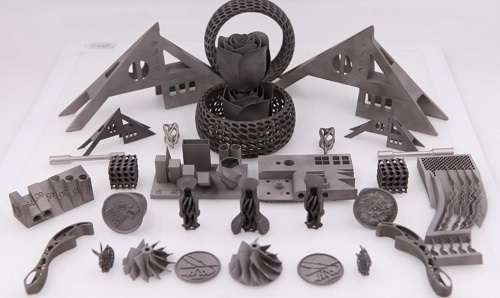
Introduction
Manufacturing has always been about transformation—turning raw materials into useful objects. For centuries, that meant cutting away what wasn't needed (subtractive) or forcing material into molds (formative). Additive manufacturing—building objects layer by layer from digital files—offers a fundamentally different approach. This shift brings advantages that traditional methods cannot match: design freedom that makes complexity free, material efficiency that slashes waste, and customization without cost penalty. From aerospace components that are 30% lighter to medical implants tailored to individual patients, additive manufacturing is transforming industries. This article explores the key advantages of additive manufacturing technologies, their limitations, and why they matter for the future of production.
What Is Additive Manufacturing?
Definition and Core Concept
Additive manufacturing (AM) , commonly called 3D printing, creates three-dimensional objects by adding material layer by layer based on a digital model. Unlike subtractive manufacturing that cuts away material from a larger block, AM builds up from nothing.
The process is straightforward:
- A digital 3D model is created in CAD software or captured by 3D scanning
- Software slices the model into thin layers (typically 0.05–0.3 mm)
- A printer deposits or solidifies material layer by layer
- The object is built from the bottom up
- Post-processing may be needed (cleaning, curing, finishing)
A Brief History
Additive manufacturing originated in the 1980s when Charles "Chuck" Hull invented stereolithography (SLA), the first commercial 3D printing process. Since then, many techniques have emerged:
- FDM (Fused Deposition Modeling) : Extrudes thermoplastic filament
- SLS (Selective Laser Sintering) : Fuses powder with a laser
- SLM/DMLS (Selective Laser Melting) : Melts metal powder
- EBM (Electron Beam Melting) : Uses electron beam in vacuum
- Binder Jetting: Bonds powder with liquid binder
- Material Jetting: Jetted droplets cured by UV light
These developments have expanded AM across aerospace, automotive, healthcare, and consumer goods.
What Are the Main Types of Additive Manufacturing Processes?
| Technology | Working Principle | Materials | Key Strengths |
|---|---|---|---|
| SLA (Stereolithography) | UV laser cures liquid resin | Photopolymer resins | High resolution, smooth finish |
| SLS (Selective Laser Sintering) | Laser sinters powder | Nylon, TPU, composites | No supports, durable parts |
| FDM (Fused Deposition Modeling) | Extrudes thermoplastic filament | PLA, ABS, PETG, nylon | Low cost, large parts |
| SLM/DMLS (Selective Laser Melting) | Laser melts metal powder | Titanium, stainless steel, aluminum | Dense metal parts, high strength |
| EBM (Electron Beam Melting) | Electron beam melts metal in vacuum | Titanium, cobalt-chrome | High-temperature alloys |
| Binder Jetting | Binder bonds powder, then sintered | Metals, ceramics, sand | Fast, large build volumes |
| Material Jetting | Jetted droplets cured by UV | Photopolymers | Multi-material, color, smooth |
What Are the Key Advantages of Additive Manufacturing?
Reduced Production Time and Cost
Traditional manufacturing requires tooling—molds, dies, fixtures—that cost thousands to hundreds of thousands of dollars and take weeks to produce. Additive manufacturing eliminates tooling entirely.
Prototyping speed: A part that takes weeks to machine can be printed overnight. Design iterations happen daily instead of monthly. This accelerates product development and time-to-market.
Cost comparison for 100 parts:
- Traditional injection molding: $15,000 mold + $5 per part = $15,500
- 3D printing: $20 per part × 100 = $2,000
For small batches and prototypes, AM is dramatically more cost-effective.
Design Flexibility and Complexity
This is perhaps AM's most transformative advantage. In traditional manufacturing, complexity costs money. Complex shapes require more machining steps, more complicated molds, more skilled labor.
In additive manufacturing, complexity is free. A simple cube and an intricate lattice structure take the same time to prepare and cost the same to print.
This enables:
- Internal channels: Cooling passages that follow curves instead of straight lines
- Lattice structures: Lightweight frameworks that maintain strength
- Organic shapes: Forms that flow like nature
- Consolidated assemblies: Multiple parts printed as one
Real-world example: GE Aviation's LEAP engine fuel nozzle previously required 20 parts welded together. Additive manufacturing produces it as one piece. Weight down 25%, durability up 5x.
On-Demand and Customizable Production
Traditional manufacturing economics punish small batches. Tooling costs must be amortized over thousands of parts. Additive manufacturing has no tooling costs, making customization economical.
Medical applications: Patient-specific implants designed from CT scans. Perfect fit, faster recovery. A study found 3D-printed implants achieve 40% higher osseointegration than traditional ones.
Consumer goods: Custom jewelry, phone cases, eyewear tailored to individual preferences. Each part unique without cost penalty.
Spare parts: Print when needed, no inventory, no obsolescence. A factory with a broken machine can print a replacement overnight instead of waiting weeks.
Material Efficiency
Traditional subtractive manufacturing is wasteful. Machining a titanium bracket from solid can waste 70–90% of the material. Additive manufacturing uses only what goes into the part—waste typically under 5% .
For expensive materials like titanium and Inconel, this is transformative. Unused powder in powder bed systems recycles. Material efficiency also reduces environmental impact.
Weight Reduction
Additive manufacturing enables lightweighting through:
- Topology optimization: Material placed only where stresses occur
- Lattice structures: Internal frameworks that reduce weight while maintaining strength
- Part consolidation: Eliminating fasteners and flanges
Aerospace impact: Airbus uses 3D-printed titanium brackets that weigh 40% less than traditionally manufactured counterparts. Every kilogram saved in flight saves thousands in fuel over an aircraft's life.
Supply Chain Simplification
Digital inventory replaces physical stock. Need a part? Download the file and print locally. No warehouses. No shipping delays. No obsolescence.
During the pandemic, when supply chains broke, 3D printing kept production running. Hospitals printed ventilator components. Factories printed replacement parts. The technology proved its value for supply chain resilience.
What Are the Limitations of Additive Manufacturing?
Material Limitations
While the material palette expands constantly, it is still limited compared to traditional manufacturing:
- Some polymers degrade under high temperatures or UV exposure
- Metal parts may not match wrought properties without post-processing
- Not every engineering alloy is available in printable form
- Material properties can vary with print orientation
Research ongoing: Material development is advancing rapidly, but some industries still require materials AM cannot fully replicate.
Build Time and Speed
Additive manufacturing is slower than traditional methods for high volumes:
- A small part might take hours
- A large, complex part could take days
- For millions of identical parts, injection molding remains faster
For prototyping and low-volume production, speed is excellent. For mass production, traditional methods win.
Strength and Durability Concerns
Parts created additively may not have the same strength and durability as traditionally manufactured ones:
- Layered construction can create weaker bond lines
- Anisotropic properties—strength varies by orientation
- Porosity can be an issue if not properly controlled
Post-processing—heat treatment, HIP, machining—is often required to improve mechanical properties.
Post-Processing Requirements
Printed parts rarely go straight to use. Common post-processing steps:
- Support removal
- Cleaning (for resin or powder)
- Heat treatment
- Surface finishing (sanding, polishing)
- Machining critical surfaces
- Inspection
These steps add time and cost.
Equipment Cost
Industrial additive manufacturing systems are expensive:
- Metal printers: $500,000–$2,000,000+
- Industrial polymer printers: $100,000–$500,000+
- Desktop printers are affordable but have limited capabilities
This limits adoption to larger companies and specialized service bureaus.
Where Is Additive Manufacturing Used?
Aerospace and Automotive
AM enables lightweight, complex components that improve performance and fuel efficiency:
- Engine components: Turbine blades, fuel nozzles, combustion chambers
- Structural brackets: 30–50% lighter than machined versions
- Prototyping: Rapid iteration reduces development time
Real-world example: Boeing uses 3D-printed titanium brackets. GE has printed over 100,000 fuel nozzles.
Medical and Dental
AM delivers patient-specific solutions:
- Implants: Hip replacements, spinal cages, cranial plates from patient scans
- Prosthetics: Custom sockets, affordable devices
- Surgical guides: Patient-specific tools for precise implant placement
- Dental: Crowns, bridges, models
Real-world example: A study found 3D-printed implants achieve 40% higher osseointegration than traditional implants. Patient satisfaction with 3D-printed knee replacements: 95% .
Consumer Goods and Art
AM enables customization and creativity:
- Custom jewelry: Intricate designs impossible to cast
- Personalized products: Phone cases, eyewear, footwear
- Art: Unique sculptures, installations
- Limited editions: Small batches of unique items
How Does Additive Manufacturing Compare to Traditional Methods?
| Factor | Additive Manufacturing | Traditional Manufacturing |
|---|---|---|
| Design Flexibility | Almost unlimited—complexity is free | Constrained by tool access, molds |
| Tooling Required | None | Molds, dies, fixtures: $5k–$500k+ |
| Lead Time | Days to weeks | Weeks to months |
| Material Waste | <5% | 30–90% |
| Customization | Free—each part can differ | Expensive—new tooling required |
| Part Consolidation | Multiple parts into one | Assembly required |
| Speed for Low Volumes | Fast | Slow |
| Speed for High Volumes | Slow | Fast |
| Surface Finish | Variable—may need post-processing | Excellent |
| Strength | Good, but can be anisotropic | Consistent, predictable |
What Does the Future Hold?
Material Advancements
New materials optimized for AM. Better properties, faster printing, lower costs. Composites, gradient materials, and multi-material printing.
Process Improvements
Faster printers, larger build volumes, better surface finishes. Hybrid machines combining printing and machining.
AI and Generative Design
AI-powered design tools that automatically generate optimized geometries. Algorithms that consider loads, materials, and printability to create structures human designers wouldn't conceive.
Mass Customization
Products tailored to individual users become the norm. Medical devices, consumer goods, industrial components—all optimized for specific applications.
Supply Chain Transformation
Digital inventory replaces physical stock. Local production, on-demand manufacturing, reduced shipping. More resilient, more sustainable.
How Does Yigu Technology View Additive Manufacturing?
As a non-standard plastic and metal products custom supplier, Yigu Technology sees AM as a critical tool in our manufacturing arsenal. We use it where its unique strengths—complexity, customization, speed—provide the most value.
Our Experience
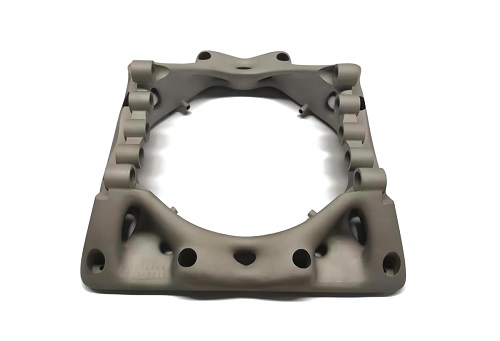
Aerospace: Titanium brackets with complex internal geometries. Traditional machining impossible. Printed via SLM. Weight reduced 30%. Parts passed all qualification testing.
Medical: Custom orthopedic implants from patient CT data. Each implant unique. Printed in Ti-6Al-4V. Perfect fit. Faster recovery.
Automotive: Prototype engine components for testing. Traditional fabrication weeks. Printed in aluminum overnight. Testing proceeded immediately.
Our Capabilities
We maintain multiple additive technologies:
- SLM for metal production parts
- SLS for durable nylon components
- FDM for large prototypes
- SLA for high-detail models
Quality Commitment
- Process validation
- Material traceability
- Inspection protocols
- Documentation for certification
Conclusion
Additive manufacturing technologies offer advantages that are transforming production:
- Reduced time and cost: No tooling, rapid iteration
- Design freedom: Complexity is free, geometries impossible before
- Customization: Each part can be unique without cost penalty
- Material efficiency: <5% waste vs. 30–90%
- Weight reduction: 30–50% lighter components
- Supply chain simplification: Digital inventory, local production
Limitations exist—material constraints, build speed for high volumes, post-processing requirements. But technology advances rapidly. Faster printers, better materials, and lower costs expand application ranges each year.
The key advantages make additive manufacturing indispensable for specific applications:
- Prototyping: Speed and low cost
- Customization: Patient-specific medical devices
- Complexity: Aerospace components with internal features
- Low volumes: Economical small batches
For manufacturers, the message is clear: additive manufacturing is not experimental. It is production-ready, cost-effective, and transformative. Companies that leverage its advantages gain competitive edge—faster development, better products, lower costs.
The future of manufacturing is additive. And the advantages are clear.
Frequently Asked Questions
Q1: What materials can be used in additive manufacturing?
AM supports a wide range of materials: plastics (PLA, ABS, PETG, nylon, polycarbonate), resins (standard, tough, flexible, castable, biocompatible), metals (titanium, stainless steel, aluminum, Inconel, cobalt-chrome), ceramics, composites, and even biological materials. Research is ongoing.
Q2: How accurate is additive manufacturing?
Accuracy depends on technology:
- FDM: ±0.1–0.5 mm
- SLA: ±0.05–0.1 mm
- SLS: ±0.1 mm
- Metal printing: ±0.02–0.1 mm
High-precision methods like SLA and EBM achieve even tighter tolerances.
Q3: Is additive manufacturing cost-effective for mass production?
For extremely high volumes (millions of parts), traditional methods remain more economical. For low-to-medium volumes, especially with complex geometries, AM can be cost-effective. The breakeven point depends on part complexity, material, and quantity.
Q4: What are the main advantages of additive manufacturing over traditional methods?
Key advantages: design flexibility (complexity is free), no tooling (economical for small batches), customization (each part can be unique), material efficiency (<5% waste), rapid prototyping (parts in days), and weight reduction through optimized designs.
Q5: How strong are additively manufactured parts compared to traditionally manufactured ones?
Properly printed and post-processed parts can match or exceed traditionally manufactured ones. Metal parts can achieve >99.9% density with properties comparable to wrought material. Post-processing (heat treatment, HIP) improves properties.
Q6: What industries benefit most from additive manufacturing?
Aerospace (lightweight, complex components), medical (custom implants, surgical guides), automotive (prototyping, custom parts), consumer goods (personalized products), and industrial manufacturing (tooling, replacement parts) all gain significant advantages.
Q7: What is the biggest limitation of additive manufacturing today?
For production, the biggest limitations are speed (slower than traditional methods for high volumes) and material constraints (not all engineering materials are available). However, both are improving rapidly.
Contact Yigu Technology for Custom Manufacturing
Ready to leverage the advantages of additive manufacturing for your next project? At Yigu Technology, we combine AM expertise with broader manufacturing capabilities. Our team helps you select the right technology and materials, optimize designs for printability, and deliver quality parts on schedule.
Visit our website to see our capabilities. Contact us today for a free consultation and quote. Let's build the future together.