Introduction
Imagine a house built not by workers laying bricks, but by a machine extruding layer after layer of concrete, following a digital blueprint with millimeter precision. This isn't science fiction. In China, it's happening right now.
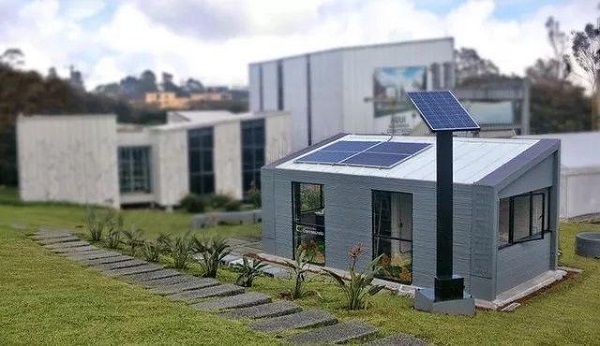
3D printed houses have moved from university labs to actual communities. In Shanghai, ten houses were printed in 24 hours using recycled materials . In Xi'an, a two-story villa was assembled in less than three hours from pre-printed modules . In宜昌, a 100-square-meter home went up with just three workers in 22 days .
These aren't gimmicks. They're real buildings with real potential to reshape how China—and the world—thinks about construction.
But is this technology ready for prime time? Can printed houses match traditional construction on cost, safety, and livability? And what challenges remain before 3D printing becomes mainstream?
Let's explore the current state of 3D printed housing in China, what's working, what's not, and where this technology is headed.
What Exactly Are 3D Printed Houses?
How Construction Printing Works
The basic principle mirrors desktop 3D printing, but scaled up dramatically. A digital model of a house is sliced into thousands of thin layers. A large gantry system or robotic arm then extrudes construction material—typically a special concrete mixture—layer by layer, building walls and structural elements from the ground up .
There are two main approaches in China today:
On-site printing uses a large-format printer positioned directly at the construction site. The machine prints the entire structure in place. This method creates a monolithic structure where walls, columns, and foundations bond together continuously .
Modular printing produces building components in a factory setting. Walls, floor panels, and roof sections are printed separately, then transported and assembled on-site like giant LEGO bricks .
Both approaches have their place. On-site printing creates seamless structures with better structural integrity. Modular printing offers factory-controlled quality and faster on-site assembly.
Special Materials for a Special Job
You can't just pour regular concrete into a 3D printer. The material must meet three demanding requirements simultaneously :
- Flowability like toothpaste – It must squeeze through a nozzle smoothly
- Quick-setting ability – Each layer must harden fast enough to support the next layer above it
- Bonding strength – Layers must fuse together, not remain separate
Chinese researchers and companies have developed specialized mixtures to meet these needs. Common formulations include:
- Engineered concrete with additives like superplasticizers for flow and accelerators for rapid setting
- Geopolymer concrete made from industrial waste like fly ash and slag, cutting CO₂ emissions by up to 80% compared to traditional cement
- Fiber-reinforced composites adding strength and crack resistance
- Recycled materials—some Chinese firms incorporate construction waste or industrial byproducts
The materials aren't just about printability. They're designed for durability, with expected lifespans of 50-150 years depending on the formulation .
How Do Printed Houses Compare to Traditional Construction?
Let's put the two approaches side by side:
| Factor | 3D Printed Houses | Traditional Construction |
|---|---|---|
| Construction time | 1-4 weeks for a typical home | 3-6 months for similar size |
| Labor required | 3-4 workers | 5+ workers with multiple trades |
| Material waste | 80% less waste | 20-30% waste typical |
| Cost per square meter | ¥1,000 - ¥3,000 | Similar range, varies by region |
| Design flexibility | Curves, complex shapes at no extra cost | Complex shapes require expensive formwork |
| Quality consistency | Computer-controlled, uniform | Depends on worker skill |
Speed: From Months to Days
The speed advantage is dramatic. A 100-square-meter home that would take 3-6 months with traditional methods can be printed in 22 days with just three workers .
The Xi'an villa project pushed this further. Six modules printed in a factory were assembled on-site in under three hours—complete with interior finishes, plumbing, and wiring .
For disaster relief or emergency housing, this speed could save lives.
Cost: Competitive Today, Cheaper Tomorrow
Current costs for 3D printed houses in China range from about ¥1,000 to ¥3,000 per square meter . That's competitive with rural self-built housing and cheaper than urban apartments in many areas.
The savings come from:
- Reduced labor (fewer workers, less skilled labor needed)
- Minimal material waste (up to 80% less than traditional construction)
- No formwork required for complex shapes
- Faster construction reducing financing costs
However, equipment costs remain high. Industrial-scale printers run ¥500,000 to several million, with depreciation rates 2.8 times higher than traditional construction equipment . These costs spread across multiple projects, but they're real.
Design Freedom Without Penalty
Traditional construction penalizes complexity. Curved walls? Expensive custom formwork. Organic shapes? Labor-intensive and slow.
3D printing treats complexity as free. A curved wall takes the same time and material as a straight one. The printer follows the digital design regardless of shape .
This opens possibilities:
- Wave-shaped walls that catch light differently throughout the day
- Integrated benches and shelves printed as part of the structure
- Optimized forms that use less material while maintaining strength
- Personalized designs for individual homeowners
At三峡大学, researchers intentionally included curved sections in their demonstration house just to prove what's possible .
Environmental Benefits Are Real
Construction generates enormous waste—typically 20-30% of materials end up in landfills. 3D printing cuts that dramatically by using only the material actually needed .
The environmental advantages go further:
- Recycled content – Some Chinese firms incorporate industrial waste like fly ash and slag into printing materials
- Lower carbon footprint – Geopolymer concrete emits 70-80% less CO₂ than traditional cement
- No formwood waste – Traditional construction uses wood forms that get discarded after a few uses
- Local materials – On-site printing reduces transportation emissions
The "雄安之翼" project in雄安新区, featured in China Daily, demonstrates how 3D printing can combine advanced technology with ecological design for sustainable urban development .
Are 3D Printed Houses Safe?
This is the question everyone asks. And it's the right question.
Testing Proves They're Strong
The宜昌 project underwent rigorous testing. At 15 days age (concrete typically takes 28 days to reach full strength),第三方检测公司 tested the structure using standard methods :
- Carbonation testing confirmed the concrete surface wasn't degrading
- Rebound hammer testing measured compressive strength
- Results showed the house would meet its design strength of C30 (30 megapascals) by day 28
The Xi'an modular villa was rated to withstand magnitude 9 earthquakes . Each module weighs over 100 kg per square meter and carries its own load independently.
The Structural Secret: Hybrid Reinforcement
Early 3D printed structures faced a limitation: you can't easily embed reinforcing steel during printing. The solution that's emerged is hybrid construction :
- The 3D printer creates hollow walls and columns
- Workers insert steel reinforcement cages into the hollow spaces
- Additional concrete fills the cavities, bonding with the printed shell
This approach combines the speed of printing with the proven strength of reinforced concrete. The宜昌 house used exactly this method—printed shells filled with reinforced concrete cores .
河北工业大学 has patented a similar approach using 3D printed permanent formwork filled with reinforced concrete, solving the reinforcement challenge while still reducing waste .
The Missing Piece: Building Codes
Here's the biggest obstacle: China doesn't yet have national standards for 3D printed houses .
Building inspectors have no established criteria to evaluate these structures. In one case, a park project was approved by management but rejected by construction authorities who had no way to certify its safety .
This is changing.雄安新区 has developed local standards for 3D printed construction, drawing on projects like "雄安之翼" . National standards will follow as more data accumulates.
For now, every 3D printed house is essentially a demonstration project. They're safe—testing proves that—but they exist in a regulatory gray area.
What Are the Real-World Examples in China?
Winsun: Pioneering Mass Production
Winsun (盈创) made international headlines in 2014 by printing ten houses in 24 hours using recycled materials . Their approach: print components in a factory with massive 150-meter printers, then assemble on-site.
Each house cost about $5,000 to produce. The company planned to establish 100 factories across China .
三峡 University: Research in Action
Professor李洋波 and his team at三峡大学 printed a two-story, 100-square-meter house with just three workers in 22 days . Cost came to about ¥1,000 per square meter—competitive with rural housing.
The project demonstrated:
- Curved walls impossible with traditional methods
- Hybrid reinforcement combining printing with steel
- Real-world testing by independent inspectors
The house now serves as a laboratory and workspace for graduate students—living proof that printed structures are functional, not just prototypes.
清华大学: Pushing Design Boundaries
Professor徐卫国 at清华大学 has been exploring digital design and 3D printing for over two decades . His team's projects include:
- A 3D printed concrete pedestrian bridge in上海宝山
- An undulating 3D printed park in深圳宝安
- A farmhouse in河北张家口 with integrated insulation
The张家口 house features "structural-decorative-insulation integrated walls" that keep the home warm in winter without extra finishes .
ZhuoDa: Speed Assembly
ZhuoDa (卓达) assembled a two-story modular villa in Xi'an in under three hours . The modules were factory-printed with interior finishes already installed.
The company claims:
- 150-year lifespan
- Magnitude 9 earthquake resistance
- 8% more usable space than traditional construction
- Materials from industrial and agricultural waste
While some claims seem optimistic, the project demonstrates the potential of modular 3D printing for rapid construction.
雄安之翼: A New Benchmark
The "雄安之翼" project in雄安新区 represents the cutting edge . Featured in China Daily and央视新闻, it combines 3D printing with smart building technologies and ecological design.
The project has helped establish local standards for 3D printed construction and demonstrates how this technology can contribute to sustainable urban development.
What Challenges Remain?
Equipment Costs and Depreciation
Industrial 3D printers are expensive. A complete system can cost ¥500,000 to several million. Depreciation runs 20-30% annually—much higher than traditional construction equipment .
For smaller builders, this is a significant barrier. Equipment sharing, leasing models, or service providers may be the answer.
Material Consistency
3D printing concrete isn't as simple as mixing standard ingredients. Variations in temperature, humidity, or raw materials can affect print quality .
The宜昌 team discovered this firsthand when their first print attempts failed due to material inconsistencies. They spent years developing the right formulations and settings .
Weather Sensitivity
Rain, extreme heat, and cold all affect 3D printing. Humidity slows curing. Rain damages fresh layers. Cold prevents proper hardening .
On-site printing requires either perfect weather or protective enclosures. This limits year-round construction in many regions.
Labor Still Needed
Despite automation, 3D printing still needs people :
- Equipment setup and calibration
- Material mixing and loading
- Monitoring for issues
- Reinforcement installation
- Post-processing and finishing
The宜昌 house required three workers for 22 days. That's far less than traditional construction, but it's not zero.
Regulatory Hurdles
Without national standards, widespread adoption is impossible. Every project requires special approval. Every inspector makes case-by-case judgments .
雄安新区's local standards are a start. National standards will take time and data.
What Does Yigu Technology Think About 3D Printed Houses?
At Yigu Technology, we see 3D printed construction as a natural extension of the additive manufacturing principles we apply to custom parts every day.
The precision advantage is real. Computer-controlled placement eliminates human error. Walls are straight because the machine says they're straight—not because a worker had a good eye that day .
Material efficiency aligns with our commitment to sustainable manufacturing. Using only what's needed, recycling waste where possible—these are principles we practice daily.
Design freedom opens possibilities. Just as we help clients create custom parts impossible to machine conventionally, 3D printing lets architects create buildings that couldn't exist any other way.
But we also see the challenges. Equipment costs are significant. Material science continues to evolve. Standards lag behind capability.
The path forward isn't either/or. It's both/and. Traditional construction won't disappear. But 3D printing will claim the projects where it makes sense—custom homes, complex forms, rapid deployment, sustainable construction.
For companies in the construction supply chain, this creates opportunities. New materials to develop. New components to design. New services to offer.
Conclusion: Is This the Future?
3D printed houses in China have moved beyond novelty. They're real structures with demonstrated advantages in speed, cost, design flexibility, and environmental impact.
The宜昌 house stands today, serving as a working laboratory. The Xi'an villa assembled in hours. The Winsun community printed in a day. The雄安之翼 pushing boundaries.
Challenges remain—equipment costs, material science, weather sensitivity, regulatory frameworks. But these are solvable problems, not fundamental limitations.
Will 3D printing replace traditional construction entirely? No. Traditional methods will continue for many projects.
Will 3D printing claim a significant share of new construction? Almost certainly. The advantages are too compelling to ignore.
For China, with its massive construction needs and commitment to technological innovation, 3D printed housing represents a natural evolution. The technology works. The economics are competitive. The environmental benefits are real.
The future isn't printed houses replacing all others. It's printed houses taking their place alongside traditional construction—another tool in the builder's kit, another option for homeowners, another path toward more efficient, more sustainable, more beautiful places to live.
Frequently Asked Questions
How long does it take to 3D print a house in China?
A small 80-100 square meter house can be printed in 3-7 days. Larger or more complex homes may take 2-4 weeks. The宜昌 project took 22 days with three workers. Modular houses can be assembled in hours after factory printing .
Are 3D printed houses safe to live in?
Yes, when properly engineered. Testing on completed houses shows they meet design strength requirements. Hybrid reinforcement with steel in printed columns provides structural integrity comparable to traditional construction. The Xi'an modular villa is rated for magnitude 9 earthquakes .
What materials are used for 3D printed houses in China?
Special concrete mixtures with additives for flow and rapid setting are most common. Geopolymer concrete using industrial waste like fly ash reduces carbon emissions. Some projects incorporate recycled materials. Fiber-reinforced composites add strength .
How much does a 3D printed house cost in China?
Current costs range from about ¥1,000 to ¥3,000 per square meter, comparable to rural self-built housing. This includes materials, equipment, and labor. Costs vary by region, design complexity, and printing approach .
Do 3D printed houses meet building codes?
China doesn't yet have national standards specifically for 3D printed houses.雄安新区 has developed local standards. Each project currently requires special approval. This is changing as more data becomes available .
Contact Yigu Technology for Custom Manufacturing
Interested in how 3D printing could transform your construction or manufacturing projects? At Yigu Technology, we combine deep expertise in additive manufacturing with practical experience across industries.
From custom architectural components to specialized construction materials, we help clients explore what's possible with today's technology. Contact us today to discuss your project. Let's build the future together.