Introduction
Zinc Alloy Zamak 3 is one of the most widely used materials in precision manufacturing. Its excellent castability, good mechanical properties, and outstanding machinability make it a go-to choice for industries ranging from automotive to electronics. But machining Zamak 3 effectively isn’t without challenges. Manufacturers often grapple with maintaining dimensional stability during high-speed operations, managing chip formation, and ensuring consistent surface quality—especially when aiming for tight tolerances.
This guide addresses these pain points. We will explore Zamak 3’s unique material properties, break down optimal CNC machining processes, and highlight its diverse applications. Whether you are producing automotive components, electronic enclosures, or decorative hardware, you will find practical insights for achieving precision and efficiency.
What Makes Zamak 3 Unique for Machining?
Mechanical Properties
Zamak 3 is a zinc-aluminum alloy with a composition that balances strength, ductility, and machinability. Its mechanical properties make it suitable for both structural and functional parts.
- Tensile strength: 280–320 MPa
- Yield strength: 200–240 MPa
- Elongation: 10–15%
- Hardness: 70–85 HB (Brinell)
- Density: 6.6 g/cm³
These values strike a balance between strength and flexibility. Zamak 3 is stronger than many other zinc alloys but remains ductile enough to withstand bending and forming operations—a key advantage for parts that require post-machining shaping.
Castability and Microstructure
Zamak 3 is celebrated for its exceptional castability, allowing for intricate shapes and thin-walled components with minimal defects. This makes it a favorite for complex parts like decorative components and electronic enclosures.
Its microstructure features a zinc matrix with aluminum and copper phases. These phases strengthen the alloy through solid solution hardening. The grain size is fine—typically 10–20 μm—contributing to uniform mechanical properties. Phase composition includes Zn-Al-Cu intermetallics that improve strength but can affect corrosion behavior, emphasizing the need for protective coatings in humid or harsh environments.
Corrosion Resistance
Corrosion resistance in Zamak 3 is moderate. The alloy performs well in indoor environments but may require protection in outdoor or humid conditions. Surface treatments like plating (chrome, nickel) or painting form a protective barrier against moisture and chemicals, extending the alloy’s lifespan significantly.
Thermal and Electrical Conductivity
Zamak 3 has a thermal conductivity of approximately 105 W/(m·K) , making it effective for heat dissipation in electronic components. Its electrical conductivity is reasonable, suitable for non-critical electrical parts like connectors. These properties, combined with its ease of machining, make it a practical choice for devices where thermal and electrical performance matter.
| Property | Value | Implication for Machining |
|---|---|---|
| Tensile Strength | 280–320 MPa | Good structural integrity |
| Hardness | 70–85 HB | Low tool wear during machining |
| Density | 6.6 g/cm³ | Sturdy feel without excessive weight |
| Thermal Conductivity | 105 W/(m·K) | Effective heat dissipation during cutting |
| Elongation | 10–15% | Ductile; allows post-machining forming |
Machinability and Dimensional Stability
One of Zamak 3’s standout features is its excellent machinability. It allows for fast and precise CNC machining with minimal tool wear. Chip formation is typically discontinuous and manageable, reducing the risk of chip entanglement that can disrupt operations.
The alloy also offers good dimensional stability, maintaining its shape and size across temperature variations. This is critical for parts that must fit together perfectly in assemblies. Stability reduces post-machining adjustments, saving time and cost in production.
What Machining Parameters Deliver Quality?
Tool Selection
Tool selection for Zamak 3 is straightforward due to its excellent machinability. High-speed steel (HSS) tools work well for most operations, offering cost-effectiveness and durability. For high-speed machining or when tighter tolerances are required, carbide tools maintain sharpness longer and deliver superior surface finishes.
Tool geometry matters. Tools with positive rake angles reduce cutting forces, minimizing tool wear and improving surface finish. For high-volume production, coated tools—TiN or TiAlN—can extend tool life further by reducing friction and heat.
Cutting Parameters
| Operation | Spindle Speed | Feed Rate | Depth of Cut |
|---|---|---|---|
| Roughing | 3000–6000 RPM | 0.15–0.3 mm/rev | 1–5 mm |
| Finishing | 5000–8000 RPM | 0.05–0.15 mm/rev | 0.1–0.5 mm |
| Drilling | 2000–4000 RPM | 0.05–0.1 mm/rev | Peck cycles |
| Threading | 1000–2000 RPM | Manual or synchronized | Multiple passes |
Spindle speeds typically range from 3000 to 8000 RPM, depending on tool diameter and operation. Zamak 3 can handle higher speeds than many other alloys, enabling efficient material removal.
Feed rates of 0.1–0.3 mm/rev balance material removal and surface quality. Lower feeds improve finish for finishing passes; higher feeds increase throughput for roughing.
Depth of cut should be optimized. Roughing passes of 1–5 mm remove bulk material efficiently. Finishing passes of 0.1–0.5 mm achieve tight tolerances and smooth surfaces.
Coolant and Lubrication
While Zamak 3 generates less heat during machining than harder alloys, using a coolant is still beneficial. Water-soluble coolants or light oils help flush away chips and reduce friction, improving surface finish and extending tool life.
Lubrication is particularly important for threading or tapping operations to prevent galling. The alloy’s good thermal conductivity helps distribute heat away from the cutting zone, so standard cooling systems are usually sufficient.
Toolpath Strategy
Optimizing toolpath and machining strategy enhances efficiency and precision. Climb milling—cutting with tool rotation—reduces chatter and tool wear compared to conventional milling.
A layered machining process—roughing followed by finishing—ensures tight tolerances, often achieving ±0.01 mm. For complex geometries, 3D machining strategies with smooth tool movements prevent sudden forces that could compromise dimensional accuracy.
How Do You Control Quality and Surface Finish?
Surface Finish
Zamak 3 can achieve a surface finish of Ra 0.8–1.6 μm with proper parameters—suitable for most applications. For parts requiring plating or painting, this finish provides a good base with minimal preparation.
To achieve optimal surface finish:
- Use sharp tools with positive rake angles
- Apply finishing passes with reduced feed rates
- Maintain adequate coolant flow to flush chips
- Minimize vibration through rigid setups
Chip Formation and Management
Chip formation in Zamak 3 is typically discontinuous and manageable. Chips break easily, reducing the risk of entanglement that can damage tools or mar surfaces.
Tools with chip breakers further improve chip control, ensuring safe and efficient machining. For high-volume production, automated chip removal systems maintain clean work areas.
Dimensional Accuracy
Typical tolerances for CNC machined Zamak 3 parts are ±0.01–0.02 mm with standard practices. For high-precision applications, tolerances of ±0.005 mm are achievable with optimized parameters and rigid setups.
Key factors for maintaining accuracy:
- Rigid machine setups that minimize deflection
- Sharp tools that cut cleanly without pushing material
- Controlled cutting parameters that balance heat generation
- Proper fixturing that holds the workpiece securely
What Common Defects Occur and How to Prevent Them?
| Defect | Root Cause | Solution |
|---|---|---|
| Built-up Edge | Excessive heat, dull tools | Increase cutting speed; sharpen tools; apply coolant |
| Poor Surface Finish | Dull tools, incorrect feed rates | Replace tools; reduce feed for finishing passes |
| Dimensional Drift | Tool wear, thermal expansion | Implement tool wear monitoring; control shop temperature |
| Burr Formation | Dull tools, incorrect geometry | Use sharp tools; optimize toolpath; add deburring pass |
| Chip Entanglement | Continuous chips, inadequate chip breakers | Use tools with chip breakers; optimize feed rates |
Built-up edge (BUE) occurs when material adheres to the cutting edge, altering geometry and degrading surface finish. Increasing cutting speed and using sharp tools with positive rake angles minimizes BUE.
Dimensional drift over long production runs often results from tool wear or thermal expansion. Regular tool changes and temperature-controlled shops prevent drift.
Burr formation is common but manageable. Sharp tools, optimized toolpaths, and dedicated deburring passes produce clean edges without secondary operations.
Where Is Zamak 3 Applied?
Automotive Industry
In the automotive industry, Zamak 3 is used for door handles, window cranks, fasteners, and interior trim components. Its combination of strength, machinability, and cost-effectiveness makes it ideal for these applications.
The alloy’s ability to take plating—chrome, nickel—gives automotive components a polished, durable finish that withstands repeated use and exposure.
Electronics Industry
Zamak 3 shines in electronic enclosures, connectors, and switchgear. Its thermal conductivity helps dissipate heat from electronic components. Its dimensional stability ensures that housings maintain precise tolerances for circuit boards and connectors.
Consumer electronics—smartphones, laptops—use Zamak 3 for structural frames and hinges. The alloy provides strength without adding excessive weight, and its ability to achieve smooth finishes meets aesthetic requirements.
Industrial Components
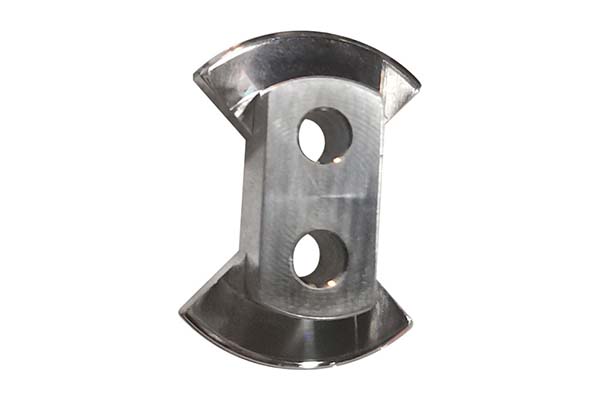
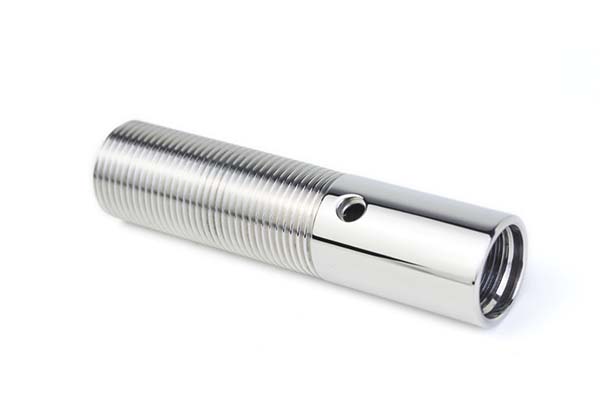
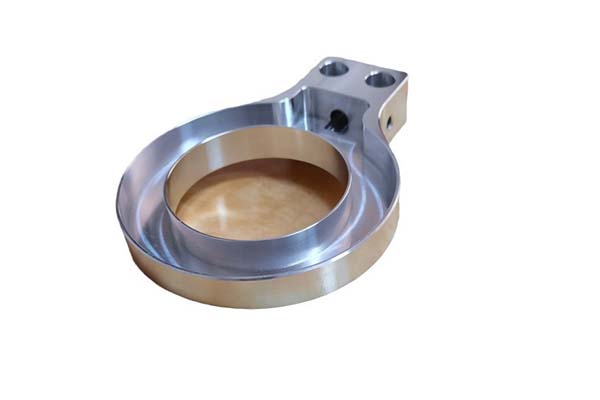
Zamak 3 is a staple in industrial components like valves, gears, and hardware. Its ease of casting and machining allows for complex shapes that reduce assembly steps. Components can be machined directly from cast blanks, eliminating the need for secondary fabrication.
Decorative Components
In decorative applications, Zamak 3 is widely used for furniture handles, lighting fixtures, and jewelry. Its ability to take plating gives it a polished, high-end look. Lighting fixtures benefit from its malleability, allowing intricate designs that combine functionality with aesthetics.
Medical Devices
While less common in critical aerospace parts, Zamak 3 is used for non-structural aircraft components like interior fittings. In medical devices, it finds use in non-implantable parts—instrument housings and connectors—where its machinability and surface finish meet strict industry standards. Surface treatments ensure it meets hygiene requirements in medical settings.
| Industry | Typical Applications | Key Requirements |
|---|---|---|
| Automotive | Door handles, fasteners, interior trim | Strength, plating capability, durability |
| Electronics | Enclosures, connectors, switchgear | Thermal conductivity, dimensional stability |
| Industrial | Valves, gears, hardware | Machinability, complex geometries |
| Decorative | Furniture handles, lighting fixtures, jewelry | Surface finish, plating capability |
| Medical | Instrument housings, connectors | Surface finish, hygiene compliance |
What Are the Advantages and Limitations?
Advantages
Excellent machinability enables fast cutting speeds, minimal tool wear, and efficient chip control. This makes Zamak 3 ideal for high-volume production where cycle time matters.
Good mechanical properties balance strength and ductility. Parts can withstand service loads while allowing post-machining forming if needed.
Dimensional stability maintains tolerances across temperature variations. Parts fit together consistently without post-machining adjustments.
Surface finish capability achieves Ra 0.8–1.6 μm with standard parameters—smooth enough for most applications and ideal for plating.
Cost-effectiveness combines material cost, machinability, and finishing ease. Zamak 3 often provides the lowest total cost for precision components.
Limitations
Moderate corrosion resistance requires protective coatings for outdoor or humid environments. Plating or painting is necessary to prevent surface degradation.
Temperature limitations restrict use above 100°C. The alloy loses strength at elevated temperatures, making it unsuitable for high-heat applications.
Not for implantable medical devices—Zamak 3 lacks the biocompatibility required for long-term contact with body tissues.
Conclusion
Zinc Alloy Zamak 3 combines excellent machinability with good mechanical properties, making it a versatile material for precision CNC machining. Its ability to achieve tight tolerances, smooth surface finishes, and complex geometries supports applications across automotive, electronics, industrial, and decorative sectors.
Success with Zamak 3 comes from understanding its properties and applying appropriate machining strategies. Tool selection with sharp HSS or carbide tools minimizes wear. Cutting parameters optimized for speed, feed, and depth balance productivity against quality. Coolant application manages heat and chip formation. Quality control verifies dimensional accuracy and surface finish.
The alloy’s strengths are clear. It machines quickly with minimal tool wear. It holds tight tolerances consistently. It accepts plating and painting for enhanced appearance and corrosion resistance. And it delivers these benefits at a cost-effective price point.
For manufacturers seeking a material that combines machinability with performance, Zamak 3 offers a proven solution—one that delivers precision components efficiently and reliably.
FAQ
How does Zamak 3 compare to other zinc alloys in terms of machinability?
Zamak 3 offers superior machinability compared to most zinc alloys. It supports faster cutting speeds, causes minimal tool wear, and produces manageable chips. This makes it ideal for high-volume production where efficiency is critical. Zamak 5, by comparison, has slightly higher strength but reduced machinability due to increased copper content.
What surface treatments work best for enhancing Zamak 3’s corrosion resistance?
Plating—chrome, nickel, or copper—forms a protective barrier against moisture and chemicals. Painting with high-quality primers and topcoats also provides effective protection. For maximum durability, electroplating with a nickel undercoat followed by chrome topcoat is common for automotive and decorative applications.
Can Zamak 3 be used for high-temperature applications?
No. Zamak 3 is not suitable for high-temperature environments above 100°C. The alloy begins to lose strength and may experience dimensional changes at elevated temperatures. It performs best in ambient temperature applications. For high-heat applications, consider aluminum or other alloys.
What tolerances can be achieved when machining Zamak 3?
Typical tolerances are ±0.01–0.02 mm with standard machining practices. For high-precision applications—such as electronic connector housings or precision mechanical components—tolerances of ±0.005 mm are achievable with optimized parameters, rigid setups, and sharp tools.
Is Zamak 3 suitable for outdoor applications?
Zamak 3 requires protective coatings for outdoor use. Unprotected, the alloy can corrode in humid or wet environments. With proper plating (chrome, nickel) or painting, Zamak 3 performs well outdoors. Automotive exterior components, for example, use plated Zamak 3 for door handles and trim with long service life.
Contact Yigu Technology for Custom Manufacturing
Need precision Zamak 3 components for your next project? Yigu Technology specializes in CNC machining of zinc alloys, delivering parts with tight tolerances and superior surface finishes. Our engineers optimize tool selection, cutting parameters, and finishing processes to meet your specifications. Contact us today to discuss your requirements.