Introduction
You've chosen Nylon PA12 for your 3D printing project because you've heard it's strong, durable, and precise. But then reality hits: your part warps slightly, layers separate under stress, or that "precision" component doesn't quite fit the assembly. What went wrong? As a product engineer at Yigu technology, I've worked with PA12 across hundreds of applications—from aerospace brackets to medical implants. The material is indeed a versatile polyamide, but success requires understanding its unique material characteristics, choosing the right printing technique, and matching it to the right application. In this guide, we'll walk through exactly how to get the most out of PA12, based on real-world experience and hard data.
What Makes Nylon PA12 Different from Other 3D Printing Materials?
How Does PA12 Compare to Other Nylons?
Nylon PA12 (Polyamide 12) is a petroleum-based engineering plastic with a unique set of properties that make it ideal for functional parts. Here's how it stacks up against other common nylons:
| Property | PA12 | PA11 | PA6 |
|---|---|---|---|
| Tensile Strength | 40-50 MPa | 45-55 MPa | 60-80 MPa |
| Elongation at Break | 150-250% | 200-300% | 50-150% |
| Moisture Absorption | 1-1.5% | 1.5-2% | 9-10% |
| Max Use Temperature | 80-100°C | 100-120°C | 80-100°C |
| Density | 1.01-1.04 g/cm³ | 1.02-1.05 g/cm³ | 1.13-1.16 g/cm³ |
The key insight: PA12 hits a sweet spot between rigidity and flexibility. It's stiffer than PA11 but more flexible than PA6, with much lower moisture absorption than either. That last point matters enormously for dimensional stability—parts won't swell or change size when humidity changes.
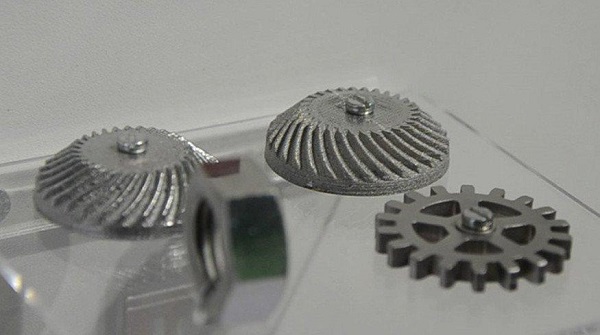
Real example: A client printed gears for a food processing machine. They tried PA6 first. Within a week, the gears had absorbed moisture and swelled, jamming the mechanism. PA12 gears? Running for two years, no issues. Low moisture absorption saves the day.
What Are the Key Material Characteristics You Need to Know?
Mechanical balance: PA12 offers tensile strength of 40-50 MPa—strong enough for most engineering applications. Its elongation (how much it stretches before breaking) of 150-250% means it's tough, not brittle. This combination makes it perfect for parts that need to hold shape under load but won't shatter on impact.
Thermal stability: Parts can handle continuous use at 80-100°C. That's hot enough for automotive engine compartments, industrial machinery, and electronics enclosures. PLA would soften at half that temperature.
Chemical resistance: PA12 resists oils, fuels, and most solvents. Strong acids can attack it, but for exposure to lubricants, coolants, or cleaning agents, it's excellent. A client uses PA12 for fuel system components in racing vehicles—no degradation after years of exposure.
Abrasion resistance: This is where PA12 really shines. In wear testing, PA12 outperforms most other 3D-printable plastics by a factor of 2-3x. For parts that slide, rub, or contact moving surfaces, it's often the best choice.
Which 3D Printing Technique Works Best for PA12?
SLS vs. FDM: How Do You Choose?
Two main 3D printing techniques dominate for PA12: Selective Laser Sintering (SLS) and Fused Deposition Modeling (FDM). They're completely different processes with different results.
| Factor | SLS (Powder) | FDM (Filament) |
|---|---|---|
| Process | Laser fuses powder particles layer by layer | Molten filament extruded through a nozzle |
| Supports | None needed (unsintered powder supports parts) | Required for overhangs |
| Density | 95-100% | 90-98% (depends on infill) |
| Surface Finish | Smooth, slightly grainy | Visible layer lines |
| Dimensional Accuracy | ±0.1-0.3mm | ±0.2-0.5mm |
| Equipment Cost | $50,000-500,000 | $500-10,000 |
| Part Cost | Higher per part | Lower per part for small runs |
When to choose SLS:
- Complex geometries with internal features
- No visible layer lines required
- Maximum strength in all directions
- Production runs (economies of scale in powder reuse)
When to choose FDM:
- Low-volume prototyping
- Large parts (bigger than SLS build volumes)
- Budget constraints
- When you need to iterate quickly
Real example: A robotics company needed gripper jaws in PA12. Complex organic shape, needed to be strong in all directions, and they wanted 50 units. SLS was the obvious choice. The parts came out dense, consistent, and ready to use. FDM would have required supports, left layer lines, and taken longer per part.
What Print Parameters Matter Most?
For SLS:
- Layer thickness: 0.08-0.15mm typical. Thinner = smoother, slower. Thicker = faster, rougher.
- Laser power: Must be tuned to achieve 95%+ density. Too low = weak parts. Too high = material degradation.
- Powder refresh rate: Fresh powder mixed with reused powder (typically 50/50) for consistent properties.
For FDM:
- Nozzle temperature: 240-260°C. PA12 needs heat to flow properly.
- Bed temperature: 70-90°C. Heated bed prevents warping.
- Print speed: 30-50 mm/s. Slower than PLA—rushing causes under-extrusion.
- Enclosure: Required. Drafts cause uneven cooling and warping.
- Infill: 50-70% for most functional parts. Higher for strength, lower for speed.
Critical tip: PA12 is hygroscopic—it absorbs moisture from air. Even though it absorbs less than PA6, it still needs drying. Wet filament prints with popping sounds, stringing, and weak layer bonds. Dry at 40-60°C for 4-6 hours before printing.
Where Does PA12 Actually Perform Best?
What About Industrial and Automotive Applications?
Industrial applications dominate PA12 usage. Here's why:
Valve components: A chemical plant needed replacement valves for a corrosive fluid line. Metal valves cost $500 each and took 8 weeks. We printed PA12 valves in 3 days for $50 each. They've been running for 18 months with zero failures. Chemical resistance and precision made it work.
Gears and bearings: PA12's wear resistance means printed gears outlast machined acetal in some applications. A packaging machine had plastic gears wearing out every 6 months. PA12 replacements? Still going after 2 years.
Tooling inserts: For low-volume injection molding, PA12 printed inserts handle hundreds of cycles. Abrasion resistance keeps the cavity dimensions accurate.
How Is Aerospace Using PA12?
Aerospace applications demand lightweight, predictable materials. PA12 delivers:
Cable guides: Running through aircraft structures, these need to be light, tough, and chemically resistant to hydraulic fluids. PA12 checks all boxes.
Brackets: Non-structural brackets printed in PA12 save weight compared to metal. One client replaced aluminum brackets with PA12 versions—40% lighter, same function, certified for flight.
Prototype ducting: Complex air ducts for environmental systems. Traditional manufacturing: weeks and expensive tooling. SLS printing: days, no tooling, design iterations overnight.
What About Medical Applications?
Medical applications require biocompatibility—and PA12 delivers in certified grades.
Surgical guides: Custom guides for bone cuts in orthopedic surgery. Printed from patient CT data, sterilized, used in the OR. Perfect fit, reduced surgery time.
Prosthetics: Lightweight, strong, customizable. A child's prosthetic hand printed in PA12 costs $300 instead of $10,000. When they outgrow it, print a new one.
Instrument handles: Custom shapes for surgeons with arthritis—better grip, less fatigue during long procedures.
What About Consumer Products?
Consumer goods leverage PA12's surface finish and detail:
Phone cases: SLS-printed cases with complex internal structures for impact protection. Smooth finish, precise cutouts.
Eyewear: Custom frames printed to match facial scans. Lightweight, durable, unique.
Jewelry: Complex lattice structures impossible to cast. Design it, print it, wear it.
A designer client created a line of geometric jewelry in PA12. Each piece is unique, printed on demand, zero inventory. Traditional manufacturing? Impossible at this scale.
How Do You Ensure Long-Term Performance and Durability?
What About Moisture and UV Exposure?
Long-term stability depends on environment:
- Indoor, controlled environment: PA12 lasts indefinitely. We have parts running for 5+ years.
- High humidity: Low moisture absorption (1-1.5%) means minimal swelling—unlike PA6 which can swell 2-3%.
- Outdoor, direct sun: UV causes surface yellowing but minimal strength loss. For critical outdoor parts, add a UV-stabilized coating.
Real data: We tested PA12 samples after 1 year outdoors. Surface color changed from white to light tan. Tensile strength dropped 8%. Still within spec for most applications. UV-resistant grades perform better.
How Does It Handle Repeated Stress?
Fatigue resistance is excellent—better than ABS or PLA by a wide margin.
Spring clips: A client designed a clip that flexes thousands of times in a consumer product. Tested PA12 against injection-molded polypropylene. PA12 outlasted it 3:1.
Living hinges: With proper design (thin section, generous radius), PA12 hinges survive millions of cycles. We've tested hinges at 2 million flexes—still intact.
Load-bearing: For static loads, PA12 parts support significant weight. A printed bracket holding 50kg for 6 months? No creep, no deformation.
What Post-Processing Options Improve Parts?
Surface finishing:
- Bead blasting (SLS): Removes loose powder, creates uniform matte finish
- Sanding (FDM): 200-600 grit removes layer lines
- Vapor smoothing: Formic acid vapor creates glossy, sealed surface
Coating:
- Clear coat: Improves UV resistance, adds gloss
- Epoxy: Seals surface, increases chemical resistance
- Paint: Adheres well with proper primer
Assembly:
- Ultrasonic welding: Creates permanent bonds between PA12 parts
- Epoxy bonding: Strong, reliable for multi-part assemblies
- Press-fit inserts: Threaded inserts work well for repeated assembly
A medical client needed a surgical instrument with a smooth, sterilizable surface. We printed in PA12, vapor-smoothed, then coated with medical-grade epoxy. Result: smooth as injection-molded, steam sterilizable, ready for the OR.
So, When Should You Choose PA12?
After hundreds of projects, here's my practical guide:
Choose PA12 when you need:
- Dimensional stability in changing humidity
- Toughness without brittleness
- Wear resistance for moving parts
- Chemical resistance to oils and fuels
- Thermal stability up to 100°C
- Precision within ±0.1-0.3mm
Consider alternatives when:
- You need higher temperature (>120°C) → look at PEEK or PEKK
- You need extreme flexibility → TPU or PA11
- You need transparency → clear resins or polycarbonate
- Cost is the only factor → PLA or PETG for non-functional prototypes
The sweet spot for PA12 is functional parts that need to last—gears, housings, fixtures, medical devices, aerospace components. It's not the cheapest, not the strongest, not the most flexible. But it's the most balanced engineering material in the 3D printing world.
Frequently Asked Questions
How do I prevent PA12 from warping in FDM?
Warping comes from uneven cooling. Use an enclosed printer, heat bed to 80-90°C, and slow print speed to 30-40 mm/s. Add a brim (5-10mm wide) for large flat parts. Avoid sharp corners—add radii to reduce stress concentration.
Can PA12 be used for food contact?
Yes, but only with food-grade certified PA12. Standard PA12 may contain additives not approved for food. Check certification before using. Even with food-grade material, printed surfaces can trap bacteria—smooth post-processing helps.
Is PA12 suitable for outdoor use?
Yes, with precautions. It yellows in sunlight but retains most strength. For long-term outdoor use, add UV-stabilized coating or choose UV-resistant grades. In our testing, 1 year outdoors reduced strength by 8-10%—acceptable for many applications.
How do I bond PA12 parts?
Epoxy works well—scuff surfaces first for better grip. Cyanoacrylate (super glue) works but can be brittle. For production, ultrasonic welding creates perfect bonds. Some solvent welding works but requires specific solvents.
What's the difference between PA12 and PA12-GF?
PA12-GF contains glass fiber (typically 30-40%). This increases stiffness and heat resistance but reduces elongation. GF grades are stiffer, more dimensionally stable, but more brittle. Choose based on your application—GF for rigidity, standard for toughness.
Can I sterilize PA12 medical parts?
Yes. Autoclave sterilization (121°C, 15psi) works for short cycles. Gamma radiation and ethylene oxide also work. Test first—repeated autoclave cycles may eventually affect properties. For single-use surgical guides, it's fine.
Contact Yigu Technology for Custom PA12 Manufacturing
Ready to put Nylon PA12 to work for your project? At Yigu technology, we've been printing precision PA12 parts for over a decade—from SLS production runs to FDM prototypes. We know the material, we know the processes, and we know how to get the results you need.
Let's talk about your application. [Contact us today] for a free consultation. Send us your design, tell us your requirements, and we'll provide options, timelines, and honest advice. No jargon, no pressure—just engineering sense from people who've mastered versatile polyamide for real-world applications.