

How Does Metal Stamping High-Strength Steel Balance Strength and Formability?

Precision Machining Inc

Manufacturers today face a tough challenge. They need parts that are lighter yet stronger. Traditional mild steel often falls short. Exotic alloys can be too expensive or difficult to work with. High-strength steel (HSS) offers a solution. It delivers tensile strengths from 340 MPa to over 1,600 MPa, allowing thinner, lighter components without sacrificing performance. […]

Manufacturers today face a tough challenge. They need parts that are lighter yet stronger. Traditional mild steel often falls short. Exotic alloys can be too expensive or difficult to work with. High-strength steel (HSS) offers a solution. It delivers tensile strengths from 340 MPa to over 1,600 MPa, allowing thinner, lighter components without sacrificing performance. But stamping HSS is not straightforward. It brings challenges like springback, tool wear, and cracking. This guide walks you through the properties, processes, and techniques needed to stamp high-strength steel successfully. Whether you work in automotive, construction, or aerospace, you will learn how to balance strength with formability to get consistent, high-quality results.


What Makes High-Strength Steel Different?

High-strength steel is not a single material. It is a family of alloys, each designed for specific needs. But they share key traits that set them apart from mild steel.

High Tensile Strength

Tensile strength measures how much pulling force a material can take before breaking. Mild steel typically offers 250 to 400 MPa. HSS starts at 340 MPa and goes up to 1,600 MPa for ultra-high-strength steel (UHSS). That is a range of 30% to 300% higher than mild steel.

High Yield Strength

Yield strength is the point where a material begins to deform permanently. For structural parts like chassis components, this matters a lot. HSS typically has yield strength of 250 MPa or higher. It resists bending under heavy loads.

Impact and Fatigue Resistance

HSS absorbs energy well during collisions. That is why it is a staple in automotive safety features like door beams and bumper reinforcements. It also withstands repeated stress cycles without failing. Suspension components, which face constant vibration, rely on this fatigue resistance.

The Formability Trade-Off

Higher strength usually means lower formability. Modern HSS grades like DP (dual-phase) and TRIP (transformation-induced plasticity) offer improved ductility. But the trend holds. DP600, with 600 MPa tensile strength, has about 15% to 20% elongation. Mild steel offers 25% to 30%. You gain strength, but you lose some ability to stretch without cracking.

GradeTensile StrengthYield StrengthElongationBest For
HSLA 340340–550 MPa290–450 MPa18–22%Structural frames
DP600600–700 MPa350–450 MPa15–18%Automotive body panels
TRIP800800–900 MPa500–600 MPa20–25%Crash-absorbing components
Martensitic1,200–1,600 MPa1,000–1,300 MPa6–10%Safety-critical parts

How Does Stamping HSS Differ from Mild Steel?

Stamping high-strength steel requires adjustments at every step. The material does not behave like mild steel. It is stronger, harder to shape, and more likely to spring back.

Press Selection

Hydraulic presses are preferred for HSS. They offer variable speed and force control, which is essential for high-strength grades. For thick materials, say 3 mm or more, you need presses with 1,000+ ton capacity. That ensures full material deformation.

Mechanical presses with servo drives work well for thin-gauge HSS. They offer faster cycle times for high-volume production. But for ultra-high-strength grades, hydraulic presses give you better control.

Die Design and Material

HSS wears down tools faster. It can reduce die life by 30% to 50% compared to mild steel. To counter this, use hardened tool steel like A2 or D2. Carbide inserts are even better for high-volume runs.

Die geometry matters too. Use larger radii—at least three times the material thickness—to prevent cracking. Add bead features to control material flow during forming. These beads act as brakes, slowing the metal down in specific areas to prevent wrinkling.

Lubrication

Higher contact pressures mean higher friction. Standard lubricants often fail. Use high-viscosity, extreme-pressure lubricants containing molybdenum disulfide or graphite. These reduce friction and prevent galling, where material from the sheet sticks to the die.

Stamping Speed and Pressure

Slow down. For ultra-high-strength grades, use 5 to 10 strokes per minute. This allows the material to flow evenly, reducing the risk of tearing. Increase blank holder pressure by 20% to 30% compared to mild steel. That extra pressure helps control wrinkling.


What Is Springback and How Do You Control It?

Springback is one of the biggest challenges in stamping HSS. When you bend a piece of steel and release the pressure, it tries to return to its original shape. HSS shows 2 to 5 times more springback than mild steel.

Over-Bending

The simplest solution is to bend further than you need. If you want a 90-degree angle, over-bend by 10 to 15 degrees. When the steel springs back, it lands at the target angle.

Bottoming Dies

Bottoming dies strike the material with enough force to compress it slightly at the bend. This reduces the elastic recovery that causes springback. The die design forces the material to conform to the desired angle rather than just bending it.

Simulation

For complex parts, guesswork is not enough. Use finite element analysis (FEA) software to simulate springback before cutting any steel. The software predicts how the part will behave and lets you optimize die angles before production begins.

A real-world example: An automotive supplier was stamping a DP600 door beam. Initial parts showed a 4-degree springback, making assembly difficult. By simulating the process in FEA, they adjusted the die angle by 12 degrees and added a bottoming feature. The final parts came out at the correct angle with no rework.


Where Is High-Strength Steel Stamping Used?

HSS’s strength-to-weight ratio makes it valuable across multiple industries.

Automotive Body Panels

DP and TRIP steels form lightweight, crash-resistant doors, hoods, and fenders. A typical sedan uses over 200 kg of HSS in its body structure. This improves fuel efficiency without sacrificing safety. In a collision, HSS absorbs energy while maintaining the passenger cell’s integrity.

Chassis Components

HSLA grades create strong, rigid frames and suspension parts. These components handle road stress and vibration while reducing vehicle weight. A lighter chassis means better handling and lower fuel consumption.

Structural Parts in Construction

HSS stamped brackets and connectors reinforce buildings and bridges. They withstand wind loads, seismic forces, and constant stress. In high-rise construction, every kilogram saved in connectors and brackets reduces the overall load on the structure.

Railway Vehicle Components

Martensitic steel parts like couplers and brake components endure heavy loads and repeated use. Trains operate for decades. Their components must last. HSS stamped parts provide that durability.

Aerospace Structural Elements

Weight is critical in aerospace. HSS stamped parts reduce aircraft weight, lowering fuel consumption while meeting strict strength requirements. Even small weight savings add up over the life of an aircraft.


How Do You Ensure Quality in HSS Stamping?

Quality control for HSS goes beyond checking dimensions. The material’s high strength means flaws can lead to sudden failure.

Dimensional Inspection

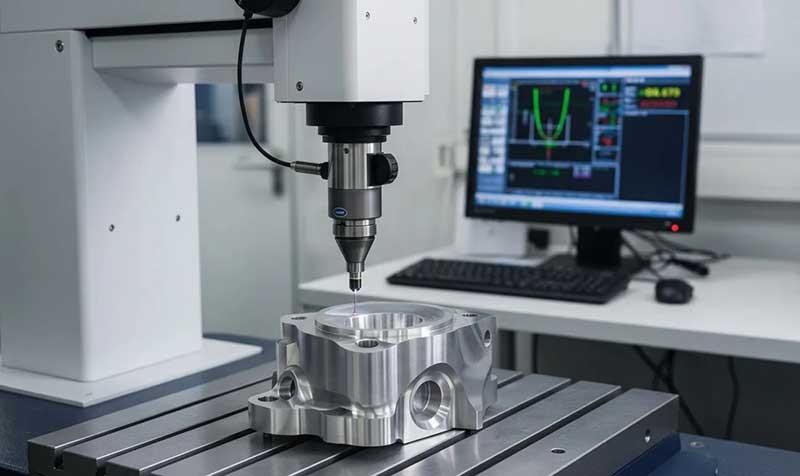
Use coordinate measuring machines (CMMs) to verify tolerances. Structural parts often require tolerances as tight as ±0.05 mm. Pay special attention to bent areas, where springback can affect fit. A part that measures correctly at the ends but has a poor bend angle may not assemble properly.

Surface Defect Detection

Surface flaws in HSS can propagate under stress. Automated optical inspection (AOI) systems identify cracks, scratches, and galling. These systems scan parts faster and more consistently than human inspectors.

Mechanical Property Testing

Conduct tensile tests on sample parts to confirm strength meets specifications. For DP600, you need to see at least 600 MPa. Hardness testing using the Rockwell B or C scale ensures heat treatment consistency. Variations in hardness can indicate issues with the raw material or the stamping process.

Non-Destructive Testing

For critical components, use ultrasonic testing to detect internal defects in thick parts. X-ray inspection checks for weld or forming flaws in components like automotive crash structures. These methods catch problems you cannot see with the naked eye.

Material Certification and Traceability

Track HSS from raw material to finished part. Ensure compliance with standards like ASTM A1011 for HSLA or ISO 16630 for automotive steel. If a part fails later, traceability lets you identify the batch and take corrective action.


What Are the Key Challenges and Solutions?

ChallengeImpactSolution
SpringbackParts do not hold shapeOver-bend, use bottoming dies, simulate with FEA
Tool wearDies wear out fasterUse hardened tool steel or carbide inserts
CrackingMaterial tears during formingIncrease bend radii, slow press speed
WrinklingMaterial bucklesIncrease blank holder pressure, add beads
GallingMaterial sticks to dieUse extreme-pressure lubricants

Conclusion

High-strength steel solves a fundamental problem. It lets you build lighter, stronger components without the cost of exotic alloys. But stamping HSS is not the same as stamping mild steel. The material is harder, more likely to spring back, and tougher on tools. Success requires the right press, the right dies, and the right lubricants. It demands slower speeds, higher pressures, and careful control of every variable.

The payoff is worth it. Automotive manufacturers build safer, more efficient vehicles. Construction projects use lighter, stronger connectors. Aerospace engineers cut weight without cutting corners. When you balance strength with formability—through proper die design, springback control, and rigorous quality testing—high-strength steel delivers results that mild steel cannot match.


FAQ About Metal Stamping High-Strength Steel

How does HSS compare to aluminum for automotive parts?

HSS offers higher strength at a lower cost. Aluminum is lighter but more expensive. Use HSS for structural parts that need maximum strength. Use aluminum for non-critical, weight-sensitive components like hoods or decklids.

Can HSS be welded after stamping?

Yes, but use low-heat techniques like laser welding to avoid weakening the heat-affected zone. Ultra-high-strength grades may need pre-weld and post-weld heat treatment to restore properties.

What is the maximum thickness for stamping HSS?

Most stamping is done on sheets up to 6 mm thick. Thicker material, in the 6 mm to 10 mm range, requires specialized presses and may need pre-heating to 200°C to 300°C to improve formability.

Why does HSS cause more springback?

Springback happens because of the material’s high yield strength. When you bend HSS, it stores more elastic energy than mild steel. When the pressure is released, that energy pushes the material back toward its original shape.

Is HSS more expensive than mild steel?

Yes, but the price gap has narrowed. HSS costs about 10% to 30% more per ton than mild steel. However, because you can use thinner material, the cost per part may actually be lower.


Contact Yigu Technology for Custom Manufacturing

Stamping high-strength steel requires more than just a press. It takes experience, precision, and the right equipment. At Yigu Technology, we specialize in custom metal stamping for automotive, construction, and industrial clients. We use servo hydraulic presses and carbide tooling to handle grades up to 1,200 MPa. Our FEA simulation controls springback before production begins. Our quality control includes non-destructive testing and tensile testing to ensure every part meets your specifications. Whether you need high-volume body panels or critical structural components, we have the capabilities to deliver. Contact us today to discuss your project.

Scroll to Top