Introduction
Imagine pulling up to a dealership and watching your car get printed layer by layer right in front of you. No massive factory. No long assembly lines. Just a giant printer and a few hours of waiting. Sounds like science fiction, right?
Well, it's not anymore.
3D-printed cars have moved from lab experiments to real, drivable vehicles. Companies like Local Motors and Divergent have already proven it works. But here's the big question everyone asks: Can you actually buy one? Is it safe? And when will this technology go mainstream?
This article breaks down everything you need to know. We'll cover how it works, real-world examples, the pros and cons, and whether a 3D-printed car could be sitting in your garage someday. Let's dive in.
1. How Does 3D Printing Work for Cars?
At its core, additive manufacturing builds objects by adding material layer by layer. Unlike traditional car making, which cuts or molds parts from raw blocks, 3D printing starts with nothing and builds up.
Key Printing Technologies
Not all 3D printers are the same. The auto industry mainly uses three types:
| Technology | How It Works | Best For |
|---|---|---|
| FDM (Fused Deposition Modeling) | Melts plastic filament and lays it down in layers | Interior parts, prototypes |
| SLS (Selective Laser Sintering) | Uses a laser to fuse powder particles together | Strong structural components |
| Metal 3D Printing (DMLS/SLM) | Laser melts metal powder into solid shapes | Engine parts, chassis nodes |
FDM is the most common and affordable. But for actual car bodies, SLS and metal printing deliver the strength you need.
Materials Used in Car Printing
The materials have come a long way. Early printers only used basic plastics. Today, you'll find:
- Carbon fiber-reinforced polymers — super strong, super light
- Nylon composites — great for brackets and housings
- Aluminum and titanium alloys — used in high-stress metal parts
- Recycled plastics — eco-friendly options are growing fast
Which Parts Can Be 3D Printed?
You won't find a fully printed car yet. But here's what's possible today:
- ✅ Dashboard and interior trim
- ✅ Air vents and cup holders
- ✅ Structural nodes (the "joints" of the car frame)
- ✅ Suspension components
- ✅ Custom body panels
- ❌ Full unibody frames (not yet at scale)
- ❌ Engine blocks (still mostly cast)
2. Notable Real-World Examples
Theory is great. But let's look at cars you can actually see (and some you can drive).
Local Motors' Strati: The First 3D-Printed Car
In 2014, Local Motors unveiled the Strati at the International Manufacturing Technology Show in Chicago. This was the world's first 3D-printed electric car.
Here are the key facts:
- Print time: About 44 hours
- Material: ABS plastic reinforced with carbon fiber
- Top speed: 40 mph (64 km/h)
- Range: Roughly 25 miles per charge
- Price at launch: Around $18,000
The Strati had only 49 parts, compared to the 30,000+ parts in a typical car. That's a massive simplification. Local Motors even let visitors vote on design tweaks at auto shows. The car was real, it drove, and it turned heads.
Divergent's Blade: A 3D-Printed Supercar
Divergent Technologies took things up a notch with the Blade. This isn't a slow city car. It's a 700-horsepower supercar.
| Spec | Detail |
|---|---|
| Engine | 700 HP twin-turbo V8 |
| 0–60 mph | 2.1 seconds |
| Chassis | 3D-printed aluminum nodes connected by carbon fiber tubes |
| Weight | Just 1,400 lbs (635 kg) |
| Production goal | Small-batch, on-demand manufacturing |
The Blade uses 3D-printed nodes as the connection points in its chassis. This cuts weight dramatically and lets Divergent build cars without a traditional factory. Kevin Czinger, Divergent's founder, has said the goal is to make car manufacturing 100x cleaner and 10x cheaper.
Other Pioneers Worth Watching
- XEV (China): Already selling the 3D-printed LSEV city car in Europe for around $10,000. It's street-legal and in production.
- Apis Cor (Russia): Printed a small house in 24 hours. Now working on 3D-printed vehicle platforms.
- Porsche & BMW: Both use 3D printing for prototype parts and custom components, even if they don't sell printed cars yet.
3. What Are the Advantages?
Why are carmakers so excited about this? The benefits go way beyond cool factor.
Design Freedom and Customization
With traditional manufacturing, complex shapes cost a fortune. With 3D printing, complexity is almost free. Want a unique grille pattern? A custom dashboard layout? A weird-shaped air vent? Just change the digital file and print it.
This opens the door to true mass customization. Every car could be different, at no extra cost.
Less Waste, Greener Footprint
Traditional car manufacturing is wasteful. You start with a big block of metal or plastic and cut away up to 90% of it. That's a lot of scrap.
3D printing only uses the material it needs. Studies show it can reduce material waste by up to 90%. That's a huge win for the environment.
Faster Prototyping and Shorter Supply Chains
A new car part used to take months to design, tool, and produce. With 3D printing, engineers can go from CAD file to physical part in days. This slashes development time and costs.
It also means you don't need a warehouse full of spare parts. Just store the digital file and print on demand.
Lightweighting and Performance Gains
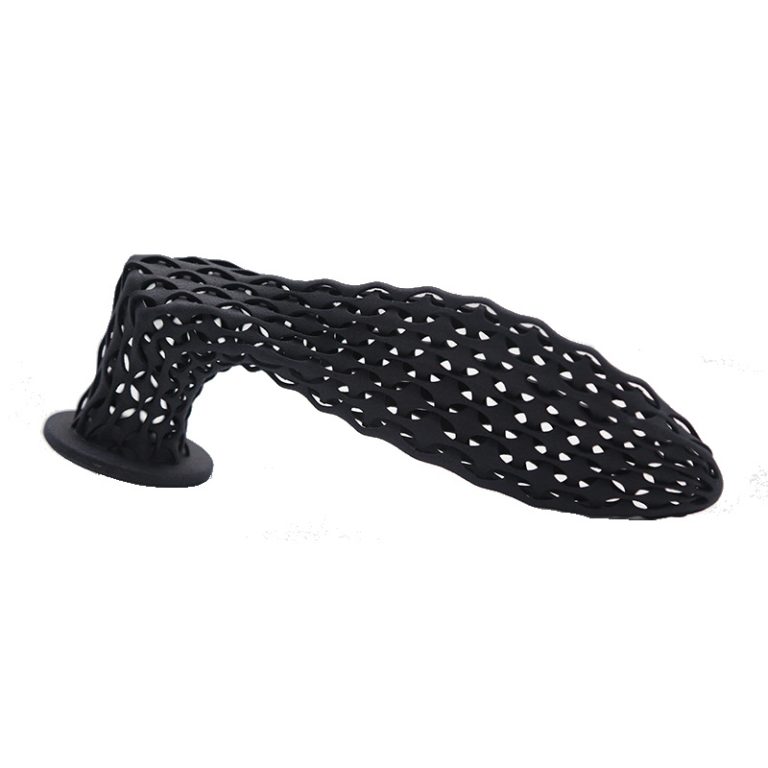
Lighter cars are faster, more efficient, and safer. 3D printing lets engineers use lattice structures — internal patterns that look like honeycombs. These are impossible to make with traditional methods but incredibly strong and light.
The Blade's 1,400-lb weight is a perfect example. That's lighter than many motorcycles.
4. What Are the Current Limitations?
Let's be honest. 3D-printed cars aren't perfect yet. Here's what's holding them back.
Speed and Scalability Issues
Printing a car takes hours to days. A traditional factory stamps out a car body in under a minute. That speed gap is enormous. For mass production, 3D printing is still way too slow.
| Method | Time to Produce One Car Body |
|---|---|
| Stamping (traditional) | 6–10 seconds |
| 3D Printing (current) | 44–100+ hours |
Material Strength and Safety Certification
This is the biggest hurdle. Cars have to pass brutal crash tests. Can a 3D-printed polymer frame protect you in a 40-mph collision?
The answer is: sometimes, but not yet at scale. Metal 3D-printed parts are strong. But fully printed plastic bodies? Regulators like the NHTSA haven't fully certified them for mainstream use yet.
Cost Barriers for Mass Production
For one-off or small-batch cars, 3D printing is cost-effective. But when you need to make millions of cars, traditional methods are still cheaper per unit. The printers themselves are expensive too. A large industrial metal printer can cost 500,000to2 million.
Regulatory and Insurance Hurdles
Who's liable if a 3D-printed car fails? The printer maker? The designer? The owner? Insurance companies don't have clear frameworks yet. And governments need time to write safety rules for a new manufacturing method.
5. Can You Actually Buy One Today?
Yes. But with some big asterisks.
Consumer vs. Industrial Availability
Right now, fully 3D-printed cars for consumers are rare. But you have options:
| Option | What You Get | Price Range |
|---|---|---|
| XEV LSEV (Europe/Asia) | Fully 3D-printed city car, street-legal | ~$10,000 |
| Local Motors Strati (limited runs) | 3D-printed EV, low speed | ~$18,000 (when available) |
| Custom 3D-printed parts | Dashboard, trim, body kits for your existing car | 500–5,000+ |
| Divergent Blade | Supercar, pre-order only, not mass-market | $300,000+ (estimated) |
Price Comparison with Conventional Cars
The XEV LSEV at $10,000 undercuts most new gas cars. But it's a slow city car with a 100-mile range. It's not replacing your family SUV anytime soon.
For now, the sweet spot is aftermarket parts. Want a custom intake manifold for your truck? 3D printing can do that for a fraction of the cost.
Customization and Lead Times
If you order custom 3D-printed car parts, expect 2–6 weeks of lead time. Fully printed cars? That's more like 3–6 months depending on the manufacturer.
6. The Future of 3D-Printed Cars
So where is this all headed? The outlook is surprisingly bullish.
Integration with Electric and Autonomous Vehicles
EVs and 3D printing are a perfect match. Electric cars have fewer parts than gas cars. That makes them easier to print. And autonomous vehicles need lightweight, optimized frames — exactly what 3D printing delivers.
Most experts see EVs as the first mass-market 3D-printed cars, likely by the early 2030s.
Decentralized, On-Demand Manufacturing
Picture this: You order a car online. A local micro-factory prints it in 48 hours. You pick it up or it gets delivered. No shipping across oceans. No massive inventory.
This is what Divergent and Apis Cor are building toward. It could disrupt the entire auto industry if it works at scale.
Industry Predictions and Timeline
| Year | Expected Milestone |
|---|---|
| 2024–2025 | More 3D-printed city cars in Europe and Asia |
| 2026–2028 | Mainstream automakers use 3D printing for 20–30% of parts |
| 2029–2032 | First mass-produced 3D-printed EVs hit the market |
| 2035+ | Fully printed cars become a real option for consumers |
McKinsey estimates the additive manufacturing market in auto could reach $12 billion by 2030. That's serious money.
Conclusion
So, are 3D-printed cars ready for the road? Yes and no.
They're real. They drive. Some are even street-legal and for sale today. But they're not yet a practical replacement for your everyday sedan. The technology is incredible, but it still faces real challenges in speed, safety certification, cost, and regulation.
That said, the trajectory is clear. Within the next decade, 3D printing will move from novelty to norm in the auto world. Expect to see more EVs with 3D-printed frames, custom parts printed on demand, and maybe even a fully printed car in your driveway by the 2030s.
The future of cars isn't just electric or autonomous. It's printed. And it's closer than you think.
FAQ
Are 3D-printed cars safe to drive?
Yes, when they use the right materials. Metal 3D-printed parts can meet safety standards. Fully polymer bodies are still working toward full crash certification.
How much does a 3D-printed car cost?
The XEV LSEV sells for around 10,000.High−endmodelsliketheDivergentBladecouldcost300,000+. Custom parts range from 500to5,000.
Can you 3D print a whole car at home?
Not yet. Home 3D printers can make small parts like clips or trim. A full car requires industrial-grade machines that cost hundreds of thousands of dollars.
What's the fastest 3D-printed car?
The Divergent Blade hits 0–60 mph in 2.1 seconds with 700 horsepower. It's one of the fastest 3D-printed vehicles ever built.
Will 3D printing replace car factories?
Not entirely. But it will replace many traditional processes. Expect a hybrid model: factories that use 3D printing for key parts alongside traditional methods.
How long does it take to 3D print a car?
Anywhere from 44 hours for a basic EV like the Strati to 100+ hours for complex supercar frames. Traditional stamping takes seconds.
Contact Yigu Technology for Custom Manufacturing
Looking for custom 3D printing solutions for automotive parts or prototypes? Yigu Technology specializes in high-precision additive manufacturing for the auto industry. From rapid prototyping to small-batch production, we've got you covered.
📩 Get in touch today to discuss your project. Let's build the future — one layer at a time.
Contact Yigu Technology for custom manufacturing.