Introduction
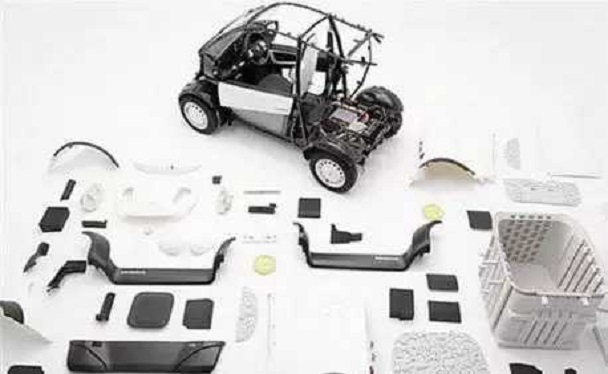
In today's fast - moving manufacturing world, 3D printing has completely changed how we bring product ideas to life. What started as a quick way to make simple models has grown into a powerful technology that creates high - quality, finished products. At Yigu technology, we've seen firsthand how 3D printed products have evolved from rough prototypes to precise, reliable end - use parts. This journey matters because it affects how businesses innovate, how fast they get products to market, and how well those products perform. In this article, we'll walk you through the entire process, from understanding the basics to mastering the advanced techniques that turn a basic prototype into something perfect.
Part 1: What Makes 3D Printed Prototypes Different?
How Does 3D Printing Actually Build Things?
Think of 3D printing like building with LEGO blocks, but instead of your hands, a machine does the work, and instead of blocks, it uses plastic, metal, or resin. The process starts with a digital design file, usually made in CAD (Computer - Aided Design) software. This file contains every detail of your product. Then, special software cuts this design into hundreds or even thousands of ultra - thin horizontal slices.
Here's what happens next:
- The printer reads these slice instructions
- It deposits material layer by layer
- Each new layer fuses to the one below it
- The object slowly rises from the build platform
For example, in Fused Deposition Modeling (FDM) , a heated nozzle melts plastic filament and draws each layer like a precise hot glue gun. In Stereolithography (SLA) , a laser hardens liquid resin into solid plastic. Different technologies suit different needs, but all follow this same layer - by - layer principle.
What Materials Work Best for Prototypes?
Choosing the right material is like picking the right ingredient for a recipe. Get it wrong, and your prototype won't perform as expected. Here are the most common options:
| Material | Best For | Key Properties | Print Difficulty |
|---|---|---|---|
| PLA | Concept models, visual prototypes | Biodegradable, easy to print, low warping | Easy |
| ABS | Functional parts, mechanical testing | Tough, heat - resistant, durable | Medium (needs heated bed) |
| PETG | Strong, durable prototypes | Chemical resistant, good layer bonding, can be clear | Medium |
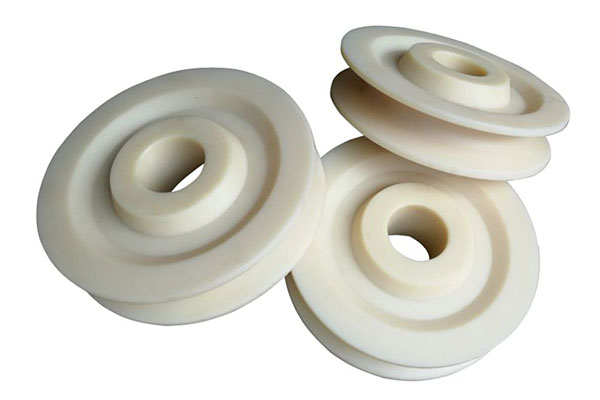
| Nylon | Gears, moving parts | Flexible, abrasion - resistant, strong | Hard |
| Resin | Detailed models, jewelry, dental | Ultra - smooth surface, high detail | Medium (requires post - processing) |
At Yigu technology, we often tell clients: start with PLA for shape and fit checks, then move to engineering materials like nylon or PETG for functional testing. For example, a client designing a new drone frame first used PLA to check part fit, then switched to carbon - fiber nylon for flight testing because it handled stress better.
Why Can't You Just Skip the Prototype Stage?
Skipping prototyping is like building a house without a blueprint. It might work, but it usually ends in costly mistakes. Prototypes serve five critical functions:
- Catch design flaws early - We worked with a medical device company that 3D printed a surgical tool handle. The first prototype felt uncomfortable after 10 minutes of use. They redesigned it, printed another version, and ended with a handle surgeons loved. Without that prototype, they'd have manufactured thousands of uncomfortable tools.
- Test real - world function - A prototype lets you see if parts move correctly, if things fit, if it survives drops or heat.
- Speed up decisions - Instead of waiting weeks for tooling, you hold a part in your hand tomorrow.
- Get team buy - in - Engineers, marketers, and executives all understand a physical object better than a screen image.
- Gather user feedback - Show potential customers something real, and their suggestions become practical improvements.
Part 2: How Do You Move From Prototype to Production - Ready?
What Does the Testing and Improvement Cycle Look Like?
The magic happens in the loop: print, test, learn, modify, repeat. Each cycle brings you closer to perfection.
Take our work with an automotive parts supplier. They needed a custom bracket for an electric vehicle battery pack. The first 3D printed prototype showed the mounting holes didn't align perfectly with the vehicle chassis. Simple fix: adjust the CAD model by 0.5mm. Print two. The next version fit, but vibration testing showed cracks forming. We analyzed the failure, switched to a glass - filled nylon material, and reinforced the stress points. Version three passed every test and went straight to production.
The key steps in this process:
- Functional testing - Does it do what it should?
- Dimensional checking - Are all measurements correct?
- Stress analysis - Where might it break under load?
- User trials - How does it feel in real hands?
- Environmental testing - Can it handle heat, cold, moisture?
How Do Materials Evolve During Development?
As your product matures, your materials should too. Early prototypes need speed and low cost. Later versions need performance. Here's how material choices typically progress:
Stage 1: Concept validation
- Use low - cost materials like PLA or basic resin
- Focus on shape, size, and appearance
- Print quickly, sometimes overnight
Stage 2: Design refinement
- Move to durable plastics like ABS or PETG
- Test mechanical properties
- Check assembly fit with other components
Stage 3: Functional testing
- Switch to engineering materials like nylon or polycarbonate
- Add reinforcements like carbon fiber if needed
- Test under real operating conditions
Stage 4: Pre - production
- Use production - intent materials
- Match final manufacturing process properties
- Validate performance fully
For example, in aerospace, parts might start as simple plastic prints but end as Inconel or titanium metal prints. In consumer products, a phone case prototype might begin in cheap PLA but finish in flexible, durable TPU.
Can 3D Printing Match Traditional Manufacturing Quality?
This question comes up constantly. The answer depends on your needs, but modern 3D printing gets surprisingly close. Here's a comparison:
| Quality Factor | 3D Printing Today | Traditional Manufacturing |
|---|---|---|
| Surface finish | Good to excellent (with post - processing) | Excellent (molded parts) |
| Dimensional accuracy | ±0.1mm typical, ±0.05mm with advanced machines | ±0.05mm or better |
| Mechanical strength | 80-95% of molded parts (with right orientation) | 100% (isotropic) |
| Complexity | Unlimited geometric freedom | Constrained by tooling |
| Material options | Growing rapidly, 1000+ options | Vast, decades of development |
A 2023 industry study showed that additive manufacturing parts now achieve 90-95% of the mechanical properties of machined or molded equivalents for many engineering materials. For non - critical applications, that difference rarely matters. For safety - critical parts, designers account for it in their safety factors.
Part 3: What Technologies and Techniques Perfect the Final Product?
Which 3D Printing Technologies Give the Best Results?
Different goals need different tools. Here's what we use at Yigu technology for various stages of perfection:
For ultra - detailed prototypes:
- SLA and DLP - These resin - based printers deliver incredibly smooth surfaces. A jewelry designer client uses them to print wax patterns for casting. The detail is so fine you can see texture from the original CAD file.
- Material Jetting - Prints multiple materials and colors in one part, perfect for overmolded look prototypes.
For strong, functional parts:
- SLS (Selective Laser Sintering) - Uses nylon powder, no supports needed. Great for complex assemblies and moving parts.
- MJF (Multi Jet Fusion) - Faster than SLS, with consistent mechanical properties. HP's technology produces parts ready for end - use.
For metal perfection:
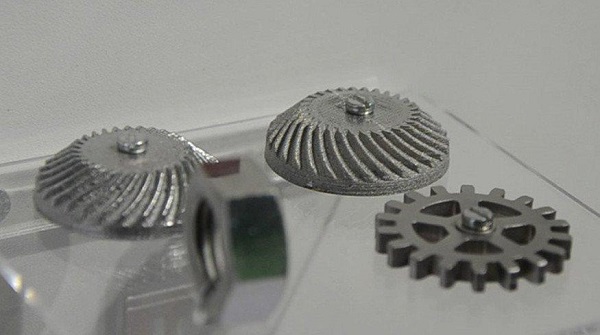
- DMLS (Direct Metal Laser Sintering) - Builds dense metal parts layer by layer. Aerospace and medical implants use this.
- Binder Jetting - Prints metal then sinters in a furnace. Lower cost for larger volumes.
In 2024, we saw multi - laser systems become more common, cutting build times by 50-70% while maintaining quality.
What Post - Processing Makes 3D Printed Parts Look Perfect?
Raw 3D prints often show layer lines or rough surfaces. Post - processing transforms them. Here are proven techniques:
Mechanical methods:
- Sanding - Start with 200 grit, move to 1000+ for smoothness
- Tumbling - For small parts, vibratory tumblers with media smooth surfaces
- Media blasting - Soda, glass bead, or sand blasting for texture
Chemical methods:
- Vapor smoothing - For ABS, acetone vapor creates a glossy, sealed surface
- Chemical dipping - Resin parts can be dipped in solvent for smoothness
Coating methods:
- Primer and paint - Fills layer lines, adds color
- Electroplating - Adds metal coatings for looks or conductivity
- Powder coating - Durable, attractive finishes for metal parts
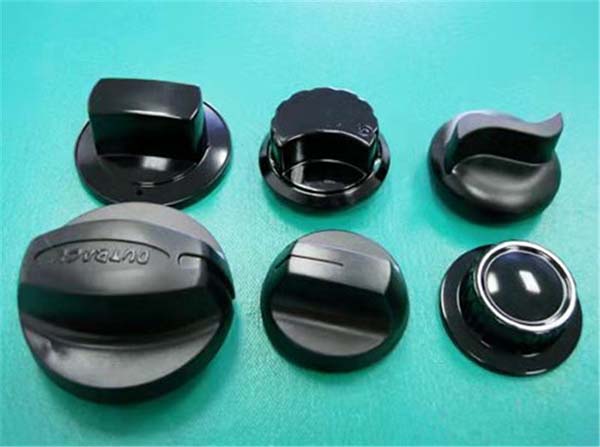
A consumer electronics client needed 3D printed speaker grilles that looked injection - molded. We printed them in black resin, sanded lightly, applied three thin primer coats with sanding between, then finished with matte black paint. The result? Even experienced manufacturers couldn't tell they were 3D printed.
How Do You Ensure Repeatability and Consistency?
Perfection isn't a one - time achievement. It means every part, every time, meets specifications. Here's how professionals ensure consistency:
- Process control - Monitor temperature, humidity, material age
- Calibrated machines - Regular calibration checks for accuracy
- Test coupons - Print test parts alongside production to verify properties
- Statistical process control - Track measurements, catch drift early
- Material certification - Use certified materials with consistent batches
At Yigu technology, we implemented automated build reporting that tracks every parameter of every print. If a part goes out of spec, we know exactly why and fix the root cause. This level of control turns 3D printing from a prototyping tool into a reliable production method.
Conclusion
The journey from prototype to perfect product isn't magic. It's a deliberate process of choosing the right technology, selecting appropriate materials, testing thoroughly, and refining relentlessly. 3D printing accelerates this journey dramatically. What once took months now takes days or weeks. The key is understanding that perfection comes from iteration. Each prototype teaches you something. Each material change improves performance. Each post - processing step enhances appearance and function.
At Yigu technology, we've helped hundreds of clients navigate this journey. Whether you're designing consumer electronics, medical devices, automotive parts, or industrial equipment, the path is the same: start with a prototype, test, learn, improve, and repeat until you achieve perfection. The technology is ready. The materials exist. The processes are proven. Now it's about applying them intelligently to your specific product.
FAQ
Q1: How many prototype iterations does it typically take to perfect a product?
A1: Most products need 3 to 5 iterations. Simple designs might need only 2, while complex products with moving parts or strict requirements could need 8 or more. Each iteration should test specific aspects and teach you something new.
Q2: Can 3D printed parts be as strong as injection - molded ones?
A2: Yes, they can reach 80-95% of injection - molded strength. The difference comes from the layer - by - layer construction, which creates slight anisotropy. Proper design orientation and material choice minimize this gap. For most applications, this strength is perfectly adequate.
Q3: What's the most cost - effective way to move from prototype to production?
A3: Use 3D printing for prototyping and low - volume production (under 1000 parts). For higher volumes, consider bridging to injection molding once your design is finalized. This hybrid approach minimizes risk and upfront tooling costs.
Q4: How do I choose between different 3D printing technologies for my final product?
A4: Consider these factors: required mechanical properties, surface finish needs, material requirements, budget per part, and production volume. For example, SLS is great for durable nylon parts, SLA for smooth cosmetic parts, and metal printing for high - strength applications.
Q5: What's the biggest mistake companies make when transitioning from prototypes to production?
A5: Using prototype materials and processes for production parts without validating them. Always test production - intent materials and settings before committing. Also, don't skip design for additive manufacturing (DfAM) principles - what works for prototyping might not be optimal for production.
Contact Yigu Technology for Custom Manufacturing
Ready to turn your prototype into a perfect product? At Yigu technology, we specialize in guiding products through every stage of development. Our team combines deep engineering expertise with state - of - the - art 3D printing capabilities. We help you select the right materials, optimize designs for manufacturing, and scale from prototype to production seamlessly.
Whether you need a single concept model or thousands of end - use parts, we deliver quality, consistency, and speed. Contact Yigu technology today for a free consultation. Let's discuss your project, explore possibilities, and create something perfect together. Visit our website, call our team, or email us to start your journey from prototype to perfection.