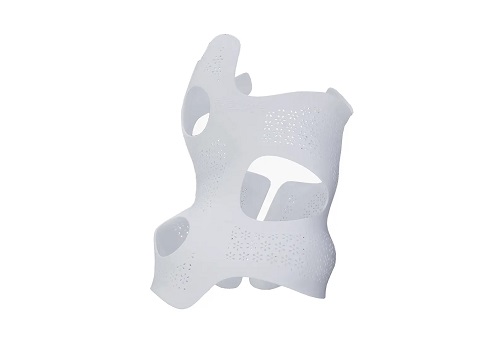
Imagine manufacturing where you never hold inventory. You design a part. A customer orders it. Only then does production begin. No warehouses full of unsold stock. No capital tied up in tooling. This is 3D printing on demand—a model that combines additive manufacturing with just-in-time production. It changes not just how things are made, but when and where they are made. This guide explains how it works, why it matters, and which industries are already transforming their operations.
What Exactly Is 3D Printing on Demand?
3D printing on demand refers to producing physical objects only after an order is placed. Unlike traditional manufacturing, which often produces in bulk to lower per-unit cost, on-demand printing makes one unit—or a small batch—only when needed.
The concept builds on additive manufacturing technology. A digital file sits in a queue. When a customer orders, the file gets printed. No molds. No minimum quantities. No finished goods inventory.
A Brief History
The idea traces back to the 1980s, when Charles Hull invented stereolithography (SLA) , the first commercial 3D printing process. Early adopters were aerospace and automotive companies using it for prototyping. Over the past decade, advances in speed, materials, and software have made on-demand production viable for end-use parts across industries.
What Makes This Model Different from Traditional Manufacturing?
The differences run deep. They affect cost structure, inventory, and even how products are designed.
| Aspect | Traditional Manufacturing | 3D Printing on Demand |
|---|---|---|
| Tooling | Requires molds, dies, or fixtures upfront | No tooling required |
| Minimum Order | High—economies of scale drive volume | One unit is economical |
| Inventory | Finished goods stored in warehouses | Digital files stored; printed when ordered |
| Lead Time | Weeks to months for first part | Days from order to delivery |
| Design Changes | Costly and slow | Fast—update the digital file |
| Waste | Material waste from subtractive processes; unsold inventory waste | Minimal material waste; no unsold inventory |
Data point: A 2023 industry study found that companies using on-demand 3D printing reduced inventory carrying costs by 40–70% and eliminated 90% of write-offs from obsolete stock.
What Are the Core Benefits?
The advantages extend beyond just avoiding inventory. They reshape business models.
Cost Efficiency
Traditional manufacturing spreads tooling costs across thousands of units. For low volumes, this makes per-part costs high. With 3D printing on demand, there are no tooling costs. The first part costs the same as the hundredth. This makes small batches and one-off parts economically viable.
For startups and small businesses, this removes a major barrier. A product that would have required $20,000 in molds can now launch with a few hundred dollars in printing.
Waste Reduction
Traditional manufacturing creates waste in two ways:
- Material waste: Subtractive processes like machining remove material.
- Inventory waste: Unsold products often get discarded.
3D printing addresses both. Additive processes use only the material needed for the part. And since parts are printed after orders come in, no unsold inventory accumulates. A 2022 report estimated that widespread adoption of on-demand manufacturing could reduce global industrial waste by 20–30%.
Unmatched Customization
Mass production excels at making identical products cheaply. On-demand 3D printing excels at making each product different at no extra cost.
A digital file can be modified per order. A prosthetic limb can match a patient’s exact anatomy. A phone case can incorporate a customer’s name or chosen pattern. A medical implant can be tailored to a specific surgical plan. This level of customization was previously reserved for high-end, handcrafted items.
Real example: A medical device company used on-demand 3D printing to produce custom surgical guides for knee replacement surgeries. Each guide matched the patient’s unique anatomy. Surgeons reported 20% shorter operation times and improved implant alignment.
Which Industries Are Being Transformed?
Different sectors adopt on-demand printing for different reasons. The common thread is flexibility.
Manufacturing and Industrial
Manufacturers use on-demand printing for spare parts. Instead of stocking thousands of replacement parts for years, they store digital files. When a machine breaks, they print the needed part in days.
Jigs and fixtures are another major application. Assembly line tools that used to take weeks to machine now print overnight. One automotive plant reduced fixture lead time from 4 weeks to 24 hours.
Healthcare
The healthcare sector leads in customization. Prosthetics and orthotics printed on demand fit better and cost less than traditional options. A custom prosthetic socket that once cost $8,000 and took 3 weeks now costs $500 and takes 3 days.
Surgical guides and implants follow the same pattern. Dentists print crowns and aligners in-house. Hospitals print anatomical models to plan complex procedures. Researchers are exploring printed tissue scaffolds and even organs.
Aerospace
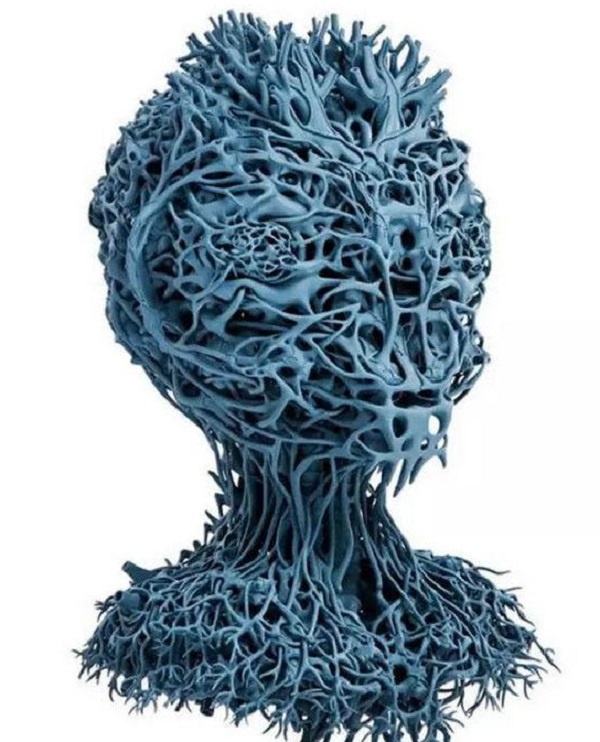
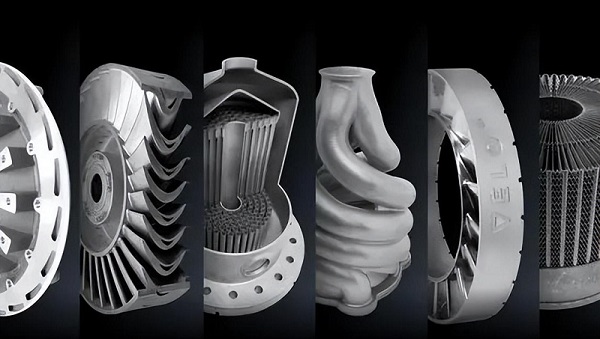
Aerospace values weight reduction and reliability. On-demand printing allows engineers to design lightweight, complex parts that traditional methods cannot produce. Fuel nozzles with internal cooling channels, printed as single pieces, replace assemblies of 20+ parts.
For space exploration, on-demand printing offers a unique advantage. Printing parts on-site reduces the need to carry spares. NASA has tested 3D printers on the International Space Station, demonstrating that tools and replacement parts can be made in orbit.
Consumer Goods
The consumer sector uses on-demand printing for personalized products. Eyewear companies print frames tailored to face shapes. Footwear brands offer custom midsoles based on foot scans. Home decor and fashion designers create limited-run items without holding inventory.
Real example: A hearing aid manufacturer shifted to 3D printing on demand. Previously, they stocked hundreds of sizes and colors. Now, each device is printed to the individual’s ear canal scan. Inventory dropped by 80% , and delivery time fell from 2 weeks to 3 days.
How Does It Change Supply Chains?
On-demand manufacturing decentralizes production. This shift has profound implications.
Localized Production
Instead of one factory serving a continent, companies can establish local print hubs. A hub in New York serves the Northeast. Another in London serves Europe. This reduces shipping distances, cuts carbon footprint, and speeds delivery.
Digital Inventory
Physical warehouses hold physical goods. Digital inventories hold files. A digital file never expires, never gets damaged, and never takes up floor space. When a customer orders, the nearest print hub produces and ships the item.
Resilience to Disruptions
Supply chain disruptions—like port closures or trade disputes—have less impact when production is distributed. If one hub faces issues, others continue operating. If shipping routes close, local hubs serve local customers.
Data point: During the 2020–2021 supply chain disruptions, companies using on-demand 3D printing reported 50% fewer production delays than those relying on traditional offshore manufacturing.
What Are the Current Limitations?
On-demand printing is powerful, but it does not replace all manufacturing—yet.
Speed for High Volumes
For millions of identical parts, traditional methods like injection molding remain faster. A molded part cycles in seconds. A printed part takes hours. The break-even point varies, but for volumes above 10,000–50,000 units, traditional methods usually win on per-part cost and speed.
Material Constraints
While material options grow, not every material is printable at scale. Some high-performance alloys, ceramics, and composites still lack reliable printing processes. For some applications, traditional methods offer more proven material properties.
Certification
In regulated industries like aerospace and medical, certification adds time and cost. Printed parts must undergo testing to prove they meet the same standards as traditionally manufactured components. This process is improving but remains a consideration.
What Does the Future Hold?
The on-demand model is still evolving. Several trends will shape its trajectory.
Hybrid Production
The future is not all additive or all subtractive. Hybrid approaches will dominate. Print near-net shape, then machine critical surfaces. Use 3D printing for complex features and traditional methods for high-volume, simple geometries.
AI-Driven Design
Software will increasingly generate designs optimized for on-demand printing. Engineers will define performance requirements, and AI will produce geometries that maximize strength while minimizing material and print time.
Distributed Print Networks
Networks of printers at service bureaus, warehouses, and even retail locations will handle local production. Customers will order custom products online and pick them up hours later from a nearby print hub.
Sustainable Manufacturing
On-demand printing aligns with circular economy principles. Products can be printed, used, recycled, and reprinted with minimal material loss. This closed-loop model reduces resource consumption and waste.
Yigu Technology’s Perspective
As a custom manufacturer of non-standard plastic and metal products, Yigu Technology sees 3D printing on demand as a complement to traditional manufacturing, not a replacement.
We use on-demand printing for:
- Prototypes: Rapid iteration without tooling costs
- Low-volume production: 10–500 units where tooling would be cost-prohibitive
- Spare parts: Digital inventory for clients who need replacement components
- Complex geometries: Parts that cannot be machined economically
For high-volume production, we transition clients to injection molding, CNC machining, or casting. The goal is to match the production method to the volume, complexity, and cost requirements of each project.
In our experience, the most successful clients use a hybrid strategy. They start with on-demand printing for development and early production. As demand grows, they invest in traditional tooling for high-volume efficiency. This approach minimizes risk and capital expenditure while scaling smoothly.
Conclusion
3D printing on demand is changing manufacturing at its core. It replaces mass production with just-in-time, customized production. It replaces physical inventory with digital files. It replaces centralized factories with distributed print hubs. The result is lower waste, faster response times, and products tailored to individual needs.
The model does not eliminate traditional manufacturing. High volumes and certain materials will always favor injection molding and machining. But for low to medium volumes, complex geometries, and customized products, on-demand printing offers a compelling alternative.
As technology improves and adoption grows, the line between “additive” and “traditional” will blur. The future belongs to manufacturers who understand both—and know when to use each.
FAQ
What types of materials can be used in 3D printing on demand?
Materials include plastics (PLA, ABS, nylon, polycarbonate), resins (standard, tough, high-temp, castable), metals (titanium, aluminum, stainless steel, Inconel), ceramics, and composites (carbon fiber-filled nylon). The choice depends on application requirements like strength, flexibility, heat resistance, or biocompatibility.
How does 3D printing on demand impact supply chain management?
It decentralizes production. Companies can use local print hubs, reducing shipping distances and lead times. Digital inventory replaces physical stock, eliminating storage costs and obsolescence. During disruptions, distributed production provides resilience.
Are there any limitations or challenges associated with 3D printing on demand?
Yes. Production speed is slower than mass manufacturing for high volumes. Material options, while expanding, are still narrower than traditional methods. Certification for regulated industries adds time and cost. Initial investment in printing equipment can be significant for in-house operations, though online services eliminate this barrier.
Can 3D printing on demand handle metal parts?
Yes. Technologies like Direct Metal Laser Sintering (DMLS) print metal parts directly from powder. Aluminum, titanium, stainless steel, and superalloys are common. Metal printed parts are used in aerospace, medical, and industrial applications where strength and weight matter.
Is on-demand 3D printing more sustainable than traditional manufacturing?
Generally, yes. It uses only the material needed for the part, reducing material waste. It eliminates unsold inventory waste. Shorter supply chains reduce shipping emissions. However, energy consumption per part can be higher than injection molding for high volumes. The sustainability advantage is strongest for low-volume, complex, or customized products.
Contact Yigu Technology for Custom Manufacturing
Yigu Technology specializes in non-standard plastic and metal custom manufacturing. We combine 3D printing on demand with traditional processes to deliver the right solution for your project. Whether you need rapid prototypes, low-volume production, or high-volume tooling, our engineering team helps you choose the most effective manufacturing path. Contact us today to discuss your next project.