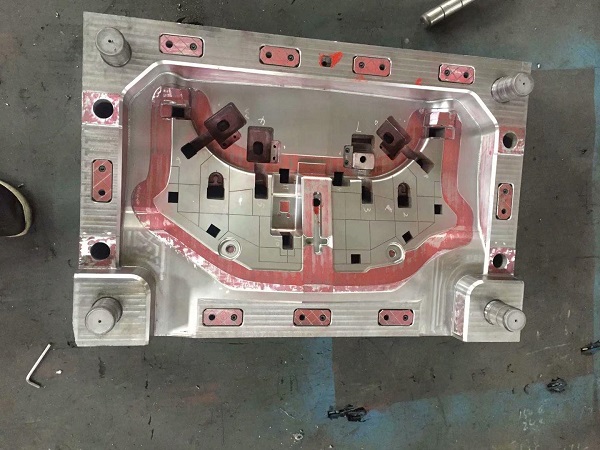
Introduction
Choosing a plastic injection OEM partner is one of the most critical decisions you’ll make for your product. This isn’t just a supplier relationship—it’s a partnership that directly affects your product quality, brand reputation, and supply chain reliability. The wrong choice leads to delayed launches, quality issues, and hidden costs. The right choice becomes a strategic asset that accelerates your time to market and protects your business. Drawing on years of experience in precision manufacturing, this guide provides a practical framework for evaluating potential partners beyond the surface-level RFQ.
What Defines a Reliable OEM Partner?
Reliability isn’t just about delivering parts on time. It’s a combination of capabilities, culture, and consistency that manifests over years of partnership.
Proactive Problem-Solving
A reliable partner doesn’t wait for problems to reach you. They anticipate issues in design, material selection, or process setup and present solutions before those issues become your emergency.
A medical device company learned this lesson when their OEM partner flagged a potential sterilization compatibility issue during the design review. The partner suggested an alternative material that met FDA requirements and maintained mechanical properties after repeated autoclave cycles. The change added two weeks to development but prevented a potential recall that would have cost millions.
Transparent Communication
Look for partners who operate with open books on project status, challenges, and costs. There should be formal escalation protocols and regular business reviews—not just reactive updates when things go wrong.
Financial and Operational Stability
Your partner’s stability becomes your stability. Ask about:
- Years in business
- Investment in new equipment
- Customer concentration (are they overly dependent on one client?)
- Financial health indicators (D&B rating if available)
Cultural Alignment
The best partnerships happen when values align—around quality, ethics, communication, and long-term thinking. Your OEM partner should act like an extension of your team, not a vendor with competing priorities.
Which Certifications Actually Matter?
Certifications are audited proof of systematic quality management. But not all certifications carry equal weight for your application.
Industry-Specific Standards
| Certification | Industry | What It Demands |
|---|---|---|
| IATF 16949 | Automotive | Rigorous process control, risk management, continuous improvement |
| ISO 13485 | Medical | Risk management, traceability, validation processes for patient safety |
| AS9100 | Aerospace | Configuration management, supply chain control, extreme reliability |
| ISO 9001 | General | Baseline quality management system |
For automotive components, IATF 16949 is non-negotiable. For medical devices, ISO 13485 is essential—a partner without this certification cannot legally produce most medical components.
A critical check: Always request the certificate scope to confirm that injection molding is explicitly included. Some companies hold certifications for other operations but apply them loosely to molding.
How Do You Evaluate Technical Capabilities?
The machine park must align with your part’s size, material, and volume requirements—both now and for future projects.
Press Tonnage and Range
A reliable partner maintains a range of press sizes to accommodate different part sizes. Ask about:
- Clamp force range: Typically 80 to 2,000+ tons
- Shot size capabilities: Matched to your part weight
- Injection unit technology: Dedicated screws for specific materials (e.g., PVC requires corrosion-resistant screw designs)
Specialized Technologies
Beyond standard injection molding, consider whether you may need:
| Technology | Application |
|---|---|
| Multi-material/Overmolding | Soft-touch grips, sealed assemblies |
| Micro-molding | Tiny, high-precision medical or electronic parts |
| Gas-assist molding | Large, rigid parts with reduced weight |
| Insert molding | Metal components encapsulated in plastic |
| MuCell foam molding | Warpage reduction, dimensional stability |
Automation Integration
Look for evidence of:
- Robotic sprue pickers and part handling
- Vision inspection systems
- Automated packaging lines
Automation isn’t just about efficiency—it ensures consistency by removing human variation from critical processes.
What Quality Systems Prevent Defects?
A “zero defect” mindset is built on prevention, not inspection.
Scientific Molding and Process Control
Advanced process control distinguishes true quality partners from commodity molders. Key indicators:
- Cavity pressure sensors: Monitor each shot in real-time
- Viscosity control: Ensures consistent material flow
- Closed-loop systems: Automatically adjust parameters to maintain setpoints
Statistical Process Control (SPC)
Quality partners collect real-time data on critical dimensions and use control charts (Cp/Cpk) to predict and prevent deviations. They don’t just react to defects—they prevent them from occurring.
A consumer electronics company reduced their field failure rate by 60% after switching to a partner that implemented SPC on all critical dimensions. The partner detected a trend toward tolerance drift early, adjusted the process, and prevented a batch of defective parts from ever being shipped.
Comprehensive Inspection Capabilities
Verify in-house inspection equipment:
- CMM (Coordinate Measuring Machine): For dimensional verification
- Optical comparators: For profile and contour measurement
- Functional test rigs: For assembly-level testing
Ask about their First Article Inspection (FAI) and PPAP (Production Part Approval Process) rigor. A robust FAI process catches issues before production begins.
Traceability Systems
Full traceability—from resin lot to shipped pallet—is essential for recalls, root cause analysis, and continuous improvement. Ask: “If a material defect is discovered, can you identify every part made from that lot within hours?”
How Important Is In-House Tooling Expertise?
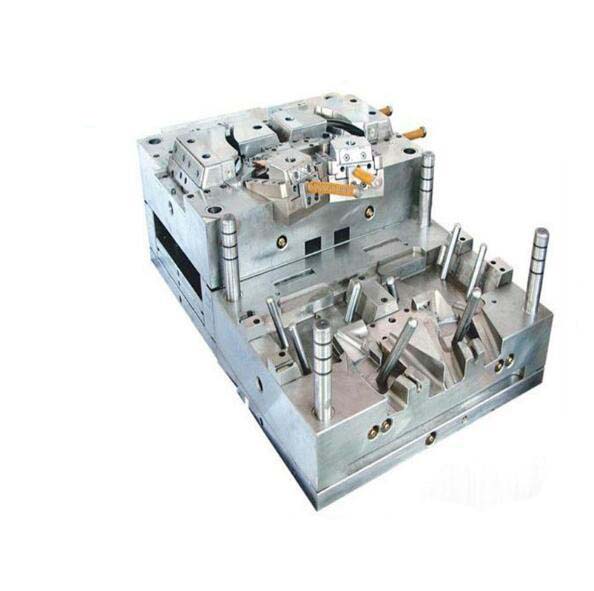
The mold is the heart of the injection molding process. In-house tooling capability is a strong indicator of a partner’s technical depth.
In-House vs. Outsourced Tooling
Prioritize partners with in-house mold design and build capabilities. Benefits include:
- Seamless collaboration between design and production teams
- Faster iteration cycles
- Single-point accountability
- Shorter lead times for tool modifications
A shop that outsources tooling relinquishes control over your project’s most critical path. If the toolmaker is across town or across the world, communication delays and competing priorities become your problem.
Design for Manufacturability (DFM) Process
Request a sample DFM report. A strong partner provides detailed feedback on:
- Gate location: Optimal placement for balanced fill
- Wall thickness: Uniformity to prevent sink and warpage
- Draft angles: Proper taper for clean ejection
- Ejection strategy: Pin placement and design
- Weld lines: Location and strength implications
A DFM report isn’t a critique—it’s a collaborative tool to optimize part quality and mold life before steel is cut.
Mold Maintenance Program
Ask to see their preventative maintenance schedule for production molds. A formal program with documented intervals ensures:
- Consistent part quality over millions of cycles
- Reduced unplanned downtime
- Extended mold life (well beyond 1 million cycles for well-maintained steel molds)
What Material Support Should You Expect?
A true partner guides you to the optimal material, not just the one you specify.
Beyond the Datasheet
Material selection involves more than comparing tensile strength numbers. A knowledgeable partner advises on:
- Long-term stability: Creep behavior under sustained load
- Chemical resistance: Compatibility with expected exposure
- Regulatory compliance: UL, FDA, REACH, RoHS requirements
- Processing characteristics: How the material behaves in the mold
Cost-Performance Optimization
Sometimes the material you request isn’t the best choice. A partner might suggest:
- A different grade of the same resin with better flow characteristics for complex geometries
- A filled compound that meets requirements at lower cost
- An alternative material with shorter lead times to avoid supply chain delays
An automotive supplier originally specified a high-cost, long-lead material for a structural component. Their OEM partner suggested a glass-filled nylon that met all performance requirements at 30% lower material cost and with 6 weeks shorter lead time.
Supply Chain Insight
Your partner should understand material availability and lead times. They should recommend alternatives to mitigate supply chain risk—particularly important for single-source materials.
How Do You Compare Lead-Time Promises Realistically?
Beware of vendors who promise unrealistically short timelines. A credible partner provides a detailed, phased schedule.
Realistic Timeline Breakdown
| Phase | Typical Duration |
|---|---|
| DFM & quotation finalization | 1–2 weeks |
| Mold design | 2–4 weeks |
| Mold manufacturing | 4–20+ weeks (varies by complexity) |
| Sampling & testing | 2–4 weeks |
| Approval & production ramp | 1–3 weeks |
The mold manufacturing phase is the key variable:
- Simple aluminum prototype mold: 4–6 weeks
- Single-cavity production steel mold: 8–12 weeks
- Multi-cavity, complex production mold: 12–20+ weeks
Ask About Capacity
A critical question: “What is your current shop capacity for new mold builds and production runs?” This reveals whether their promises match their actual availability.
A startup rushed to select a partner promising 8-week tooling. The partner overcommitted, and the tool was delivered in 14 weeks—delaying the product launch by nearly two months. The partner with longer initial lead time but realistic capacity would have been the better choice.
Conclusion
Selecting a plastic injection OEM partner requires systematic evaluation of systems, capabilities, and culture—not just price comparisons. The right partner demonstrates:
- Valid certifications for your industry
- In-house tooling expertise
- Data-driven quality systems
- Technical depth in materials and processes
- Transparent communication and realistic lead-time management
This partner becomes a strategic asset, reducing time to market, mitigating risk, and ensuring your product performs reliably for your customers. The evaluation effort you invest upfront pays back through years of smooth production and shared success.
FAQ
What is the difference between an OEM partner and a standard injection molder?
An OEM partner operates as an extension of your brand, taking ownership of the entire manufacturing process—from design input to boxed product. A standard molder typically executes a provided specification with less proactive engineering and supply chain management.
How important is geographic location when choosing a partner?
For products requiring frequent engineering collaboration, just-in-time delivery, or lower shipping costs, proximity is a significant advantage. For stable, high-volume products with mature designs, a capable distant partner with excellent logistics can be effective. Consider time zones for communication—overlapping work hours matter.
Should I ask for customer references?
Absolutely. Ask for 2–3 references from companies with similar part complexity, volume, and industry. Ask specific questions about problem-solving, communication during challenges, and how the partner handled unexpected issues. These reveal more than general satisfaction questions.
What are red flags during a supplier audit?
Key red flags include: a disorganized shop floor (poor 5S), lack of real-time SPC charts at presses, outdated or uncalibrated inspection equipment, inability to clearly explain quality escalation processes, and reluctance to show you their mold maintenance records.
How should we approach pricing negotiations with an OEM partner?
Focus on total cost of ownership, not just piece price. Discuss open-book costing for annual reviews, volume-based price breaks, and terms for engineering changes. The goal is a fair, sustainable price that allows your partner to invest in quality, equipment, and innovation—benefits that return to you over the partnership lifecycle.
Contact Yigu Technology for Custom Manufacturing
At Yigu Technology, we operate as the OEM partner our customers can rely on. Our integrated approach combines:
- IATF 16949 and ISO 13485 certified systems
- Full in-house mold design and manufacturing
- Scientific molding with real-time process control
- Comprehensive inspection capabilities including CMM
- Transparent communication and collaborative engineering
We don’t just make parts. We manage projects, mitigate risks, and drive continuous improvement as an accountable extension of your team. From complex medical devices to high-volume automotive components, we provide the technical depth, systemic quality, and partnership transparency that leading brands demand.
Ready to discuss your injection molding project? Contact us with your specifications, and we’ll provide a detailed capability review, DFM feedback, and competitive quoting—typically within 24–48 hours.