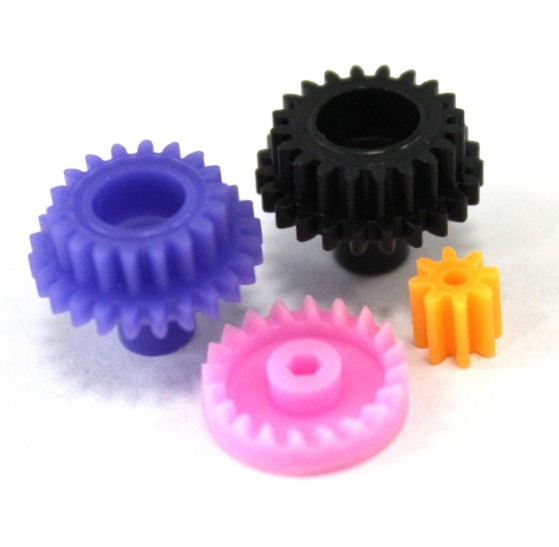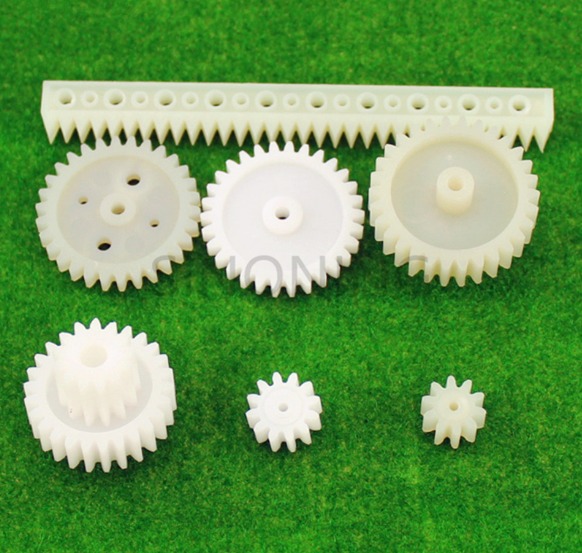
When a machine starts grinding, slipping, or making unusual noises, the problem often traces back to its gears. Plastic gears are everywhere—in your printer, your blender, your power tools, even in medical devices. They wear out over time, and when they do, the entire system suffers. But replacing them correctly can bring that equipment back to life. This guide explains how plastic gears work, why they fail, and how to choose and install replacement gears that restore performance and reliability.
What Are Plastic Gears?
Common Materials Used in Gear Manufacturing
Plastic gears come in different materials, each suited for specific applications. Choosing the right one is the first step toward a successful restoration.
| Material | Key Properties | Common Applications |
|---|---|---|
| Acetal (POM) | High stiffness, low friction, excellent dimensional stability | Small motors, office equipment, automotive interior components |
| Nylon (PA) | Good mechanical strength, tough, self-lubricating | Household appliances, power tools, conveyor systems |
| Polycarbonate (PC) | High impact resistance, transparent, good electrical insulation | Electronic devices, machinery requiring shock absorption |
A printer's paper-feeding mechanism, for example, relies on acetal gears for smooth, precise movement. In a household blender, nylon gears transfer power from the motor to the blades, enabling efficient blending.
Why Choose Plastic Gears Over Metal?
Lightweight and Energy-Efficient
Plastic gears are significantly lighter than metal ones. An acetal gear can be up to 70% lighter than a steel gear of the same size. This weight reduction matters.
In a cordless drill, switching from metal to plastic gears reduces the tool's weight substantially. The user experiences less fatigue. The tool also becomes more energy-efficient. Lighter components require less power to move. Industry studies show that replacing metal gears with plastic gears in small electric motors can boost energy efficiency by 15–20%.
Low Noise and Vibration
Plastics have natural damping properties. They absorb shock and vibration during gear meshing. This makes plastic gears ideal for noise-sensitive environments.
Consider an infusion pump in a hospital. Quiet operation is not a luxury—it is a necessity. Plastic gears help maintain a calm atmosphere for patients. In home audio systems, they ensure smooth, silent movement of CD or turntable mechanisms.
Corrosion Resistance
Metal gears rust. Plastic gears do not. This makes them invaluable in harsh environments.
In marine applications, saltwater quickly corrodes metal gears. Plastic gears operate reliably without frequent maintenance. In chemical processing plants, where equipment is exposed to corrosive substances, plastic gears maintain their structural integrity over long periods.
Cost-Effective and Design Flexible
Injection molding makes plastic gears affordable. For large production runs, the savings are substantial. Producing 10,000 plastic gears through injection molding can cost up to 50% less than machining the same number of metal gears.
Plastic also offers design freedom. Engineers can mold complex shapes with internal features, undercuts, and thin walls. In a small robotic mechanism, custom plastic gears can fit into tight spaces with unique tooth profiles—something difficult and expensive to achieve with metal.
What Causes Plastic Gears to Fail?
Understanding failure modes helps you identify problems early and choose the right replacement.
Wear and Tear
This is the most common reason for replacement. As gears mesh, teeth gradually lose material. Over months or years, the tooth thickness decreases.
How to spot wear:
- Tooth tips become rounded instead of sharp
- Sides of teeth show material loss
- Thickness reduces by more than 10–15% of the original value
- Excessive noise or vibration develops during operation
In a household fan motor, for instance, the plastic gears may show visible tooth wear after continuous operation over several years.
Fatigue Failure
Fatigue happens when gears endure repeated cyclic loading. Tiny cracks form over time. These cracks grow until the gear fails.
Several factors accelerate fatigue:
- Frequent load changes—systems that start and stop often, like factory conveyor belts
- High running speeds—increasing rotational speed by 50% can reduce fatigue life by up to 40%
- Temperature variations—expansion and contraction weaken the material
Incorrect Installation or Design
Sometimes failure is not the gear's fault. It stems from how it was installed or designed.
Installation errors: A misalignment of just 0.1 mm between meshing gears can increase tooth stress by up to 30%. Uneven stress leads to premature wear on one side of the teeth.
Design errors: If the original gear was poorly designed—underestimating loads or contact stress—failure is inevitable. A poorly designed gearbox may fail within weeks, while a properly designed one operates smoothly for years.
How Do You Choose the Right Replacement?
Match Material to Application
Not every plastic gear fits every job. The replacement must match the original in material properties and performance requirements.
| Application Type | Recommended Material | Why |
|---|---|---|
| High precision, low friction | Acetal (POM) | Dimensional stability, smooth operation |
| High torque, impact resistance | Nylon (PA) | Tough, self-lubricating, handles stress |
| Electrical insulation, shock absorption | Polycarbonate (PC) | Impact-resistant, non-conductive |
Verify Dimensions and Tooth Profile
A replacement gear must fit exactly. Measure these critical parameters:
- Outside diameter
- Root diameter
- Tooth thickness
- Number of teeth
- Hub diameter and bore size
Even small deviations cause poor meshing, increased noise, and rapid wear.
Consider Operating Environment
Ask yourself:
- Will the gear face moisture or chemicals? → Choose corrosion-resistant materials
- Does the application require quiet operation? → Stick with plastic for damping properties
- Are temperatures extreme? → Select materials rated for the range
What Does the Replacement Process Look Like?
Step 1: Inspect and Diagnose
Before replacing, confirm the gear is the problem. Look for visible wear, cracks, or deformation. Listen for unusual noise. Feel for vibration during operation.
Step 2: Source the Correct Replacement
Obtain a gear that matches the original specifications. If the original gear was custom, consider working with a manufacturer who can replicate it precisely.
Step 3: Remove and Clean
Carefully remove the worn gear. Clean the surrounding components. Debris from the failed gear can damage the new one.
Step 4: Install with Precision
Ensure proper alignment. Misalignment stresses the new gear unnecessarily. Use the correct mounting method—press-fit, set screw, or adhesive as specified.
Step 5: Test Before Full Operation
Run the system at low speed initially. Listen for abnormal noise. Check for smooth movement. Gradually increase to normal operating speed.
Yigu Technology's View
At Yigu Technology, we see replacement plastic gears as opportunities to improve performance, not just restore it. Our approach combines material expertise with precision manufacturing.
For a high-torque industrial application, we might recommend a high-strength nylon composite instead of standard nylon. The difference in durability can extend gear life significantly.
Our quality control process is rigorous. Every batch undergoes dimensional accuracy checks and strength tests. We ensure replacement gears fit perfectly and last.
We also collaborate with clients on design. If the original gear failed due to design flaws, we offer customized solutions—optimized tooth profiles, better material selection, or improved geometry—to prevent recurrence.
Conclusion
Replacement plastic gears restore mechanical systems by addressing the root causes of failure. Understanding the materials—acetal, nylon, polycarbonate—helps you choose the right replacement. Recognizing failure modes like wear, fatigue, and installation errors prevents repeat issues. A proper replacement process—from inspection to installation—ensures the system returns to reliable operation. Plastic gears offer advantages over metal: they are lighter, quieter, corrosion-resistant, and cost-effective. When selected and installed correctly, they restore performance and often extend the life of the equipment they serve.
FAQ About Replacement Plastic Gears
How do I know if my plastic gear needs replacement?
Check the gear teeth for wear. If tooth thickness has decreased by more than 10–15% of the original, or if tips are rounded and sides show material loss, replacement is needed. Unusual noise, vibration, or visible cracks are also clear signs.
Can I use any plastic gear as a replacement?
No. The replacement must match the original in material, size, tooth profile, and load capacity. Using an inappropriate gear leads to premature failure, increased noise, and inefficient power transmission.
What is the lifespan of a plastic gear?
Under normal operating conditions with moderate loads and proper maintenance, plastic gears typically last between 1,000 and 10,000 hours. Lifespan depends on load, speed, temperature, and operating environment.
Contact Yigu Technology for Custom Manufacturing
Need replacement plastic gears that fit perfectly and perform reliably? Yigu Technology specializes in custom plastic gear manufacturing. We help you select the right material, match exact specifications, and ensure quality through rigorous testing. Contact us today to discuss your project.