Introduction
IMD injection molding—short for In-Mold Decoration—is a manufacturing process that combines plastic injection molding with integrated decoration in a single step. Instead of molding a plain plastic part and then painting, printing, or labeling it afterward, IMD embeds the decoration directly into the part during molding.
The result is a product with a permanent, high-quality decorative surface that resists scratches, chemicals, and wear. The decoration sits beneath a protective layer, so it cannot peel or fade like traditional labels or paint.
This guide explains how IMD works, what materials are used, how it compares to traditional decoration methods, and where it delivers the greatest value. By the end, you will understand whether IMD is the right choice for your product.
How Does IMD Injection Molding Work?
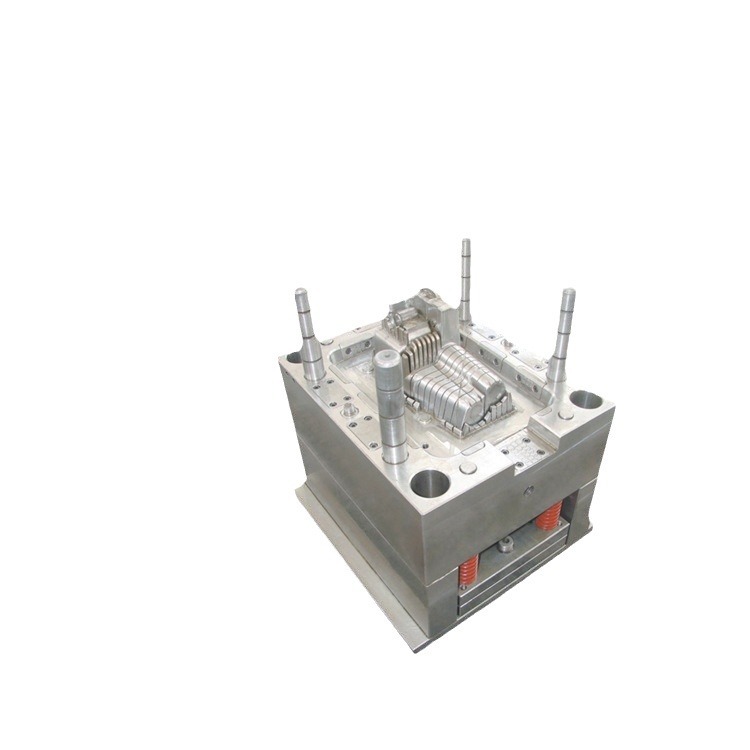
IMD injection molding integrates decoration into the molding process itself. The core principle is simple: place a pre-printed film into the mold, then inject plastic behind it.
What Are the Key Components?
The decorative film typically consists of three layers:
| Layer | Function |
|---|---|
| Base film | Carries the decoration; often polyester or polycarbonate |
| Ink layer | Contains the printed pattern, logo, or texture |
| Adhesive layer | Bonds the film to the injected plastic during molding |
Some films include an additional top coat for extra scratch or UV resistance.
What Are the Stages of the IMD Process?
The IMD process follows a precise sequence:
Stage 1: Film Printing
The decorative pattern is printed onto the film using screen printing, offset printing, or digital printing. High-quality UV-curable inks are common because they cure quickly and adhere well.
For large-scale production, offset printing offers high speed and precision. For short runs or complex designs, digital printing provides flexibility without the need for printing plates.
Stage 2: Film Punching and Cutting
The printed film is cut to the precise shape that will fit inside the mold. Accuracy is critical—tolerances are often within ±0.05 mm. For complex shapes, laser cutting ensures clean edges and precise dimensions.
Stage 3: Thermoforming
The cut film is heated (typically 80–150°C) until pliable, then formed into the three-dimensional shape of the final part using vacuum or pressure. This step ensures the film matches the mold contour exactly.
For a curved part like a smartphone case or dashboard panel, thermoforming pre-shapes the film so it fits snugly against the mold wall.
Stage 4: Injection Molding
The pre-formed film is placed into the injection mold cavity. The mold closes, and molten plastic is injected behind the film. Injection pressure typically ranges from 30–100 MPa, with melt temperatures between 180–300°C, depending on the plastic.
The heat and pressure activate the adhesive layer, bonding the film permanently to the plastic substrate. As the plastic cools and solidifies, the finished part—with decoration fully integrated—is ejected.
The result: A single part with permanent, protected decoration. No secondary painting, printing, or labeling required.
What Materials Are Used in IMD?
Material selection affects both the molding process and the final product’s performance.
Substrate Plastics (The Molded Part)
| Material | Key Properties | Typical Applications |
|---|---|---|
| ABS | Impact resistance; dimensional stability; good surface finish | Consumer electronics housings; automotive interior parts |
| PC (Polycarbonate) | High heat resistance; outstanding mechanical strength; transparency | Automotive lenses; high-end electronics |
| PMMA (Acrylic) | Excellent transparency; weather resistance; aesthetic appearance | Signage; transparent covers; outdoor applications |
| PBT | Chemical resistance; high-temperature stability; dimensional stability | Electrical components; automotive underhood parts |
| PC/ABS blends | Combines impact resistance of ABS with heat resistance of PC | Automotive interiors; medical device housings |
Film Materials
The decorative film itself is typically made from:
- Polyester (PET) – Good heat resistance; dimensional stability
- Polycarbonate (PC) – Excellent formability; clarity
- ABS film – Good adhesion; impact resistance
Ink and Adhesive Requirements
- Inks must withstand thermoforming and injection temperatures without degrading
- Adhesives must activate at molding temperatures to form a permanent bond
- UV-curable inks are common for their fast curing and durability
How Does IMD Compare to Traditional Decoration?
Understanding the differences helps you decide when IMD makes sense.
IMD vs. Traditional Painting
| Factor | Traditional Painting | IMD Injection Molding |
|---|---|---|
| Process complexity | Multiple steps: pretreatment, primer, color coats, clear coat; each requires drying/curing | Single-step: decoration integrated during molding |
| Cost structure | High labor and material cost; VOC treatment adds expense | Higher initial tooling; lower per-part cost at volume |
| Durability | Paint layer exposed; scratches, fades, and peels over time | Decoration protected under film; resists scratches and chemicals |
| Design flexibility | Limited on complex 3D shapes; uneven coating on curves | Excellent for complex shapes; film pre-formed to match contours |
Real-world example: A manufacturer producing 100,000 smartphone cases per year compared painting versus IMD. Painting required seven process steps and cost $0.85 per part. IMD required one step and cost $0.62 per part—a 27% savings—with better durability.
IMD vs. Traditional Labeling
| Factor | Traditional External Labeling | IMD In-Mold Labeling |
|---|---|---|
| Adhesion | Adhesive bonds to surface; can peel over time, especially with moisture or heat | Chemically bonded during molding; will not peel |
| Aesthetics | Visible edges; potential misalignment; can trap dirt at edges | Seamless integration; no edges; smooth surface |
| Durability | Labels scratch, fade, or tear with use | Decoration protected; lasts product lifetime |
| Harsh environments | Adhesive degrades; labels lift | Maintains integrity under heat, moisture, chemicals |
Real-world example: An outdoor power equipment manufacturer used traditional labels on handles. After six months, 8% of units had peeling or faded labels. Switching to IMD labeling eliminated the issue entirely.
IMD vs. Pad Printing and Hot Stamping
| Method | Best For | Limitations |
|---|---|---|
| Pad printing | Small areas; simple logos | Limited durability; can wear off with use |
| Hot stamping | Metallic finishes; simple shapes | Single color; limited complexity |
| IMD | Complex, multi-color graphics; full-surface decoration; 3D shapes | Higher tooling cost; longer lead time for new designs |
What Are the Design Considerations for IMD?
Successful IMD requires planning at the design stage.
Part Geometry
IMD works best with:
- Gradual curves – Sharp corners make film forming difficult
- Moderate depth – Deep draws may stretch or thin the film
- Consistent wall thickness – Uneven thickness affects cooling and film adhesion
Avoid:
- Sharp internal corners where film may not conform
- Extremely deep parts where film stretching exceeds limits
- Complex undercuts that complicate film placement
Film Stretch Limits
During thermoforming, the film stretches to match the part shape. Different films have different stretch limits:
- Polyester (PET) – Moderate stretch; good for shallow to moderate depth
- Polycarbonate (PC) – Excellent stretch; suitable for deeper draws
- ABS – Good stretch; balanced properties
For complex parts, mold flow analysis should include film forming simulation to predict stretch patterns and ensure the design is feasible.
Gate Placement
The injection gate must be positioned so molten plastic flows evenly behind the film. Poor gate placement can cause:
- Film wrinkling – Uneven flow pushes film out of position
- Incomplete adhesion – Plastic does not reach all areas behind the film
- Visible marks – Gate vestige may be visible on decorative surface
Color and Registration
For multi-color designs:
- Printing registration must be precise (±0.1 mm or better)
- Colors must withstand injection temperatures without shifting
- Overprint clear coats protect against UV and abrasion
What Are the Advantages of IMD Injection Molding?
IMD offers distinct benefits for the right applications.
Durability
The decorative layer sits between the plastic substrate and a protective top coat (or the base film itself). This construction:
- Resists scratches and abrasion
- Withstands chemical exposure (cleaners, oils, solvents)
- Does not peel or delaminate
- Maintains appearance for 5+ years even in harsh environments
Design Freedom
IMD enables:
- Full-surface decoration – Graphics can cover the entire part, not just a small area
- Complex 3D shapes – Film pre-forming allows decoration on curved surfaces
- Multiple effects – Metallic, matte, gloss, textured finishes; backlighting compatible
- Fine detail – Print resolution down to fine text and intricate patterns
Process Efficiency
By combining molding and decoration into one step, IMD:
- Eliminates secondary operations (painting, printing, labeling)
- Reduces labor and handling
- Shortens overall production time
- Lowers per-part cost at volume
Sustainability
IMD reduces environmental impact:
- No paint solvents or VOCs
- Less waste than multi-step processes
- Film waste can be recycled (depending on material)
- Energy savings from fewer process steps
What Are the Limitations?
IMD is not suitable for every application.
Higher Initial Tooling Cost
IMD requires:
- Specialized molds with film positioning systems
- Thermoforming tools
- Printing tooling (for screen or offset printing)
Total tooling cost can be 20–50% higher than standard injection molds. For low volumes (under 10,000 parts), traditional decoration may be more economical.
Design Constraints
Not all parts are suitable:
- Very deep draws may exceed film stretch limits
- Sharp corners cause film wrinkling
- Parts requiring decoration on both sides may need complex setups
Longer Lead Time
New IMD projects require:
- Film printing setup
- Thermoforming tool fabrication
- Injection mold with film handling
Lead time can be 2–4 weeks longer than standard injection molding.
Color Change Complexity
Changing colors or graphics requires new printed film. While the injection process itself is unchanged, film inventory must be managed. For frequent design changes, digital printing on film offers flexibility but may have higher per-part film cost.
What Are the Applications of IMD?
IMD is used across industries where appearance and durability matter.
Automotive
| Component | Benefits |
|---|---|
| Dashboard panels | High-quality finish; scratch resistance; integrated lighting |
| Center consoles | Complex shapes; seamless appearance |
| Door trim | Durability; design flexibility |
| Climate control panels | Backlighting compatibility; wear resistance |
Example: A luxury automaker uses IMD for dashboard trim panels with metallic finishes and backlit graphics. The parts withstand years of UV exposure and cleaning products without degradation.
Consumer Electronics
| Component | Benefits |
|---|---|
| Smartphone cases | Full-surface graphics; scratch resistance; thin walls |
| Laptop covers | Premium appearance; durability |
| Wearable devices | Complex 3D shapes; sweat and chemical resistance |
| Appliance control panels | Integrated graphics; touch compatibility |
Example: A smartphone manufacturer uses IMD for back covers with gradient colors and logos. The decoration does not scratch or peel even after years of use.
Medical Devices
| Component | Benefits |
|---|---|
| Device housings | Permanent labeling; chemical resistance (cleaning agents) |
| Control panels | Seamless; easy to clean; no edges to trap contaminants |
| Handheld instruments | Durability; branding integration |
Example: A medical device company uses IMD for surgical tool housings. Serial numbers, logos, and operating instructions are permanently embedded, surviving repeated sterilization cycles.
Home Appliances
| Component | Benefits |
|---|---|
| Control panels | Scratch-resistant; seamless |
| Branding elements | Permanent; no peeling |
| Decorative trim | High-quality appearance |
Conclusion
IMD injection molding combines the efficiency of injection molding with the design freedom of integrated decoration. The process embeds printed film into the plastic part during molding, creating a durable, scratch-resistant surface that will not peel or fade.
IMD offers clear advantages over traditional painting, printing, and labeling:
- Durability – Decoration protected under film; lasts product lifetime
- Design freedom – Complex 3D shapes; full-surface graphics; special effects
- Process efficiency – One-step molding and decoration
- Sustainability – No paints or solvents; reduced waste
The trade-offs include higher initial tooling cost and design constraints for deep draws or sharp corners. For high-volume applications where appearance and durability matter, IMD is often the superior choice.
Frequently Asked Questions (FAQ)
What types of plastics are most suitable for IMD injection molding?
ABS, PC, PMMA, and PBT are commonly used. ABS offers good impact resistance and processability. PC provides heat resistance and strength. PMMA delivers excellent transparency for clear parts. PBT offers chemical and high-temperature resistance. PC/ABS blends combine properties for automotive and electronics applications. Material selection depends on the part’s mechanical, thermal, and aesthetic requirements.
How can we ensure color accuracy in IMD printing?
Use calibrated color measurement instruments to match and control ink colors. Implement color management systems to maintain consistency across batches. Calibrate printing equipment regularly for accurate dot gain and registration. Choose inks with good lightfastness and thermal stability to prevent fading during thermoforming and injection. For critical applications, conduct pilot runs to validate color before full production.
What are the main differences between IMD and IML?
IMD (In-Mold Decoration) is the broader category that includes all in-mold decorative techniques. IML (In-Mold Labeling) is a subset focused on placing a printed label film in the mold. In practice, IMD often implies more complex 3D decoration, while IML is used for simpler, flatter surfaces. IMD typically uses thicker films that are thermoformed to shape; IML uses thinner films and is often simpler to implement with faster changeovers for different graphics.
How durable is IMD decoration compared to painting?
IMD decoration is significantly more durable. The decorative layer is protected between the plastic substrate and a clear top coat (or the base film itself). It resists scratches, abrasion, and chemical exposure. While painted surfaces may show wear within 1–2 years in harsh environments, IMD decorations often maintain their appearance for 5 years or more under similar conditions. The decoration cannot peel because it is chemically bonded during molding.
Is IMD cost-effective for low-volume production?
IMD has higher upfront costs—specialized molds, thermoforming tools, and printing setup. For volumes under 10,000 parts, traditional decoration (painting, pad printing) may be more economical. For volumes above 50,000 parts, IMD’s per-part cost advantage typically outweighs the higher initial investment. The breakeven point depends on part complexity and decoration requirements.
Contact Yigu Technology for Custom Manufacturing
At Yigu Technology, we specialize in IMD injection molding for applications that demand durability, aesthetics, and efficiency. Our team manages the entire process—from film printing and thermoforming to precision injection molding—under one roof.
Our IMD capabilities include:
- Custom film printing – Screen, offset, and digital printing for complex graphics
- Precision thermoforming – Film shaping for complex 3D geometries
- Injection molding – 80 to 800 tons; tight process control
- Material expertise – ABS, PC, PMMA, PBT, and blends
- Quality assurance – Dimensional inspection; adhesion testing; color verification
We serve automotive, medical, electronics, and consumer goods industries where appearance and durability are critical.
Contact us today to discuss your IMD injection molding project. Let our expertise help you create parts that look great and last.