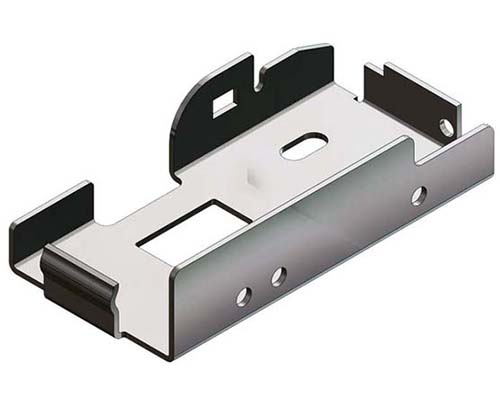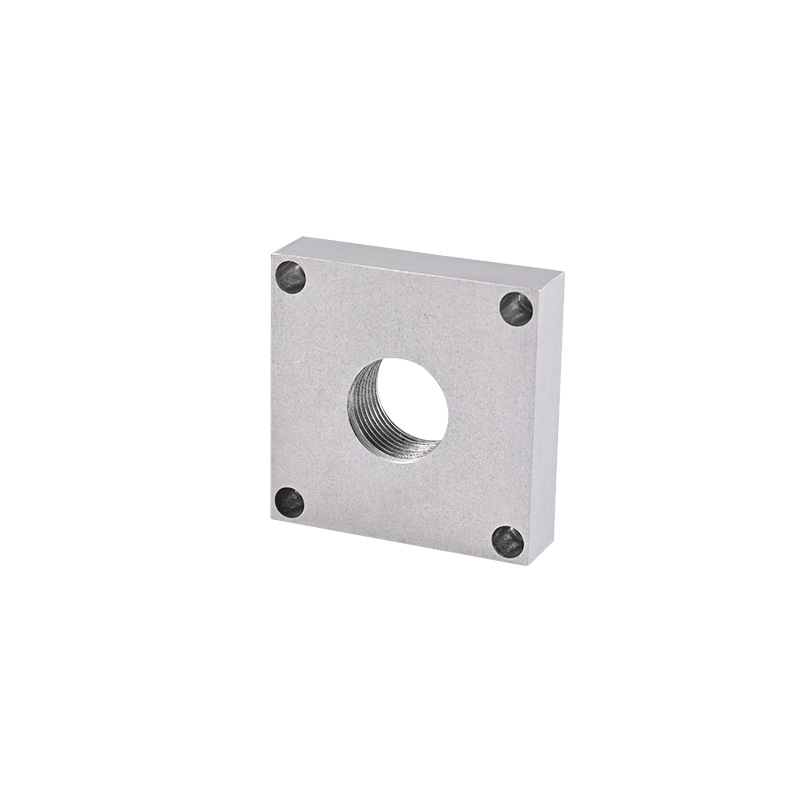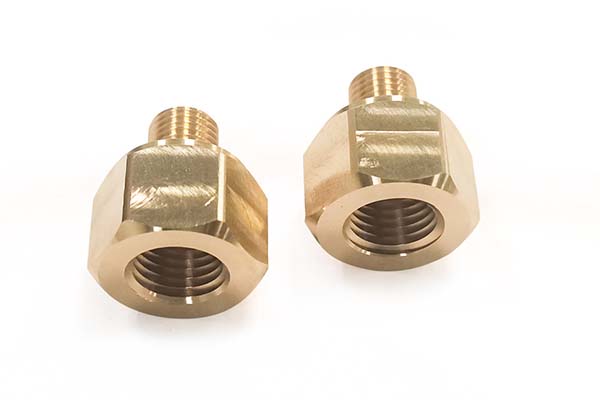
Introduction
You get a quote. It looks clean. The number feels right. Then halfway through the project, the invoice jumps 40%. Sound familiar? You are not alone. Metallic fabrication cost overruns are the number one headache for engineers, project managers, and procurement teams worldwide. The problem is not one single mistake. It is a chain of small gaps. Gaps between CAD design and shop floor reality. Gaps between material specs and what is actually available. Gaps between what you asked for and what you actually needed.
This article breaks down the 9 most common cost and quality traps in metallic fabrication. We cover everything from design flaws to welding defects, from hidden tooling costs to compliance headaches. Each section gives you real, actionable insight. You will walk away knowing exactly where budgets bleed. And more importantly, how to stop the bleeding before it starts.
1. The Design-to-Reality Gap
CAD Looks Great. Shop Floor Says No.
Here is a real case. A mid-size food processing company designed a stainless steel hopper in SolidWorks. The CAD model was flawless. Clean bends. Tight corners. Perfect weld joints. Then the fabricator called back. "We can build this. But it will cost 60% more than your quote." Why? The design ignored basic fabrication rules.
Bend radii were too tight. The material would crack. Weld access was blocked. The torch could not reach the joint. Hole spacing violated minimums. The die would tear the sheet.
These are not exotic problems. They happen every single day.
Design for Fabrication Rules
Smart engineers use Design for Fabrication (DFF) principles. These rules save money before a single cut is made.
| DFF Rule | Why It Matters |
|---|---|
| Minimum bend radius = 1x material thickness | Prevents cracking and spring-back issues |
| Hole edge distance ≥ 2x hole diameter | Avoids die tearing during punching |
| Weld access gap ≥ 3/8 inch | Lets the torch reach every joint |
| Avoid sharp internal corners | Reduces stress concentration and weld defects |
| Standard material sizes first | Cuts scrap waste and lowers material cost |
Pro tip: Ask your fabricator to review CAD files before you finalize them. A 30-minute DFF review can save you thousands.
2. Material Sourcing Headaches
Grade Confusion Costs Real Money
"We need stainless steel." That is not enough. Which grade? 304? 316? 2205? The difference is not just a number. It is cost, availability, and performance.
Here is a quick comparison:
| Grade | Key Feature | Typical Cost Premium vs 304 | Best Use Case |
|---|---|---|---|
| 304 | General purpose, good corrosion resistance | Baseline | Indoor equipment, food processing |
| 316 | Molybdenum added, better pitting resistance | +15–25% | Marine, chemical, outdoor |
| 2205 | Duplex, high strength + corrosion resistance | +40–60% | Offshore, high-pressure systems |
| 6061 Al | Good weldability, moderate strength | Baseline (Al) | Frames, enclosures, light structures |
| 7075 Al | Aircraft grade, very high strength | +30–50% | Aerospace, high-stress parts |
A real example: A client specified 316 stainless for an indoor water tank. The fabricator suggested 304. It met all corrosion requirements. The switch saved $8,000 on material alone.
Mill Test Reports Matter
Always demand Mill Test Reports (MTRs). An MTR proves the material grade, chemical composition, and mechanical properties. Without it, you have no traceability. For regulated industries like oil and gas or medical devices, missing MTRs can halt an entire project.
Lead times vary wildly right now:
| Material | Typical Lead Time (2024–2025) |
|---|---|
| Cold-rolled steel (11 ga) | 2–4 weeks |
| 304 Stainless sheet | 4–8 weeks |
| 316 Stainless plate | 6–12 weeks |
| 6061 Aluminum | 3–6 weeks |
| Specialty alloys (Inconel, Hastelloy) | 12–20 weeks |
Price volatility adds another layer. Steel prices can swing 10–15% quarter to quarter. Lock in prices early when possible.
3. Welding Quality Issues
The Defects That Hide in Plain Sight
Bad welds do not always look bad. That is what makes them dangerous. Here are the top 5 weld defects and what causes them:
| Defect | What It Looks Like | Root Cause |
|---|---|---|
| Porosity | Tiny holes in the weld bead | Contaminated base metal, wrong shield gas |
| Undercut | Groove melted into base metal beside the weld | Too much amperage, wrong travel speed |
| Cracking | Visible or hidden fractures | High restraint, wrong filler metal, preheat missing |
| Lack of Fusion | Weld sits on top, not bonded | Low heat input, dirty joint surfaces |
| Distortion | Warped or twisted parts | Unbalanced heat, no fixturing, wrong weld sequence |
A food equipment manufacturer once shipped a welded frame to a client. The welds looked perfect. But X-ray inspection found porosity in 30% of the joints. The whole frame had to be reworked. Cost: $22,000 in rework and 3 weeks of delay.
WPS and Welder Qualification
Every serious fabrication runs on a Welding Procedure Specification (WPS). This document defines:
- Base metal and filler metal
- Welding process (MIG, TIG, Stick, FCAW)
- Amperage, voltage, travel speed
- Preheat and interpass temperature
- Post-weld heat treatment (if needed)
Welders must be qualified to the WPS. A welder certified to AWS D1.1 is not automatically qualified for ASME Section IX. The codes are different. The tests are different. Always match the qualification to the code.
Visual welds vs. structural welds: Not all welds need to be perfect to the eye. A cosmetic weld on a non-structural bracket is different from a full-penetration structural weld on a load-bearing beam. Know which standard applies before you inspect.
4. Dimensional Accuracy
Why Parts Don't Fit On-Site
You fabricate 12 parts. Each one is "within tolerance." But when you assemble them on-site, nothing fits. This is tolerance stack-up. It is the silent killer of fabrication projects.
Here is how it works. Each part has a tolerance of ±0.062". With 12 parts in a chain, the worst-case stack-up is ±0.744". That is almost an inch of drift. Real assemblies fail at half that.
Controlling Thermal Distortion
Welding puts intense localized heat into metal. The metal expands. Then it cools and shrinks. This cycle causes warping, bowing, and twisting.
| Strategy | How It Works |
|---|---|
| Weld sequencing | Weld symmetrically to balance heat input |
| Tack welds first | Hold parts in position before full welding |
| Back-step welding | Reduces heat buildup in one area |
| Fixtures and jigs | Physically hold parts during welding |
| Preheat control | Reduces thermal shock in thick sections |
A real case: A structural steel fabricator was building bridge gusset plates. First attempts had 1/4" distortion. They added a simple fixture and changed the weld sequence. Distortion dropped to under 1/16". No extra cost. Just smarter process control.
5. Surface Treatment Confusion
Which Coating Do You Actually Need?
This question comes up on almost every project. The answer depends on environment, lifespan, and budget.
| Coating Type | Cost Range | Lifespan | Best For |
|---|---|---|---|
| Paint (liquid) | $ | 3–7 years | Indoor, decorative, low corrosion |
| Powder coat |
∣8–15years∣Outdoor,colormatching,UVresistance∣∣∗∗Hot−dipgalvanize∗∗∣
| 20–50 years | Structural steel, harsh environments | | **Electroplate (zinc/nickel)** | $$ | 5–15 years | Small parts, precise thickness | | **Phosphate + oil** | | 1–3 years | Temporary protection, indoor storage |
Pre-Treatment Is Non-Negotiable
No coating sticks without proper prep. The most common prep steps:
- Degrease — Remove oil, grease, and fingerprints
- Shot blast (SSPC-SP6) — Create a clean, rough surface profile
- Rinse and dry — Remove all blast media residue
- Apply coating within 4 hours — Prevent flash rust
Skipping shot blast to save 500canleadto∗∗coatingfailurein6months∗∗.Thenyoupay5,000 to strip and redo it. The math never favors the shortcut.
Adhesion testing (ASTM D3359 cross-cut test) should be part of every coating spec. It takes 10 minutes. It catches problems before they leave the shop.
6. Cost Control: Stop Budget Overruns
Where the Hidden Costs Hide
A low quote is not a cheap quote. It is often a incomplete quote. Here is what gets left out:
| Cost Item | Often Hidden? | Typical Range |
|---|---|---|
| Material | Rarely | 30–50% of total |
| Labor (cut, form, weld) | Sometimes | 20–35% of total |
| Tooling and dies | Very often | 500–5,000+ |
| Setup and changeover | Very often | 200–1,000 per setup |
| Handling and staging | Often | 5–10% of total |
| Finishing (paint, coat, deburr) | Sometimes | 10–20% of total |
| QC and inspection | Sometimes | 3–8% of total |
A client received a quote of 15,000for200laser−cutbrackets.Thefinalinvoicewas21,400. Why? The quote did not include tooling setup (800),deburring(1,200), and powder coating ($4,400). All reasonable costs. Just not in the original number.
How to Compare Quotes Apples-to-Apples
Use this checklist:
- Does the quote break down material, labor, tooling, finishing, and QC separately?
- Are material grades and thicknesses clearly specified?
- Is weld type and standard (AWS D1.1, etc.) stated?
- Does it include shipping and packaging?
- Are MTRs and inspection reports included or listed as extras?
If a quote skips these, ask before you sign. The cheapest bid is rarely the cheapest project.
7. Lead Time Management
Realistic Timelines by Process
Stop trusting "4–6 weeks" as a universal answer. Here are realistic ranges for common processes:
| Process | Typical Lead Time |
|---|---|
| Laser cutting | 3–7 business days |
| Press brake forming | 5–10 business days |
| MIG/TIG welding | 7–14 business days |
| Powder coating | 5–10 business days (plus cure time) |
| Galvanizing (outsourced) | 3–6 weeks |
| Full assembly + QC | 2–4 weeks |
| Total (simple project) | 3–5 weeks |
| Total (complex project) | 8–16 weeks |
Supply Chain Risk Mitigation
The post-COVID supply chain taught everyone a hard lesson. Single-source material is a ticking time bomb. Here is what smart buyers do:
| Strategy | Benefit |
|---|---|
| Order material 2–4 weeks early | Locks in price and availability |
| Specify acceptable grade substitutions | Gives fabricator flexibility |
| Use domestic suppliers when possible | Cuts lead time by 30–50% |
| Build 10–15% schedule buffer | Absorbs unexpected delays |
A construction firm learned this the hard way. They specified a specific European steel grade with a 14-week lead time. The project needed the steel in 8 weeks. Result: 6-week delay and $40,000 in expediting fees. A simple spec change could have avoided it all.
8. Quality Assurance That Actually Protects You
The Inspection Hierarchy
Not every weld needs X-ray. But every critical joint needs some level of inspection. Here is the standard hierarchy:
| Level | Method | When to Use |
|---|---|---|
| Level 1 | Visual (VT) | Non-structural, cosmetic welds |
| Level 2 | Visual + Dimensional | Structural welds, no NDT required |
| Level 3 | Visual + NDT | Pressure vessels, critical structures |
| Level 4 | Full NDT + Destructive Testing | Nuclear, aerospace, life-safety |
Common NDT methods:
| Method | Detects | Best For |
|---|---|---|
| UT (Ultrasonic) | Internal defects, lack of fusion | Thick plate, pipe welds |
| RT (Radiographic) | Porosity, slag, cracks | Full documentation needed |
| MT (Magnetic Particle) | Surface and near-surface cracks | Ferromagnetic materials |
| PT (Liquid Penetrant) | Surface cracks, porosity | Non-magnetic materials |
Documentation You Must Demand
| Document | Why You Need It |
|---|---|
| Weld map | Shows every weld location, type, and inspector |
| Inspection report (ITP) | Proves each step passed QC |
| MTRs | Material traceability from mill to final part |
| WPS + welder qualifications | Proves the process was controlled |
| As-built drawings | Shows what was actually built, not just designed |
A medical device company required third-party inspection on every batch. It added 3,000perproject.Butitpreventeda∗∗productrecallthatwouldhavecost2 million**. The ROI was obvious.
9. Regulatory Compliance Burden
Codes Are Not Optional
Ignoring codes does not save money. It creates liability. Here is a quick guide to the most common codes:
| Code / Standard | Applies To | Key Requirement |
|---|---|---|
| AWS D1.1 | Structural steel welding | Weld sizing, prequalification, inspection |
| ASME Section IX | Pressure vessels, piping | Welder qualification, WPS, PQR |
| AISC 360 | Steel building structures | Member design, connection design |
| PED / CE Marking | Equipment sold in EU | Conformity assessment, Notified Body |
| ISO 3834 | Welding quality systems | Full QMS for welding operations |
A real example: A U.S. fabricator exported structural steel frames to Europe. They had AWS D1.1 welding. But the client needed CE marking under PED. The fabricator had to re-qualify welders to EN ISO 9606 and bring in a Notified Body for inspection. The project cost doubled. The fabricator should have asked about export requirements before quoting.
Environmental and safety compliance also matters. VOC limits affect your coating choices. OSHA welding standards affect your shop practices. Ignoring these creates fines, shutdowns, or lost contracts.
Conclusion
Metallic fabrication budget overruns are not accidents. They are the result of predictable gaps. Gaps in design. Gaps in material specs. Gaps in welding quality control. Gaps in cost transparency. And gaps in compliance planning.
The 9 traps covered in this article are not theoretical. They are real, documented, and costly. But they are also preventable. The key is to involve your fabricator early. Review designs together. Compare quotes line by line. Demand proper documentation. And always build in a buffer for the unexpected.
The cheapest fabrication is not the one with the lowest quote. It is the one with the fewest surprises.
FAQ
Why do fabrication quotes change after I approve them?
Most initial quotes are estimates. Final quotes include actual material costs, tooling, and finishing. Always ask for a quote breakdown before signing.
What is the biggest cause of fabrication cost overruns?
Design changes mid-project are the #1 driver. Second is unspecified surface treatment. Third is material grade changes after ordering.
How much should I budget for tooling on a new project?
Expect 500–5,000 for standard tooling (dies, punches, jigs). Complex or custom tooling can run $10,000+. Always ask upfront.
Do I really need Mill Test Reports (MTRs)?
Yes. For any structural, pressure, or regulated application, MTRs are mandatory. They are your proof of material quality.
What welding standard should I specify?
For general structural steel: AWS D1.1. For pressure vessels: ASME Section IX. For export to Europe: EN ISO 3834 + CE/PED.
How long does powder coating add to lead time?
Typically 5–10 business days for the coating itself. Add 24–48 hours cure time. Total impact: about 1–2 weeks.
Can I save money by skipping pre-treatment before coating?
No. Skipping shot blast or degreasing causes coating failure within months. The rework cost is 5–10x the prep cost.
Contact Yigu Technology for Custom Manufacturing
Struggling with design-to-reality gaps, material sourcing headaches, or budget overruns on your metallic fabrication projects? Yigu Technology specializes in precision custom manufacturing with full DFF support, transparent quoting, and end-to-end quality control. From CNC machining and sheet metal fabrication to welding, finishing, and assembly — we build it right the first time.
📞 Get a free DFF review and transparent quote today.