Introduction
You have ideas. Products you want to develop. Prototypes you need to test. Custom parts that standard suppliers don't offer. In the past, turning these ideas into physical objects meant expensive tooling, long lead times, and minimum quantities that made small batches impractical. 3D design and printing services change all that. They combine digital modeling expertise with advanced manufacturing to bring your concepts to life—quickly, affordably, and with design freedom that traditional methods cannot match. From rapid prototyping that cuts development time by 80% to cost-effective small-batch production, these services are transforming how businesses innovate. This guide explores what 3D design and printing services can do for your business, the advantages they offer, and how to leverage them effectively.
What Are 3D Design and Printing Services?
3D Design: Creating the Digital Blueprint
3D design is the process of creating three-dimensional digital models using specialized software. These models represent objects with complete geometric detail—every curve, surface, and internal feature precisely defined.
Designers use tools like:
- SolidWorks, Fusion 360: Engineering-focused parametric design
- Blender: Organic modeling, artistic creation
- Rhino: Complex surfaces, jewelry design
- Tinkercad: Beginner-friendly, browser-based
3D design allows you to:
- Visualize products before they exist
- Experiment with shapes, sizes, and features
- Identify design flaws early
- Create perfect digital blueprints for manufacturing
3D Printing: Turning Digital into Physical
3D printing (additive manufacturing) transforms digital 3D models into physical objects by building them layer by layer. Unlike traditional methods that cut away material or force it into molds, 3D printing adds material only where needed.
The process:
- A 3D model is prepared and sliced into thin layers
- A printer deposits or solidifies material layer by layer
- The object emerges from the build platform
- Post-processing may be needed (cleaning, curing, finishing)
Why They Matter Together
3D design and printing are complementary:
- Design creates the perfect digital representation
- Printing brings it into physical reality
- Together, they enable rapid iteration, customization, and innovation
What Advantages Do 3D Design and Printing Services Offer?
Rapid Prototyping
The most significant advantage: speed. Traditional prototyping is slow—creating molds, machining parts, assembling components can take weeks or months.
With 3D printing:
- A prototype can be created in hours or days
- Design iterations happen daily instead of monthly
- Multiple variations can be tested simultaneously
Real-world impact: According to Wohlers Associates, the automotive industry has reduced prototype creation time by up to 80% since adopting 3D printing. A car manufacturer that once took 15 days to prototype an engine component now does it in 3 days.
Why this matters:
- Faster time-to-market
- More design exploration
- Earlier identification of flaws
- Competitive advantage
Cost-Effectiveness
3D printing is especially cost-effective for small batches and complex designs.
| Cost Aspect | Traditional Manufacturing | 3D Printing |
|---|---|---|
| Tooling Costs | High—molds and dies cost thousands | None—tool-less process |
| Material Waste | High—subtractive processes waste 30–90% | Low—additive uses only needed material |
| Labor Costs | High—multiple steps, skilled labor | Relatively low—automated printing |
| Setup Costs | High for each new design | Minimal—just modify the file |
For 100 custom-designed parts:
- Traditional manufacturing: $15,000 (tooling) + $5/part = $15,500
- 3D printing: $20/part × 100 = $2,000
Complex designs add cost in traditional manufacturing—more machining steps, more complex tooling. In 3D printing, complexity is free. A simple cube and an intricate lattice structure cost the same to print.
Design Flexibility
3D design software removes traditional manufacturing constraints.
Traditional limitations:
- Undercuts need complex tooling
- Internal cavities are difficult or impossible
- Organic shapes require multiple steps
3D design freedom:
- Internal channels and cavities
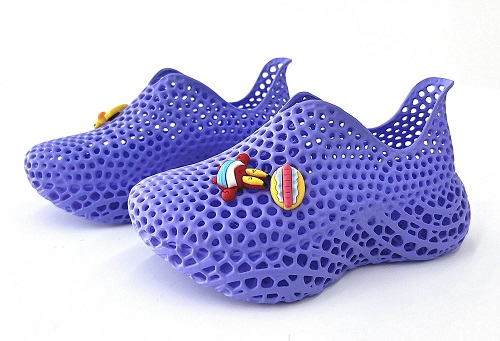
- Lattice structures for lightweighting
- Organic, flowing shapes
- Consolidated assemblies (multiple parts printed as one)
Real-world examples:
- Prosthetics: Custom-designed to fit each patient's unique anatomy. More comfortable, more functional.
- Jewelry: One-of-a-kind pieces with intricate patterns impossible to cast.
- Aerospace: Components with internal cooling channels that follow optimal paths.
Customization Without Cost Penalty
Traditional manufacturing economics punish uniqueness. Each custom design requires new tooling, new setup, new costs.
3D printing economics reward uniqueness. The same printer can make infinite variations by simply changing the digital file. Design modifications cost nothing.
Applications:
- Medical: Patient-specific implants and surgical guides
- Consumer: Custom jewelry, phone cases, eyewear
- Industrial: Tools designed for specific tasks
Reduced Inventory
With 3D printing, you don't need to stock physical inventory. Store digital files instead. Print parts when needed.
Benefits:
- No warehouse space required
- No obsolescence (digital files don't expire)
- No minimum order quantities
- On-demand production exactly when needed
Faster Problem Solving
When a part breaks, you don't wait weeks for a replacement. Scan, design, print—back in service in days.
How Can Different Industries Benefit?
Manufacturing
- Rapid prototyping: Test designs before committing to tooling
- Custom tooling: Jigs, fixtures, and workholding printed on demand
- Small-batch production: Economical runs without tooling investment
- Spare parts: Digital inventory, print when needed
Healthcare
- Custom implants: Patient-specific, perfect fit, faster recovery
- Surgical guides: Precise tools for complex procedures
- Anatomical models: Practice on replicas before operating
- Prosthetics: Customized, affordable, functional
Aerospace
- Lightweight components: 30–50% weight reduction
- Complex geometries: Internal cooling channels, optimized structures
- Part consolidation: Multiple parts printed as one
- On-demand production: Spare parts for aging aircraft
Automotive
- Prototyping: 80% faster development
- Custom parts: Limited editions, personalized components
- Tooling: Printed jigs and fixtures
- Restoration: Replacement parts for classic vehicles
Consumer Goods
- Customized products: Jewelry, phone cases, eyewear
- Small-batch production: Test markets, limited editions
- Rapid iteration: Refine designs based on feedback
- Unique designs: Impossible with traditional methods
Architecture
- Scale models: Detailed, accurate representations
- Custom components: Unique building elements
- Concept visualization: Communicate design intent
What Technologies Are Used in 3D Printing Services?
| Technology | Materials | Strengths | Best For |
|---|---|---|---|
| FDM | PLA, ABS, PETG, nylon | Low cost, large parts, functional | Prototypes, jigs, fixtures |
| SLA | Photopolymer resins | High detail, smooth finish | Jewelry, dental, visual models |
| SLS | Nylon, TPU, composites | Durable, no supports | Functional parts, complex geometries |
| Metal | Titanium, stainless steel, aluminum | High strength, production-grade | Aerospace, medical, industrial |
| Material Jetting | Photopolymers | Multi-material, color, smooth | Visual prototypes, medical models |
How Do You Choose the Right Service Provider?
Key Factors to Consider
Technology offered: Do they have the right printers for your needs? FDM for large parts? SLA for detail? SLS for durability? Metal for production?
Material options: Can they print in the materials your project requires? Standard plastics? Engineering materials? Metals? Specialties?
Design support: Do they offer design assistance? Can they help optimize your model for printability?
Quality and experience: Review their portfolio. Have they done similar projects? Do they understand your industry?
Turnaround time: How quickly can they deliver? Do they offer expedited services?
Cost: Transparent pricing? Hidden fees? Volume discounts?
Questions to Ask
- What 3D printing technologies do you use?
- What materials do you offer?
- Can you review my file before printing?
- What post-processing options do you provide?
- What is your typical turnaround time?
- Can you show examples of similar projects?
- What happens if the print fails or doesn't meet specifications?
How Does Yigu Technology Approach 3D Design and Printing?
As a non-standard plastic and metal products custom supplier, Yigu Technology integrates 3D design and printing into our core services.
Our Experience
Product development: 3D design allows us to transform abstract ideas into detailed models quickly. Clients visualize the final product before any material is used. Design flaws are identified early.
Prototyping: Instead of expensive mold-making for new components, we use 3D printing to produce samples for testing. Development cycles shorten. Costs decrease.
Customization: We create unique products meeting specific client requirements—shape, size, functionality. No two parts need be the same.
Our Capabilities
- Design services: From concept to printable 3D models
- Multiple technologies: FDM, SLA, SLS, metal printing
- Wide material range: Plastics, resins, metals
- Post-processing: Cleaning, curing, finishing, assembly
Quality Commitment
- File review and optimization
- Process validation
- Inspection before shipping
- Documentation as needed
Conclusion
3D design and printing services bring transformative advantages to businesses:
- Rapid prototyping: Development time reduced by up to 80%
- Cost-effectiveness: No tooling, minimal waste, economical small batches
- Design freedom: Complex geometries, customization, innovation
- Reduced inventory: Digital files, on-demand production
- Faster problem solving: Parts in days instead of weeks
Applications span every industry:
- Manufacturing: Prototypes, tooling, small-batch production
- Healthcare: Custom implants, surgical guides, anatomical models
- Aerospace: Lightweight components, complex geometries
- Automotive: Faster development, custom parts
- Consumer goods: Personalized products, rapid iteration
For businesses, the message is clear: 3D design and printing are not experimental. They are practical tools that deliver competitive advantage—faster development, better products, lower costs.
Whether you need a single prototype, a small production run, or custom parts for your customers, 3D design and printing services can bring your ideas to life.
Frequently Asked Questions
Q1: What types of materials can be used in 3D printing?
Common materials include plastics (PLA, ABS, PETG, nylon), resins (standard, tough, flexible, castable), metals (titanium, stainless steel, aluminum), ceramics, and composites. Each offers different properties for different applications.
Q2: How accurate is 3D printing?
Accuracy varies by technology:
- Desktop FDM: ±0.1–0.5 mm
- Industrial SLA: ±0.05–0.1 mm
- SLS: ±0.1 mm
- Metal printing: ±0.02–0.1 mm
Factors like model complexity, material, and printer calibration affect final accuracy.
Q3: Can I use my own 3D design for 3D printing services?
Yes. Most services accept common file formats (STL, OBJ, 3MF). Ensure your model is "watertight" (no holes or gaps) and meets minimum wall thickness requirements. Many services offer file review and can suggest fixes.
Q4: How much does 3D printing cost?
Costs vary by size, material, complexity, and quantity. Small plastic parts: $5–$50. Medium complex parts: $50–$200. Metal parts: $200–$2,000+. Request quotes with your specific file.
Q5: How long does 3D printing take?
Simple parts: hours. Complex parts: days. Your service provider can give an estimate based on your file and requirements.
Q6: Can 3D printing produce functional parts?
Absolutely. FDM, SLS, and metal printing produce parts suitable for functional testing and end use. Choose appropriate materials and technologies for your application.
Q7: What industries benefit most from 3D design and printing?
Manufacturing (prototypes, tooling), healthcare (custom implants, surgical guides), aerospace (lightweight components), automotive (faster development), and consumer goods (personalized products) all gain significant advantages.
Contact Yigu Technology for Custom Manufacturing
Ready to bring your ideas to life with 3D design and printing services? At Yigu Technology, we combine design expertise with advanced manufacturing. Our team helps you from concept to finished part—optimizing designs, selecting the right technologies, and delivering quality results.
Visit our website to see our capabilities. Contact us today for a free consultation and quote. Let's turn your ideas into reality.