What Is Metal CNC Machining and How Is It Used in Manufacturing?
Introduction Metal CNC machining is a highly precise manufacturing process. It leverages computer numerical control (CNC) technology to shape and form metal workpieces into intricate parts and components. Using computer programs to control the movement of cutting tools, material is removed from the workpiece to achieve desired dimensions and geometry. This process is widely used […]
Metal CNC machining is a highly precise manufacturing process. It leverages computer numerical control (CNC) technology to shape and form metal workpieces into intricate parts and components. Using computer programs to control the movement of cutting tools, material is removed from the workpiece to achieve desired dimensions and geometry. This process is widely used across industries due to its ability to produce complex parts with high precision and efficiency. This guide covers the basics of metal CNC machining , the types of machines and tools used, the steps involved, and its numerous benefits and applications.
What Is Metal CNC Machining and Why Is It Important?
Metal CNC machining is a subtractive manufacturing process. Material is removed from a metal workpiece to create a finished part. Unlike traditional manual machining, CNC machining relies on computer programs to control machine tools—ensuring consistent and precise results.
The process begins with a digital design file (created using CAD software). This is converted into machine-readable code (G-code) to control cutting tool movement. This automation allows for complex geometries and tight tolerances that would be difficult or impossible to achieve manually.
Importance in Manufacturing
Factor
Impact
Precision
Achieves micron-level tolerances
Efficiency
Automated processes reduce production time
Versatility
Produces simple brackets to complex gears and assemblies
Repeatability
Consistent results across production runs
Critical industries
Aerospace, automotive, defense—where precision and reliability are paramount
What Types of CNC Machines and Tools Are Used?
Milling Machines
Milling machines are among the most common CNC machines used in metal machining. They use rotating cutting tools—end mills and face mills—to remove material.
Capability
Operations
Flat surface machining
Face milling
Slotting
Creating channels and grooves
Contouring
Complex 3D shapes
Multi-axis machining
Advanced milling centers with multiple axes produce highly complex three-dimensional parts
Lathes and Turning Centers
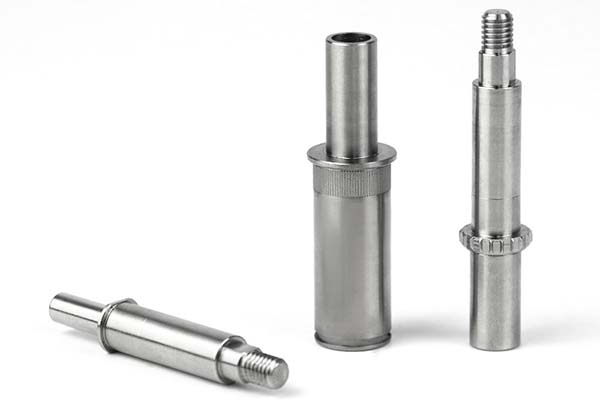
CNC lathes and turning centers are designed for machining cylindrical parts. The workpiece rotates while a stationary cutting tool removes material.
Capability
Operations
Turning
Cylindrical shaping
Threading
Screw threads
Grooving
Channels and recesses
Advanced features
Live tooling, sub-spindles—enable complex parts in a single setup
Drilling Machines and Other Tools
Tool Type
Purpose
Drills
Create holes with precise diameters
Reamers
Enlarge and finish holes to exact size
Taps
Cut internal threads
Grinding wheels
Surface finishing
Saws
Cut-off operations
The versatility of CNC machines allows manufacturers to integrate multiple processes into a single machine—reducing setup time and increasing efficiency.
What Are the Steps in the Metal CNC Machining Process?
Workpiece Preparation and Fixture Design
Step
Description
Material selection
Based on strength, weight, corrosion resistance requirements
Workpiece mounting
Secured to machine table or custom fixture
Fixture design
Critical for stability and precise positioning during machining
Programming and Simulation
Step
Description
CAD design
Create detailed 3D model
CAM conversion
Convert to machine-readable code (G-code) defining tool paths, speeds, feeds
Simulation
Detect potential errors or collisions before machining
Machining Operations and Monitoring
Step
Description
Tool movement
Cutting tools follow programmed paths
Material removal
Workpiece shaped to desired dimensions
Real-time monitoring
Advanced sensors provide feedback; adjustments made as needed
Quality checks
Ensure proper tool performance, material removal rates, surface finish
What Are the Benefits of Metal CNC Machining?
High Precision and Accuracy
Benefit
Impact
Micron-level tolerances
Critical for aerospace, medical—where minor deviations have significant consequences
Metal CNC machining is a cornerstone of modern manufacturing. It offers unparalleled precision (micron-level tolerances), efficiency (automated processes reduce production time), and versatility (wide material range: aluminum, steel, titanium, brass, copper). The process uses milling machines (complex 3D parts), lathes (cylindrical components), and drilling tools (precise holes). Key steps include workpiece preparation, CAD/CAM programming, simulation, and real-time monitoring. Benefits include cost-effective production (high-volume runs with consistent quality) and flexibility (design changes accommodated easily). Applications span aerospace (engine components, landing gear), automotive (engine parts, transmissions), defense (military vehicles), medical (implants), and electronics. With its ability to produce complex geometries and tight tolerances, metal CNC machining remains essential for industries where precision and reliability are paramount.
FAQs
What materials can be machined using metal CNC machining? Metal CNC machining works with a wide range of materials: aluminum, steel, stainless steel, titanium, brass, and copper. Material selection depends on application requirements—strength, weight, corrosion resistance.
How does CNC machining differ from traditional machining methods? CNC machining is an automated process using computer programs to control cutting tools—ensuring high precision and repeatability. Traditional machining relies on manual operation , often less precise and more time-consuming. CNC offers significant advantages in accuracy, efficiency, and versatility.
What are the common applications of metal CNC machining? Metal CNC machining is used in aerospace (aircraft engines, landing gear), automotive (engine parts, transmissions), defense (military vehicles, weapons systems), medical (implants, surgical instruments), electronics (housings, connectors), and general manufacturing (tooling, fixtures). It is ideal for complex geometries, high-precision parts, and components with tight tolerances.
Contact Yigu Technology for Custom Manufacturing
At Yigu Technology , we specialize in metal CNC machining for demanding applications. Our 3-axis, 4-axis, and 5-axis CNC machines achieve micron-level tolerances for aerospace, automotive, medical, and defense components. We work with a wide range of metals—aluminum, steel, stainless steel, titanium, brass, copper. Our capabilities include milling, turning, drilling, and multi-axis machining. We provide DFM feedback to optimize your designs for manufacturability. From prototypes to high-volume production, we deliver precision components that meet the most demanding specifications.
Ready to leverage metal CNC machining for your next project? Contact Yigu Technology today for a free consultation and quote. Let us help you achieve precision, efficiency, and quality in every component.
Related Plastic & Metal Custom Manufacturing Articles