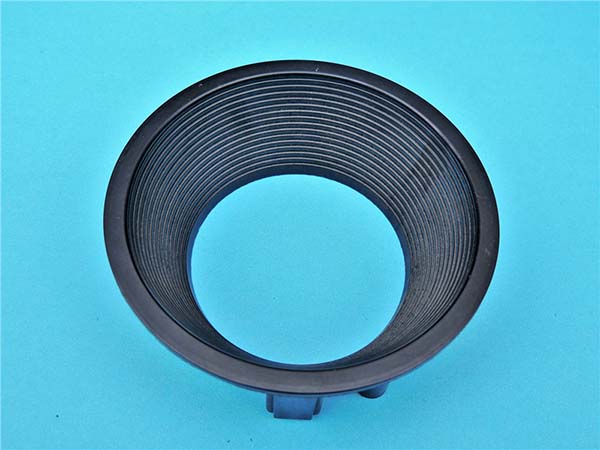
SLA 3D printing uses a laser to cure liquid resin into high-detail, smooth-surfaced parts—ideal for prototypes, jewelry, and medical applications. This guide explains how it works, its applications, and what you need to know to get started.
Introduction to SLA Technology
SLA, short for Stereolithography Apparatus, is a revolutionary 3D printing technology that has transformed industries since its invention. Created by Charles W. Hull in 1983 and patented in 1986, it was the first commercialized 3D printing technology—the foundation upon which the entire additive manufacturing industry was built.
SLA is a form of vat photopolymerization. The process uses a liquid photopolymer resin that solidifies when exposed to light. A high-precision laser traces each layer of your 3D model onto the resin surface, curing it into solid material. Layer by layer, your object rises from the liquid.
The result? Parts with extremely high precision and smooth surface finishes. SLA can achieve layer thicknesses as small as 25 microns (0.025 mm) —thinner than a human hair. This makes it ideal for applications where intricate details and accurate dimensions are crucial: jewelry making, dental applications, and prototypes for high-tech products.
How Does SLA 3D Printing Actually Work?
What happens in each step of the process?
Step 1: 3D Modeling
The journey begins with creating a 3D model of your desired object. Designers use professional software like Blender, Autodesk Maya, or SolidWorks.
For example, a product designer creating a new smartphone case would use SolidWorks to design with precise measurements—including cut-outs for ports and buttons.
Once created, the model needs optimization. Check for non-manifold geometry (like self-intersecting surfaces) and ensure the model is watertight. A non-watertight model can cause errors during slicing and printing.
Step 2: Slicing the Model
The 3D model is imported into slicing software—like PreForm (for Formlabs printers) or ChiTuBox. The software divides the model into hundreds or even thousands of thin horizontal layers.
For a 10-centimeter-tall figurine with 0.05mm layer thickness, the model slices into 200 layers.
Layer thickness selection is crucial:
- Thinner layers (0.025mm) = smoother finish, longer print time
- Thicker layers (0.1mm) = faster print, less detail
Highly detailed jewelry models might use 0.025mm. Less detailed prototypes might use 0.1mm.
Step 3: The Printing Process
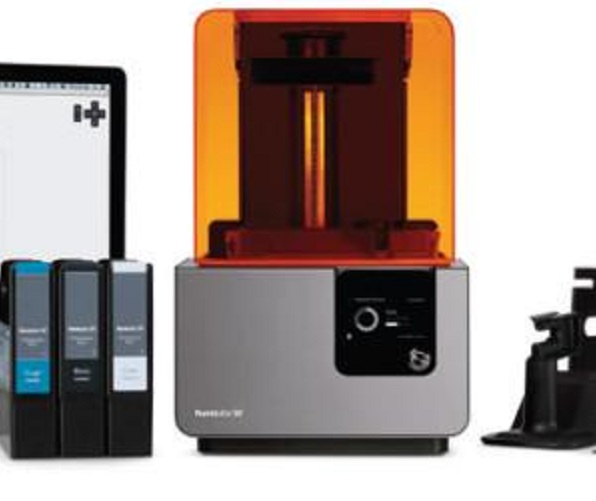
An SLA printer has a vat filled with photosensitive resin. A high-power ultraviolet (UV) laser traces each layer's shape onto the resin surface. Where the laser hits, the resin cures (solidifies).
The build platform starts at the resin surface. After each layer cures, it lowers slightly—typically by one layer thickness—and the next layer prints on top.
In a Form 3 SLA printer, the laser spot size is as small as 50 microns, enabling very fine details. The printer's software precisely controls laser movement and platform positioning to ensure accurate layer alignment.
Step 4: Post-Processing
After printing, the object needs rinsing and curing.
Rinsing: The part is removed from the build platform and rinsed in a solvent—usually isopropyl alcohol (IPA) . This removes uncured resin from the surface. A printed dental crown, for example, would be thoroughly rinsed to ensure no residual resin remains.
Curing: The rinsed part goes into a separate UV curing station. This secondary curing fully polymerizes the resin, enhancing mechanical properties. Some curing stations use rotating platforms for even UV exposure on all sides.
What Makes SLA Different From Other 3D Printing Technologies?
How does SLA compare to FDM?
| Aspect | SLA | FDM |
|---|---|---|
| Print Method | Laser cures liquid resin | Melts and extrudes filament |
| Layer Thickness | 0.025-0.1mm | 0.1-0.3mm |
| Surface Finish | Smooth, no visible layer lines | Visible layer lines, rough texture |
| Detail | Excellent for fine features | Limited by nozzle size |
| Materials | Photopolymer resins | Thermoplastic filaments |
| Post-Processing | Washing, curing required | Support removal, sanding optional |
SLA wins for detail, surface finish, and precision. FDM wins for cost, material variety, and large parts.
How does SLA compare to SLS?
| Aspect | SLA | SLS |
|---|---|---|
| Print Method | Laser cures liquid resin | Laser sinters powder |
| Surface Finish | Very smooth | Slightly rough, granular |
| Detail | Excellent | Good |
| Mechanical Properties | Moderate (resin-dependent) | Excellent (nylon-based) |
| Support Structures | Required for overhangs | Not required (powder supports) |
| Post-Processing | Washing, curing | Powder removal |
SLA wins for surface finish and detail. SLS wins for mechanical properties and complex geometries without supports.
What Materials Can You Use in SLA?
Common resin types
SLA primarily uses liquid photopolymer resins. Different formulations offer different properties:
Standard Resins: General-purpose materials for prototyping and concept models. Good balance of properties at reasonable cost.
Tough Resins: Formulated for higher impact resistance and durability. Suitable for functional prototypes and parts requiring some mechanical strength.
Flexible Resins: Create rubber-like parts that bend and stretch. Elongation at break can reach 100-500%. Ideal for grips, gaskets, and soft-touch applications.
High-Temperature Resins: Maintain structural integrity at elevated temperatures. Used for parts exposed to heat—like aerospace components or under-hood automotive applications.
Biocompatible Resins: Certified for medical applications. Used for surgical guides, dental appliances, and medical devices requiring skin contact or short-term body contact.
Dental Resins: Specifically formulated for dental applications—models, surgical guides, orthodontic appliances. Meet accuracy requirements for dental professionals.
Castable Resins: Burn out cleanly with minimal ash residue. Used for investment casting in jewelry and dental applications.
Material properties comparison
| Resin Type | Strength | Flexibility | Temperature Resistance | Typical Applications |
|---|---|---|---|---|
| Standard | Moderate | Low | Moderate | Prototypes, concept models |
| Tough | High | Moderate | Moderate | Functional prototypes, housings |
| Flexible | Low | High | Low | Grips, gaskets, soft-touch parts |
| High-Temp | High | Low | High | Heat-exposed components |
| Biocompatible | Moderate | Low-Moderate | Moderate | Medical devices, surgical guides |
| Castable | Low | Low | Low | Jewelry patterns, investment casting |
What Can You Create With SLA?
Manufacturing applications
Rapid Prototyping: SLA transforms design concepts into physical models in days. A consumer electronics company can prototype a new smartwatch in just a few days—compared to weeks or months with traditional methods.
Custom-Made Parts: SLA enables highly customized components. A motorcycle manufacturer might need custom air intakes for a limited-edition model. SLA produces these with precise dimensions and complex geometries, tailored to specific requirements.
Small-Batch Production: A startup producing unique kitchen utensils can use SLA for 50-100 units of market testing—without expensive injection-molding tools. This reduces upfront investment and allows quick adjustments based on market feedback.
Medical applications
Personalized Prosthetics: SLA prints prosthetics custom-fitted to patients. A prosthetic printed to match the exact shape of a residual limb improves comfort and functionality—enhancing mobility and quality of life.
Dental Applications: SLA creates highly accurate dental models for planning complex procedures. Studies show SLA-printed dental models achieve accuracy up to 0.1mm—crucial for successful treatments like implant placements and orthodontics.
Surgical Guides: Custom surgical guides printed from patient scans help surgeons place implants precisely. This improves outcomes and reduces operating time.
Bioprinting Research: Though still in research, SLA shows promise for creating 3D-printed tissue constructs for transplantation—bringing hope to patients awaiting organ donations.
Jewelry design
Jewelry demands high precision and intricate shapes. SLA delivers both.
Designers create elaborate pieces with detailed patterns and filigree work that would be extremely difficult to produce by hand. A necklace with a complex floral pattern can be designed in 3D software and printed with SLA.
The high resolution—minimum feature size around 0.1mm—enables very fine details. Printed models can be used for investment casting: the resin patterns are burned out, leaving molds into which precious metals like gold or silver are poured.
Consumer products
- Eyewear frames with custom fits and designs
- Figurines and collectibles with intricate details
- Ergonomic products tailored to user anatomy
- Cosmetic packaging with unique shapes
Engineering and industrial
- Fluidic devices with internal channels
- Connectors and housings
- Form-and-fit prototypes for assemblies
- Master patterns for molding
What Are the Advantages of SLA?
Precision
SLA achieves unmatched detail. Layer thickness down to 25 microns captures features that other technologies miss. This precision is essential for:
- Snap-fits and mechanical interfaces
- Textured surfaces and fine details
- Accurate dimensions for critical assemblies
Surface finish
SLA produces the smoothest surfaces of any 3D printing technology. Parts come out of the printer with a finish often ready for use or requiring minimal post-processing. For aesthetic prototypes, this matters enormously.
Complexity
Like all 3D printing, SLA handles complex geometries that machining can't produce. Internal features, undercuts, and organic shapes are routine. The only limitation is that overhangs need supports.
Material options
The range of photopolymer resins continues expanding. From rigid to flexible, standard to biocompatible, there's a resin for most applications. Properties continue improving, approaching engineering plastics.
What Are the Limitations of SLA?
Build volume
SLA printers typically have smaller build volumes than FDM or SLS machines. Desktop SLA printers handle parts up to about 150-200mm in each dimension. Larger industrial systems exist but cost more.
Support structures
Overhangs require supports. These leave marks when removed and require post-processing to achieve clean surfaces. Orientation matters—position parts to minimize supports on visible surfaces.
Post-processing requirements
SLA parts aren't ready immediately. They require:
- Washing in IPA to remove uncured resin
- Curing in UV light to achieve final properties
- Support removal and finishing
This adds time and requires additional equipment.
Material properties
While improving, resin properties differ from injection-molded plastics. Long-term durability under UV exposure, temperature, or mechanical stress requires material selection and testing.
Cost
Resin costs more than FDM filament. For large parts or high volumes, SLA can be expensive. However, for detail and surface finish, it's often the most economical choice.
Yigu Technology's View
As a non-standard plastic and metal products custom supplier, Yigu Technology highly values SLA technology. The high precision allows us to achieve complex designs difficult with traditional manufacturing.
For custom-designed plastic components with intricate internal channels, SLA accurately forms these structures. This precision ensures both functionality and aesthetic appeal.
SLA also shortens product development cycles. Instead of waiting weeks for molds, we have functional prototypes within days. This speed lets us respond quickly to customer needs and make design adjustments efficiently.
SLA is a powerful tool helping us meet diverse and demanding requirements in the non-standard plastic and metal products market.
FAQ
Q1: What types of materials can be used in SLA 3D printing?
A: SLA primarily uses liquid photopolymer resins. Types include standard (general-purpose), tough (impact-resistant), flexible (rubber-like), high-temperature (heat-resistant), biocompatible (medical), dental, and castable (for investment casting) resins.
Q2: Is SLA 3D printing suitable for large-scale production?
A: SLA is not typically ideal for large-scale production due to relatively high cost per unit and slow printing speed. However, it excels in small-batch production and custom manufacturing where detail matters and tooling costs would be prohibitive.
Q3: How do you post-process SLA 3D printed parts?
A: Post-processing involves: (1) Rinsing in isopropyl alcohol (IPA) to remove uncured resin, (2) Curing in a UV station to fully polymerize and enhance mechanical properties, (3) Support removal, and (4) Optional sanding and polishing for improved surface finish.
Q4: How accurate is SLA 3D printing?
A: SLA achieves accuracy of ±0.1mm or better in most cases. Layer thickness can be as low as 0.025mm, enabling extremely fine details. Accuracy depends on printer calibration, material, and part geometry.
Q5: What's the difference between SLA and DLP?
A: Both use photopolymer resins. SLA uses a laser to trace each layer point by point. DLP projects an entire layer at once using a digital light projector. DLP is generally faster; both achieve excellent detail.
Q6: Can SLA print large objects?
A: Build volumes vary. Desktop SLA printers typically handle parts up to 150-200mm. Industrial SLA systems offer larger volumes but cost significantly more. Very large parts may need to be printed in sections and assembled.
Q7: Is SLA safe for home use?
A: Liquid resin can cause skin irritation—wear nitrile gloves when handling. Work in well-ventilated areas. Uncured resin is toxic to aquatic life—dispose properly. Cured parts are generally safe. For occasional use, proper precautions make SLA safe for home workshops.
Q8: How long does SLA printing take?
A: Print time depends on part height (number of layers) and model complexity. Small parts may take 1-2 hours; larger, complex parts can take 8-12 hours or more. Thinner layers increase time but improve quality.
Contact Yigu Technology for Custom Manufacturing
Ready to explore SLA 3D printing for your next project? At Yigu Technology, we combine deep expertise with state-of-the-art SLA capabilities. Whether you need high-detail prototypes, custom jewelry patterns, dental models, or precision components, our team delivers quality results tailored to your specifications. Contact us today for a consultation—let's bring your detailed designs to life with SLA technology.