3D printing could be the key technology that makes terraforming Mars possible—enabling construction, tool manufacturing, and life-support systems using local materials. This article explores how additive manufacturing might help humanity establish a permanent presence on the Red Planet.
Introduction: Why Mars and Why 3D Printing?
Mars has long captured human imagination. Now, with advances in space exploration, the dream of terraforming Mars—transforming its environment to support human life—moves closer to reality. But one critical question remains: How will we build everything needed for a permanent Martian settlement without shipping everything from Earth?
The answer may lie in 3D printing technology. Also known as additive manufacturing, 3D printing builds objects layer by layer from digital files. This capability could let future Martians create habitats, tools, and equipment using Martian soil as raw material. Instead of transporting tons of supplies across millions of kilometers, we could send printers and digital designs—and let the Red Planet provide the rest.
This article explores how 3D printing might contribute to terraforming Mars, from constructing shelters to manufacturing life-support systems, and what challenges we must overcome to make it happen.
What Is 3D Printing and How Does It Work?
What exactly is 3D printing?
3D printing, or additive manufacturing, constructs three-dimensional solid objects from digital files. Unlike traditional manufacturing methods that remove material (cutting, milling, drilling), 3D printing builds objects layer by layer. It uses materials like metals, plastics, ceramics, or composites as building blocks.
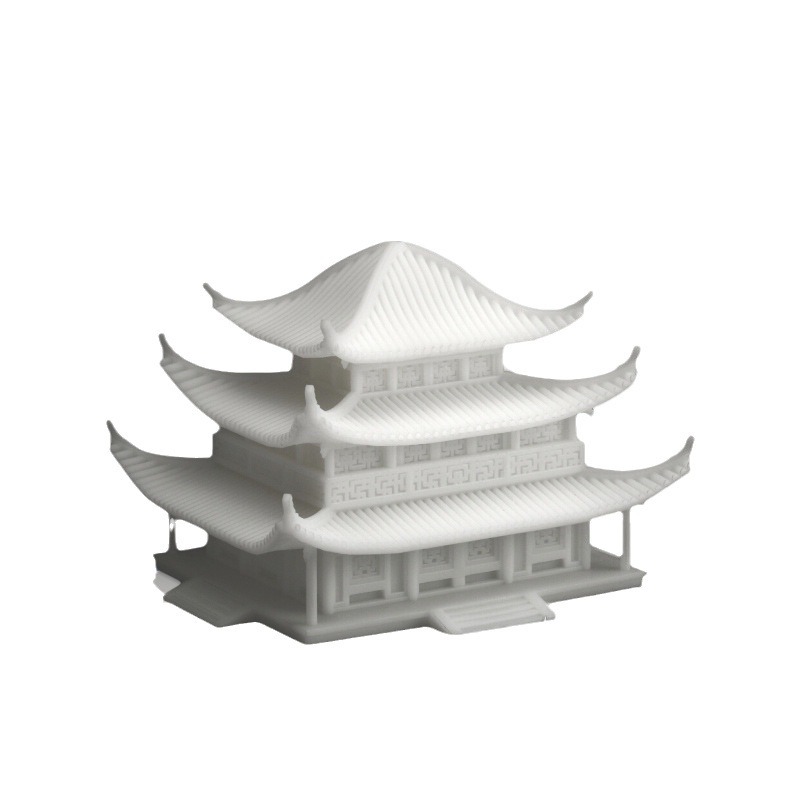
For example, creating a small plastic figurine starts with a digital model. The printer reads instructions from this file and deposits thin layers of melted plastic—one on top of another—until the figurine is complete. This technology enables complex geometries impossible to achieve with traditional techniques.
What do you need for 3D printing?
Three elements are essential: a digital file, a 3D printer, and materials.
Digital File: This blueprint contains all geometric information about the object—shape, size, internal structure. You create it using computer-aided design (CAD) software or capture it with a 3D scanner.
3D Printer: The device reads the digital file and deposits material precisely according to instructions. Different printer types use different methods.
Materials: A wide range exists—metals (aluminum, titanium), nylon, glass fiber, PLA (a biodegradable plastic), resin, and rubber. PLA is popular because it's easy to print with, has a low melting point, and is environmentally friendly.
What are the main 3D printing technologies?
| Technology | How It Works | Common Uses |
|---|---|---|
| FDM (Fused Deposition Modeling) | Melts and extrudes thermoplastic filament layer by layer | Home printing, prototypes, custom parts |
| SLA (Stereolithography) | Laser cures liquid photopolymer resin | Jewelry, dental models, detailed prototypes |
| SLS (Selective Laser Sintering) | Laser sinters powdered material (metal, nylon) | Functional parts, automotive, aerospace |
| 3DP (3D Printing and Gluing) | Adhesive bonds powder layers | Complex internal structures, full-color prints |
Each technology has strengths. FDM is affordable and accessible. SLA delivers high resolution. SLS produces strong functional parts. 3DP enables complex internal features and color.
Why Terraform Mars?
What problems on Earth drive Mars exploration?
Earth faces serious challenges. The global population is booming—according to the United Nations, it will reach 9.7 billion by 2050 and exceed 10 billion by century's end. This growth strains resources.
Fresh water is already scarce. About 2.2 billion people lack safe drinking water today. Demand will only increase. Food production must rise 60% by 2050 to feed everyone.
Non-renewable resources are depleting. At current consumption rates, oil reserves may last only 50 more years, natural gas about 60 years. Meanwhile, climate change—driven by fossil fuel use—makes Earth less habitable. Rising seas threaten coastal cities. Extreme weather events grow more frequent and intense.
Mars offers a potential solution. Its relative proximity makes it the most viable candidate for human expansion. Terraforming Mars could create new living space, relieve pressure on Earth's resources, and provide a backup plan for humanity in case of global catastrophe—asteroid impact, supervolcano eruption, or pandemic.
What progress have we made in terraforming research?
Scientists have made promising advances:
Atmospheric Modification: Mars' atmosphere is mostly carbon dioxide but extremely thin—surface pressure less than 1% of Earth's. Researchers propose releasing greenhouse gases to thicken it. A recent study suggested using local Martian resources to produce these gases. Mining and processing Martian regolith (surface material) could release compounds that enhance the greenhouse effect, gradually warming the planet.
Temperature Increase: Mars averages -63°C. Raising temperature is crucial. Concepts include placing large mirrors in space to reflect more sunlight onto the surface, especially polar ice caps. Melting ice would release trapped carbon dioxide, further warming the planet.
Water Resource Exploration: Water is essential for life. Recent missions—NASA's Mars Reconnaissance Orbiter, China's Tianwen-1—found strong evidence of water. Large ice deposits exist at the poles, and underground water reserves may exist. Understanding water distribution and accessibility is a major step toward habitation.
How Could 3D Printing Help Terraform Mars?
Can we build habitats using Martian soil?
Construction on Mars represents 3D printing's most promising application. Instead of shipping building materials from Earth at enormous cost, we could use Martian regolith as raw material.
NASA studies show that mixing Martian regolith with a binding agent creates a printable material. This "Martian concrete" could print habitat walls, floors, and structural components layer by layer.
The advantages are compelling:
- Cost savings: Transporting materials to Mars costs an estimated $10,000 to $100,000 per pound. Using local materials eliminates this expense.
- Optimized structures: 3D printing enables complex geometries impossible with traditional construction. Curved walls and domed ceilings can better withstand Mars' harsh environment—high-speed winds, meteorite impacts, extreme temperature swings. A domed habitat distributes stress more evenly than rectangular buildings.
- Rapid deployment: Printers could work autonomously before humans arrive, preparing shelters ready for occupation.
NASA's 3D-Printed Habitat Challenge demonstrated this concept. Teams created Martian regolith simulant and printed structures showing that habitat construction using local materials is feasible.
Can we manufacture tools and equipment on-site?
During long missions, tools break and new equipment becomes necessary. Instead of waiting years for resupply from Earth, astronauts could print what they need.
Simple hand tools—wrenches, screwdrivers, pliers—can print easily. More complex equipment can be printed in components and assembled. Rover parts like wheels, brackets, and even some electrical components could be manufactured on-site.
The European Space Agency (ESA) has demonstrated 3D-printed metal components for space applications. Using Martian resources or efficiently using materials brought from Earth, mission self-sufficiency improves dramatically.
Imagine a rover wheel damaged by sharp rocks. Instead of abandoning the vehicle or waiting for replacement parts, astronauts print a new wheel overnight. Repairs happen in hours, not years.
Can we create life-support system components?
Life-support systems keep astronauts alive. They purify air, recycle water, and maintain habitable conditions. 3D printing could manufacture critical components for these systems.
Air-filtering devices: Martian air is mostly carbon dioxide with traces of other gases. Filters must remove harmful particles and adjust gas composition to make air breathable. 3D printing can create complex filter structures with high-efficiency capabilities tailored to specific requirements.
Water-recycling equipment: Water is precious on Mars. Recycling is essential. 3D-printed equipment can be customized to extract and purify water from sources like Martian ice or atmospheric vapor. A leading aerospace research institute successfully printed a prototype water-recycling component, demonstrating this technology's potential.
Could 3D printing enable other terraforming applications?
Beyond habitats, tools, and life support, 3D printing could contribute to:
- Radiation shielding: Printing thick walls from regolith protects against cosmic radiation
- Greenhouse components: Structures for growing food
- Scientific equipment: Custom instruments for research
- Spare parts: Everything from plumbing fittings to electronic enclosures
- Furniture and amenities: Making living spaces comfortable
What Challenges Must We Overcome?
How does low gravity affect printing?
Mars gravity is about 38% of Earth's. This affects material flow and deposition during printing. For FDM technology, extrusion and layering might behave differently, potentially causing uneven layers.
Scientists are developing solutions. Magnetic or electrostatic fields could help control material movement. With proper adjustments, research suggests 3D printing on Mars can achieve accuracy comparable to Earth—within a few millimeters for small objects—sufficient for most construction and tool-making needs.
Can we use Martian materials effectively?
Using Martian regolith as printing material presents challenges. Its composition varies by location. It may contain reactive minerals or toxic compounds. Binding agents must work with available resources.
Research continues on optimizing regolith-based materials. Different binder formulations, printing parameters, and post-processing methods are being tested to achieve reliable, strong structures.
What about power requirements?
3D printing requires significant energy. On Mars, power comes from solar panels or nuclear sources. Printers must be energy-efficient or missions must have ample power generation capacity.
Large-scale construction might require dedicated power systems. However, printing smaller items—tools, spare parts—would have modest energy demands manageable with standard mission power.
How do we ensure reliability?
Equipment on Mars must work flawlessly. Printer failures could be catastrophic. Redundancy, robust design, and easy repairability are essential. Printers themselves might need spare parts that can be printed—a recursive solution.
What Does Yigu Technology Think About 3D Printing for Mars?
As a non-standard plastic and metal products custom supplier, Yigu Technology recognizes the unique advantages 3D printing brings to Mars-related projects. The ability to create complex structures using local materials is truly game-changing.
We have expertise in developing customized materials and components for specialized applications. For Mars missions, we could develop special plastic-metal composite materials suited to the harsh Martian environment—with high-temperature resistance, strong radiation protection, and excellent mechanical properties.
In the future, Yigu Technology is eager to participate in research and development cooperation for 3D printing in terraforming Mars. Our experience in custom products and deep understanding of material properties could contribute to more advanced 3D printing solutions for the Red Planet, helping make the dream of terraforming Mars a reality faster.
Conclusion
3D printing technology could play a pivotal role in terraforming Mars. From building habitats using Martian soil to manufacturing tools on-demand and creating life-support system components, additive manufacturing addresses one of the biggest challenges of Mars settlement: the impossibility of shipping everything from Earth.
Key takeaways:
- 3D printing builds objects layer by layer from digital files
- Mars faces extreme conditions but offers local resources like regolith
- Using Martian materials for 3D printing reduces costly Earth transport
- Habitats, tools, equipment, and life-support components could all be printed
- Challenges remain—low gravity effects, material optimization, power requirements—but solutions are being developed
While terraforming Mars remains a long-term goal, 3D printing provides a practical path to establishing initial settlements. As technology advances, the dream of humans living on Mars moves closer to reality—one printed layer at a time.
FAQ
Q1: What materials could we use for 3D printing on Mars?
A: The primary material is Martian regolith (soil). Studies show that adding a binding agent makes it printable for structural components. Metals brought from Earth (aluminum, titanium) could be used for tools and equipment. Plastics like PLA could also be used, especially for small objects requiring flexibility or corrosion resistance.
Q2: How accurate can 3D printing be in Mars' low gravity?
A: Low gravity affects material flow and deposition. However, with proper adjustments and new control mechanisms (like magnetic or electrostatic fields), research suggests accuracy comparable to Earth—within a few millimeters for small objects—sufficient for most construction and tool-making needs.
Q3: Can 3D printing completely replace traditional manufacturing on Mars?
A: No. A combination of 3D printing and traditional methods is more likely. 3D printing excels at customization and using local resources. Traditional methods may be more efficient for mass-producing simple, standardized parts or achieving very high precision for certain components.
Q4: How much would 3D printing save in transportation costs?
A: Transporting materials to Mars costs an estimated $10,000 to $100,000 per pound. Using local Martian materials eliminates virtually all this cost for construction and manufacturing. For a Mars mission, savings could reach billions of dollars.
Q5: Could 3D printing produce radiation shielding?
A: Yes. Thick walls printed from regolith provide excellent protection against cosmic radiation and solar particles. The density and composition of Martian soil make it suitable for shielding structures.
Q6: Have we tested 3D printing with Martian materials?
A: Yes. NASA and other organizations have conducted extensive testing using Martian regolith simulant (material made to match Martian soil composition). These tests successfully printed structural components, demonstrating the concept's feasibility.
Contact Yigu Technology for Custom Manufacturing
Ready to explore how 3D printing could contribute to your space-related projects? At Yigu Technology, we combine deep expertise in additive manufacturing with specialized knowledge of advanced materials. Whether you need custom components for research, prototyping for Mars mission concepts, or consultation on 3D printing applications, our team delivers solutions tailored to your needs. Contact us today—let's work together to turn the dream of terraforming Mars into reality.