Introduction
You've probably heard the hype. SLS 3D printing makes strong, functional parts. No supports needed. No messy resins. It sounds like a dream for anyone who needs industrial-grade quality without the tooling costs of injection molding. But here's the thing — most people jump in without understanding the full picture. The machines cost a fortune. The powder is expensive. And the post-processing? It's not as simple as hitting "print" and walking away. In this guide, I'll break down exactly what SLS is, where it shines, where it falls short, and whether it actually makes sense for your project. Whether you're a small business owner, a product designer, or a hobbyist wondering if the hype is real — this article will help you decide.
What Makes SLS Different?
Self-Supporting Powder Bed
Most 3D printing methods need support structures. FDM prints overhangs with extra plastic. SLA uses resin supports you have to break off. SLS? It uses a powder bed as its own support. The unsintered nylon powder holds every part in place. You don't design supports. You don't remove them. This alone gives you way more design freedom.
No Supports Means More Freedom
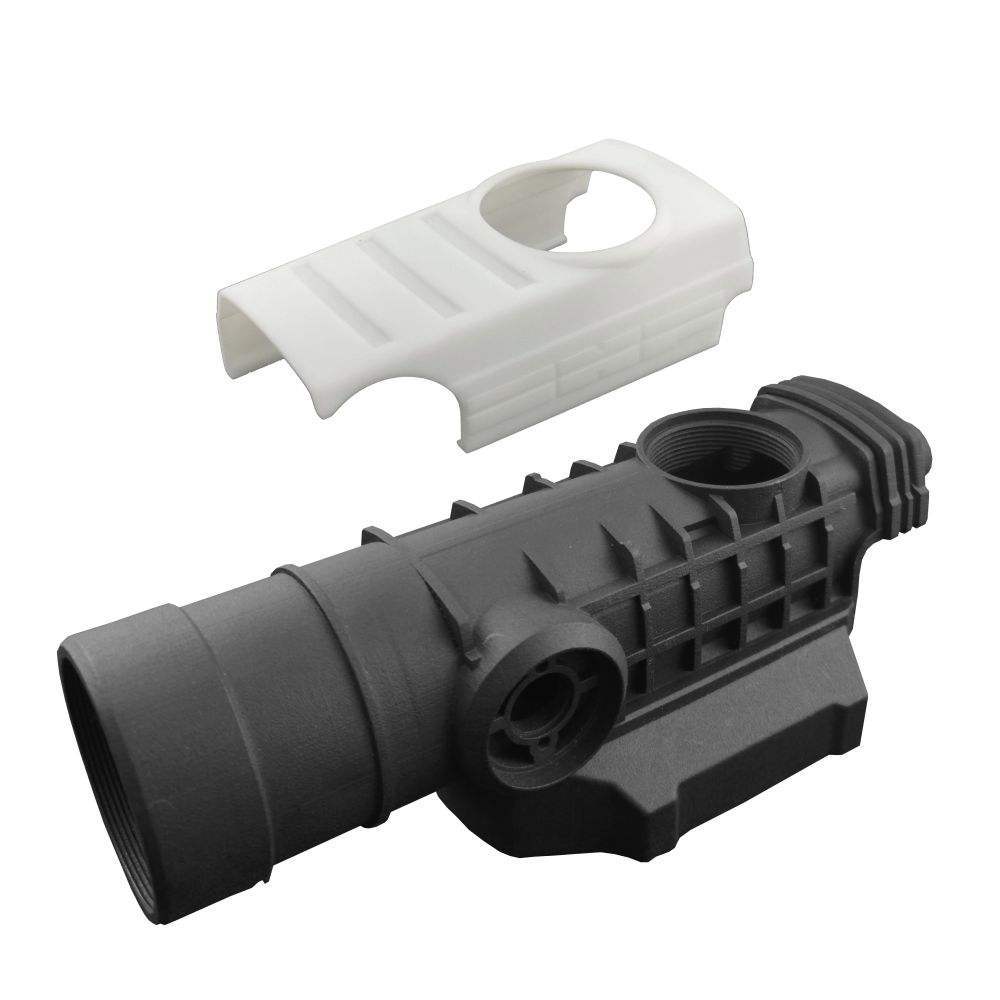
With no support structures, you can print complex geometries that other methods simply can't handle. Think internal channels, lattice structures, and nested assemblies — all in one build. A real-world example: a medical device company used SLS to print a fluid manifold with internal passages. FDM would have needed dissolvable supports. SLA would have needed breakaway supports. SLS printed it clean, in one go.
Key Differences at a Glance
| Feature | FDM | SLA | SLS |
|---|---|---|---|
| Supports Needed? | Yes | Yes | No |
| Material Strength | Medium | Low-Medium | High |
| Surface Finish | Rough | Smooth | Semi-rough |
| Best For | Prototypes | Visual Models | Functional Parts |
| Build Volume | Large | Medium | Medium-Large |
Why Is SLS So Expensive?
Hardware Costs Break It Down
Let's talk numbers. An industrial SLS machine like the EOS P395 runs around 500,000to1,000,000+. Even the newer desktop options — like the Formlabs Fuse 1 or Sintratec machines — start at 10,000to50,000. That's not pocket change for most small teams.
Nylon Powder Isn't Cheap Either
Nylon 12 (PA12) powder — the most common SLS material — costs roughly 80to150 per kilogram. And you don't use all of it. The unsintered powder degrades over time. Most shops refresh 50% to 80% of the powder between builds. That means your real material cost per part is higher than the powder price alone suggests.
Hidden Costs Add Up Fast
Here's what most people miss:
- Powder handling equipment (sieves, ovens, storage)
- Post-processing tools (blasting cabinets, tumbling machines)
- Facility requirements (ventilation, humidity control)
- Operator training (it's not plug-and-play)
| Cost Category | Estimated Range |
|---|---|
| Industrial SLS Machine | 500K–1M+ |
| Desktop SLS Machine | 10K–50K |
| Nylon PA12 Powder (per kg) | 80–150 |
| Powder Refresh Rate | 50% – 80% |
| Post-Processing Setup | 2K–15K |
What Materials Can You Use?
Standard Nylon Is the Go-To
PA12 (Nylon 12) is the workhorse. It's tough, flexible, and chemically resistant. PA11 (Nylon 11) is another common option — it's slightly more flexible and comes from bio-based sources. Both are great for functional prototypes and end-use parts.
Emerging Materials Are Expanding Options
The material library is growing fast. Here's what's available now:
| Material | Key Property | Best Use Case |
|---|---|---|
| PA12 (Nylon 12) | Tough, chemical resistant | General functional parts |
| PA11 (Nylon 11) | Flexible, bio-based | Snap fits, hinges |
| TPU (Flexible) | Rubber-like elasticity | Gaskets, seals |
| Glass-Filled Nylon | High stiffness, heat resistant | Structural brackets |
| Carbon-Filled Nylon | Maximum strength, low weight | Aerospace, automotive |
| Alumide (Metal Composite) | Metal-like finish | Cosmetic prototypes |
How Does It Compare to Injection Molding?
SLS nylon parts hit about 80–90% of injection molded nylon strength. For most functional applications, that's more than enough. But injection molding still wins on surface finish and per-unit cost at high volumes (10,000+ parts). Below that threshold? SLS often wins on total cost.
How Hard Is Post-Processing?
Depowdering Takes Time
After printing, your part is buried in loose powder. You need to remove all that powder from inside and outside the part. Small parts? You can brush it off by hand. Complex parts with internal channels? You need a pressurized air cabinet or vacuum system. This step alone can take 15 to 60 minutes per batch.
Surface Finishing Options
| Method | What It Does | Time Required |
|---|---|---|
| Media Blasting | Smooths surface, uniform matte finish | 10–30 min |
| Tumbling | Polishes and rounds edges | 30–120 min |
| Dyeing | Adds color (nylon absorbs dye well) | 20–60 min |
| Vapor Smoothing | Slight gloss, seals surface | 15–45 min |
| Coating | Adds UV or chemical resistance | Varies |
The Skill Gap Is Real
I worked with a product team that ordered 200 SLS parts from a service bureau. They assumed the parts would be "ready to use." They weren't. The surface roughness was too high for their snap-fit assembly. They had to outsource tumbling and dyeing — adding 2 weeks and $3,000 to their timeline. Always budget for post-processing. Always.
Can You Get Consistent Quality?
What Accuracy Can You Expect?
Dimensional accuracy for SLS is typically ± 0.3% to ± 0.5%, with a minimum of about ± 0.3 mm. That's good for most functional parts. But it's not as tight as CNC machining (± 0.05 mm).
Surface roughness (Ra) usually lands between 8 to 12 micrometers. It's not mirror-smooth. For most engineering uses, that's fine. For cosmetic parts, you'll need finishing.
Variability Between Machines Is Real
Not all SLS printers are equal. A 2023 study by Wohlers Associates found that part strength can vary up to 15% between different SLS machines using the same material and settings. This is why machine calibration, powder age, and build orientation all matter.
| Quality Factor | SLS Typical Range | Injection Molding | CNC Machining |
|---|---|---|---|
| Dimensional Accuracy | ± 0.3–0.5% | ± 0.1–0.3% | ± 0.01–0.05% |
| Surface Roughness (Ra) | 8–12 µm | 0.8–3.2 µm | 0.4–1.6 µm |
| Tensile Strength | 45–55 MPa | 50–75 MPa | 70–100+ MPa |
| Repeatability | Good | Excellent | Excellent |
Quality Control Best Practices
- Print test coupons with every batch
- Track powder age (use within 12–18 months)
- Use consistent build orientation across batches
- Work with service bureaus that share machine calibration logs
Outsource or Go In-House?
Service Bureau Model
| Factor | Typical Range |
|---|---|
| Per-Part Cost (Small Batch) | 50–500+ |
| Lead Time | 3 – 14 days |
| Minimum Order | 1 part (most bureaus) |
| Quality Control | Varies by provider |
Service bureaus like Protolabs, Xometry, and 3D Hubs make SLS accessible. You upload a file, get a quote, and receive parts in days. Great for low volume. Bad for tight IP control.
Desktop SLS Is Getting Cheaper
New players like Sintratec, Formlabs Fuse 1, and API Additive are pushing desktop SLS into the 15K–40K range. These machines use smaller build volumes (around 150x150x200mm). They're great for rapid prototyping in-house. But they still can't match industrial machine quality or speed.
Decision Framework
| Your Situation | Best Choice |
|---|---|
| 1–50 parts, low budget | Service Bureau |
| 50–500 parts, need speed | Service Bureau or Desktop SLS |
| 500+ parts, tight deadlines | In-House Industrial SLS |
| High IP sensitivity | In-House |
| Cosmetic/visual parts | SLA or Injection Mold |
SLS Design Rules You Must Know
Orientation and Nesting Matter
Since SLS uses a powder bed, you can nest multiple parts in one build. This cuts cost per part dramatically. A smart nesting strategy can reduce your per-part cost by 30–50%. Always orient parts to minimize build height — that's what drives machine time.
Wall Thickness and Tolerances
| Design Feature | Recommended Value |
|---|---|
| Minimum Wall Thickness | 0.8 – 1.0 mm |
| Minimum Hole Diameter | 0.7 – 1.0 mm |
| Recommended Tolerance | ± 0.3 – 0.5 mm |
| Maximum Build Height | 300 – 380 mm (varies) |
| Minimum Detail Size | ~0.5 mm |
Use Self-Supporting Geometry
This is SLS's superpower. Design internal channels, lattice infills, and interlocking parts that would be impossible with FDM or SLA. One example: a drone company printed a single-piece air duct with internal baffles using SLS. It replaced a 4-part FDM assembly. Weight dropped 40%. Strength went up.
Powder Recycling and Waste
How Much Powder Can You Reuse?
Nylon powder degrades with each thermal cycle. Most shops refresh 50–80% of the powder. After 10–15 build cycles, the powder needs full replacement. This is a real ongoing cost.
| Factor | Detail |
|---|---|
| Powder Shelf Life | 12–18 months (sealed) |
| Refresh Rate Per Build | 50% – 80% |
| Full Replacement Cycle | 10 – 15 builds |
| Waste Disposal | Nylon is recyclable but not biodegradable |
Safety Notes
Nylon powder is combustible and can be an inhalation hazard. You need proper ventilation, PPE, and powder handling protocols. Don't underestimate this. I've seen shops skip proper ventilation and end up with powder dust everywhere — it's a fire risk and a health risk.
Speed vs. Resolution Trade-Off
Build Speed Realities
SLS is slower than FDM but faster than most resin processes for batch production. A typical SLS build takes 12–24 hours for a full chamber. But because you can nest 20–50 parts in one build, the per-part time drops significantly.
| Priority | Layer Thickness | Build Speed | Surface Quality |
|---|---|---|---|
| Fast Prototype | 0.12 – 0.15 mm | Faster | Rougher |
| Balanced | 0.10 mm | Moderate | Good |
| High Detail | 0.06 – 0.08 mm | Slower | Smoother |
Is SLS for Prototyping or Production?
Both. SLS excels at bridge production — that zone between 50 and 5,000 parts where injection molding is too expensive but you need real functional parts. Companies like BMW and Airbus use SLS for end-use components in low-volume applications. For rapid prototyping? It works, but SLA is often faster and cheaper for visual models.
Conclusion
So, is SLS 3D printing worth the investment? The honest answer is: it depends on your use case. If you need strong, functional nylon parts without supports, and you're producing between 50 and 5,000 units — SLS is hard to beat. The cost is high, yes. But compared to injection molding tooling (10K–100K+), it's often cheaper and faster for low-to-medium volumes. The post-processing complexity is real. The material options are growing. And the quality is good enough for most engineering applications. Just don't skip the planning. Understand your part volume, material needs, and post-processing budget before you commit. That's the difference between a successful SLS project and an expensive lesson.
FAQ
Is SLS stronger than FDM?
Yes. SLS nylon parts are significantly stronger than FDM parts. SLS tensile strength hits 45–55 MPa. FDM typically maxes out at 30–40 MPa for the same material.
Can SLS print metal parts?
Not directly. SLS uses polymer powders. But metal-filled nylon (like Alumide) gives a metal-like finish. For real metal parts, look at DMLS or SLM — those are different processes.
How much does an SLS part cost?
It varies widely. A small bracket might cost 50–150. A complex assembly could run 300–1,000+. Always get quotes from 2–3 service bureaus.
Do SLS parts need post-processing?
Yes. At minimum, you need depowdering. For functional use, expect media blasting or tumbling. For color, you'll need dyeing. Budget 30–60 minutes per part for finishing.
Is SLS better than injection molding?
For volumes under 5,000 parts, SLS is usually cheaper and faster. Above 10,000 parts, injection molding wins on per-unit cost and surface quality.
What is the biggest downside of SLS?
Cost and post-processing. The machines are expensive, the powder isn't cheap, and finishing parts takes real skill and time.
Contact Yigu Technology for Custom Manufacturing
Need custom SLS 3D printed parts or want to explore if SLS is right for your project? Yigu Technology specializes in precision additive manufacturing with SLS, SLM, and multi-material processes. From rapid prototyping to low-volume production, their team helps you navigate material selection, design optimization, and post-processing — so you get production-ready parts on time and on budget.
📞 Get a free quote today — no commitment, just answers.