Introduction
Jewelry making is one of the oldest crafts on Earth. For thousands of years, artisans hammered, cast, and set stones by hand. Now, a new tool is changing everything. 3D-printed jewelry is no longer a novelty. It is a real, growing force in the fine design world.
Brands like Tiffany & Co. and independent designers alike are using digital fabrication to create pieces that were impossible before. Complex shapes. Interlocking parts. Lattice structures that look like frozen lace. All of this is now possible — and wearable.
But here is the big question: Is 3D-printed jewelry real jewelry? Can it match the quality of handcrafted pieces? And is it here to stay, or just a trend?
This article breaks it all down. We cover the technology, the materials, the design freedom, the quality questions, and the business side. Whether you are a designer, a buyer, or just curious — you will find your answers here.
How Is 3D-Printed Jewelry Made?
The process starts on a screen. It ends on your wrist. But the steps in between are more involved than most people think.
CAD Design Comes First
Every piece begins as a 3D digital model. Designers use CAD software like Rhino, ZBrush, or Blender to sculpt the jewelry. Some even use generative algorithms — code that creates shapes no human would think of on their own.
This is a huge shift. In traditional jewelry, you sketch, then wax-carve, then cast. With 3D printing, you design, print, and finish. The digital file is the blueprint.
Two Main Printing Paths
There are two dominant routes for making 3D-printed jewelry:
| Method | What It Does | Best For |
|---|---|---|
| SLA / DLP (Resin) | Prints a resin model, then uses it as a cast pattern | Detailed prototypes, wax-replace patterns for casting |
| DMLS / SLM (Metal) | Prints directly in metal powder using lasers | Final metal pieces — no casting needed |
SLA and DLP are the most common entry point. You print a resin model, then send it to a foundry for lost-wax casting. The resin burns out. Molten gold or silver fills the void. The result is a real metal piece.
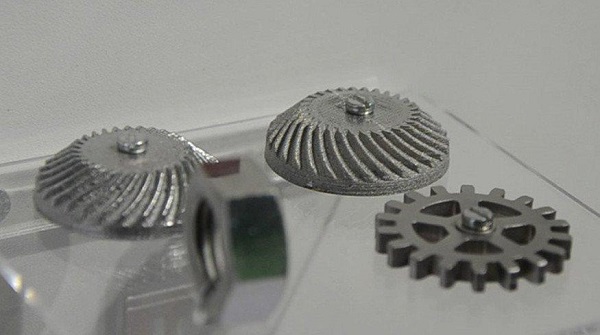
DMLS (Direct Metal Laser Sintering) skips the casting step entirely. A laser fuses metal powder layer by layer. The output is a solid metal piece — ready to polish.
Post-Processing Is Where the Magic Happens
A raw print is not a finished piece. Not even close.
- Support removal — tiny metal or resin nubs get clipped off
- Sanding and polishing — brings out the shine
- Electroplating — adds rhodium, gold, or black PVD coatings
- Stone setting — done by hand, just like traditional jewelry
This step is critical. The finish quality of 3D-printed jewelry depends heavily on post-processing. A well-finished print can look identical to a cast piece. A poorly finished one looks cheap.
What Design Possibilities Does It Unlock?
This is where 3D printing truly shines. The design freedom is unlike anything traditional methods offer.
Complex Geometries Become Easy
Think about an interlocking ring set — three rings that weave through each other as one solid piece. Try making that with wax carving. It is a nightmare. With 3D printing? You model it once and print it.
Other examples:
- Cellular lattice structures — look organic, weigh almost nothing
- Topology-optimized forms — strong but using minimal material
- Hollow interiors with thick walls — big look, light feel
A real-world case: Designer Nervous System uses 3D printing to create kinetic jewelry. Their pieces move and flex in ways that handcrafting simply cannot achieve.
Mass Customization at Low Cost
Want your initials inside a ring? A specific birthstone setting? A unique band width? With traditional jewelry, custom means expensive. With 3D-printed jewelry, custom means "change a few numbers in the file."
This is called parametric design. One base model can generate hundreds of variations. Size, thickness, pattern, stone placement — all adjustable. The cost per unit stays nearly the same.
Generative Design Meets Art
Some designers now use AI-driven generative tools. You set the rules — "organic shape, under 5 grams, fits a size 7 finger." The software generates dozens of options. The designer picks, tweaks, and prints.
This blurs the line between art and engineering. The result? Pieces that feel alive. Unique. Impossible to replicate by hand.
What Materials Are Available?
Material choice is the biggest factor in how 3D-printed jewelry feels, looks, and holds value.
Precious Metals: The Real Deal
| Material | Print Method | Notes |
|---|---|---|
| 14K / 18K Gold | DMLS or casting from resin | Full value, hallmarkable |
| Sterling Silver (925) | DMLS or casting | Most common for indie designers |
| Platinum (950) | DMLS | Premium, very hard to cast traditionally |
Yes, you can print in real gold and platinum. DMLS machines use fine metal powder. The output is dense, solid metal. It can be hallmarked just like any cast piece.
Alternative Metals
Not every piece needs to be gold. These metals are popular in the 3D printing world:
- Titanium — ultra-light, hypoallergenic, dark grey finish
- Stainless Steel — durable, affordable, great for everyday wear
- Bronze and Brass — warm tones, easy to cast, budget-friendly
Titanium is especially interesting. It is hard to work with by hand. But 3D printing makes titanium jewelry easy and affordable. Brands like Pulsar by Titan have built entire lines around this.
Resins and Polymers
For fashion jewelry or prototypes, resin printing is the go-to. Materials like castable resin burn out cleanly. Other resins are used for colorful, lightweight statement pieces.
These are not "real" jewelry in the precious metal sense. But they serve a real market. Trendy, affordable, and fast to produce.
Emerging Materials
The frontier is exciting:
- Ceramic-filled resins — look like porcelain, very hard
- Recycled metal powders — sustainable sourcing
- Bio-resins — plant-based, eco-friendly casting materials
Sustainability is becoming a selling point. Consumers want to know their jewelry is not harming the planet.
How Does Quality Compare to Traditional Jewelry?
Let us address the elephant in the room. Is 3D-printed jewelry as good as handmade?
Surface Finish and Detail
Modern DMLS printers achieve 20–50 micron layer resolution. That is finer than most human hands can carve. The detail is sharp. Edges are clean.
But here is the catch: raw DMLS prints have a slightly grainy texture from the metal powder. It is not smooth like cast metal. That is why polishing is mandatory. After proper finishing, the difference is invisible to the naked eye.
| Quality Factor | Handcrafted | 3D-Printed (Well Finished) |
|---|---|---|
| Detail sharpness | Excellent | Excellent |
| Surface smoothness | Excellent | Very Good (needs polishing) |
| Consistency | Varies by artisan | Highly consistent |
| Unique imperfections | Yes (part of charm) | No (too perfect for some) |
Durability and Wear
3D-printed metal jewelry is just as durable as cast jewelry. DMLS parts are nearly 100% dense. They do not have the porosity issues of early 3D prints.
A real test: A 3D-printed titanium ring worn daily for 18 months showed zero visible wear. The same cannot always be said for plated fashion jewelry.
Hallmarking and Value
This is where trust matters. 3D-printed gold and silver can be hallmarked. In the UK, the Assay Office tests and stamps pieces just like cast jewelry. In the US, makers can get independent assay verification.
The perceived value gap is closing. Five years ago, people laughed at 3D-printed rings. Today, Tiffany's own collections include 3D-printed designs. The stigma is fading fast.
Is It Accessible for Designers and Consumers?
The short answer: yes, more than ever.
Lower Barriers for Independent Makers
Starting a jewelry brand used to cost 10,000–50,000 in tools and inventory. Now?
| Traditional Startup Cost | 3D Printing Startup Cost |
|---|---|
| Wax carving tools: $2,000+ | CAD software: 500–2,000/year |
| Casting equipment: $5,000+ | Desktop resin printer: 300–800 |
| Stone setting tools: $1,000+ | DMLS service (outsourced): 50–200/piece |
| Inventory risk: High | On-demand: Near zero |
You do not need a factory. You need a computer, a printer, and a good eye for design.
Cost Comparison for Consumers
| Jewelry Type | Traditional Price | 3D-Printed Price |
|---|---|---|
| Simple silver band | 80–150 | 40–90 |
| Custom gold ring | 500–1,200 | 200–600 |
| Complex lattice pendant | 300–800 | 100–350 |
The savings come from no wax carving labor and no inventory waste. For custom work, the savings can be 40–60%.
On-Demand Means Less Waste
Traditional jewelry brands overproduce. Unsold stock sits in vaults. 3D-printed jewelry is made to order. This reduces waste and risk. It also means faster turnaround — days instead of weeks.
What Are the Current Challenges?
It is not all smooth. There are real hurdles.
Equipment Costs Are Still High
A desktop resin printer is cheap. But a DMLS metal printer costs 250,000–1,000,000+. Most small designers outsource to print services. That adds cost and lead time.
You Need CAD Skills
Designing in 3D is not like drawing on paper. You need to learn CAD software. Rhino and ZBrush have steep learning curves. This is the biggest skill gap in the industry right now.
Consumer Education Is Needed
Many buyers still ask: "But is it real?" Education is the biggest marketing challenge. Brands that explain their process — show the print, the polish, the hallmark — convert better.
Intellectual Property Risks
Digital files can be copied. A designer's 3D model can be stolen and printed by anyone. IP protection in digital jewelry is still a messy area. Some platforms are exploring blockchain-based proof of ownership.
The Future of 3D-Printed Jewelry
Where is this all heading? Here is what the experts see.
AI Will Design Your Jewelry
Imagine telling an AI: "I want a ring that looks like ocean waves, in white gold, under 4 grams." It generates the model. You approve. It prints. AI-assisted design will make custom jewelry as easy as ordering a pizza.
Sustainability Will Drive Adoption
Traditional gold mining is devastating. 3D printing uses less material and creates less waste. Recycled metal powders are already available. The eco-angle will be a major selling point by 2027.
Blockchain for Authenticity
Some brands are testing blockchain verification for 3D-printed pieces. Your ring gets a digital certificate. You can prove it is real gold, made by a specific designer, at a specific date. This solves the trust problem.
The Artisan Will Evolve, Not Disappear
Here is the truth: 3D printing does not replace jewelers. It upgrades them. The best pieces will always combine digital precision with human finishing. A machine prints the shape. A human sets the stone. That is the future.
Conclusion
So, is 3D-printed jewelry the future of fine design? The evidence says yes.
The technology is mature. The materials are real. The quality matches traditional methods. And the design possibilities are simply unmatched.
Yes, challenges remain. Costs, skills, and consumer trust all need work. But the direction is clear. 3D printing is not replacing jewelry making. It is expanding what jewelry can be.
For designers, it lowers the barrier to entry. For buyers, it means more choice, more customization, and better prices. For the industry, it means a new golden age of creativity.
The question is no longer "if." It is "how fast can you get on board?"
FAQ
Is 3D-printed jewelry real gold or silver?
Yes. DMLS printing produces solid precious metal. Pieces can be hallmarked just like cast jewelry.
How long does 3D-printed jewelry last?
It lasts as long as traditional jewelry. Properly finished pieces show no extra wear. Titanium and platinum prints are especially durable.
Can you wear 3D-printed jewelry every day?
Absolutely. Metal prints (gold, silver, titanium) are fully wearable. Resin pieces are better for occasional wear.
Is 3D-printed jewelry cheaper than handmade?
Usually 30–50% cheaper for custom pieces. Simple designs may be similar in price. The savings come from labor and zero inventory waste.
Does 3D-printed jewelry look different from cast jewelry?
Not after finishing. A well-polished 3D-printed ring looks identical to a cast one. The raw print has a slight texture, but that is removed in post-processing.
Can 3D-printed jewelry be resized?
Yes. Gold and silver prints can be resized like any other metal ring. Titanium is harder to resize but still possible.
Contact Yigu Technology for Custom Manufacturing
Ready to bring your jewelry designs to life? Yigu Technology specializes in custom 3D printing and rapid prototyping for jewelry makers and brands worldwide.
Whether you need a single prototype or a production run of 500 pieces — we handle the printing, finishing, and quality control. Our DMLS and SLA capabilities cover gold, silver, titanium, and premium resins.
📩 Get a free quote today. Visit our website or send your CAD file directly. Let us turn your vision into a real, wearable piece.
Yigu Technology — Where Digital Design Meets Real Craftsmanship.