Introduction
You bought a 3D printer. Now what? The real question is not about the machine. It is about the 3D printing materials you feed into it. The material you choose decides how strong, how flexible, and how useful your final part will be. Honestly, picking the right material matters way more than picking the right printer. A cheap printer with great filament can beat an expensive printer with bad filament every single time.
In this guide, we break down every major material category. We go from beginner-friendly plastics all the way to metal powders and bioprinting substrates. Whether you are a hobbyist or an engineer, you will find exactly what you need here.
1. The Big Three: Everyday Plastics
These three materials cover about 80% of all desktop 3D prints. If you are just starting out, begin here.
PLA Is the Easiest Start
PLA (Polylactic Acid) is the most popular filament in the world. It prints smooth. It does not warp much. It barely smells. That makes it perfect for beginners.
PLA comes from corn starch or sugarcane. So it is biodegradable under the right conditions. You can print figures, phone cases, and decorative items with zero hassle.
But PLA has limits. It softens around 60°C (140°F). That means no hot car dashboards. No outdoor parts in summer. It is also brittle. Drop it, and it cracks.
| Property | PLA Rating |
|---|---|
| Ease of Print | ⭐⭐⭐⭐⭐ |
| Strength | ⭐⭐⭐ |
| Heat Resistance | ⭐⭐ |
| Cost | Low ($15–25/kg) |
Real-world example: A hobbyist printed custom drone arms with PLA. They looked great but cracked on the third flight. Switching to PETG fixed the problem instantly.
ABS Brings Toughness
ABS (Acrylonitrile Butadiene Styrene) is the old-school workhorse. It is tough. It handles heat up to 100°C (212°F). Car parts, enclosures, and functional prototypes all use ABS.
The catch? ABS fumes are nasty. You need ventilation or an enclosure. It also warps a lot. Your prints can lift off the bed mid-print without a heated bed.
PETG Hits the Sweet Spot
PETG (Polyethylene Terephthalate Glycol) combines the best of both worlds. It prints almost as easy as PLA. But it is nearly as strong and heat-resistant as ABS.
PETG is flexible enough to absorb impact. It resists chemicals well. That is why it is the go-to for water bottles, food containers, and outdoor gear.
| Material | Print Ease | Strength | Heat Resist. | Best For |
|---|---|---|---|---|
| PLA | ★★★★★ | ★★★ | ★★ | Decor, figures |
| ABS | ★★★ | ★★★★ | ★★★★ | Car parts, enclosures |
| PETG | ★★★★ | ★★★★ | ★★★ | Bottles, outdoor use |
2. Engineering-Grade Thermoplastics
When PLA and PETG are not enough, you step up to engineering-grade materials. These are for parts that must perform under real stress.
Nylon Is Strong but Picky
Nylon (PA6, PA12) is incredibly strong and flexible. It resists wear and chemicals. Gears, hinges, and mechanical parts often use nylon.
But nylon absorbs moisture from the air. Wet nylon prints poorly. You must store it in a dry box. Print temps are also high (240–260°C). Not every printer can handle that.
Polycarbonate Handles Impact
Polycarbonate (PC) is one of the toughest plastics you can print. It handles temperatures over 110°C. It is almost unbreakable.
Parts made from PC replace metal in many applications. Think bulletproof glass layers, riot shields, and automotive panels. The downside? PC needs a hot end above 280°C and a fully enclosed printer.
ASA and TPU for Special Needs
| Material | Key Trait | Top Use Case |
|---|---|---|
| ASA | UV and weather resistant | Outdoor signs, housings |
| TPU | Rubber-like flexibility | Phone grips, gaskets, shoes |
ASA is like ABS but handles UV light without turning yellow. Perfect for anything left outside.
TPU (Thermoplastic Polyurethane) is flexible rubber. It bends and snaps back. Print it slow (20–30 mm/s) or you will get a tangled mess.
3. Resins for Precision and Detail
Resin printing (SLA/DLP/MSLA) gives you layer heights as low as 0.025mm. That means insane detail. Miniatures, jewelry, and dental models all come from resin.
Standard Resins for Visuals
Standard resins cure hard and smooth. They are ideal for miniatures, figurines, and visual prototypes. But they are brittle. Do not use them for functional parts that take load.
Engineering Resins for Function
Engineering resins like Tough 1500 or Durable Resin are flexible and strong. They can replace ABS or nylon in many cases. They resist heat and impact. The trade-off? They cost 2–3x more than standard resin.
Specialty Resins Do It All
| Resin Type | What It Does | Who Needs It |
|---|---|---|
| Castable | Burns out clean for metal casting | Jewelers, foundries |
| Dental | Biocompatible, FDA-approved | Dentists, orthodontists |
| Biocompatible | Safe for skin contact | Medical device makers |
| High Temp | Resists 200°C+ | Aerospace, automotive |
Case study: A small jewelry studio switched from standard resin to castable resin. They 3D printed wax patterns, then cast them in silver. The process cut their prototyping time from 5 days to 8 hours.
4. Metal and Composite Materials
This is where 3D printing stops being a hobby and starts being real manufacturing.
Metal Filaments Are Accessible Now
You do not need a $500K machine to print with metal. Metal-filled filaments (copper, bronze, stainless steel bound in PLA or BASF) let you print metal-looking parts on a desktop printer. After printing, you sinter them in a kiln. The plastic burns off. Pure metal remains.
| Metal Filament | Final Density | Sintering Temp |
|---|---|---|
| Bronze | ~90% | 850–950°C |
| Copper | ~95% | 1000–1080°C |
| Stainless Steel | ~97% | 1350–1400°C |
DMLS and SLM: Real Metal Printing
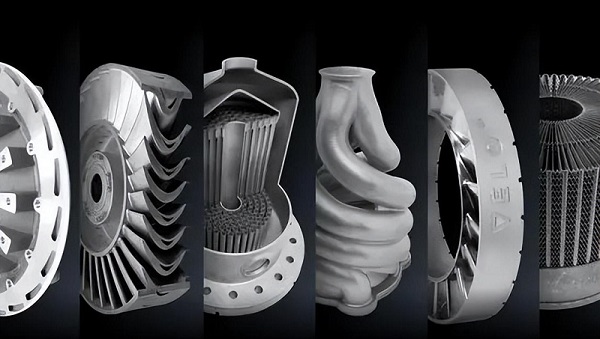
Direct Metal Laser Sintering (DMLS) and Selective Laser Melting (SLM) use real metal powder. A laser fuses the powder layer by layer. The result? Parts that are 100% metal with properties identical to forged parts.
Aerospace companies use DMLS for turbine blades. Medical firms use it for titanium implants. These machines cost 200K–1M. But the parts they make are irreplaceable.
Carbon Fiber Composites
Adding carbon fiber or glass fiber to nylon or PETG makes parts stiffer and lighter. A carbon fiber nylon part can be 30% stronger than plain nylon at the same weight.
These are popular in drone frames, RC cars, and tooling. Just remember: carbon fiber is abrasive. It wears out your brass nozzle fast. Use a hardened steel or ruby nozzle instead.
5. Emerging and Niche Materials
The material landscape is growing fast. Here is what is new and worth watching.
Wood, Ceramic, and Stone
Wood-filled filaments print with a real wood look and smell. You can sand and stain them like real wood. Great for decorative panels and fake furniture.
Ceramic-filled filaments let you print shapes, then fire them in a kiln. The result is real ceramic. Artists and potters love this.
| Filler Type | Feel After Print | Best Use |
|---|---|---|
| Wood | Natural, sandable | Decor, signs |
| Ceramic | Hard, brittle | Art, tiles |
| Stone | Heavy, rough | Sculptures, countertops |
Conductive and Magnetic Filaments
Conductive filaments (carbon or graphene-loaded) let you print circuits and sensors. You can 3D print a custom button or a flex sensor right on your desk.
Magnetic filaments let you print parts that stick to magnets. Useful for jigs, fixtures, and creative toys.
Bioprinting Substrates
This is the frontier. Bioprinting uses hydrogels and cell-laden materials to print living tissue. Researchers have printed skin grafts, cartilage, and even simple blood vessels.
While still mostly in labs, biocompatible resins and filaments are already available for medical prototyping. The future is closer than you think.
6. How to Choose the Right Material
Stop guessing. Use this simple decision framework.
Step 1: Define Your Need
Ask yourself three questions:
- Will this part take load or heat? → Go engineering-grade (Nylon, PC, PETG).
- Does it need to look perfect? → Go resin (standard or engineering).
- Is it just for display? → PLA is fine.
Step 2: Check Your Printer
Not every printer handles every material.
| Printer Type | Best Materials |
|---|---|
| Basic FDM (no enclosure) | PLA, PETG |
| Enclosed FDM | ABS, ASA, Nylon, TPU |
| Resin (MSLA/SLA) | Standard, tough, castable resins |
| Industrial (DMLS/SLM) | Titanium, Inconel, aluminum |
Step 3: Balance Cost and Effort
| Priority | Pick This |
|---|---|
| Lowest cost | PLA |
| Best all-rounder | PETG |
| Highest strength | Polycarbonate or Nylon |
| Best detail | Resin |
| Metal look | Bronze or copper filament |
Pro tip: Always print a small test piece first. Check layer adhesion, warping, and surface quality before committing to a full build.
7. Safety and Environmental Considerations
Manage Those Fumes
ABS and nylon release styrene and caprolactam fumes. These are not just smelly. They are harmful. Always print in a ventilated room or use an enclosure with an activated carbon filter. Resin printing also releases VOCs. Wear nitrile gloves and a mask.
Go Green When You Can
The 3D printing industry is moving toward sustainability. PLA is compostable. Some companies now make PETG from recycled bottles. Proto-Pasta and eSUN both offer recycled filament lines.
| Eco-Friendly Option | What It Replaces |
|---|---|
| rPLA | Virgin PLA |
| rPETG | Virgin PETG |
| Bamboo Filament | PLA (aesthetic swap) |
Food Safety Matters
If you print food containers or medical devices, you need certified materials. Look for FDA-compliant PETG or biocompatible resins. Regular PLA is not food-safe. It can degrade and release chemicals over time.
Conclusion
Choosing the right 3D printing material is the single biggest decision you will make. It affects strength, look, function, and safety. Start with PLA or PETG if you are new. Move to nylon, polycarbonate, or resin when you need more. And if your project demands metal or composites, the options are there too.
The key is to match the material to the job. Do not overspend on polycarbonate for a desk ornament. Do not use PLA for a car part in July. Read the specs. Print a test. Then go all in.
The material is not just the input. It is the foundation of everything you build.
FAQ
What is the best 3D printing material for beginners?
PLA is the best starting point. It is easy to print, affordable, and forgiving.
Can I mix different 3D printing materials in one print?
Not really. Each material needs different temperatures and speeds. Mixing causes poor layer adhesion and failed prints.
Is ABS stronger than PETG?
ABS is slightly stronger in raw tensile strength. But PETG is more impact-resistant and easier to print. For most users, PETG wins.
How long do 3D printing materials last?
PLA lasts 1–2 years if stored dry. Nylon absorbs moisture fast, so use it within 3–6 months of opening. Resin has a shelf life of about 1 year.
Are resin prints as strong as FDM prints?
Engineering resins can match or beat ABS and nylon in strength. Standard resins are more brittle. It depends on the resin you pick.
What is the strongest 3D printing material you can buy?
Polycarbonate and carbon fiber nylon are the strongest FDM options. For resin, tough engineering resins like Tough 1500 lead. For metal, DMLS titanium is the gold standard.
Contact Yigu Technology for Custom Manufacturing
Need a custom part but unsure which material to use? Yigu Technology offers professional 3D printing and CNC machining services. We help you pick the right material for your application. From rapid prototyping to low-volume production, we handle it all.
📩 Get a free quote today. Tell us your specs. We will recommend the best material and process for your project.
👉 Contact Yigu Technology for custom manufacturing.