
How Do Custom Molds Craft Unique Products with Precision?

Women's hair removal machine plastic mold processing laser hair removal machine plastic parts design mold injection molding processing

Contents Introduction What Are Custom Molds? Definition and Basic Components Working Principle How Are Custom Molds Designed and Manufactured? Design Conception Design Validation and Simulation Material Selection Mold Manufacturing Assembly and Testing Final Touches and Delivery How Is Precision Achieved in Custom Molds? 3D Printing Precision CNC Machining Precision EDM Precision How Do Custom Molds […]

Introduction

Custom molds are the backbone of modern product innovation. They transform raw materials into unique, precisely crafted products that standard molds cannot produce. From aerospace components and medical devices to luxury consumer goods, custom molds enable designs that push the boundaries of what is possible.

Unlike standard molds mass-produced for general applications, custom molds are tailored to exact product requirements. They can be made from steel, aluminum, plastic, or silicone—each material chosen for specific advantages based on product needs and production processes.

This guide explores how custom molds are designed and manufactured, the precision technologies that make them possible, and when to choose custom molds over standard alternatives.


What Are Custom Molds?

Definition and Basic Components

Custom molds are specialized tools crafted to shape raw materials into specific, often unique, products. They consist of several key components:

  • Cavity: The negative impression of the final product’s shape; raw material is poured or injected here
  • Core: Provides the shape for internal features—such as the hollow center of a bottle
  • Runners: Channels that direct raw material flow from the injection point to the cavity
  • Gates: Small openings where material enters the cavity, controlling flow rate and distribution

Working Principle

Custom molds shape materials through various molding processes.

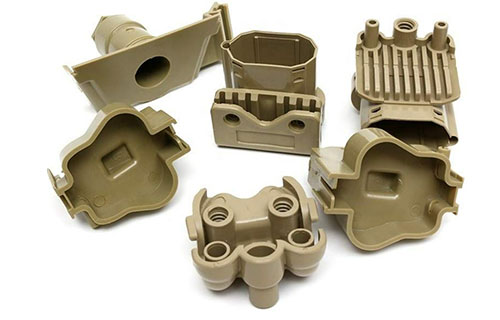
Injection molding: Molten plastic is injected at high speed into a closed mold cavity under high pressure. The pressure ensures plastic fills even the most intricate details.

Compression molding: A pre-measured amount of material is placed between two heated mold halves. As the mold closes, pressure forces material to flow and fill the cavity. The material cures (thermosetting) or cools (thermoplastic), and the finished product is ejected.


How Are Custom Molds Designed and Manufactured?

Design Conception

The process begins with a thorough understanding of product requirements. Designers gather information on dimensions, functionality, aesthetics, and production volume.

Using CAD (Computer-Aided Design) software, designers create a 3D model of the product. This digital model allows easy visualization and modification. Multiple iterations can be made quickly, saving time and cost.

Critical design factors considered:

  • Draft angles: Typically 1–3 degrees added to side walls to facilitate part ejection
  • Wall thickness: Uniformity prevents warping and ensures consistent cooling
  • Radii of curvature: Smooth transitions reduce stress concentrations

Design Validation and Simulation

Once the initial CAD design is complete, it undergoes validation using CAE (Computer-Aided Engineering) software.

In injection molding, CAE simulations predict:

  • Flow of molten plastic within the cavity
  • Potential air traps (causing defects)
  • Weld lines (where two plastic streams meet)
  • Areas of uneven filling

Simulation results guide design adjustments. If an air trap is predicted, vents can be added. These simulations prevent costly mold re-engineering after manufacturing begins.

Material Selection

Mold material is chosen based on product requirements, production volume, and molding process.

MaterialAdvantagesBest For
SteelHigh durability; withstands high pressure over hundreds of thousands of cyclesHigh-volume production of small parts
AluminumLighter, easier to machine, less expensive than steel; lower wear resistanceLow-volume production; complex geometries requiring flexibility
SiliconeSoft and flexibleSilicone-based products; prototypes

Mold Manufacturing

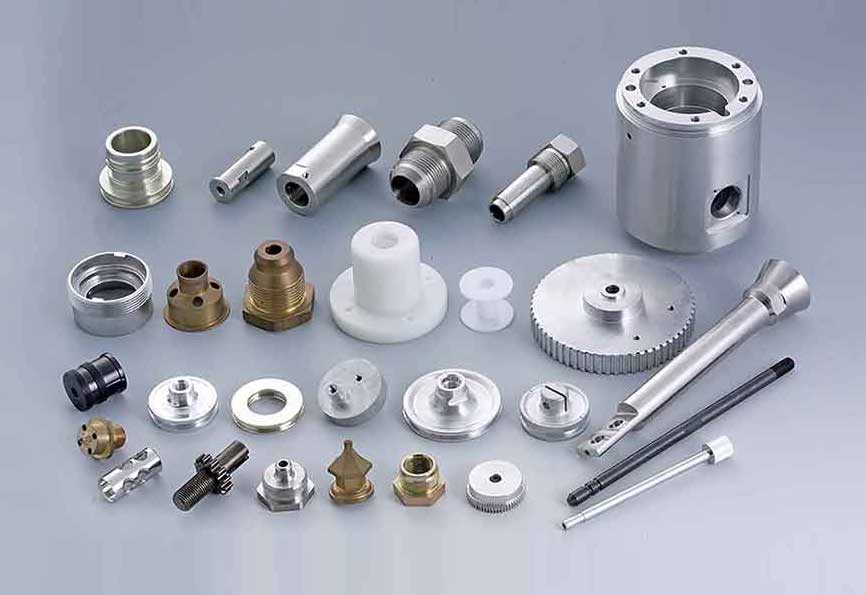
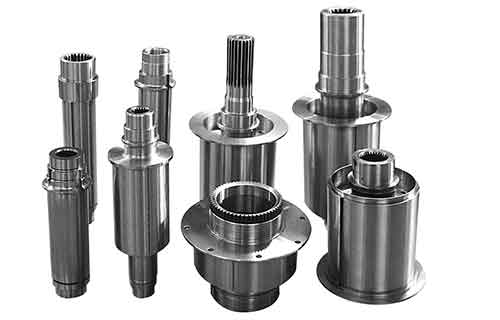
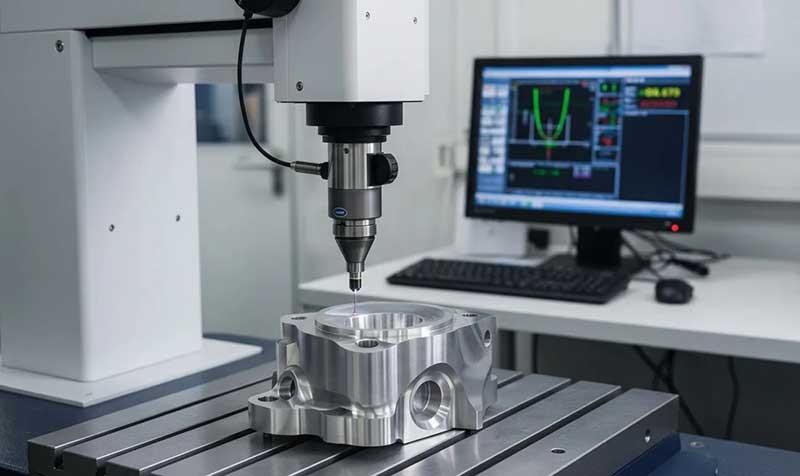
Precision machining creates the mold. CNC (Computer Numerical Control) machines accurately cut and shape the mold material according to the 3D design. A CNC milling machine can mill cavity and core from a block of steel or aluminum.

EDM (Electrical Discharge Machining) is used for intricate shapes or materials difficult to machine conventionally. An electric spark erodes material to create the desired shape.

After machining, components are often heat-treated to improve hardness and wear resistance.

Assembly and Testing

Individual components—cavity, core, runners, gates—are assembled with precise alignment. The mold is installed in a molding machine for trial runs. Trial products are inspected for defects: poor surface finish, incorrect dimensions, structural weaknesses.

If issues arise, the mold is disassembled and adjusted. This process continues until products meet quality standards.

Final Touches and Delivery

Mold surfaces may be polished to achieve the desired product finish. High-gloss products require highly polished mold surfaces. The finished custom mold is delivered with documentation—operating instructions and maintenance guidelines.


How Is Precision Achieved in Custom Molds?

3D Printing Precision

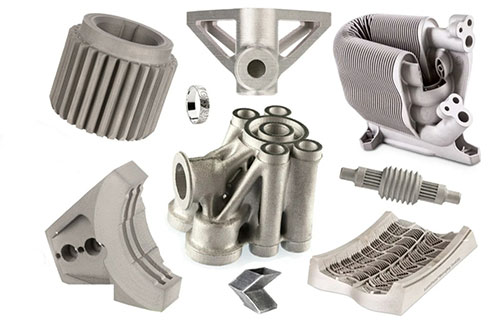
High-resolution modeling: CAD software creates detailed 3D models with sub-millimeter accuracy. In SLA (stereolithography) 3D printing, lasers focus to spot sizes of 0.05–0.15 mm, enabling fine details. Layer thicknesses as low as 0.025 mm produce smooth surfaces and accurate replication.

Material consistency: High-quality resins and powders have consistent properties. SLA resins maintain consistent viscosity and curing behavior. In SLS (selective laser sintering), carefully sized powders ensure even sintering for dimensional accuracy.

CNC Machining Precision

Advanced control systems: CNC machines use feedback mechanisms like linear encoders that monitor tool position with accuracy up to 0.0001 inches. Control systems adjust tool paths in real time, compensating for deviations.

High-quality components: Spindles in high-end CNC machines maintain concentricity below 0.0005 inches. Precision guideways minimize play and movement during machining.

EDM Precision

Controlled spark discharge: Energy, duration, and frequency are adjusted based on material and precision requirements. Lower-energy sparks create fine details by reducing material removal per spark. Dielectric fluid cools the workpiece and flushes eroded material for consistent machining.

Precision electrodes: Wire EDM uses wire electrodes 0.05–0.3 mm in diameter, guided by diamond-coated guides for straight, accurate cuts. Sinker EDM electrodes are fabricated with CNC machining to accurately transfer shapes to the workpiece.


How Do Custom Molds Compare to Standard Molds?

AspectCustom MoldsStandard Molds
CostHigher initial cost; unit cost competitive for high-volume complex partsLower initial cost; best for simple, high-volume products
Production CycleLonger—weeks to monthsShorter—days to weeks
ApplicabilityUnique shapes, high precision, specialized industries (aerospace, medical, high-end electronics)Common shapes, general-purpose products (containers, simple toys)
Product FlexibilityHigh; design changes can be accommodatedLimited; significant changes often require new custom mold
Volume SuitabilityLow-volume high-value products; high-volume consistent qualityHigh-volume simple products

When to Choose Custom Molds

Unique product design: When the product has a distinct shape, size, or function that standard molds cannot meet. Example: an ergonomically designed kitchen utensil with non-standard grip and complex shape.

High-precision requirements: Aerospace and medical applications where dimensional deviations have significant consequences. Example: a turbine blade mold requiring extremely tight tolerances for engine performance and safety.

Low-volume, high-value products: Luxury jewelry or high-performance sports equipment where each product’s value justifies mold investment.

Product differentiation: Creating exclusive designs that competitors cannot easily replicate. Example: a uniquely shaped lipstick tube for a cosmetic brand.


What Are the Applications of Custom Molds?

Aerospace

Custom molds produce turbine blades, interior components, and structural parts requiring high precision and specific material properties. Tolerances often exceed standard capabilities, and materials must withstand extreme conditions.

Medical Devices

Implants, surgical instruments, and diagnostic equipment components require custom molds to meet strict regulatory standards. Biocompatible materials and precise geometries ensure patient safety and device effectiveness.

Automotive

Custom molds create complex interior components, lighting housings, and engine parts. Lightweight materials and precise fits contribute to vehicle performance and fuel efficiency.

Consumer Electronics

Smartphone cases, wearable device housings, and connector components demand custom molds for precise fits, surface finishes, and integration of multiple materials.

Luxury Goods

High-end packaging, unique product housings, and decorative elements use custom molds to achieve distinctive designs that reinforce brand identity.


Yigu Technology’s Perspective

As a custom supplier of non-standard plastic and metal products, we understand that custom molds are essential for bringing unique product visions to life.

Design expertise: Our team uses advanced CAD/CAE software to create and validate designs before manufacturing begins. Simulation identifies potential issues early, reducing costly revisions.

Precision manufacturing: We employ CNC machining, EDM, and precision finishing techniques to achieve tolerances that meet demanding specifications.

Material selection: We help clients choose the optimal mold material—steel for durability in high-volume production, aluminum for faster turnaround, silicone for flexible applications.

Collaborative approach: Working closely with clients from design conception through testing ensures final products meet exact requirements.


Conclusion

Custom molds are essential tools for crafting unique, high-precision products. Their design and manufacturing process—from CAD modeling and CAE simulation to CNC machining, EDM, and precision finishing—enables creation of complex shapes and tight tolerances that standard molds cannot achieve.

While custom molds require higher initial investment and longer lead times, they offer superior product flexibility, design differentiation, and suitability for both low-volume high-value and high-volume consistent production. In industries where precision, uniqueness, and quality are paramount, custom molds are not just an option—they are a necessity.


FAQ

What is the typical cost difference between a custom mold and a standard mold?
Custom molds generally have higher initial costs. A standard mold for a simple product might cost a few thousand dollars. A custom mold for a complex, high-precision application can cost tens of thousands or more. However, for high-volume production of complex parts, the unit cost of using a custom mold becomes competitive over time due to reduced waste and rework.

How long does it usually take to produce a custom mold?
Production time varies significantly. Simple custom molds may take 2–4 weeks. Complex molds for applications like aerospace components can take 3–6 months or longer. Factors include design complexity, material selection, and manufacturing processes.

Can custom molds be modified after production?
Yes, though modifications involve additional cost and time. Minor changes—surface finish adjustments or small feature additions—may be straightforward. Major design changes may require significant re-engineering. Communicate potential design changes early to minimize complications.


Contact Yigu Technology for Custom Manufacturing

Looking for custom molds that bring your unique product designs to life? Yigu Technology specializes in non-standard plastic and metal products. Our team combines advanced design tools, precision manufacturing, and collaborative expertise to deliver molds that meet your exact specifications.

Reach out today to discuss your next project. Let us help you craft unique products with precision.

Scroll to Top