Introduction
When your washing machine breaks down or a critical component in your manufacturing line fails, the hunt for replacement parts begins. Often, you face long lead times, high costs, or the frustrating reality that the part is simply obsolete. Enter 3D printed replacement parts—components created through additive manufacturing that are changing how we think about repairs. This article explores whether 3D printing truly offers a cost-effective solution for replacement parts, from the materials and technologies involved to real-world applications and limitations. By the end, you'll understand when 3D printing makes financial sense and when traditional manufacturing might still be your better bet.
What Exactly Are 3D Printed Replacement Parts?
How does 3D printing create replacement parts?
3D printed replacement parts are components manufactured using additive processes rather than traditional subtractive methods like machining or molding. The concept is straightforward: you start with a digital 3D model, load the appropriate material into a printer, and the machine builds the part layer by layer until completion.
The digital design can come from two sources. You might create it from scratch using CAD (Computer-Aided Design) software, which requires technical skills but offers complete design freedom. Alternatively, you can scan an existing broken part using a 3D scanner, creating a digital replica that can be printed exactly as needed.
Which printing technologies matter for repairs?
Not all 3D printers work the same way, and understanding the differences helps you choose the right approach:
- FDM (Fused Deposition Modeling) : The most common and affordable option. It melts plastic filament and extrudes it through a nozzle. Perfect for basic plastic parts like brackets, handles, or housings.
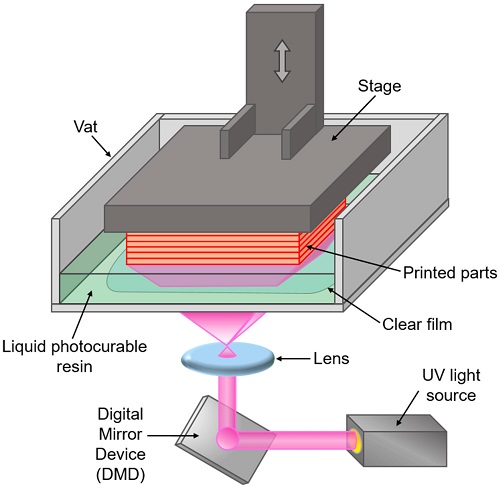
- SLA (Stereolithography) : Uses a laser to cure liquid resin into solid plastic. Delivers smoother surfaces and finer details, ideal for parts requiring precision fit.
- SLS (Selective Laser Sintering) : Fuses powder particles—plastic or metal—using a laser. Produces strong, functional parts without support structures, suitable for complex geometries.
- DMLS (Direct Metal Laser Sintering) : The go-to for metal replacement parts, sintering metal powder into dense, durable components for demanding applications.
What Materials Work Best for 3D Printed Repairs?
Plastics: The everyday heroes
For most household and light industrial repairs, plastics dominate the 3D printing space. Here's how the common options compare:
ABS (Acrylonitrile Butadiene Styrene) has been an industry workhorse for decades. It offers good strength and heat resistance up to around 80-90°C, making it suitable for automotive interior parts or power tool housings. However, it tends to warp during printing and emits fumes, requiring proper ventilation.
PLA (Polylactic Acid) is the beginner-friendly champion. Made from renewable resources like cornstarch, it prints easily at lower temperatures with minimal warping. The trade-off? It softens at just 50-60°C and becomes brittle over time. Great for decorative items or low-stress parts, but not for engine bays or outdoor use.
PETG (Polyethylene Terephthalate Glycol) hits the sweet spot for many repair applications. It combines ease of printing with better durability than PLA and higher impact resistance than ABS. It's also food-safe in its virgin form and resists moisture and chemicals reasonably well.
Nylon (Polyamide) brings exceptional strength and flexibility to the table. It handles wear well and withstands higher temperatures. Industrial users often choose nylon for gears, bearings, and functional prototypes. The catch? It absorbs moisture from the air and requires careful storage and printing conditions.
Metals: When plastic won't cut it
For applications demanding real muscle, metal 3D printing delivers:
Stainless steel offers corrosion resistance and strength comparable to conventionally manufactured parts. A broken valve in a chemical plant or a marine component exposed to saltwater becomes a candidate for stainless steel printing.
Aluminum alloys provide lightweight strength with good thermal conductivity. Aerospace and automotive sectors use aluminum 3D printing for brackets, heat exchangers, and structural components where every gram matters.
Titanium sits at the premium end, combining exceptional strength-to-weight ratio with biocompatibility. Medical implants and high-performance aerospace parts justify its cost through critical performance requirements.
Material comparison at a glance
| Material | Strength | Heat Resistance | Cost | Print Difficulty | Best Applications |
|---|---|---|---|---|---|
| PLA | Low | Low (50°C) | $ | Very Low | Decorative, low-stress parts |
| ABS | Medium | Medium (80°C) | $$ | Medium | Functional prototypes, indoor use |
| PETG | Medium | Medium (75°C) | $ | Low | Outdoor parts, food containers |
| Nylon | High | High (120°C) | $$$ | High | Gears, bearings, wear parts |
| Stainless Steel | Very High | Very High | $$$$ | Very High | Industrial, marine, food processing |
| Aluminum | High | Very High | $$$$ | Very High | Aerospace, automotive lightweight parts |
| Titanium | Exceptional | Exceptional | $$$$$ | Very High | Medical implants, aerospace critical parts |
Where Are 3D Printed Replacement Parts Making a Difference?
Consumer electronics: Saving your gadgets
That vintage amplifier with a broken knob? The specialized bracket for your obsolete camera lens? 3D printing breathes new life into old electronics. Enthusiasts and repair shops increasingly turn to printed parts for:
- Smartphone components: Charging port covers, SIM card trays, and even custom cases
- Computer hardware: Fan shrouds, drive caddies, and cable management clips
- Home appliances: Buttons, dials, and small internal brackets for microwaves or coffee makers
A community of makers shares designs online, meaning you might find a replacement for your 2005 printer's paper feed roller already modeled and ready to print. The environmental impact matters too—a study by the Ellen MacArthur Foundation suggests that extending a product's life by just 9 months can reduce its carbon footprint by up to 30%.
Automotive repairs: Keeping old cars on the road
Classic car owners face a constant challenge: finding parts for vehicles that manufacturers stopped supporting decades ago. 3D printing offers an elegant solution:
- Interior trim pieces: Dashboard vents, switch surrounds, and door handle brackets
- Under-hood components: Ducting, clips, and covers that don't face extreme heat
- Custom modifications: Unique parts that were never mass-produced
A restoration shop in Ohio recently shared their success story: they needed a complex air vent mechanism for a 1967 Jaguar. The original part hadn't been made in 40 years. After scanning and printing, they had the car back on the road in days instead of months searching salvage yards.
Industrial machinery: Minimizing downtime
For manufacturers, every hour of unplanned downtime carries a price tag—often thousands of dollars. Traditional supply chains might take weeks to deliver a replacement gear or housing. 3D printing compresses that timeline dramatically:
- A food processing plant printed a replacement for a broken conveyor belt guide in 4 hours
- A paper mill created a custom impeller for a pump, avoiding a 3-week wait for casting
- An automotive assembly line printed end-of-arm tooling for robots overnight
The numbers tell the story. General Electric reports that 3D printing reduced their lead times for certain replacement parts from months to days. Some facilities now keep industrial printers on-site, creating a digital inventory where files replace physical stock.
Medical and dental: Custom-fit solutions
Healthcare demands parts tailored to individual anatomy—a perfect fit for 3D printing's strengths:
- Dental crowns and bridges: Printed in ceramic or metal, matching patient-specific geometry
- Prosthetic sockets: Custom-fit to residual limbs, improving comfort and function
- Surgical guides: Patient-specific tools that help surgeons place implants precisely
A prosthetics clinic in London now scans patients and prints test sockets in a day, reducing fitting appointments from five to two. The patient experiences faster recovery and better mobility.
What Are the Hidden Costs and Limitations?
Upfront investment matters
While entry-level FDM printers cost under $300, industrial metal systems run into six figures. The choice depends entirely on your needs:
| Printer Type | Typical Cost | Materials | Applications |
|---|---|---|---|
| Consumer FDM | $200-$2,000 | Plastics only | Hobby, light household repairs |
| Professional FDM | $3,000-$15,000 | Engineering plastics | Small business, prototyping |
| Industrial SLS | $50,000-$250,000 | Nylon, TPU | Functional production parts |
| Metal Systems | $100,000-$1M+ | Various metals | Aerospace, medical, automotive |
Quality control isn't automatic
Not every printed part performs like its traditionally manufactured counterpart. Layer lines create stress concentrations. Anisotropy means parts are weaker in one direction than another. Surface finish affects fit and fatigue life.
Post-processing often proves essential:
- Heat treatment relieves internal stresses
- CNC machining adds precision to critical surfaces
- Vapor smoothing improves surface finish and chemical resistance
Design expertise still required
A 3D printer doesn't eliminate the need for engineering knowledge. Poor designs fail regardless of manufacturing method. Successful printed parts require:
- Understanding material properties and limitations
- Designing for the specific printing process
- Considering layer orientation and support structures
- Testing prototypes before committing to final production
How Does Yigu Technology Approach 3D Printed Replacements?
At Yigu Technology, we see 3D printing as a powerful tool in the broader manufacturing toolkit—not a magic wand that replaces everything else. Our experience across thousands of custom projects reveals clear patterns about when printing makes sense.
For small-batch production of complex parts, printing often wins. When a client needed 50 custom manifolds with internal channels impossible to machine conventionally, we printed them in days. The cost per part was competitive with injection molding only because the volumes stayed low—tooling amortization would have killed the economics for such small runs.
Geometric complexity consistently favors printing. Parts with organic shapes, lattice structures, or internal passages that would require multiple machining setups become single-step prints. A recent project involved printing a cooling component with conformal channels following the exact heat flow path—something no traditional method could achieve.
However, we're transparent about when printing isn't the answer. For simple shapes at high volumes, conventional manufacturing remains more economical. A straightforward bracket needed in thousands of units should be injection molded. A standard shaft should be turned on a lathe.
Our sweet spot lies in bridging the gap between what's available off-the-shelf and what customers truly need. When a replacement part is obsolete, custom-designed, or needed urgently, 3D printing delivers value traditional methods can't match. We combine printing with conventional techniques—sometimes printing near-net shapes then finishing with machining, other times printing tooling that enables traditional production.
The future we see is hybrid: printers working alongside CNC machines, injection molders, and fabricators. Each technology doing what it does best, with the common thread being digital design files that flow seamlessly between processes.
Conclusion
Are 3D printed replacement parts the future of cost-effective repairs? The answer is a qualified yes—for the right applications. They excel when you need small quantities, complex geometries, or immediate availability. They empower individuals to extend product life and manufacturers to slash downtime. Materials continue improving, with new options appearing regularly that push performance boundaries.
Yet printing isn't universal. Simple, high-volume parts remain cheaper through traditional methods. Quality requires expertise, not just equipment. Material properties differ from those of molded or machined parts.
The smart approach combines the best of both worlds: using 3D printing where its strengths shine—customization, complexity, speed—and relying on conventional manufacturing for straightforward, high-volume needs. As technology advances and materials expand, that balance will shift, but the principle remains: choose the right tool for each job.
For anyone facing a broken device with no replacement in sight, 3D printing offers hope. For businesses tired of supply chain delays, it offers independence. And for all of us concerned about waste, it offers a path to repair rather than replace. That's a future worth printing toward.
FAQ
Can 3D printed parts really match the strength of original manufactured parts?
Yes, when printed with appropriate materials and processes. Metal 3D printed parts using DMLS or SLS can achieve mechanical properties comparable to wrought materials after proper heat treatment. Plastic parts printed with engineering-grade materials like nylon or polycarbonate can match or exceed injection-molded equivalents in some applications. However, the quality depends heavily on printer calibration, material selection, and post-processing—it's not automatic.
How much does it cost to 3D print a replacement part versus buying original?
Costs vary dramatically based on part size, material, and complexity. A small plastic bracket might cost $2-5 in filament and a few hours of printer time—far cheaper than hunting down an obsolete original. A large metal aerospace component might cost hundreds in powder plus specialized equipment operation, potentially undercutting traditional machining if the geometry is complex. For high-volume simple parts, traditional manufacturing typically wins on cost.
How long does 3D printing a replacement part actually take?
Print time ranges from under an hour for tiny parts to several days for large, complex components. A typical smartphone-sized plastic part prints in 3-6 hours on a consumer FDM printer. Metal parts take longer due to slower build rates and required post-processing like support removal and heat treatment. The real time savings come from eliminating tooling and supply chain delays—you print when you need it.
What types of replacement parts cannot be 3D printed?
Parts requiring extreme precision (sub-10 micron tolerances) often need post-print machining. Components exposed to very high temperatures—like turbine blades in operation—challenge current materials. Parts requiring specific surface finishes for sealing or sliding applications may need additional processing. And very large parts exceeding printer build volumes require assembly or different approaches entirely.
Is it legal to 3D print replacement parts for commercial products?
Legal considerations include patents, trademarks, and safety certifications. Printing a part for personal use generally raises few issues. Manufacturing and selling printed replacements for patented designs without permission can infringe intellectual property. Safety-critical parts—brake components, medical devices—may require certifications that homemade printing doesn't provide. Always research the legal landscape for your specific application.
Contact Yigu Technology for Custom Manufacturing
Need a replacement part that's no longer available? Require small-batch production of complex components? Yigu Technology specializes in bridging the gap between impossible and delivered. Our team combines deep manufacturing expertise across 3D printing and traditional processes to find the optimal solution for your unique requirements.
We guide you through material selection, design optimization, and production planning—ensuring your parts perform as intended. Whether you need one prototype or a thousand production units, we deliver quality with transparency about timelines and costs.
Contact us today to discuss your project. Send your design files or describe your challenge—we'll respond with practical options that make technical and economic sense. Let's turn your repair problem into a solution that works.