Introduction
Product development has always been constrained by manufacturing capabilities. Complex geometries were expensive. Iteration was slow. Tooling costs made low-volume production prohibitive. Powder-based rapid prototyping (PBR) changes this equation. By building parts layer by layer from powdered materials—plastics, metals, ceramics—and fusing them with lasers, binders, or electron beams, PBR enables complex designs, rapid iteration, and cost-effective low-volume production. From aerospace to medical devices, this technology is revolutionizing how products are developed. At Yigu Technology, we use powder-based methods like Selective Laser Sintering (SLS) and Binder Jetting to serve clients across industries. This article explores the process, advantages, applications, and impact of powder-based rapid prototyping.
What Is Powder-Based Rapid Prototyping?
Powder-based rapid prototyping (PBR) refers to additive manufacturing technologies where a 3D object is built by depositing layers of powder material—plastics, metals, ceramics—and fusing them using binders or energy sources (lasers, electron beams) to form solid parts.
Unlike traditional subtractive manufacturing—which removes material from a solid block—PBR builds objects from the ground up, layer by layer. This enables:
- Complex geometries: Internal channels, lattice structures, organic shapes
- No tooling: Parts built directly from CAD models
- Material efficiency: Minimal waste compared to subtractive methods
How Does It Work?
The Basic Process
| Step | Description |
|---|---|
| 1. CAD model creation | Design the part using CAD software |
| 2. Slicing | The model is sliced into thin layers (0.05–0.3 mm) |
| 3. Powder deposition | A thin layer of powder is spread across the build platform |
| 4. Fusion | A laser, electron beam, or binder fuses powder particles according to the layer geometry |
| 5. Layer stacking | The platform lowers, new powder is spread, and the process repeats |
| 6. Removal and post-processing | The part is removed from the powder bed; unsintered powder is recycled |
Key Technologies
| Technology | Fusion Method | Materials | Best For |
|---|---|---|---|
| Selective Laser Sintering (SLS) | Laser sinters powder (below melting point) | Nylon, glass-filled nylon, TPU | Functional prototypes, complex geometries |
| Selective Laser Melting (SLM) | Laser fully melts powder | Titanium, aluminum, stainless steel | High-strength metal parts |
| Electron Beam Melting (EBM) | Electron beam melts powder | Titanium, cobalt-chrome | Aerospace, medical implants |
| Binder Jetting | Liquid binder bonds powder; sintered later | Metals, ceramics, sand | Large parts, low-cost production |
What Are the Advantages Over Traditional Prototyping?
Speed and Efficiency
PBR eliminates lengthy processes like mold-making, machining, and manual assembly. Complex parts can be created in hours or days, compared to weeks or months with traditional methods.
Impact: Companies bring products to market faster and respond more quickly to market changes.
Cost-Effectiveness
While equipment costs can be high, overall savings are significant:
- No tooling costs: Molds and fixtures eliminated
- Reduced material waste: 5–10% waste vs. 30–70% for subtractive methods
- Rapid iteration: Multiple designs tested simultaneously; flaws identified early
Design Freedom
PBR enables geometries impossible or cost-prohibitive with traditional manufacturing:
- Internal channels: Cooling passages, fluid flow paths
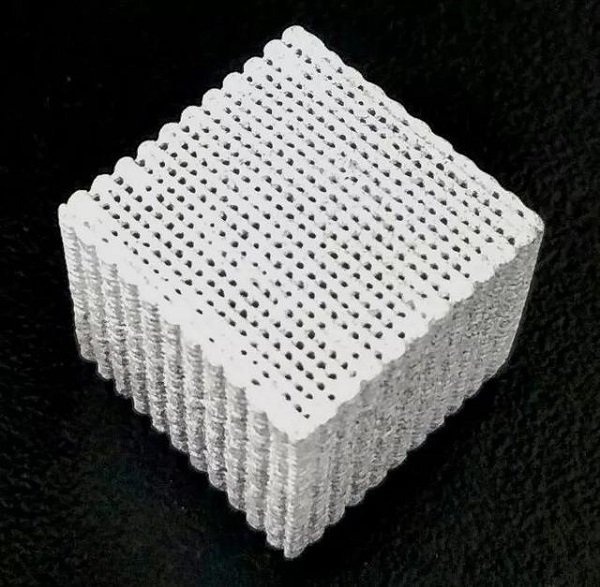
- Lattice structures: Lightweight, high-strength components
- Complex surface textures: Custom finishes, ergonomic features
- Custom-fit components: Patient-specific medical devices
Material Efficiency
Unsintered powder can be recycled and reused. Material utilization rates can reach 95% —far higher than subtractive methods.
What Materials Can Be Used?
| Material Category | Examples | Properties | Applications |
|---|---|---|---|
| Polymers | Nylon (PA12, PA11), glass-filled nylon, TPU | High strength, flexibility, chemical resistance | Functional prototypes, automotive, consumer goods |
| Metals | Titanium, aluminum, stainless steel, Inconel | High strength, heat resistance, biocompatibility | Aerospace components, medical implants, tooling |
| Ceramics | Alumina, zirconia | High hardness, heat resistance, electrical insulation | Electronics, high-temperature components |
| Composites | Carbon fiber-filled nylon | Lightweight, high stiffness | Structural parts, aerospace |
Where Is Powder-Based Rapid Prototyping Applied?
Aerospace
The aerospace industry demands lightweight, high-performance parts. PBR delivers.
Applications:
- Engine components, brackets, housings
- Satellite structures, space exploration tools
- Lightweight lattice structures for weight reduction
Impact: Boeing and Airbus use PBR to prototype critical components, reducing weight and improving fuel efficiency while maintaining strength.
Example: NASA uses SLS to produce specialized tools for Mars rovers, reducing mission costs and improving operational efficiency.
Automotive
PBR accelerates vehicle development and enables complex part testing.
Applications:
- Engine components, intake manifolds, brackets
- Custom tooling, jigs, fixtures
- Prototype vehicle parts for functionality and fit testing
Impact: Ford Motor Company uses SLS to rapidly prototype car parts and tools, reducing development time and allowing faster market response.
Medical
Powder-based prototyping enables patient-specific solutions.
Applications:
- Custom implants (titanium cranial plates, spinal cages)
- Surgical guides for precise procedures
- Prosthetics and orthotics
- Dental implants, hearing aids
Impact: Mayo Clinic uses PBR to create patient-specific surgical guides and implants, improving surgical outcomes and reducing revision surgeries.
Consumer Goods
PBR enables customization and complex designs for consumer products.
Applications:
- Sporting goods (lightweight brackets, custom gear)
- Electronics housings, enclosures
- Limited-run, personalized items
What Are the Case Studies and Success Stories?
NASA and Space Exploration
NASA has been an early adopter of PBR for space exploration. Using SLS and other PBR technologies, the agency produces critical components for rovers, spacecraft, and the International Space Station.
Key achievement: On-demand part production in space minimizes reliance on Earth-based supplies, ensuring flexibility and resilience for missions.
Ford Motor Company
Ford uses SLS to revolutionize its vehicle design process. By rapidly prototyping car parts, tools, and even entire vehicle models, Ford:
- Reduced development time
- Brought innovations to market faster
- Streamlined production and reduced costs
Mayo Clinic
Mayo Clinic uses PBR for customized medical devices and patient-specific surgical guides.
Impact:
- Orthopedic surgery guides allow precise planning, improving outcomes
- Patient-specific implants ensure better fit, reducing revision surgeries
How Does PBR Impact Product Development Cycles?
| Traditional Development | Powder-Based Rapid Prototyping |
|---|---|
| Weeks to months for prototypes | Hours to days |
| Expensive tooling per iteration | No tooling required |
| Limited design complexity | Unlimited geometric freedom |
| High material waste | 5–10% waste |
| Late-stage design changes costly | Rapid iteration; flaws identified early |
Overall impact: PBR shortens development cycles, reduces costs, and enables more innovative designs. Companies can differentiate themselves by offering custom, high-performance products while maintaining competitive advantage.
What Are the Limitations?
| Limitation | Description |
|---|---|
| Equipment cost | Industrial PBR machines are expensive ($50,000–$500,000+ for metal systems) |
| Material restrictions | Powder quality and variety affect part properties |
| Post-processing | Parts require cleaning, heat treatment, or surface finishing |
| Build size constraints | Large parts may exceed build volume |
| Surface finish | As-printed parts have grainy texture; post-processing required for smooth surfaces |
Yigu Technology's Perspective
As a custom manufacturer of non-standard plastic and metal products, Yigu Technology uses powder-based rapid prototyping to serve clients across industries.
Our capabilities:
- SLS (nylon, glass-filled nylon, TPU): Functional prototypes, complex geometries
- Metal 3D printing (SLM): Titanium, aluminum, stainless steel for high-strength applications
- Binder Jetting: For larger parts and cost-effective production
What we have learned:
- Match material to application: Nylon for flexible, durable prototypes; titanium for biocompatible, high-strength implants; aluminum for lightweight structural parts.
- Design for PBR: No supports needed, but consider powder removal from internal cavities.
- Post-processing is essential: Cleaning, tumbling, and heat treatment improve properties and finish.
- PBR enables innovation: Complex geometries that were impossible are now routine.
We help clients select the right PBR technology and material for their applications—from prototypes to low-volume production.
Conclusion
Powder-based rapid prototyping is revolutionizing product development by providing:
- Speed: Parts in hours or days, not weeks
- Cost-effectiveness: No tooling, minimal waste, rapid iteration
- Design freedom: Complex geometries, internal channels, lattice structures
- Material versatility: Plastics, metals, ceramics, composites
- Applications across industries: Aerospace, automotive, medical, consumer goods
Key technologies—SLS, SLM, EBM, Binder Jetting—each offer distinct advantages. Case studies from NASA, Ford, and Mayo Clinic demonstrate real-world impact.
As materials improve, costs decrease, and adoption grows, PBR will play an even greater role in shaping the future of manufacturing. Companies that embrace powder-based rapid prototyping can innovate faster, reduce costs, and bring groundbreaking products to market with unprecedented speed and precision.
Frequently Asked Questions
What materials can be used in powder-based rapid prototyping?
A wide range: plastics (nylon, glass-filled nylon, TPU), metals (titanium, aluminum, stainless steel, Inconel), ceramics (alumina, zirconia), and composites. Material selection depends on application requirements for strength, weight, temperature resistance, and biocompatibility.
How does powder-based rapid prototyping compare to other additive manufacturing methods?
Compared to FDM (extrusion) or SLA (resin), PBR methods like SLS and Binder Jetting produce parts with higher mechanical strength and greater complexity. PBR requires no support structures and is better suited for functional parts and production-grade materials. However, equipment costs are higher.
What are the limitations of powder-based rapid prototyping?
Limitations include high initial equipment costs, material restrictions (powder quality affects properties), post-processing requirements (cleaning, heat treatment), build size constraints, and grainy surface finish that may need refinement. These are manageable with proper process selection.
Can powder-based rapid prototyping be used for production?
Yes. PBR is used for low to medium-volume production (1–10,000 units) of end-use parts, especially for complex geometries where traditional methods are cost-prohibitive. Industries like aerospace, medical, and automotive use PBR for production components.
How does PBR reduce product development time?
By eliminating tooling, enabling rapid iteration, and allowing testing of complex designs early. PBR compresses weeks or months of traditional prototyping into hours or days, enabling faster design validation and earlier market entry.
Contact Yigu Technology for Custom Manufacturing
At Yigu Technology, we specialize in powder-based rapid prototyping and custom manufacturing. Our capabilities include SLS (nylon, glass-filled nylon, TPU), metal 3D printing (SLM), and binder jetting. We serve aerospace, automotive, medical, and consumer goods industries.
If you are developing a new product and want to leverage powder-based rapid prototyping, contact our engineering team. Let us help you choose the right technology and material for your application.