Introduction
You have a product idea. You have a team. You have a budget. But how do you ensure that your prototype actually moves you closer to a successful product—not just another iteration that reveals the same problems? Product prototyping is not a single event. It is a process. And like any process, it succeeds or fails based on how well you plan, execute, and learn from each step. A successful prototype answers critical questions, aligns stakeholders, and reduces risk before you commit to production. At Yigu Technology, we have seen hundreds of prototyping projects. The ones that succeed share common traits: clear objectives, the right methods, early user feedback, and disciplined iteration. This guide walks you through the essential steps, critical success factors, and real-world examples of prototyping done right.
Why Does Prototyping Matter?
Prototyping is the bridge between concept and reality. It transforms abstract ideas into tangible objects that you can test, evaluate, and refine.
A well-executed prototype:
- Identifies design flaws before they become expensive production problems
- Validates user experience with real people, not assumptions
- Aligns stakeholders around a shared understanding
- Reduces risk by testing critical functions early
- Accelerates time-to-market through faster iteration
The cost of fixing a design flaw increases dramatically the later it is discovered. A change during prototyping might cost $500. The same change after production tooling could cost $50,000. After mass production, it could be $500,000 or more in recalls and rework.
What Are the Essential Steps?
Step 1: Define Clear Objectives
Before you build anything, know what you are trying to learn.
Align stakeholders: Product managers, designers, engineers, and investors must agree on goals. Disagreements later cause delays and wasted effort.
Identify the problem: What specific question does this prototype answer?
- Does the form feel comfortable?
- Does the mechanism work reliably?
- Does the user understand how to use it?
Determine features to validate: Not every feature needs testing in the first prototype. Prioritize. What is critical? What can wait?
Establish success criteria: How will you know if the prototype succeeds? Define measurable outcomes. "User satisfaction" is vague. "90% of users can complete the task in under 30 seconds" is measurable.
A medical device startup defined their first prototype objective clearly: "Validate that surgeons can grip and manipulate the instrument comfortably for 20 minutes without hand fatigue." This focus guided every design decision.
Step 2: Choose the Right Prototyping Method
Different methods serve different purposes. Match the method to your objectives.
| Method | Best For | Speed | Cost | Limitations |
|---|---|---|---|---|
| 3D printing (FDM) | Form testing, concept models | Fast | Low | Lower strength, visible layers |
| 3D printing (SLA/SLS) | Functional testing, high detail | Moderate | Moderate | Limited material options |
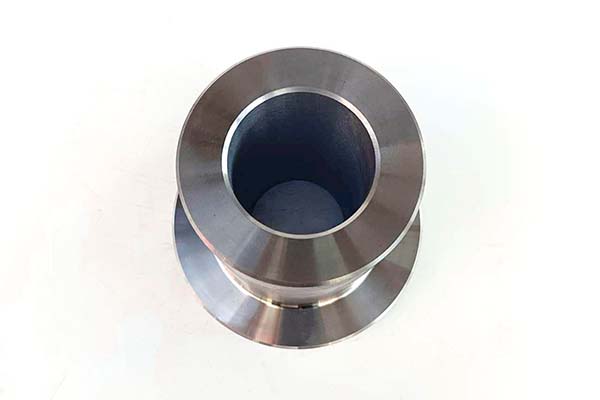
| CNC machining | Precision parts, production materials | Slow | Moderate-high | Longer lead time, higher cost |
| Clay modeling | Early form exploration | Fast | Low | Non-functional, limited detail |
| Vacuum casting | Small batches, production-like parts | Moderate | Moderate | Requires master pattern |
A consumer electronics company used FDM for early form studies—printing 20 variations of a wearable device in one week. When they needed functional testing with production-like materials, they switched to SLS. When they needed final validation with the exact production material, they used CNC machining.
Step 3: Incorporate User Feedback Early
User feedback is not a final step. It should drive iteration from the beginning.
Test early, test often: Do not wait for a polished prototype. Test rough models. A foam block can reveal ergonomic issues. A cardboard mockup can show size and proportion problems.
Watch, don't just ask: Users often say one thing and do another. Observe how they interact with the prototype. Where do they hesitate? What do they try that you did not expect?
Act on feedback: Feedback without action is wasted. Prioritize changes based on impact and feasibility. Some feedback will be critical. Some will be preferences. Know the difference.
A medical device company tested their prototype with surgeons after each iteration. Usability tests revealed that the grip was too narrow for gloved hands. They redesigned the grip. The second prototype showed a 40% improvement in user satisfaction.
What Are the Critical Success Factors?
Material Selection Strategy
Materials determine what you can learn from a prototype. Choose materials that match your testing objectives.
| Objective | Recommended Materials |
|---|---|
| Form and feel only | Foam, clay, low-cost 3D printing filament |
| Functional testing (plastics) | ABS-like resin, SLS nylon, CNC-machined plastic |
| Functional testing (metals) | CNC-machined aluminum, DMLS metal |
| Production-like properties | Match final material as closely as possible |
| Biocompatibility testing | Medical-grade resins, titanium, PEEK |
Aerospace example: A wing component required high strength-to-weight ratio. Aluminum was chosen for prototyping because it closely matched the production material properties. Testing on aluminum prototypes gave accurate data for the final carbon fiber part.
Consumer electronics example: A wearable device needed flexibility for a strap. Silicone was selected for the prototype because it matched the final material. The prototype accurately predicted how the strap would perform in real-world use.
Sustainability consideration: Biodegradable plastics are becoming viable for certain applications. For packaging or disposable products, prototyping with these materials helps validate environmental claims early.
Cross-Functional Team Collaboration
Prototyping succeeds when diverse perspectives come together.
| Team Member | Contribution |
|---|---|
| Engineers | Technical feasibility, manufacturability, material properties |
| Designers | Aesthetics, ergonomics, user experience |
| Marketers | Market trends, customer needs, competitive positioning |
| End users | Real-world usability, unmet needs, pain points |
A smart home device company held weekly prototyping reviews with engineers, designers, and marketing. When a user test revealed confusion about button placement, the team redesigned together. The solution—a slight contour change—was simple. But it required input from all three disciplines to implement without compromising engineering constraints or design intent.
What Do Successful Case Studies Look Like?
Automotive: Electric Vehicle Charging Dock
Challenge: A company developing an EV charging dock needed to ensure compatibility with multiple vehicle models. Different EVs had different connector types, power requirements, and communication protocols.
Solution: They built a modular prototype with interchangeable components. A base unit housed the core electronics. Connector modules could be swapped to match different vehicles. Software controlled power delivery based on the connected vehicle.
Result: The modular approach allowed parallel development of components. The development cycle dropped from 18 months to 9 months. The company launched faster and could easily update the dock as new EV models emerged.
Medical Device: Minimally Invasive Surgical Tool
Challenge: A surgical tool needed to perform precise movements in confined spaces. Traditional manufacturing could not achieve the required combination of slim profile, strength, and sensor integration.
Solution: The company used 3D printing to create a titanium prototype with integrated sensors. The slender, flexible shaft was optimized for laparoscopic procedures. Force sensors at the tip provided real-time feedback to the surgeon.
Result: The prototype achieved precision that traditional methods could not match. FDA approval came 6 months ahead of schedule. The company gained a competitive advantage in a fast-growing market.
Consumer Goods: Ergonomic Kitchen Tool
Challenge: A kitchen tool manufacturer wanted to optimize grip comfort for a new peeler. Users had different hand sizes and grip styles.
Solution: They printed 20 handle variations using FDM and tested with 50 users. Data on grip pressure, comfort ratings, and task completion time guided design refinements.
Result: The final design scored 4.8 out of 5 in user satisfaction. The product became the company's best-selling kitchen tool.
How Do You Avoid Common Pitfalls?
| Pitfall | Consequence | Prevention |
|---|---|---|
| Vague objectives | Prototype answers no clear questions | Define what you need to learn before building |
| Overbuilding | Wasted time and money on unnecessary features | Build only what is needed to answer your questions |
| Skipping user testing | Design flaws missed until production | Test with real users at every iteration |
| Wrong material choice | Test results don't reflect production reality | Match materials to testing objectives |
| Isolated team | Missed opportunities, conflicting requirements | Involve diverse perspectives from the start |
| No iteration plan | One prototype becomes final, flaws remain | Budget for multiple iterations |
Yigu Technology's Perspective
As a custom manufacturer of plastic and metal parts, Yigu Technology works with clients at every stage of prototyping. We see what separates successful projects from those that struggle.
What we have learned:
- Start with clear objectives. The most successful clients know what they need to learn before they ask for a quote.
- Plan for iteration. Budget for at least three prototype cycles. The first reveals issues. The second tests fixes. The third validates.
- Match method to stage. Use low-cost methods early. Save expensive processes for later when you are confident in the design.
- Involve manufacturing early. Design for manufacturing (DFM) feedback during prototyping prevents costly production issues later.
- Document everything. Keep records of each iteration, feedback received, and changes made. This prevents repeating mistakes and helps communicate progress.
We encourage clients to think of prototyping as an investment, not an expense. The time and money spent upfront pay back many times over in reduced risk, faster launch, and better products.
Conclusion
Successful product prototyping does not happen by accident. It requires clear objectives, the right methods, early user feedback, and disciplined iteration. It demands collaboration across disciplines and a willingness to learn from failure.
When done well, prototyping transforms uncertainty into confidence. It reveals what works and what does not. It aligns teams around a shared vision. It reduces risk before you commit to production.
The case studies in this guide demonstrate the power of thoughtful prototyping. An EV charging dock reached market in half the expected time. A surgical tool gained early FDA approval. A kitchen tool became a bestseller. These outcomes did not come from luck. They came from a structured, disciplined approach to prototyping.
Whether you are developing a medical device, an automotive component, or a consumer product, the principles remain the same. Define what you need to learn. Choose methods that match your objectives. Test with real users. Iterate based on feedback. And partner with experienced professionals who can guide you through the process.
Frequently Asked Questions
How many prototype iterations are typically needed?
Most products require 3–7 iterations from initial concept to production-ready design. Simple products may need fewer. Complex products with tight tolerances or regulatory requirements often need more. Plan for at least three cycles in your timeline and budget.
What is the most cost-effective prototyping method for early stages?
For early form and fit testing, FDM 3D printing or clay modeling offers the lowest cost. FDM parts cost $5–$50 for small components. Clay models cost almost nothing in materials. Save more expensive methods like SLS or CNC for later stages when you need functional validation.
How do I know when to stop prototyping and move to production?
Move to production when your prototype has answered all critical questions and you have validated form, fit, function, and manufacturability. If you are still discovering major design changes, you are not ready. A common rule: when three consecutive prototypes pass testing with no significant changes, you are ready.
What should I look for in a prototyping partner?
Look for technical capability (experience with your needed technologies), material expertise (access to high-performance materials), design support (DFAM feedback), and clear communication. Ask for examples of similar projects. Visit the facility if possible. A good partner asks questions about your objectives, not just your files.
How do I incorporate user feedback effectively?
Test with real users early and often. Use rough prototypes first—users are more honest about flaws when the prototype looks unfinished. Watch how they interact; do not just ask questions. Record feedback systematically. Prioritize changes based on impact and feasibility. Close the loop by showing users how their feedback influenced the next iteration.
Contact Yigu Technology for Custom Manufacturing
At Yigu Technology, we specialize in helping clients succeed with product prototyping. Our capabilities include CNC machining, 3D printing (FDM, SLA, SLS) , and sheet metal fabrication. We work with startups, medical device companies, automotive suppliers, and aerospace firms to turn concepts into validated designs.
If you are planning a prototyping project, contact our engineering team. Let us help you define your objectives, choose the right methods, and avoid common pitfalls. Together, we can make your prototyping a success.