Introduction
Production grinding to a halt. A mold cracks under pressure. Parts come out with inconsistent dimensions. For manufacturers, these issues hit the bottom line hard. The root cause is often the same: choosing the wrong tool steel for the job.
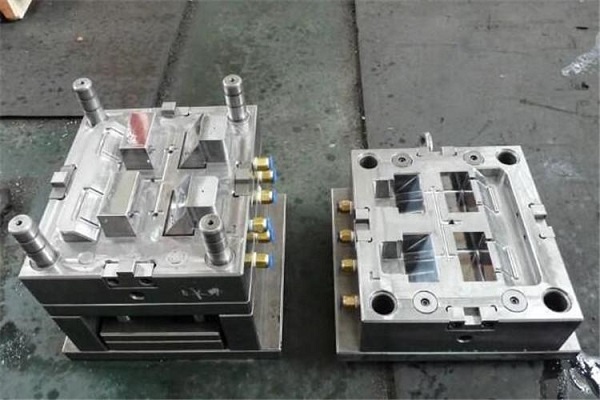
Cr12MoV—equivalent to AISI D2—solves this problem. It bridges the gap between extreme hardness and practical toughness. This balanced performance makes it a go-to choice for demanding mold applications, from stamping dies to plastic injection molds.
This guide explores how Cr12MoV (D2) addresses common manufacturing challenges. You will learn about its composition, properties, applications, and how to maximize its performance in your tooling.
What Makes Cr12MoV (D2) Unique?
The performance of Cr12MoV (D2) comes from its carefully engineered composition. Each element plays a specific role.
| Element | Content | Function |
|---|---|---|
| Chromium | 11–13% | Forms hard chromium carbides for exceptional wear resistance |
| Molybdenum | 0.7–1.2% | Improves hardenability and toughness; reduces brittleness |
| Vanadium | 0.8–1.2% | Forms fine vanadium carbides; refines grain structure for dimensional stability |
| Carbon | 1.4–1.6% | Enables high hardness (57–62 HRC after heat treatment) |
Key Properties
Wear resistance: The high chromium content creates hard carbides that act like tiny armor plates. This resists abrasion during repeated use—critical for high-volume stamping and extrusion.
Thermal stability: D2 maintains hardness at temperatures up to 450°F (232°C) . This outperforms many cold work steels and makes it suitable for applications where friction generates moderate heat, like continuous stamping.
Corrosion resistance: The chromium content provides better corrosion resistance than plain carbon steels. D2 withstands humid workshops and short-term coolant exposure, though long-term storage still requires rust protection.
Dimensional stability: After heat treatment, D2 experiences less than 0.0002 inches of distortion per inch. This is critical for micro-molding applications and high-precision molds.
Where Is Cr12MoV (D2) Used in Mold Making?
Cold Work Tooling
From blanking dies to forming tools, D2 is a workhorse. It holds tight tolerances (±0.0005 inches) and produces consistent parts in high-volume runs.
Plastic Injection Molds
For molding abrasive plastics filled with glass or mineral fibers, D2’s wear resistance prevents premature surface degradation. Manufacturers report up to 50 percent longer mold life compared to standard steels.
Stamping Dies
In automotive stamping, where thousands of parts are produced daily, D2’s durability reduces downtime. A D2 stamping die handles 300,000 to 800,000 cycles before needing reconditioning—double the life of O1 steel dies.
Punches and Shears
D2’s sharp edge retention ensures clean cuts in sheet metal. A D2 punch used in 16-gauge steel cutting stays sharp for 40,000+ cycles, compared to 20,000 cycles for A2.
High-Precision Molds
Medical device molds and electronics components require tight tolerances. D2’s dimensional stability delivers. After heat treatment, distortion is minimal—critical for applications where precision is paramount.
Progressive Dies
These complex dies perform multiple operations in one pass. D2’s balance of hardness and toughness resists the varied stresses involved, making it a top choice for appliance and electronics manufacturing.
How Do You Heat Treat and Process D2?
Proper heat treatment unlocks D2’s full potential. Mistakes here lead to subpar performance.
| Process | Parameters | Purpose |
|---|---|---|
| Annealing | 1,500–1,550°F (815–845°C), hold 2–4 hours, slow cool ≤50°F/hour | Softens to 180–220 HB for easier machining; reduces internal stresses |
| Hardening | 1,850–1,900°F (1,010–1,038°C), hold 30–60 minutes | Ensures carbides dissolve evenly; overheating above 1,950°F causes grain growth and brittleness |
| Quenching | Oil quenching (standard); vacuum quenching for complex molds | Forms martensite; vacuum quenching minimizes oxidation, reducing post-processing polishing by 20–30% |
| Tempering | 300–400°F (150–204°C), 1–2 hours, repeat once | Transforms retained austenite; boosts toughness and stability |
Surface Treatments
Nitriding adds a 5–10 micron hard layer. Surface hardness reaches 65–70 HRC, improving wear resistance by 40 percent.
PVD coatings like TiCN reduce friction. This is ideal for plastic injection molds where material flow is critical.
Machinability
Annealed D2 is moderately machinable, but its carbide content wears tools quickly. Use:
- Carbide inserts with a negative rake angle
- Cutting speeds of 40–70 SFM
- Coolant to prevent overheating
EDM Considerations
D2 handles electrical discharge machining well. However, the recast layer (0.0001–0.0003 inches) must be removed via polishing or etching. This prevents cracking in high-stress applications like cold forging dies.
What Performance and Durability Does D2 Deliver?
Mold Life Expectancy
| Application | Expected Cycles |
|---|---|
| Non-abrasive plastic injection molds | 500,000–1,000,000 |
| Glass-filled plastic injection molds | 300,000–500,000 |
| Stamping dies | 300,000–800,000 |
D2 outperforms A2 by 30 to 50 percent in these applications.
Edge Retention
In abrasive environments, D2 holds an edge 20 to 30 percent longer than A2. For cold extrusion of aluminum, a D2 die maintains its profile 25 percent longer than an A2 die.
Cost-Effectiveness
While D2 costs 20 to 30 percent more than O1 upfront, its longer life lowers total cost of ownership. For a high-volume stamping operation, switching to D2 can reduce annual tooling costs by 15 to 20 percent.
Maintenance
Regular cleaning and light polishing keep D2 molds in top shape. Reconditioning—grinding and re-hardening—can extend life by 2 to 3 times, making it a sustainable choice for long-term production.
How Does Cr12MoV (D2) Compare to Other Tool Steels?
| Steel Grade | Hardness (HRC) | Wear Resistance | Toughness | Relative Cost | Best For |
|---|---|---|---|---|---|
| Cr12MoV (D2) | 57–62 | Very Good | Good | Medium-High | Balanced performance (stamping, injection molds) |
| AISI D3 | 58–64 | Excellent | Low | Medium | High-wear, low-impact (blanking dies) |
| SKD11 | 56–61 | Very Good | Good | Medium-High | Precision molds (electronics) |
| A2 | 57–61 | Good | Very Good | Medium | High-impact (forging dies) |
| Powder metallurgy (ASP-60) | 60–65 | Excellent | Good | Very High | Ultra-high-wear (metal forming) |
D2 vs. D3: D3 offers higher wear resistance but lower toughness. It is prone to chipping in impact-heavy applications. D2 is more versatile, handling both wear and moderate impact.
D2 vs. SKD11: SKD11 is nearly identical in composition but often has tighter impurity controls, making it slightly more consistent. However, D2 is more readily available globally at a similar price.
Cost comparison: D2 costs less than powder metallurgy steels but more than A2 or O1. Its balance of properties makes it the best value for most medium-to-high-volume precision applications.
Yigu Technology’s Perspective
As a custom manufacturing supplier, we rely on Cr12MoV (D2) for its versatility and reliability. It is the ideal middle ground for clients needing both precision and durability—whether for automotive stamping dies or medical device molds.
Our in-house heat treatment experts optimize D2’s properties for each application. We balance hardness and toughness to meet specific production demands.
For clients transitioning from lower-grade steels, switching to D2 typically reduces tooling costs by 20 to 30 percent over a year. Longer mold life and fewer replacements drive these savings.
Conclusion
Cr12MoV (D2) offers a balanced combination of wear resistance, hardness, and toughness that makes it a versatile solution for precision tooling. Its high chromium content provides exceptional wear resistance for abrasive applications. Its molybdenum and vanadium content improve toughness and dimensional stability. Heat treatment unlocks its full potential, delivering hardness up to 62 HRC with minimal distortion.
From stamping dies and plastic injection molds to punches and progressive dies, D2 performs where other steels fall short. While it costs more than basic tool steels upfront, its longer life and reduced downtime make it cost-effective for high-volume production.
For manufacturers seeking a reliable, versatile tool steel, Cr12MoV (D2) delivers.
FAQ
Can Cr12MoV (D2) be used for high-impact applications?
D2 offers moderate toughness, making it suitable for low-to-moderate impact uses like stamping. For high-impact applications such as heavy forging, A2 steel is a better choice due to its superior toughness.
How does D2 perform in corrosive environments?
D2 has moderate corrosion resistance, suitable for humid workshops and short-term coolant exposure. For highly corrosive environments like marine applications, stainless tool steels are recommended instead.
What is the best way to extend D2 mold life?
Regular cleaning, proper storage with rust inhibitors, and timely reconditioning—grinding and re-tempering—are essential. Applying a PVD coating can also reduce wear and extend life by 30 to 40 percent.
Contact Yigu Technology for Custom Manufacturing
Looking for precision tooling that delivers reliability and performance? Yigu Technology specializes in custom non-standard plastic and metal products. Our team has extensive experience with Cr12MoV (D2) and other high-performance tool steels.
Reach out today to discuss your next project. Let us help you choose the right material for your application.