
How to CNC Machine SS317 for High-Corrosion Applications?

Machining Products

Contents Introduction What Makes SS317 Unique? Mechanical Properties Chemical Composition Corrosion Resistance Key Characteristics How Do You CNC Machine SS317? Core Machining Operations Parameter Comparison What Tooling Works Best for SS317? Cutting Tools Tool Coatings Tool Geometry Tool Holders and Coolant Chip Control Strategies What Surface Finish and Quality Control Are Required? Achievable Surface Roughness […]

Introduction

When harsh chemical environments demand exceptional corrosion resistance, SS317 stainless steel is often the answer. This austenitic alloy offers superior protection against acids, chlorides, and industrial chemicals—outperforming SS316 in high-chloride applications. But machining it comes with unique challenges.

SS317’s high alloy content, while boosting corrosion resistance, increases work hardening tendencies. Cutting forces are elevated. Tool wear accelerates. Chip control becomes critical. Yet with the right strategies—tool selection, cutting parameters, cooling—manufacturers can achieve precision, efficiency, and reliability.

This guide addresses these challenges, providing proven strategies to optimize CNC machining SS317 for chemical processing, marine, food, and medical applications.


What Makes SS317 Unique?

SS317 is an austenitic stainless steel engineered for extreme corrosion resistance.

Mechanical Properties

PropertyValue
Tensile strength515 MPa
Yield strength205 MPa
Hardness (annealed)18–22 HRC
Elongation40%
Magnetic propertiesNon-magnetic (all conditions)

Chemical Composition

ElementPercentage
Chromium (Cr)18–20%
Nickel (Ni)11–15%
Molybdenum (Mo)3–4%
Carbon (C)0.08% max
Sulfur (S)0.15–0.35% (free-machining variants)

Corrosion Resistance

SS317 offers exceptional resistance in harsh environments:

  • Sulfuric acid and phosphoric acid
  • Chloride solutions (seawater, industrial brines)
  • Industrial waste streams

The 3–4% molybdenum content provides 20–30% better chloride resistance than SS316, resisting pitting and crevice corrosion.

Key Characteristics

TraitImpact on Machining
High ductility (40% elongation)Stringy chips; chip control challenges
Work hardening tendencyRapid tool wear; elevated cutting forces
Non-magneticNo impact on machining
Excellent weldabilityPost-weld annealing optional

How Do You CNC Machine SS317?

CNC machining SS317 requires careful control to manage work hardening and chip formation.

Core Machining Operations

OperationParametersNotes
CNC millingSpeed 90–150 m/min; feed 0.1–0.2 mm/tooth; depth 1–3 mmClimb milling reduces work hardening; lowers cutting forces 10–15%
CNC turningSpeed 100–180 m/min; feed 0.12–0.25 mm/rev; depth 1.5–4 mmModerate feeds balance material removal and heat
CNC drillingSpeed 70–120 m/min; feed 0.08–0.15 mm/rev; depth 1–2.5 mmSharp tools; peck drilling prevents chip clogging

Parameter Comparison

ParameterSS317SS316Difference
Cutting speed90–150 m/min100–160 m/min5–10% lower
Feed rate (turning)0.12–0.25 mm/rev0.15–0.28 mm/revSlightly lower
Work hardening tendencyHigherModerateRequires sharper tools, lighter cuts

What Tooling Works Best for SS317?

Tool selection focuses on wear resistance and chip control.

Cutting Tools

Tool MaterialPerformance
Carbide (fine-grain WC-Co, 6–8% Co)Preferred; balances toughness and wear resistance
High-speed steel (HSS)Not recommended; wears rapidly

Tool Coatings

CoatingBenefit
AlTiNExtends tool life 40–60% vs. uncoated; high hardness (3500 HV); reduces friction
TiAlNGood alternative; high-temperature resistance

Tool Geometry

FeatureRecommendation
Rake anglePositive (5–10°) — reduces cutting forces
Edge preparationSharp edges minimize work hardening
Roughing insertsRound inserts with large radii
Finishing insertsSquare inserts with honed edges

Tool Holders and Coolant

ComponentRequirement
Tool holdersRigid, shrink-fit; minimizes deflection under high cutting forces
Coolant deliveryHigh-pressure (70–120 bar) directed at cutting zone

Chip Control Strategies

ChallengeSolution
Stringy chipsAggressive chip breakers designed for austenitic stainless steels
Chip wrappingAdjust feed rates to promote short, curly chips
Chip re-cuttingHigh-volume coolant flow (10–15 L/min) flushes chips away

What Surface Finish and Quality Control Are Required?

SS317’s surface finish directly impacts corrosion resistance—rough surfaces trap contaminants and accelerate pitting.

Achievable Surface Roughness

OperationTypical Ra
Roughing3.2 μm
Finish machining0.8 μm
Chemical processing parts≤1.6 μm (minimizes particle adhesion)
Food processing equipment≤0.8 μm (easy cleaning)
Marine components≤1.6 μm (resists saltwater pitting)

Finishing Processes

ProcessBenefit
Electrochemical finishingRemoves micro-burrs; enhances corrosion resistance
PolishingCreates smooth, contamination-resistant surface
PassivationNitric acid treatment enhances oxide layer; boosts corrosion resistance 30–40%
ElectropolishingRemoves 5–10 μm layer; improves surface smoothness and corrosion resistance

Quality Control Measures

MethodPurpose
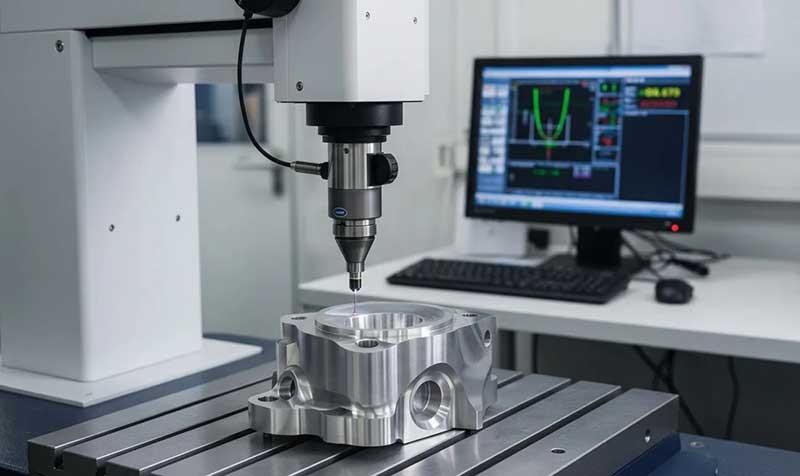
CMM (Coordinate Measuring Machine)Dimensional accuracy verification
ProfilometerSurface roughness (Ra, Rz) measurement
Salt spray testing (ASTM B117)Corrosion resistance verification
ASTM A240/A276 complianceMaterial consistency; alloy content

Surface defects to monitor: Tool marks and scratches act as corrosion initiation points. Grinding removes these defects, improving both performance and longevity.


How Does Heat Treatment Affect SS317?

SS317 requires minimal heat treatment but benefits from specific processes.

Solution Annealing

ParameterDetails
Temperature1040–1150°C
CoolingWater quench
ResultDissolves carbides; uniform austenitic structure; softens to 18–22 HRC; maximizes corrosion resistance
TimingTypically performed before machining

Stress Relief Annealing

ParameterDetails
Temperature300–500°C
Hold time1–2 hours
ResultReduces residual stresses from machining; prevents distortion in large parts (chemical tanks)

Post-Machining Processes

ProcessPurpose
Ultrasonic cleaningRemoves coolant residues and chips; prevents contamination
PassivationEnhances chromium oxide layer; critical for marine/chemical applications
ElectropolishingOptional for high-purity applications

Where Is SS317 Used?

SS317 excels in environments where corrosion resistance is paramount.

Chemical Processing Equipment

ComponentsApplications
Reactors, pumps, valvesSulfuric acid, phosphoric acid, chloride solutions
Performance: Outperforms SS316 in high-concentration applications; lasts 5–7× longer in sulfuric acid processing

Food Processing Machinery

ComponentsRequirements
Mixers, conveyors, storage tanksResistance to cleaning chemicals and food acids; FDA compliance

Marine Components

ComponentsPerformance
Propeller shafts, hull fittings, seawater intake systemsWithstands saltwater corrosion 2–3× longer than SS304

Medical Devices

ComponentsRequirements
Sterilization equipment, surgical toolsResistance to autoclave chemicals and bodily fluids

Industrial Waste Treatment

ComponentsBenefit
Pipes, filtersHandles corrosive sludge and wastewater; reduces maintenance costs

How Does SS317 Compare to Other Materials?

MaterialCorrosion Resistance (Chlorides)Machinability (Relative)Cost (Relative)
SS317ExcellentGood (80%)High
SS316Very GoodGood (85%)Medium-High
SS304FairVery Good (90%)Medium
Ti-6Al-4VExcellentPoor (50%)Very High
Hastelloy C276SuperiorPoor (40%)Very High

SS317 vs. SS316

FactorSS317SS316
Chloride resistance20–30% betterGood
MachinabilitySlightly harderBetter
CostHigherLower
Best forSeawater, industrial brineGeneral chemical processing

SS317 vs. Titanium

FactorSS317Ti-6Al-4V
MachinabilityEasier (80% vs. 50%)Difficult
Cost30–40% lowerVery high
CorrosionComparable in most chemicalsSuperior in hydrofluoric acid

SS317 vs. Hastelloy C276

FactorSS317Hastelloy C276
Corrosion resistanceExcellentSuperior
Cost3–4× lowerVery high
Best forMost chemical environmentsExtreme environments

Conclusion

CNC machining SS317 requires understanding its unique properties and applying targeted strategies:

  • Material characteristics: High molybdenum (3–4%) provides superior chloride resistance; work hardening tendency requires sharp tools and light cuts
  • Machining parameters: Cutting speeds 90–180 m/min; feeds 0.08–0.25 mm/rev; depths 1–4 mm
  • Tooling: AlTiN-coated carbide; positive rake angles; rigid tool holders; high-pressure coolant (70–120 bar)
  • Surface finish: Ra 0.8–1.6 μm for most applications; ≤0.8 μm for food processing
  • Quality control: CMM inspection; salt spray testing; ASTM A240/A276 compliance
  • Applications: Chemical processing, marine, food, medical—where corrosion resistance is critical

While machining SS317 is more expensive than SS316 (15–20% higher cost), the investment is justified by 2–3× longer service life in harsh chemical environments and 20–30% better chloride resistance.


FAQs

What makes SS317 ideal for chemical processing?

SS317’s high molybdenum content (3–4%) enhances resistance to chlorides and acids, outperforming SS316 in high-concentration chemical environments. Its austenitic structure also resists stress corrosion cracking—critical for reactor and pump components.

How does SS317’s machinability compare to SS316?

SS317 is slightly harder to machine due to higher alloy content, requiring 5–10% slower cutting speeds and more durable tools (AlTiN-coated carbide). Free-machining variants (SS317F) with high sulfur content improve chip control, narrowing the gap.

When should SS317 be chosen over SS316?

SS317 is preferred for applications with high chloride concentrations (seawater, industrial brines) or exposure to strong acids (sulfuric, phosphoric), where its extra molybdenum provides 20–30% better corrosion resistance than SS316.

What tooling works best for SS317?

AlTiN-coated carbide tools with positive rake angles (5–10°). Fine-grain carbide (WC-Co with 6–8% Co) balances toughness and wear resistance. High-pressure coolant (70–120 bar) is essential for heat management and chip evacuation.

What surface finish is required for SS317 in different applications?

Chemical processing: Ra ≤1.6 μm (minimizes particle adhesion). Food processing: Ra ≤0.8 μm (easy cleaning). Marine components: Ra ≤1.6 μm (resists saltwater pitting). General: Ra 0.8–3.2 μm depending on function.


Contact Yigu Technology for Custom Manufacturing

At Yigu Technology, we specialize in CNC machining SS317 for chemical processing, marine, and food industry clients. With 15 years of experience, advanced 5-axis machining, and ISO 9001 certification, we deliver components that meet the most demanding corrosion resistance requirements.

Our expertise includes AlTiN-coated tooling, high-pressure coolant strategies, and post-machining passivation to enhance corrosion protection. Contact us today to discuss your SS317 machining project.

Scroll to Top