Ten years ago, 3D printing was a lab toy. Engineers used it to check a design before sending it to a factory. Today, that same technology is making real products. Planes fly with 3D-printed parts. Doctors implant 3D-printed bones. Cars roll off the line with 3D-printed tooling.
So here's the big question: Can rapid manufacturing 3D printing actually replace mass production? Or is it still just a niche tool for prototypes?
The short answer? It depends. But the gap is closing fast.
In this guide, we break down exactly where additive manufacturing stands right now. We look at real industries already using it. We compare costs, speeds, and quality. And we give you a clear picture of what the future holds. Whether you're a product manager, an engineer, or a business owner — this article will help you decide if rapid manufacturing makes sense for you.
What Is Rapid Manufacturing 3D Printing?
Core Principles of Additive Production
Rapid manufacturing (RM) is not the same as rapid prototyping. Let's get that straight first.
Rapid prototyping means making one model to test a shape. Rapid manufacturing means making actual end-use parts. The parts go into products. They get sold. They get used every day.
The core idea is simple: build parts layer by layer from a digital file. No molds. No tooling. No setup time. You send a CAD file to a printer, and hours later, you have a finished part.
This is direct digital production. It skips every traditional step between design and finished product.
Technologies for End-Use Parts
Not all 3D printers can do rapid manufacturing. You need industrial-grade systems. Here are the main ones:
| Technology | Best For | Typical Materials |
|---|---|---|
| SLS (Selective Laser Sintering) | Functional parts, small batches | Nylon, TPU, glass-filled polymers |
| SLM/DMLS (Metal Laser Sintering) | Metal aerospace & medical parts | Titanium, stainless steel, Inconel |
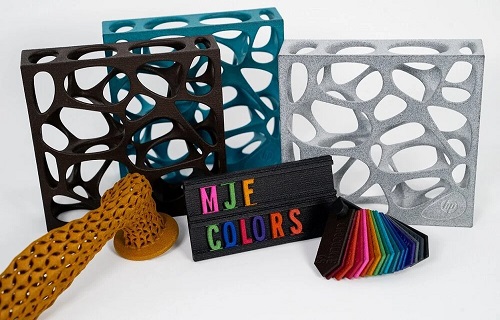
| MJF (Multi Jet Fusion) | High-volume polymer production | PA12, TPU, glass-filled nylon |
| FDM (Industrial FDM) | Large parts, tooling, jigs | PEEK, ULTEM, carbon-fiber nylon |
| SLA/DLP (Resin) | High-detail parts, dental, jewelry | Engineering resins, biocompatible resins |
Each of these can produce certified end-use parts. That's the key difference from a desktop hobby printer.
From One to Many
The real shift in rapid manufacturing is scale. Early 3D printing was "make one." Now, systems like HP Multi Jet Fusion and EOS P 396 can print hundreds of parts in a single build.
This is how additive manufacturing moves from prototype lab to production floor.
Where Is It Already Being Used?
Aerospace: Lighter, Stronger Parts
Boeing and Airbus use 3D printing every day. The Boeing 787 Dreamliner has over 1,000 3D-printed parts. These include titanium brackets, ducting, and interior panels.
Why? Weight savings. A 3D-printed bracket can be 40% lighter than a machined one. It uses topology optimization — the software removes material where it's not needed.
GE Aviation's LEAP engine has a fuel nozzle made from 3D printing. It used to be 20 parts welded together. Now it's one printed part. It's 25% lighter and 5x more durable.
Automotive: Tooling and Low-Volume Parts
Car makers don't print entire engines yet. But they print a lot else.
- BMW uses SLS to make custom jigs and fixtures on the assembly line.
- Porsche 3D-prints pistons for its race cars.
- Ford uses FDM for large interior prototypes and functional test parts.
The big win here is custom tooling. A traditional steel mold can cost 50,000andtake8weeks.A3D−printedtoolcosts2,000 and is ready in 3 days.
Medical: Patient-Specific Implants
This is where rapid manufacturing shines brightest.
Stryker and Zimmer Biomet produce 3D-printed titanium hip and knee implants. Each one matches the patient's exact anatomy from a CT scan.
Dental labs print thousands of aligners and crowns daily using SLA resin printers. Surgical guides for spinal surgery are also 3D-printed.
In 2023, the global medical 3D printing market hit $6.5 billion. It's growing at 23% per year.
Consumer Goods: Eyewear, Shoes, Electronics
- Adidas uses Carbon's DLS technology to print 3D midsoles for the 4DFWD shoe.
- Luxottica prints custom eyeglass frames with MJF.
- Sonos 3D-prints custom speaker housings for limited editions.
These aren't prototypes. These are products you can buy in stores right now.
Key Advantages Over Traditional Manufacturing
No Tooling Costs or Wait Times
This is the biggest financial win. Traditional manufacturing needs molds, dies, and fixtures. These cost thousands to hundreds of thousands of dollars. They also add 4–12 weeks of lead time before you see a single part.
With rapid manufacturing, you skip all of that. Your first part and your thousandth part come from the same digital file. No tooling. No setup. No delay.
| Factor | Traditional (Injection Molding) | Rapid Manufacturing (3D Printing) |
|---|---|---|
| Tooling cost | 10,000–200,000+ | $0 |
| Lead time to first part | 6 – 16 weeks | 1 – 5 days |
| Design change cost | Re-tool the mold ($10K+) | Update the file (free) |
| Minimum order | 1,000 – 10,000+ units | 1 unit |
Design Freedom and Topology Optimization
Traditional methods limit your design. You can only make shapes that a mold can pull apart. 3D printing has no such limits.
You can create internal lattice structures, organic shapes, and complex geometries that are impossible to machine or mold. Topology optimization software can cut weight by 30–60% while keeping strength the same.
On-Demand Production, Less Inventory
You don't need to guess demand and stock warehouses. With on-demand 3D printing, you make parts when you need them. This cuts inventory costs by up to 40% for spare parts, according to a 2022 McKinsey report.
Mass Customization at No Extra Cost
In traditional manufacturing, every custom version means a new mold. That's expensive.
With 3D printing, every part can be different at the same per-unit cost. This is called mass customization. It's why hearing aids, dental aligners, and prosthetics are all 3D-printed today.
Current Barriers to Replacing Mass Production
Speed: Print Time vs. Cycle Time
Let's be honest. 3D printing is slower than injection molding for high volumes.
An injection molding machine can spit out a part every 15–30 seconds. A 3D printer might take 4–12 hours for the same part. Even with multiple printers, you can't match that throughput yet.
For runs under 1,000 units, 3D printing wins on total lead time. For runs over 10,000, traditional molding is still faster per part.
Material Limitations
The range of production-certified materials is growing. But it's still smaller than what traditional methods offer.
- Metal 3D printing works great with titanium and stainless steel. But aluminum and copper are still tricky.
- Polymer options are expanding fast. But not every engineering plastic has a 3D-printing grade yet.
Here's a quick look:
| Material Need | 3D Printing Ready? |
|---|---|
| Titanium (Ti6Al4V) | ✅ Yes, widely used |
| Stainless Steel (316L) | ✅ Yes |
| Aluminum (AlSi10Mg) | ⚠️ Limited, improving |
| PEEK | ✅ Yes, but slow and costly |
| Standard ABS/PLA | ✅ Yes, but not for end-use |
| Copper | ❌ Not yet viable |
Surface Finish and Consistency
3D-printed parts often need post-processing. Layer lines, support marks, and surface roughness are common. You may need sanding, vapor smoothing, or machining to hit tight tolerances.
For aerospace and medical parts, this adds cost and time. Dimensional accuracy is typically ±0.1% to ±0.3%, which is good but not as tight as CNC machining at ±0.01%.
Post-Processing Bottlenecks
Printing is only half the job. Cleaning, curing, heat-treating, and finishing can take as long as the print itself. This is a hidden cost many companies underestimate.
In a production environment, post-processing is often the slowest step in the whole workflow.
Is It Cost-Competitive at Scale?
Break-Even Analysis
Here's a real-world cost comparison for a simple bracket:
| Volume | Injection Molding (per unit) | 3D Printing (per unit) | Winner |
|---|---|---|---|
| 100 units | $45 | $12 | 3D Printing |
| 1,000 units | $8 | $10 | Injection Molding |
| 10,000 units | $3 | $8 | Injection Molding |
| 100,000 units | $1.50 | $7 | Injection Molding (by far) |
The break-even point is usually around 500–2,000 units, depending on part complexity. For simple parts, molding wins sooner. For complex parts with undercuts or internal channels, 3D printing wins at much higher volumes.
When Low Volume Justifies High Cost
If you need 50 custom brackets, injection molding doesn't make sense. The tooling alone would cost more than the entire project.
This is where rapid manufacturing shines. High per-unit cost doesn't matter if your total volume is low. And with zero tooling, your total project cost is often lower.
Build Volume and Nesting Matter
Larger build volumes mean more parts per print. Nesting software packs parts tightly to maximize each build. This can cut per-unit costs by 20–40%.
Systems like the EOS P 396 have a 700 x 700 x 600 mm build volume. That's big enough for real production batches.
Quality Assurance and Standardization
Industry Certifications
Rapid manufacturing isn't just "good enough." It's certified for the toughest industries.
| Industry | Key Certification | What It Covers |
|---|---|---|
| Aerospace | AS9100 / NADCAP | Material traceability, process control |
| Medical | ISO 13485 / FDA 510(k) | Biocompatibility, sterilization, patient safety |
| Automotive | IATF 16949 | Quality management for supply chain |
GE Aviation's 3D-printed fuel nozzle is FAA-certified. Stryker's 3D-printed implants are FDA-cleared. These aren't experiments. They're regulated production.
Repeatability in Production
Modern industrial printers have closed-loop process control. They monitor temperature, laser power, and atmosphere in real time. This ensures part-to-part consistency within tight tolerances.
Repeatability rates for SLS and SLM systems are now above 99.5% for critical dimensions. That's production-grade.
Digital Thread and Traceability
Every 3D-printed part has a digital birth certificate. The printer logs every parameter: laser speed, layer thickness, chamber temperature. This creates a full digital thread from design to finished part.
This is actually an advantage over traditional manufacturing. In machining, you often lose process data. In 3D printing, everything is recorded automatically.
The Future of Rapid Manufacturing
Multi-Material and Hybrid Systems
The next wave is printing with multiple materials in one build. Imagine a part with a rigid core and a flexible outer shell — printed in one go.
Hybrid machines that combine 3D printing with CNC machining are already here. The DMG MORI LASERTEC 65 3D prints metal and then machines it to final tolerance in the same setup.
AI-Driven Print Optimization
Artificial intelligence is changing how we print. AI software now:
- Predicts print failures before they happen
- Optimizes part orientation for best strength
- Adjusts parameters in real time during the build
- Schedules maintenance before breakdowns occur
This reduces scrap rates from 5–10% down to under 2% in some facilities.
The Vision: Decentralized Factories
The long-term goal? Fully automated, local factories. Instead of shipping parts from China, you send a digital file to a 3D printer near your customer. They print it on demand.
This is already happening. Shapeways and Xometry operate distributed 3D printing networks. Siemens is piloting decentralized manufacturing hubs in Europe.
We're moving toward a world where mass production isn't one giant factory — it's a thousand small ones.
Conclusion
So, can rapid manufacturing 3D printing replace mass production?
Not yet — not for everything. But it already has for many applications.
For low-to-medium volumes, complex geometries, customized parts, and fast turnarounds, 3D printing is not just competitive. It's often the better choice. For high-volume, simple parts, traditional manufacturing still wins on speed and cost per unit.
The real answer is this: rapid manufacturing and mass production are becoming partners, not rivals. The smartest companies use both. They 3D-print prototypes, tooling, and low-volume parts. They use injection molding and CNC for high-volume runs.
The gap is closing every year. New materials, faster printers, AI optimization, and hybrid systems are pushing 3D printing further into production. Within 5–10 years, the line between "prototype" and "production part" will be almost invisible.
If you're evaluating whether rapid manufacturing 3D printing fits your product or business — the time to test it is now. The technology is ready. The question is whether you are.
FAQ
Is rapid manufacturing the same as 3D printing?
Not exactly. Rapid manufacturing uses 3D printing, but it also includes post-processing, quality control, and production planning. It's the full production workflow, not just the printing step.
What volume is too high for 3D printing?
Generally, above 10,000–50,000 units per year, traditional methods like injection molding become more cost-effective. But this depends on part complexity. Complex parts can stay competitive at higher volumes.
Can 3D-printed parts be as strong as machined parts?
Yes. Metal 3D-printed parts using SLM/DMLS can match or exceed the strength of wrought materials. Titanium 6Al4V printed parts achieve 99.5%+ density and meet aerospace strength requirements.
How long does it take to get a 3D-printed production part?
From file to finished part: typically 3–7 days for polymers and 5–14 days for metals. This includes printing, post-processing, and quality inspection.
Do 3D-printed parts need post-processing?
Almost always. Common steps include support removal, heat treatment, surface finishing, and CNC machining of critical surfaces. Budget 20–50% of total cost for post-processing.
Is 3D printing cheaper than CNC machining?
For complex parts, yes — often 30–60% cheaper because there's no material waste. For simple parts, CNC is usually cheaper per unit at higher volumes.
Contact Yigu Technology for Custom Manufacturing
Need custom rapid manufacturing for your next product? Yigu Technology specializes in high-quality 3D printing for aerospace, medical, automotive, and consumer applications.
We offer:
- ✅ SLS, SLM, FDM, and resin printing
- ✅ Production-grade materials with full certifications
- ✅ Fast turnaround from design to delivery
- ✅ Post-processing and quality inspection included
Get a free quote today. Let's turn your digital design into real, production-ready parts.
📧 Contact Yigu Technology — Your trusted partner in rapid manufacturing 3D printing.