Introduction
You are shopping for sheet metal. You see options labeled 16 gauge, 18 gauge, 20 gauge. The numbers seem backward—a lower number means thicker metal. So what makes 18 gauge sheet metal such a common choice?
Walk into any metal fabrication shop, and you will find 18 gauge being used for everything from electronics enclosures to automotive brackets. It sits in a sweet spot: thick enough to be strong and durable, yet thin enough to be formed, cut, and welded without specialized heavy equipment.
This guide explains what 18 gauge means, what materials it comes in, and why it has become a go-to thickness for so many applications. By the end, you will know exactly when to choose 18 gauge and how to work with it effectively.
What Does 18 Gauge Mean?
The Gauge System Explained
In North America, gauge is the standard way to measure sheet metal thickness. The system is counterintuitive: the lower the gauge number, the thicker the metal.
For 18 gauge sheet metal, the thickness is approximately:
- 0.0478 inches
- 1.214 millimeters
To put this in context, here is how 18 gauge compares to common neighboring gauges:
| Gauge | Thickness (inches) | Thickness (mm) |
|---|---|---|
| 16 | 0.0625 | 1.588 |
| 18 | 0.0478 | 1.214 |
| 20 | 0.0359 | 0.912 |
| 22 | 0.0276 | 0.701 |
As the table shows, 18 gauge is significantly thicker than 20 or 22 gauge, but noticeably thinner than 16 gauge. This middle-ground thickness gives it a unique balance of properties.
Real-World Example: A customer needed a protective cover for outdoor equipment. 20 gauge felt too flimsy—it would dent easily. 16 gauge was stronger but added unnecessary weight and cost. 18 gauge provided the right balance: strong enough to resist impacts, light enough to handle easily, and cost-effective for the project.
How Thickness Is Measured
Gauge standards vary slightly by material. The numbers above are for steel. For aluminum, 18 gauge is slightly thinner—about 0.0403 inches (1.024 mm). Always confirm thickness specifications when switching between material types.
What Materials Are Available in 18 Gauge?
Carbon Steel: Strong and Affordable
Carbon steel is the most common material for 18 gauge sheet metal. It offers:
- High strength: Tensile strength typically ranges from 40,000 to 70,000 psi, depending on grade.
- Good formability: Bends and stamps well with proper tooling.
- Low cost: More affordable than stainless steel or aluminum.
The main drawback is corrosion susceptibility. Carbon steel rusts when exposed to moisture. For outdoor or humid applications, it requires a protective coating—paint, powder coating, or galvanizing.
Stainless Steel: Corrosion Resistance
Stainless steel 18 gauge sheet metal contains at least 10.5% chromium, which forms a self-healing oxide layer that prevents rust. Common grades include:
- 304 stainless: General-purpose, good corrosion resistance. Used in food equipment, kitchenware, and architectural trim.
- 316 stainless: Added molybdenum improves resistance to chlorides (saltwater). Ideal for marine and chemical environments.
Stainless steel is stronger than carbon steel in some applications but costs 2–4 times more. It also requires more care during welding to maintain corrosion resistance.
Aluminum Alloy: Lightweight Champion
Aluminum 18 gauge sheet metal weighs about one-third as much as steel. Common alloys include:
- 5052: Excellent formability, good corrosion resistance. Ideal for deep drawing and complex shapes.
- 6061: Higher strength, less formable. Used for structural applications.
Aluminum naturally forms an oxide layer that resists corrosion. Anodizing thickens this layer, adding durability and allowing for color finishes. Aluminum is widely used in aerospace, automotive, and consumer electronics where weight reduction matters.
What Properties Make 18 Gauge So Popular?
Strength and Durability
18 gauge sheet metal offers a practical balance of strength and weight. For carbon steel, tensile strength ranges from 40,000 to 70,000 psi. This means a properly designed 18 gauge component can handle significant loads without failing.
In automotive applications, 18 gauge steel appears in brackets, supports, and some body panels. It withstands road vibrations, temperature changes, and minor impacts while maintaining structural integrity for years.
Formability
One of the key advantages of 18 gauge is its excellent formability. It can be:
- Stamped into complex shapes using dies
- Bent into angles, channels, and boxes
- Roll-formed into curved profiles
When bending 18 gauge steel, a general rule is to use a minimum bend radius of 1.5 times material thickness. For 18 gauge carbon steel (1.2 mm), this means a bend radius of about 1.8 mm. With proper tooling, bends up to 90 degrees or more are easily achievable without cracking.
Case Study: A furniture manufacturer needed curved steel legs for a new chair design. 16 gauge was too stiff to form cleanly without heavy equipment. 20 gauge was too flimsy to support the weight. 18 gauge formed smoothly on existing press brakes and provided the strength needed. The company reduced tooling costs and launched the product ahead of schedule.
Corrosion Resistance (Material-Dependent)
Corrosion resistance varies by material:
- Carbon steel: Requires coating. Without protection, rust appears quickly in humid environments.
- Stainless steel: Excellent corrosion resistance. The chromium oxide layer self-repairs if scratched.
- Aluminum: Good natural resistance. Anodizing improves durability for outdoor use.
For outdoor applications, 18 gauge stainless steel or anodized aluminum can last decades. For indoor or painted applications, coated carbon steel performs well at lower cost.
Where Is 18 Gauge Sheet Metal Used?
Electronics and Enclosures
18 gauge is a standard thickness for electronic enclosures, server racks, and control panels. It provides:
- Enough strength to protect sensitive components
- Sufficient thickness for threaded holes and mounting points
- Good shielding against electromagnetic interference (EMI)
A typical computer server chassis uses 18 gauge steel for the main frame, with thinner material for removable covers.
Automotive and Transportation
In automotive manufacturing, 18 gauge appears in:
- Brackets and mounting hardware
- Interior structural components
- Some exterior panels (especially in older vehicles and heavy trucks)
Modern cars use a mix of gauges, but 18 gauge remains common for parts that need strength without excessive weight.
Construction and Architecture
Architectural applications include:
- Metal siding and roofing (often with protective coatings)
- Handrails and balustrades (stainless steel for corrosion resistance)
- Ductwork (galvanized 18 gauge for HVAC systems)
General Fabrication
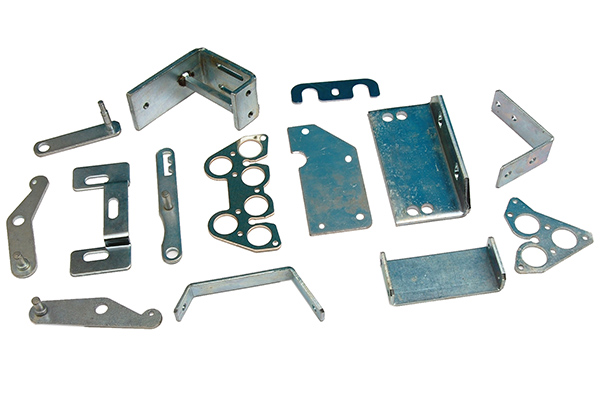
For custom fabrication—enclosures, guards, shelves, brackets—18 gauge is often the default choice. It is readily available, works with standard tooling, and delivers reliable performance.
How Do You Work with 18 Gauge Sheet Metal?
Cutting
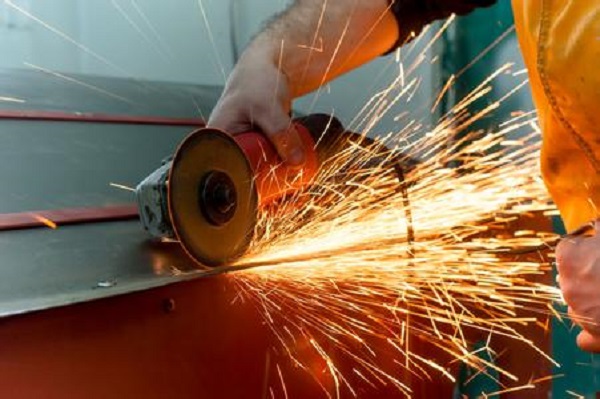
18 gauge cuts cleanly with most standard methods:
- Shearing: Fast, clean straight cuts
- Laser cutting: Precise, complex shapes with minimal burrs
- Plasma cutting: Works well but may leave rougher edges
- Manual tools: Aviation snips or electric shears for small jobs
Bending
Press brakes with standard tooling handle 18 gauge easily. Key considerations:
- Use a V-die opening about 6–8 times material thickness
- Set bend radius to at least material thickness for carbon steel, slightly larger for stainless
- Account for springback—stainless steel and aluminum rebound more than carbon steel
Welding
Welding 18 gauge is straightforward with proper technique:
- Carbon steel: MIG or TIG welding works well. Use appropriate filler metal.
- Stainless steel: TIG welding preferred for clean, corrosion-resistant welds. Use 308L filler for 304 stainless.
- Aluminum: Requires AC TIG or specialized MIG. Clean surface oxide before welding.
Pro Tip: For thin 18 gauge material, use pulse welding or tack welds to control heat input and prevent warping.
How Do You Choose Between 18 Gauge and Other Gauges?
| Factor | 18 Gauge | 16 Gauge | 20 Gauge |
|---|---|---|---|
| Strength | Good balance | Higher strength | Lower strength |
| Weight | Moderate | Heavier | Lighter |
| Formability | Excellent | Good (requires more force) | Excellent (but prone to denting) |
| Cost | Moderate | Higher | Lower |
| Best For | General fabrication, enclosures, brackets | Heavy-duty structures, high-impact areas | Light-duty parts, decorative items |
Choose 18 gauge when you need a balance of strength, formability, and cost. Choose 16 gauge for structural parts that must withstand heavy loads or impacts. Choose 20 gauge for lightweight applications where strength requirements are minimal.
Conclusion
18 gauge sheet metal occupies a sweet spot in the thickness range. At approximately 0.0478 inches (1.214 mm) , it offers enough strength for structural applications while remaining formable enough for complex shapes. Available in carbon steel, stainless steel, and aluminum, it serves industries from electronics to automotive to construction.
Its popularity comes down to versatility. 18 gauge works with standard fabrication equipment, handles moderate loads reliably, and fits a wide range of budgets. Whether you are building enclosures, brackets, or architectural features, 18 gauge is a practical, proven choice.
FAQs
What are the common thickness tolerances for 18 gauge sheet metal?
For carbon steel, typical thickness tolerance is ±0.003 inches for general applications. Precision grades can achieve ±0.0015 inches. For stainless steel, expect ±0.0025 inches in normal production. These tolerances matter when parts must fit together tightly—such as in electronic enclosures where gaps could expose internal components to dust or moisture.
Can 18 gauge sheet metal be easily welded?
Yes, but ease depends on material. Carbon steel welds easily with MIG or TIG. Stainless steel welds well but requires careful heat control and proper filler metal to maintain corrosion resistance. Aluminum is more challenging due to high thermal conductivity and surface oxide—use AC TIG welding with argon shielding and thorough cleaning before welding.
How do I choose between 18 gauge and other gauges for my project?
Consider three factors: strength requirements, weight constraints, and cost. Choose 18 gauge for balanced performance. Choose 16 gauge if the part must withstand heavy loads or impacts. Choose 20 gauge for lightweight, low-stress applications where reducing material cost is a priority. For outdoor use, consider material type (stainless or coated carbon) as much as thickness.
What is the minimum bend radius for 18 gauge steel?
For carbon steel, a typical minimum inside bend radius is 1.5 times material thickness, or about 1.8 mm (0.07 inches) for 18 gauge. For stainless steel, use a slightly larger radius to prevent cracking. For aluminum, a larger radius may be required depending on the alloy and temper. Always test bends on scrap material before final production.
Contact Yigu Technology for Custom Manufacturing
At Yigu Technology, we work with 18 gauge sheet metal daily. We stock carbon steel, stainless steel, and aluminum in this popular thickness. Our capabilities include laser cutting, CNC bending, stamping, and welding. We help customers select the right material and gauge for their application, balancing strength, formability, and cost. Whether you need a single prototype or a production run, contact us to discuss your project—we will help you get it right.