
Sheet Metal
Is 22 Gauge Galvanized Sheet Metal Right for Your Project?
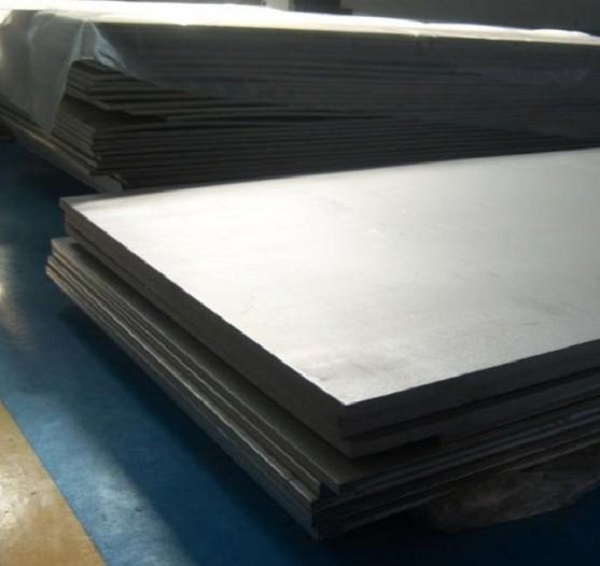
When you need a material that balances strength with workability, 22 gauge galvanized sheet metal often hits the sweet spot. It’s thin enough to cut and bend with common tools, yet thick enough to hold its shape and resist dents. The name tells you three things: it’s steel (strong and durable), 22 gauge (about 0.03 inches thick), and galvanized (coated with zinc for rust protection).
What Does 22 Gauge Galvanized Actually Mean?
Breaking down the name
The term “22 gauge galvanized sheet metal” contains three distinct pieces of information:
Steel: The base material is carbon steel. This gives the sheet its strength, stiffness, and structural integrity. Steel is an iron-carbon alloy valued for its toughness and reasonable cost.
22 gauge: This tells you the thickness. In the gauge system, higher number = thinner metal. A 22-gauge sheet measures approximately 0.0299 inches or 0.76 millimeters thick. Manufacturing variations can cause slight differences from this standard.
Galvanized: This describes the protective zinc coating applied to the steel. The galvanizing process prevents rust and corrosion, dramatically extending the material’s service life.
How the zinc coating protects
The galvanized coating works in two ways, making it far superior to untreated steel.
Barrier protection: The zinc layer acts as a physical wall, sealing the steel so moisture and oxygen cannot reach it directly. These are the two elements required for rust to form.
Sacrificial protection: Zinc is more chemically active than steel. If the surface gets scratched, the zinc corrodes first, “sacrificing” itself to protect the exposed steel. This protection continues to work even at cut edges and small scratches.
Physical properties at a glance
At 0.0299 inches thick, 22 gauge steel weighs about 1.25 pounds per square foot. This makes it manageable for one person to handle in standard sheet sizes.
The material strikes an excellent balance:
- Bendable enough to form complex shapes with hand tools or a brake
- Stiff enough to hold its shape and resist minor impacts
Why Choose Galvanized Steel?
Outstanding rust resistance
This is the primary reason. The zinc coating allows galvanized steel to withstand long exposure to weather, humidity, condensation, and rain. It’s ideal for any application where moisture is a concern, from exterior building components to HVAC systems.
Long service life
Depending on coating thickness and environmental conditions, galvanized steel can last decades with minimal maintenance. Coatings are rated G60, G90, etc.—the number indicates ounces of zinc per square foot. G90 coating, for example, is rated to last over 30 years in many rural and suburban environments before significant maintenance is needed.
Cost-effective over time
While galvanized steel costs slightly more than untreated “black” steel upfront, it’s often cheaper over the product’s entire life. The initial price includes protection that would otherwise need to be added later through painting or other finishing. You eliminate those extra steps and future maintenance costs.
Appearance options
Hot-dip galvanized steel has a distinctive crystalline or “spangled” surface pattern. Many find this industrial look appealing. It also serves as an excellent base for painting with proper preparation—cleaning followed by a zinc-compatible primer.
What Are Common Uses for 22 Gauge?
HVAC ductwork
In the heating and ventilation industry, 22 gauge galvanized is a workhorse material for light commercial and high-end residential systems. It’s thick enough to form straight duct runs that resist rattling and “oil-canning” from air pressure. Yet it’s bendable enough to craft complex transitions, elbows, and take-offs. The galvanized coating prevents rust from condensation inside ducts.
Roofing components
While rarely used for main roof surfaces, 22 gauge is standard for critical roofing parts where durability matters:
Flashing: Valley flashing, step flashing around chimneys, apron flashing where roofs meet walls. It bends precisely to create watertight seals.
Drip edges: Installed along eaves to direct water away from fascia boards, preventing rot.
Gutters and downspouts: Strong and rust-resistant for durable drainage systems.
Project suitability guide
| Project | Suitability | Expert Notes |
|---|---|---|
| HVAC ducts (light commercial) | Ideal | Industry standard—excellent balance of bendability and stiffness |
| Roof flashing and drip edge | Ideal | Durable, weatherproof, easily formed |
| Magnetic memo board | Good choice | Large magnetic surface with industrial look |
| Workbench top liner | Acceptable with support | Needs full wood base support to prevent denting |
| Small animal enclosure | Good choice | Strong, corrosion-resistant from waste |
| Automotive patch panels | Acceptable | For non-structural rust repair with careful welding |
| Truck toolbox | Not recommended | Too thin for structural demands—use 16 or 14 gauge |
How Does 22 Gauge Compare to Other Thicknesses?
Gauge system reminder
Higher gauge number = thinner metal. Think of slicing a loaf: more slices (higher number) means each slice is thinner. So 26 gauge is much thinner and more flexible than 18 gauge, which is much stiffer and heavier. 22 gauge sits in the versatile middle ground.
Gauge comparison table
| Gauge | Thickness (inch/mm) | Weight (lbs/sq ft) | Stiffness | Common Uses |
|---|---|---|---|---|
| 26 | 0.0179″ / 0.45 mm | ~0.75 | Very flexible | Liners, appliance skins, small signs |
| 24 | 0.0239″ / 0.61 mm | ~1.00 | Flexible | Residential HVAC, some flashing |
| 22 | 0.0299″ / 0.76 mm | ~1.25 | Good balance | Light commercial HVAC, robust flashing, general work |
| 20 | 0.0359″ / 0.91 mm | ~1.50 | Stiff | Durable work surfaces, truck bed liners |
| 18 | 0.0478″ / 1.21 mm | ~2.00 | Very stiff | Structural brackets, support members |
Choosing the right gauge
Choose thinner (24-26 gauge) when: Low cost, light weight, and ease of bending are top priorities. Applications not subject to impact or stress—decorative elements, liners.
Choose 22 gauge when: You need the ultimate “all-rounder.” It balances cost, weight, bendability, and stiffness. Go-to for general-purpose applications where you need reliable material without overkill.
Choose thicker (20-18 gauge) when: Strength, impact resistance, and structural stiffness are non-negotiable. Applications that bear weight or withstand abuse. Note: you’ll need more powerful tools, and cost/weight increase significantly.
How Do You Work With 22 Gauge Galvanized Steel?
Essential safety first
Cut-resistant gloves: Cut sheet metal edges are razor-sharp. Never handle without hand protection.
Safety glasses: Cutting and drilling send sharp metal fragments flying.
Ventilation for welding/grinding: Heat vaporizes the zinc coating, creating toxic fumes. Work in well-ventilated areas or use a respirator rated for metal fumes.
Cutting methods
Aviation snips (tin snips): Most common for straight cuts. Three types: yellow (straight cuts), red (left curves), green (right curves).
Power shear: Excellent investment for longer, faster straight cuts.
Jigsaw: For complex cuts, use fine-toothed metal-cutting blade at slow speed.
Nibbler: Power tool excellent for curves and complex shapes without distorting metal.
Expert tip: Avoid abrasive cutoff wheels on angle grinders. The intense heat burns off zinc coating in a wide band along the cut, creating an immediate rust weak point.
Bending and shaping
Sheet metal brake: Ideal tool for long, straight, clean bends. Clamps material and allows precise forming.
DIY method without brake: Clamp sheet firmly between two straight pieces of wood or angle iron, with bend line aligned with edge. Use mallet and wood block to carefully hammer metal over the edge.
22 gauge is forgiving and bends to relatively tight radii without cracking—easier than thicker, less bendable gauges.
Joining methods
Self-tapping screws: Fastest and most common. They drill their own pilot holes and cut threads in one action.
Pop rivets: Create strong, clean, permanent mechanical bonds. Requires drilling holes and using a rivet gun.
Welding: MIG welding possible but requires preparation. Grind galvanized coating completely from weld areas for strong, clean welds and to minimize toxic fumes.
How to write a spec that gets priced correctly
A drawing is a contract. If it leaves a number open, the shop fills that number in with its own default. The default is rarely the one you had in mind. Put these five lines on every RFQ and most of the back-and-forth disappears before it starts.
- Flat pattern or STEP file plus a dimensioned drawing
- Material grade and thickness with the standard number
- Bend radii, K-factor and the direction of the grain
- Finish, masking and which faces stay bare
- Quantity and the assembly sequence
The point is not paperwork. Each line removes a decision the shop would otherwise make for you. A complete RFQ comes back priced. An incomplete one comes back guessed.
What actually drives the price
Buyers usually push on material because it is the line they can see. In practice the material is rarely the biggest number on a quote. These five lines decide most of it:
- blank size and nesting efficiency
- number of bends and weld joints
- material grade and thickness
- finish and masking
- batch quantity
Ask for the quote split by line. A supplier who cannot break it down is guessing, and you will pay for the guess. The line you can usually renegotiate is the tolerance band, not the raw material.
Problems you will meet, and the fix
Every process has a failure mode it prefers. The same four show up again and again on this kind of work, and none of them are mysteries once you know what to look for.
- Stretching at a bend that is tighter than the material allows
- Hole distortion when a hole sits too close to a bend line
- Weld draw on a visible face
- Springback that pulls a formed angle out of tolerance
Catch the fault on the first part, not the hundredth. A first-article check costs an hour. A bad batch costs the whole order. Write the check into the purchase order so nobody has to remember it.
What to check on the first article
The first article is the cheapest inspection you will ever buy. Use it properly and the rest of the run becomes boring, which is exactly what you want.
- Every dimension on the drawing, with the measured value written beside it.
- The material certificate, matched to the heat or lot number on the parts.
- The finish against the sample you approved, under the same light.
- Fit against the mating part, assembled rather than measured.
- Packaging, because parts that arrive damaged were never in tolerance.
Check in this order: datums, then mating features, then cosmetic faces. If the datums are wrong, every number after them is noise. Keep the report on file. When a problem shows up in month six, that document is the only thing that tells you what changed.
How to compare two quotes fairly
Two numbers are not comparable unless the scope matches. Line them up before you decide, because a low number with three gaps is not a low number.
Same drawing, same material, same finish, same inspection. Anything else is a different job wearing the same part number. Then look at what each quote leaves out. Freight, packaging, certificates and tooling are the usual gaps.
Ask each supplier to state their assumptions in writing. The one who does is usually the one who has run the process before.
Scaling from one part to a batch
The first part teaches you the process. The hundredth teaches you the process cost.
Watch three things as volume grows: setup amortisation, tool wear, and how much hand work the finish still needs. If the unit price barely moves between ten and a hundred, the cost sits in material or in hand work, not in setup. Ask which, because only one of them is negotiable.
Lead time behaves the same way. A one-off is scheduled around other jobs. A repeat order is scheduled around your forecast. Give the shop a forecast and the lead time gets shorter, not longer.
How to read a supplier's quote
A quote is a short document with a long shadow. Four things in it decide whether the job runs smoothly, and only one of them is the price.
- The scope line. It should name the process, the material and the finish, not just the part.
- The tolerance basis. General tolerance or the drawing, and which standard it follows.
- The exclusions. Tooling, freight, certificates and inspection are the usual omissions.
- The validity date. Material prices move, and an open-ended quote is a promise nobody can keep.
Read the exclusions before you read the total. A quote that leaves out tooling is not cheaper. It is a quote for a different job.
Where and How to Buy?
Local supplier options
HVAC supply houses: Often best source for ductwork-grade sheets. They sell full sheets and have knowledgeable staff.
Metal suppliers / steel service centers: Most economical for multiple full sheets (4’x8′ or 4’x10′) or custom-cut pieces. Best bulk pricing.
Big-box home improvement stores: Convenient for small repairs. Stock smaller “project panels” (2’x2′, 2’x4′) at higher per-square-foot cost.
Specialty roofing suppliers: Good source for galvanized steel in coil form or pre-bent flashing profiles.
What to ask for
Be specific: “I need a 4-foot by 8-foot sheet of 22 gauge G90 galvanized steel.”
G90 specifies a common, high-quality zinc coating thickness—heavier and more protective than G60. Being specific shows you’ve done your research and helps suppliers provide exactly what you need.
Understanding costs
Factors affecting price:
- Sheet size: Small project panels carry convenience markup. Full sheets from steel suppliers cost much less per square foot.
- Quantity: Bulk purchases from metal service centers get volume discounts.
- Coating thickness: G90 may have slight premium over G60/G40 but offers greater longevity.
- Market changes: Steel and zinc are global commodities. Prices fluctuate with supply, demand, and economic conditions.
Typical price ranges (estimates):
- Small project panels: $10–$15 per square foot
- Full 4’x8′ sheet: $60–$100 per sheet ($1.80–$3.15 per square foot)
Call local suppliers for current quotes. These are planning estimates only.
22 gauge galvanized sheet metal delivers an exceptional balance of durability, workability, and cost-effectiveness. The protective zinc coating ensures long, maintenance-free service life even in challenging environments. At about 0.03 inches thick and 1.25 pounds per square foot, it’s light enough to handle easily and thin enough to form with common tools, yet it retains the strength and stiffness needed for countless functional applications. From HVAC ductwork to roof flashing, from workshop projects to custom fabrication, this material is a reliable workhorse. By understanding its properties, comparing it to other gauges, and knowing how to cut, bend, and buy it, you’re equipped to make it the smart choice for your next project.
Our solution for 22 Gauge Galvanized Sheet Metal
YiguProto runs sheet metal fabrication in house, from a single prototype to a production batch. We quote the process, the material and the finish as separate lines, so you can see where the money goes instead of arguing with one number.
Send a STEP file or a drawing and you get a DFM report in one to two business days. It flags the features that add cost and the features that will not hold tolerance on the process you picked.
Every order ships with an inspection report on the features you call out. If a part misses, we make it again. Ready to price a part? Start with a free quote and DFM review, or read more about our sheet metal fabrication. You can also talk to an engineer before you commit to a drawing.
FAQ about 22 Gauge Galvanized Sheet Metal
What tolerance can you hold on 22 Gauge Galvanized Sheet Metal?
The working default is ±0.2 mm on formed features, ±0.1 mm on laser-cut holes. Tighter than that the process changes and so does the price, because every step tighter adds inspection time. Call out only the faces that mate with something else and leave the rest on the general tolerance.
What happens if a part is out of specification?
We measure it against the same drawing you approved and, if it misses, we make it again. What matters is that the report exists, because a disagreement without data is just an opinion.
Can 22 Gauge Galvanized Sheet Metal be made in small quantities?
Yes, and small quantities are where a good supplier earns the next order. Setup dominates the price at low volume, so the cheapest route is usually the one with the fewest operations, not the cheapest material.
What files do you need in order to quote?
A STEP file plus a PDF drawing that carries the same revision letter. The model carries the geometry and the drawing carries the intent. When the two disagree, the shop picks one, and it is never the one you meant.
How do I compare two quotes fairly?
Match the scope first: same drawing, same material, same finish, same inspection. Then read the exclusions. Freight, tooling and certificates are the usual gaps, and a low number with three gaps is not a low number.
Does the process work for prototypes as well as production?
Yes, and that is usually the point. Running the prototype on the production process removes a whole class of surprises, because the part you test is made the same way as the part you sell.
The short version
22 Gauge Galvanized Sheet Metal rewards the buyer who reads the data sheet and the drawing together. Pick the option for the property that matters, not for the price per kilo.
Tighten only what mates. Test a sample before the run. Then let the process do the rest.