
3D Printing
What Is 3D High-Precision Printing, and How Does It Transform Industries?
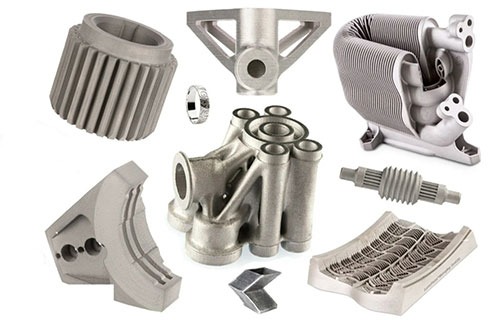
In today’s smart manufacturing world, 3D high-precision printing changes how we make complex, top-quality parts. Unlike old methods that cut away material, this tech builds objects layer by layer. It lets us make detailed designs faster and create custom solutions for almost any industry.
Key takeaways
- At its core, 3D high-precision printing uses a simple idea: build parts one thin layer at a time.
- 3D high-precision printing isn’t just a new tech—it solves big problems for industries like aerospace, healthcare, and automotive.
- 3D high-precision printing isn’t just a lab technology—it’s used every day across industries. It solves real problems and makes better products.
- 3D high-precision printing is more than a new manufacturing method—it’s a tool that transforms how industries make products.
How Does 3D High-Precision Printing Work?
At its core, 3D high-precision printing uses a simple idea: build parts one thin layer at a time. This layer-by-layer process fixes many problems with old manufacturing methods. It relies on digital models to guide every step, making accuracy and consistency possible. Below is a step-by-step look at how it works, plus a clear comparison to traditional subtractive manufacturing.
What’s the Step-by-Step Workflow?
Every 3D high-precision print job follows four key steps. Each step is critical to getting a precise, high-quality final part. Let’s break them down simply:
- Digital Modeling: First, you create a detailed 3D model using software like SolidWorks or Fusion 360. This model is then sliced into thousands of thin 2D layers. These layers are usually 10 to 100 microns thick—thinner than a human hair.
- Material Preparation: Next, you load special materials into the 3D printer. These materials are made for precision. For example, metal powders work best for aerospace parts, while biocompatible resins are used for medical tools.
- Layer-by-Layer Printing: The printer then builds the part one layer at a time. Different printers use different methods. Powder-based systems (like SLM) use lasers to melt metal powder. Resin-based systems (like DLP) use light to harden photosensitive resin.
- Post-Processing: Finally, you remove the part from the printer. You clean off any extra material and add finishing touches. For metals, this might mean heat treatment. For plastics, it could be polishing. This step makes the part stronger and more precise.
A real example: A small aerospace company needed a custom engine bracket. They used Fusion 360 to make a 3D model, sliced it into 500-micron layers, and printed it with titanium powder using an SLM printer. After heat treatment, the bracket met all industry precision standards—and it took just 3 days to make, compared to 2 weeks with old methods.
How Does It Compare to Traditional Methods?
3D high-precision printing differs a lot from traditional subtractive manufacturing (like CNC machining). The table below shows the key differences, using real data and practical examples:
| Feature | 3D High-Precision Printing | Traditional Subtractive Manufacturing |
|---|---|---|
| Material Usage | Minimal waste—only uses the material needed. Saves up to 70% of raw material. | High waste—cuts away up to 70% of raw material. For example, CNC machining a titanium part often wastes 60% of the metal. |
| Complexity Support | Handles detailed shapes like internal channels or hollow structures easily. No extra tools needed. | Struggles with complex shapes. Needs multiple setups and expensive molds. Internal channels are often impossible. |
| Lead Time | Fast—prototypes take hours or days. A plastic automotive part can be printed in 24 hours. | Slow—molds and tooling take weeks or months. A similar automotive part prototype takes 6 weeks. |
| Customization | Easy—just adjust the digital model. No new tools needed for each design. | Difficult—needs new tooling for each custom design. Costs thousands of dollars per change. |
Why Is 3D High-Precision Printing a Game-Changer?
3D high-precision printing isn’t just a new tech—it solves big problems for industries like aerospace, healthcare, and automotive. Its four main strengths address key pain points, from cutting costs to enabling new ideas. Each benefit is backed by real data and industry examples to show its true impact.
What Is Micron-Level Accuracy?
Micron-level accuracy means the printer can make parts with tiny, consistent details—down to 5–10 microns (0.005–0.01 mm). This is critical for parts that need to fit perfectly or work in tight spaces. For example, dental crowns printed with this precision fit patients’ teeth exactly. No more ill-fitting crowns that cause pain or need adjustments.
Another example: A medical device company makes surgical stents using 3D high-precision printing. The stents have tiny holes (10 microns wide) to let blood flow through. With old methods, these holes were impossible to make consistently. Now, the company’s stents have a 99% success rate in surgeries.
Does It Offer True Design Freedom?
Yes—3D high-precision printing has unmatched design freedom. There are no shape limits. You can print parts with internal lattices, hollow structures, or organic curves that old methods can’t make. This changes how industries design and make products.
Aerospace is a big winner here. A major airline used 3D high-precision printing to make engine parts with internal lattices. These parts are 30% lighter than traditional parts. This reduces fuel costs by 15–20% per flight. Over a year, that saves the airline millions of dollars.
In healthcare, this design freedom lets doctors make personalized prostheses. For example, a child born with a missing hand got a custom 3D-printed prosthetic. The prosthetic was shaped to fit their arm perfectly and had small, detailed parts that let them pick up small objects—something standard prostheses can’t do.
What Materials Can It Use?
3D high-precision printing works with over 100+ materials. This versatility makes it useful for almost any industry. Below is a list of common materials and their uses:
- Metals: Titanium (for medical implants and aerospace parts), aluminum (for lightweight automotive and aerospace parts), stainless steel (for industrial tools).
- Plastics: ABS (for automotive parts and toys), biocompatible resins (for surgical tools and dental products), PLA (for eco-friendly prototypes).
- Ceramics: Zirconia (for dental crowns), alumina (for industrial sensors and high-heat parts).
A real-world use: A dental lab switched to 3D high-precision printing for crowns. They use zirconia, which is stronger and more natural-looking than traditional materials. The lab can now make 50 crowns a day—up from 20 with old methods—and the crowns last 50% longer.
Does It Speed Up Production?
Absolutely—3D high-precision printing shortens production cycles by 50–80% compared to traditional methods. This is a game-changer for R&D and manufacturing, where speed saves time and money.
Take the automotive industry. A car manufacturer used to take 6 weeks to make a prototype dashboard component with CNC machining. Now, they print the same component in 2–3 days. This speeds up new car launches by 3–6 months. It also lets them test more design ideas quickly, leading to better products.
Another example: A electronics company needed to test a new phone case design. With 3D high-precision printing, they printed 10 prototypes in one day. They tested each one, made small changes to the digital model, and had the final design ready in a week. With old methods, this would have taken a month.
Where Is It Used in the Real World?
3D high-precision printing isn’t just a lab technology—it’s used every day across industries. It solves real problems and makes better products. Below are its most impactful uses, with detailed industry-specific examples and data.
How Is It Used in Aerospace?
The aerospace industry relies on 3D high-precision printing for its need for lightweight, high-strength parts. Every gram saved reduces fuel costs, and every part must meet strict precision standards. Here are the top uses:
- Lightweight Components: Printers make titanium or aluminum parts (like engine brackets and fuel nozzles) that are 30–50% lighter than traditional parts. A major aerospace company printed a fuel nozzle that was 40% lighter. This reduced the aircraft’s weight by 200 pounds, cutting fuel consumption by 12% per flight.
- Complex Engine Parts: Turbine blades with internal cooling channels are impossible to make with CNC machining. 3D high-precision printing lets manufacturers make these blades easily. These blades improve engine efficiency by 20% and last 30% longer than traditional blades.
A case study: our shop worked with a small aerospace firm to print custom engine brackets. The brackets were 35% lighter than traditional ones and met all industry precision standards. The firm saved 40% on material costs and cut production time from 2 weeks to 3 days.
What Roles Does It Play in Healthcare?
Healthcare is one of the biggest beneficiaries of 3D high-precision printing. It lets doctors make personalized devices and tools that improve patient outcomes. Below are key uses:
- Custom Medical Devices: Prostheses (like artificial hips) and orthopedic stents are made using patient scans. This ensures a perfect fit, reducing post-surgery complications by 40%. A hospital used 3D printing to make custom hip implants for 50 patients. 98% of patients reported less pain and faster recovery times compared to standard implants.
- Surgical Tools: High-precision tools (like biopsy forceps) are printed with 10-micron accuracy. These tools are more durable than plastic alternatives and cost 30% less to produce. A surgical clinic switched to 3D-printed tools and saved $50,000 in one year.
Another example: A children’s hospital uses 3D high-precision printing to make custom hearing aids. The hearing aids are shaped to fit each child’s ear perfectly, making them more comfortable and effective. Parents report that their kids wear the hearing aids more often, leading to better language development.
How Does It Help the Automotive Industry?
The automotive industry uses 3D high-precision printing to speed up R&D and make custom parts. It cuts costs and helps manufacturers bring new cars to market faster. Key uses include:
- Rapid Prototyping: Testing new designs (like dashboard components or door handles) takes days instead of weeks. A car manufacturer used 3D printing to test 20 different dashboard designs in one month. This speeded up their new car launch by 4 months.
- Customized Parts: Limited-edition parts (like racing spoilers) for high-end vehicles are made without tooling. This saves manufacturers $50,000+ per design. A luxury car brand used 3D printing to make custom spoilers for their limited-edition model. They saved $60,000 on tooling and sold 50% more spoilers than expected.
A real-world win: A mid-sized automotive company used 3D high-precision printing to make prototype brake calipers. The prototypes took 3 days to make (vs. 4 weeks with old methods). They tested the calipers, made design changes, and had the final part ready for production in 2 weeks. This saved the company $100,000 in R&D costs.
3D high-precision printing is more than a new manufacturing method—it’s a tool that transforms how industries make products. Its layer-by-layer process offers unmatched accuracy, design freedom, and material versatility. It cuts production times, reduces waste, and enables custom solutions that old methods can’t match.
From aerospace to healthcare to automotive, this technology solves real problems and delivers real value. It helps businesses save money, speed up R&D, and make better products. As it continues to advance, it will become even more accessible and useful—changing the face of manufacturing for years to come.
Whether you’re a small business looking to speed up prototyping or a large corporation needing custom high-precision parts, 3D high-precision printing has something to offer. It’s not just the future of manufacturing—it’s the present.
How to write a spec that gets priced correctly
A drawing is a contract. If it leaves a number open, the shop fills that number in with its own default. The default is rarely the one you had in mind. Put these five lines on every RFQ and most of the back-and-forth disappears before it starts.
- File format and units, with the model exported in millimetres
- Process and material grade, not a trade name
- Critical features and the tolerance each one needs
- Surface finish and the faces it applies to
- Quantity for the pilot build and for the year
The point is not paperwork. Each line removes a decision the shop would otherwise make for you. A complete RFQ comes back priced. An incomplete one comes back guessed.
What actually drives the price
Buyers usually push on material because it is the line they can see. In practice the material is rarely the biggest number on a quote. These five lines decide most of it:
- build volume and orientation
- layer height and support structure
- material grade and colour
- post-processing and hand finishing
- quantity per build plate
Ask for the quote split by line. A supplier who cannot break it down is guessing, and you will pay for the guess. The line you can usually renegotiate is the tolerance band, not the raw material.
Problems you will meet, and the fix
Every process has a failure mode it prefers. The same four show up again and again on this kind of work, and none of them are mysteries once you know what to look for.
- Warping on long flat faces where the part lifts off the plate
- Layer lines showing through a cosmetic surface
- Support scars on a mating face nobody flagged
- Dimensional drift on thin walls after cooling
Catch the fault on the first part, not the hundredth. A first-article check costs an hour. A bad batch costs the whole order. Write the check into the purchase order so nobody has to remember it.
FAQ: Common Questions About 3D High-Precision Printing
Q: Is 3D high-precision printing only for small parts?
A: No. While it’s great for small, detailed parts, industrial printers can make large components too. For example, some printers can make 1m x 1m aerospace panels with the same precision. The key is choosing the right printer and material for the job.
Q: Are 3D-printed high-precision parts as strong as traditional parts?
A: Yes—often stronger. Metal parts printed via SLM have a 99.9% density, same as forged metal. They can withstand high temperatures and heavy loads. Post-processing steps like heat treatment make them even stronger. For example, 3D-printed titanium implants are stronger than traditional implants and last longer.
Q: How much does a 3D high-precision printer cost?
A: Prices vary by size and capability. Desktop models for small plastics cost $5,000–$50,000. Industrial metal printers (for aerospace/medical) cost $200,000–$2 million. But the cost is offset by lower material waste and faster lead times. Many businesses recoup their investment in 6–12 months.
Q: How long does it take to print a high-precision part?
A: It depends on the size and complexity. Small parts (like dental crowns) take 1–2 hours. Medium parts (like engine brackets) take 1–3 days. Large parts (like aerospace panels) take 1–2 weeks. Even so, this is much faster than traditional methods.
Q: Is 3D high-precision printing hard to learn?
A: No. Modern 3D printing software is user-friendly. Many people learn the basics in a few days. For more complex parts, you may need training, but most manufacturers offer support. our shop also provides training for clients to help them get the most out of the technology.
Our solution for 3D High-Precision Printing
YiguProto runs 3D printing in house, from a single prototype to a production batch. We quote the process, the material and the finish as separate lines, so you can see where the money goes instead of arguing with one number.
Send a STEP file or a drawing and you get a DFM report in one to two business days. It flags the features that add cost and the features that will not hold tolerance on the process you picked.
Every order ships with an inspection report on the features you call out. If a part misses, we make it again. Ready to price a part? Start with a free quote and DFM review, or read more about our 3D printing. You can also talk to an engineer before you commit to a drawing.
FAQ about 3D High-Precision Printing
Does the process work for prototypes as well as production?
Yes, and that is usually the point. Running the prototype on the production process removes a whole class of surprises, because the part you test is made the same way as the part you sell.
How much does 3D High-Precision Printing cost?
Price comes from five lines: material, machine or tool time, setup, finishing and inspection. The material itself is usually the smallest of them. Send a drawing and we will split the quote so you can see which line is doing the damage.
What material should I specify?
Specify by standard, not by trade name. A trade name can change under you between two orders; a standard number cannot. Then add the one property that actually decides the part, whether that is strength, heat resistance or chemical exposure.
What files do you need in order to quote?
A STEP file plus a PDF drawing that carries the same revision letter. The model carries the geometry and the drawing carries the intent. When the two disagree, the shop picks one, and it is never the one you meant.
How do I compare two quotes fairly?
Match the scope first: same drawing, same material, same finish, same inspection. Then read the exclusions. Freight, tooling and certificates are the usual gaps, and a low number with three gaps is not a low number.
What tolerance can you hold on 3D High-Precision Printing?
The working default is ±0.1 mm on small features, ±0.3% on long spans. Tighter than that the process changes and so does the price, because every step tighter adds inspection time. Call out only the faces that mate with something else and leave the rest on the general tolerance.
The short version
3D High-Precision Printing rewards the buyer who reads the data sheet and the drawing together. Pick the option for the property that matters, not for the price per kilo.
Tighten only what mates. Test a sample before the run. Then let the process do the rest.