
3D Printing
Is 3D Printed Clothing the Future of Sustainable Fashion Design?
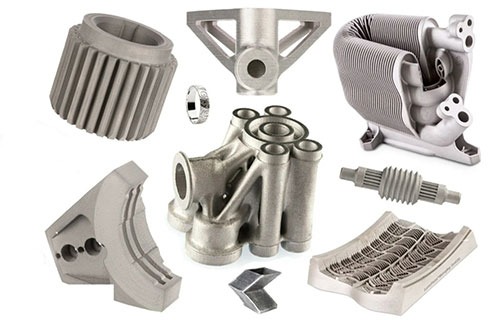
For decades, the fashion industry has relied on the “cut-and-sew” method—a process that is inherently wasteful and limited by the 2D nature of fabric. However, a digital transformation is underway. 3D printed clothing, also known as additive manufacturing for textiles, is no longer confined to avant-garde runways or science fiction.
Key takeaways
- Traditional garment construction is restricted by seams, grain lines, and the physical properties of woven or knitted textiles.
- A common misconception is that 3D printed clothes are “stiff plastic.” In reality, the industry uses advanced polymers and bio-synthetics engineered for skin-contact comfort.
- The “standard size” (S, M, L, XL) is an industrial compromise that leads to massive returns and consumer frustration.
- The fashion industry is responsible for nearly 10% of global carbon emissions. 3D printing offers a “circular” solution to this environmental crisis.
How Does 3D Printing Unleash Design Innovation?
Traditional garment construction is restricted by seams, grain lines, and the physical properties of woven or knitted textiles. 3D printing bypasses these mechanical limits, allowing designers to think in three dimensions from the very first sketch.
Beyond Traditional Seams and Stitches
With additive manufacturing, a designer can program varying levels of flexibility and density within a single piece of “fabric.” For instance, a jacket can be printed with a rigid structure around the shoulders for support and a breathable lattice under the arms for ventilation—all without a single stitch.
Case Study: Iris van Herpen’s “Sensory Seas”
In 2023, Dutch designer Iris van Herpen showcased the pinnacle of this expertise. Her collection featured gowns printed from flexible resins that mimic the fluid movement of water.
- The Complexity: These gowns utilized web-like patterns so intricate they would collapse under the weight of traditional thread.
- The Result: By spending over 100 hours on a single print, Van Herpen created “living” sculptures worn by icons like Beyoncé, proving that 3D printing provides a level of aesthetic authority traditional tailoring cannot reach.
Which Materials are Powering the 3D Fashion Revolution?
A common misconception is that 3D printed clothes are “stiff plastic.” In reality, the industry uses advanced polymers and bio-synthetics engineered for skin-contact comfort.
The Fashion Material Palette
| Material Type | Key Properties | Best Application |
| TPU (Thermoplastic Polyurethane) | Highly flexible, soft-touch, durable | Activewear, sneakers, yoga gear |
| Nylon (PA12) | Lightweight, high strength, breathable | Outerwear, structural accessories |
| Recycled Plastics | Eco-friendly, variable textures | Casual wear, sustainable bags |
| Flexible Resins | High-detail, translucent, smooth | Couture gowns, intricate jewelry |
Case Study: Adidas 4DFWD Performance
Adidas revolutionized the footwear market by using TPU to 3D print midsoles. Unlike standard foam that compresses over time, the lattice structure of the 4DFWD midsole is mathematically tuned to redirect vertical impact into forward motion. Since 2021, this data-driven approach has proven that functional fashion can be mass-produced with superior performance stats.
Can 3D Printing Solve the Fashion “Fit” Crisis?
The “standard size” (S, M, L, XL) is an industrial compromise that leads to massive returns and consumer frustration. 3D printing enables mass customization at the individual level.
The Personalized Production Workflow
- Digital Body Scanning: A user performs a 30-second scan via a smartphone app or in-store kiosk to capture exact biometric data.
- Algorithmic Adjustment: Software adjusts the digital garment model to the user’s specific curves and height.
- On-Demand Printing: The garment is printed only after it is ordered, ensuring a perfect fit and zero unsold inventory.
Case Study: Unspun’s Custom Denim
San Francisco startup Unspun uses 3D scanning to create custom-fit jeans. By eliminating the “guesswork” of sizing, they have reported a 70% reduction in returns. This not only saves the company money but also prevents the environmental cost of shipping and landfilling unwanted clothes.
Is 3D Printing Truly More Sustainable?
The fashion industry is responsible for nearly 10% of global carbon emissions. 3D printing offers a “circular” solution to this environmental crisis.
Drastic Waste Reduction
In traditional “cut-and-sew,” roughly 15% of fabric ends up on the cutting room floor as scrap. Because 3D printing is additive, it only deposits material where the design requires it, slashing waste to nearly 1-2%.
Comparative Sustainability Data
| Metric | Traditional Manufacturing | 3D Printed Fashion |
| Material Waste | 10–15% | 1–2% |
| Water Usage | ~2,700 Liters (Cotton T-shirt) | <5 Liters |
| Carbon Emissions | 4.2 kg CO2 per garment | 2.5 kg CO2 per garment |
| Logistics | Global shipping (High impact) | Local/On-demand printing |
What Does the Future Hold for 3D Fashion?
As we look toward 2030, the cost of 3D printing continues to drop, moving the technology from the runway to the closet.
- Affordability: Custom 3D printed jeans now cost roughly $150, making them competitive with premium traditional brands.
- Smart Textiles: We are seeing the rise of embedded sensors printed directly into the fibers to track heart rate or body temperature.
- Home Production: The “Star Trek Replicator” dream is nearing reality, where consumers might download a digital pattern and print a new shirt in their living room.
How to write a spec that gets priced correctly
A drawing is a contract. If it leaves a number open, the shop fills that number in with its own default. The default is rarely the one you had in mind. Put these five lines on every RFQ and most of the back-and-forth disappears before it starts.
- File format and units, with the model exported in millimetres
- Process and material grade, not a trade name
- Critical features and the tolerance each one needs
- Surface finish and the faces it applies to
- Quantity for the pilot build and for the year
The point is not paperwork. Each line removes a decision the shop would otherwise make for you. A complete RFQ comes back priced. An incomplete one comes back guessed.
What actually drives the price
Buyers usually push on material because it is the line they can see. In practice the material is rarely the biggest number on a quote. These five lines decide most of it:
- build volume and orientation
- layer height and support structure
- material grade and colour
- post-processing and hand finishing
- quantity per build plate
Ask for the quote split by line. A supplier who cannot break it down is guessing, and you will pay for the guess. The line you can usually renegotiate is the tolerance band, not the raw material.
Problems you will meet, and the fix
Every process has a failure mode it prefers. The same four show up again and again on this kind of work, and none of them are mysteries once you know what to look for.
- Warping on long flat faces where the part lifts off the plate
- Layer lines showing through a cosmetic surface
- Support scars on a mating face nobody flagged
- Dimensional drift on thin walls after cooling
Catch the fault on the first part, not the hundredth. A first-article check costs an hour. A bad batch costs the whole order. Write the check into the purchase order so nobody has to remember it.
What to check on the first article
The first article is the cheapest inspection you will ever buy. Use it properly and the rest of the run becomes boring, which is exactly what you want.
- Every dimension on the drawing, with the measured value written beside it.
- The material certificate, matched to the heat or lot number on the parts.
- The finish against the sample you approved, under the same light.
- Fit against the mating part, assembled rather than measured.
- Packaging, because parts that arrive damaged were never in tolerance.
Check in this order: datums, then mating features, then cosmetic faces. If the datums are wrong, every number after them is noise. Keep the report on file. When a problem shows up in month six, that document is the only thing that tells you what changed.
How to compare two quotes fairly
Two numbers are not comparable unless the scope matches. Line them up before you decide, because a low number with three gaps is not a low number.
Same drawing, same material, same finish, same inspection. Anything else is a different job wearing the same part number. Then look at what each quote leaves out. Freight, packaging, certificates and tooling are the usual gaps.
Ask each supplier to state their assumptions in writing. The one who does is usually the one who has run the process before.
Scaling from one part to a batch
The first part teaches you the process. The hundredth teaches you the process cost.
Watch three things as volume grows: setup amortisation, tool wear, and how much hand work the finish still needs. If the unit price barely moves between ten and a hundred, the cost sits in material or in hand work, not in setup. Ask which, because only one of them is negotiable.
Lead time behaves the same way. A one-off is scheduled around other jobs. A repeat order is scheduled around your forecast. Give the shop a forecast and the lead time gets shorter, not longer.
How to read a supplier's quote
A quote is a short document with a long shadow. Four things in it decide whether the job runs smoothly, and only one of them is the price.
- The scope line. It should name the process, the material and the finish, not just the part.
- The tolerance basis. General tolerance or the drawing, and which standard it follows.
- The exclusions. Tooling, freight, certificates and inspection are the usual omissions.
- The validity date. Material prices move, and an open-ended quote is a promise nobody can keep.
Read the exclusions before you read the total. A quote that leaves out tooling is not cheaper. It is a quote for a different job.
What to send with the first order
The first order sets the pattern for every order after it. Send a complete package once and the shop files it, and the second order takes a fraction of the time.
- A STEP or native model plus a PDF drawing carrying the same revision letter.
- The material callout by standard number, not by trade name.
- The finish and the exact faces it applies to.
- Any test the part must pass: fit, seal, drop, salt spray, dielectric.
- A contact who can answer a question inside one working day.
Then write down what was agreed. An email that confirms the material, the finish and the date is worth more than a longer purchase order that leaves them open.
When this is the wrong choice
A good supplier tells you when the process does not fit. These are the cases where we say so.
- The volume is so low that setup costs more than the parts are worth.
- The tolerance is tighter than the process can hold without a second operation.
- The geometry cannot be made without a tool feature that will not pay back.
- The material you need is not available in the form the process requires.
- The schedule is shorter than the tooling or setup time, and nobody has said so yet.
None of these are refusals. They are reasons to look at a different route, and the earlier that conversation happens the cheaper it is. The most expensive mistake in manufacturing is a process chosen before the question was understood.
Planning the ramp from prototype to production
The gap between one good part and a thousand identical ones is a plan, not a machine. Three decisions close it.
First, freeze the design. Every change after tooling starts is a re-cut, and re-cuts are where schedules go. Second, decide the inspection level. A prototype is checked by eye; a production part is checked against a report. Third, agree the change process in writing, including who pays for it.
Write the ramp down as dates and owners, not as intentions. A ramp plan with three names and three dates is worth more than a page of good intentions.
What documentation to expect
Paperwork is not bureaucracy when a part fails at the customer. It is the only record of what was agreed. A normal shipment should carry four documents.
- A dimensional report covering every callout on the drawing.
- A material certificate traceable to the heat or lot number.
- A finish or coating certificate where the specification requires one.
- A packing list that matches the carton labels.
If a supplier cannot produce these on request, they are not running a controlled process. Ask for one sample set before you place the first order and you will know exactly what you are buying.
How to handle a change after the order
Changes happen. What matters is whether the change is priced, scheduled and recorded, or absorbed quietly and discovered later.
Send the change as a new revision, not as a note in an email. Ask for three answers in writing: what it costs, what it does to the date, and what happens to material or tooling already committed. Then decide.
A change without a revision number is a rumour. The shop will build what it has on file, and both sides will be right and unhappy at the same time.
How the work actually runs, step by step
Most buyers see two numbers: a price and a date. Between them sits a sequence that decides both. On additive manufacturing work it looks like this.
- File review. The model and the drawing are checked against each other. Where they disagree, the shop stops and asks, because guessing is how scrap gets made.
- DFM feedback. The features that add cost and the features that will not hold tolerance are listed. This is the cheapest hour in the whole project.
- Setup or tooling. Fixtures, programs or a tool are built. Everything downstream inherits the quality of this step.
- First article. One part is made and measured against the drawing before anything else runs. Nothing is signed until it passes.
- Production. The run goes ahead with the parameters that produced the approved first article, not with new ones.
- Inspection and packing. The callouts are measured, the certificate is matched, and the parts are packed so they arrive in the condition they left in.
Ask any supplier to walk you through these six steps on your part. The answers tell you more about the shop than the price does.
Summary
3D printed clothing is far more than a gimmick; it is a fundamental shift toward a user-centered, waste-free fashion ecosystem. By leveraging innovative materials like TPU and the precision of digital body scanning, the industry can finally move away from the “one-size-fits-all” model. As the technology matures, it promises a future where fashion is defined by the individual’s body and the planet’s health, rather than the limitations of a sewing machine.
Our solution for 3D Printed Clothing
YiguProto runs 3D printing in house, from a single prototype to a production batch. We quote the process, the material and the finish as separate lines, so you can see where the money goes instead of arguing with one number.
Send a STEP file or a drawing and you get a DFM report in one to two business days. It flags the features that add cost and the features that will not hold tolerance on the process you picked.
Every order ships with an inspection report on the features you call out. If a part misses, we make it again. Ready to price a part? Start with a free quote and DFM review, or read more about our 3D printing. You can also talk to an engineer before you commit to a drawing.
FAQ about 3D Printed Clothing
How long does a first article take?
Usually a few business days once the drawing is frozen, and longer if tooling is involved. The date we give you is the date we confirm in writing, not the date we hope for.
How much does 3D Printed Clothing cost?
Price comes from five lines: material, machine or tool time, setup, finishing and inspection. The material itself is usually the smallest of them. Send a drawing and we will split the quote so you can see which line is doing the damage.
What should I check before approving the parts?
Datums first, then the features that mate, then the cosmetic faces. Ask for a dimensional report, a material certificate and a finish sample. A part can be inside every tolerance and still not fit, so assemble one before you sign.
Is there a minimum order quantity?
No hard minimum. One part is fine. What changes with volume is which costs dominate, so a single unit is priced mostly on setup and a thousand units are priced mostly on cycle time and material.
How do I compare two quotes fairly?
Match the scope first: same drawing, same material, same finish, same inspection. Then read the exclusions. Freight, tooling and certificates are the usual gaps, and a low number with three gaps is not a low number.
Does the process work for prototypes as well as production?
Yes, and that is usually the point. Running the prototype on the production process removes a whole class of surprises, because the part you test is made the same way as the part you sell.
The short version
3D Printed Clothing rewards the buyer who reads the data sheet and the drawing together. Pick the option for the property that matters, not for the price per kilo.
Tighten only what mates. Test a sample before the run. Then let the process do the rest.