
3D Printing
Why Choose 3D Printed Aluminum Parts? Weighing the Pros, Cons, Solutions
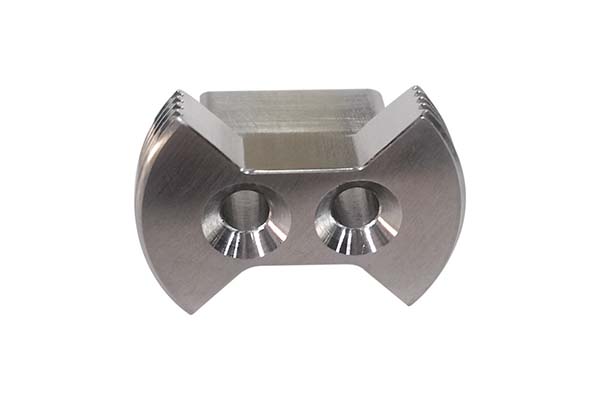
You’re designing a bracket for a satellite, a custom heatsink for an EV, or a lightweight surgical tool. You need the strength-to-weight ratio of aluminum, but traditional machining feels slow, wasteful, and limiting for your complex design. This is where metal additive manufacturing (AM) enters the picture, promising a revolution. But is 3D printing with aluminum truly ready for your critical application?
Key takeaways
- At its core, a 3D printed aluminum part is a component built additively, layer by layer, from fine aluminum alloy powder or specialized wire, using a focused energy source like a laser or electron beam.
- The benefits go beyond “complex geometry.” They translate into solving concrete business and engineering problems.
- Adoption isn’t without hurdles. A successful project requires upfront acknowledgment and mitigation of these challenges.
- The technology is not static. Key developments will further broaden its appeal:
What Are 3D Printed Aluminum Parts, Really?
At its core, a 3D printed aluminum part is a component built additively, layer by layer, from fine aluminum alloy powder or specialized wire, using a focused energy source like a laser or electron beam. It’s not a single technology but a family of processes, with Laser Powder Bed Fusion (L-PBF) and Directed Energy Deposition (DED) being the most prevalent for aluminum.
Think of it not as magic, but as micro-welding. In L-PBF, a laser meticulously scans and fuses micron-thick layers of powder according to your 3D model’s cross-section. The part is built inside a powder bed, surrounded by unfused material that acts as natural support. This fundamental shift from subtractive (cutting away) to additive (building up) is what unlocks the unique benefits and introduces the specific challenges we’ll explore.
What Are the Tangible Advantages of 3D Printing Aluminum?
The benefits go beyond “complex geometry.” They translate into solving concrete business and engineering problems. Let’s break them down with a comparative lens.
| Advantage Category | How It Manifests in 3D Printed Aluminum | Traditional Aluminum Part Limitation | The Real-World Impact for You |
|---|---|---|---|
| Unmatched Design Freedom | Enables topology-optimized structures, consolidated assemblies, and internal channels (for cooling, fluidics) that are impossible to machine or cast as a single piece. | Designs are constrained by tool access, draft angles, and the need for multiple components to be assembled. | Reduce part count drastically. A famous aerospace case saw a hydraulic manifold drop from 16 pieces to 1, eliminating 24 seals and 200 fasteners, cutting assembly time, weight, and potential failure points. |
| Lightweighting Without Sacrificing Strength | Allows material to be placed only where needed via generative design and lattice structures, achieving weight reductions of 40-60% while meeting or exceeding strength requirements. | Lightweighting often requires expensive multi-axis machining or results in compromised structural integrity. | Boost performance and efficiency. For an electric vehicle, a lightweight 3D-printed aluminum suspension knuckle directly extends battery range. In aerospace, every kilogram saved translates to significant fuel savings over a vehicle’s lifetime. |
| Rapid Iteration & On-Demand Production | Digital tooling means design changes are implemented in software, with a new prototype printed in days, not weeks. No need for hard tooling. | New molds or fixtures are required for design changes, costing tens of thousands of dollars and months of lead time. | Accelerate development cycles. Perfect for low-volume, high-value parts (e.g., custom medical implants, vintage car restoration components) or bridging production while waiting for traditional tooling. |
| Material & Resource Efficiency | Near-net-shape process wastes dramatically less material—typical powder reuse rates are over 95% for unused powder in the bed. Only the needed material is fused. | Subtractive machining can result in buy-to-fly ratios as high as 10:1 or 20:1 (you buy 20kg of billet to make a 1kg part). | Lower material costs for complex parts and reduce your environmental footprint. This is critical as aluminum production is energy-intensive. |
What Are the Key Technical and Economic Challenges?
Adoption isn’t without hurdles. A successful project requires upfront acknowledgment and mitigation of these challenges.
Why is Surface Finish a Persistent Issue?
- The Problem: The layer-by-layer micro-welding process, along with partially sintered powder particles adhering to surfaces, creates a characteristic rough, “as-printed” finish (Ra values of 10-25 µm are common). This is unacceptable for bearing surfaces, aerodynamic profiles, or cosmetic parts.
- The Professional Solution: Post-processing is not optional; it’s integral. The pathway depends on the requirement: Functional Interfaces (e.g., sealing surfaces): CNC machining is often used for critical datums and bolt holes. This hybrid “print and machine” approach is standard in industry. Aesthetic/Uniform Finish: Techniques like vibratory finishing, abrasive flow machining, or electropolishing can improve finish to Ra < 5 µm. High-Performance Surfaces (e.g., fatigue-critical): Hot Isostatic Pressing (HIP) can close internal pores and improve surface integrity, followed by precision machining.
How Do You Manage Material Properties and Anisotropy?
- The Problem: Mechanical properties (tensile strength, elongation, fatigue life) can vary depending on the build orientation due to the directionality of the thermal history and potential for inter-layer defects.
- The Professional Solution: Strategic Orientation: Position the part in the build chamber to align the primary load path parallel to the build layers, not perpendicular to them, to maximize strength in that direction. Process Parameter Optimization: Utilize machine-specific parameter sets (laser power, scan speed, hatch spacing) developed for your target alloy to achieve full densification (>99.5%). Rigorous Qualification: Establish a quality assurance protocol that includes testing coupons printed in different orientations alongside your production parts. Standards like AMS7003 are emerging for aerospace L-PBF aluminum.
Is Cost Still a Major Barrier?
- The Reality: For high-volume production (>10,000 units) of simple shapes, traditional casting or forging remains more economical. The cost drivers for AM are machine time (slow build rates), powder cost (high-quality, spherical powder), and post-processing.
- The Cost-Effective Strategy: The sweet spot is in low-to-medium volume (1-1,000 units) where: The part is geometrically complex. Weight is a premium (aerospace, motorsports). Lead time is critical (spare parts, prototypes). Part consolidation saves significant assembly costs.
Which Industries Are Leading Adoption with Proven Cases?
This isn’t theoretical. Real applications are delivering value today.
- Aerospace & Defense: Beyond brackets, GE Aviation famously 3D prints fuel nozzles for its LEAP engine. While not aluminum (they use a nickel superalloy), the principle is identical: consolidating 20 separate parts into one, improving performance and reducing weight. For aluminum, Airbus uses Scalmalloy® (an Al-Mg-Sc alloy developed for AM) to print large, structural cabin partitions for the A320, achieving massive weight savings.
- Automotive & Motorsports: Formula 1 teams have used 3D printed aluminum for custom cooling ducts, hydraulic line brackets, and topology-optimized suspension components for years. The ability to iterate overnight based on track data is invaluable. In consumer autos, Bugatti used a 3D printed aluminum brake caliper—the largest functional part of its kind at the time—demonstrating the feasibility for high-stress applications.
- Medical & Dental: While titanium dominates implants, aluminum is used for custom surgical guides, instrument handles, and non-sterile device housings. The ability to patient-specifically design a drill guide that fits unique bone anatomy improves surgical outcomes.
How to write a spec that gets priced correctly
A drawing is a contract. If it leaves a number open, the shop fills that number in with its own default. The default is rarely the one you had in mind. Put these five lines on every RFQ and most of the back-and-forth disappears before it starts.
- File format and units, with the model exported in millimetres
- Process and material grade, not a trade name
- Critical features and the tolerance each one needs
- Surface finish and the faces it applies to
- Quantity for the pilot build and for the year
The point is not paperwork. Each line removes a decision the shop would otherwise make for you. A complete RFQ comes back priced. An incomplete one comes back guessed.
What actually drives the price
Buyers usually push on material because it is the line they can see. In practice the material is rarely the biggest number on a quote. These five lines decide most of it:
- build volume and orientation
- layer height and support structure
- material grade and colour
- post-processing and hand finishing
- quantity per build plate
Ask for the quote split by line. A supplier who cannot break it down is guessing, and you will pay for the guess. The line you can usually renegotiate is the tolerance band, not the raw material.
Problems you will meet, and the fix
Every process has a failure mode it prefers. The same four show up again and again on this kind of work, and none of them are mysteries once you know what to look for.
- Warping on long flat faces where the part lifts off the plate
- Layer lines showing through a cosmetic surface
- Support scars on a mating face nobody flagged
- Dimensional drift on thin walls after cooling
Catch the fault on the first part, not the hundredth. A first-article check costs an hour. A bad batch costs the whole order. Write the check into the purchase order so nobody has to remember it.
What to check on the first article
The first article is the cheapest inspection you will ever buy. Use it properly and the rest of the run becomes boring, which is exactly what you want.
- Every dimension on the drawing, with the measured value written beside it.
- The material certificate, matched to the heat or lot number on the parts.
- The finish against the sample you approved, under the same light.
- Fit against the mating part, assembled rather than measured.
- Packaging, because parts that arrive damaged were never in tolerance.
Check in this order: datums, then mating features, then cosmetic faces. If the datums are wrong, every number after them is noise. Keep the report on file. When a problem shows up in month six, that document is the only thing that tells you what changed.
How to compare two quotes fairly
Two numbers are not comparable unless the scope matches. Line them up before you decide, because a low number with three gaps is not a low number.
Same drawing, same material, same finish, same inspection. Anything else is a different job wearing the same part number. Then look at what each quote leaves out. Freight, packaging, certificates and tooling are the usual gaps.
Ask each supplier to state their assumptions in writing. The one who does is usually the one who has run the process before.
Scaling from one part to a batch
The first part teaches you the process. The hundredth teaches you the process cost.
Watch three things as volume grows: setup amortisation, tool wear, and how much hand work the finish still needs. If the unit price barely moves between ten and a hundred, the cost sits in material or in hand work, not in setup. Ask which, because only one of them is negotiable.
Lead time behaves the same way. A one-off is scheduled around other jobs. A repeat order is scheduled around your forecast. Give the shop a forecast and the lead time gets shorter, not longer.
How to read a supplier's quote
A quote is a short document with a long shadow. Four things in it decide whether the job runs smoothly, and only one of them is the price.
- The scope line. It should name the process, the material and the finish, not just the part.
- The tolerance basis. General tolerance or the drawing, and which standard it follows.
- The exclusions. Tooling, freight, certificates and inspection are the usual omissions.
- The validity date. Material prices move, and an open-ended quote is a promise nobody can keep.
Read the exclusions before you read the total. A quote that leaves out tooling is not cheaper. It is a quote for a different job.
What Does the Future Hold? Emerging Trends to Watch
The technology is not static. Key developments will further broaden its appeal:
- Multi-Laser Systems: Modern L-PBF machines now feature 4, 8, or even 12 lasers working in tandem, dramatically increasing build speed and improving economics for larger parts.
- Advanced Alloys: New, AM-specific aluminum alloys are being developed. Scalmalloy® offers high strength and good ductility. Other alloys focus on improving thermal conductivity for next-gen heatsinks or high-temperature performance.
- AI-Driven Process Monitoring: Machine learning algorithms analyze data from melt pool monitors and optical cameras in real-time to detect anomalies (like pore formation), enabling in-situ quality assurance and potentially certifying parts as they are built.
3D printing aluminum parts represents a fundamental shift in manufacturing philosophy. It is not a panacea, but a powerful, specialized tool in the engineer’s arsenal. Its value is most profound when you leverage its core strengths: complexity for free, radical lightweighting, and agility. Success requires a clear-eyed view of its challenges—primarily surface finish, anisotropic properties, and cost structure—and a willingness to integrate necessary post-processing and qualification steps. For the right application—where performance, speed, or design complexity outweigh pure per-part cost—3D printed aluminum is not just viable; it’s transformative. The question is no longer “if” it can be done, but whether your specific part is strategically positioned to benefit from its unique capabilities.
FAQ: 3D Printed Aluminum Parts
Q: How does the strength of 3D printed aluminum compare to machined 6061-T6?
A: This is alloy-dependent. A well-printed AlSi10Mg part, after heat treatment (e.g., T6-like cycle), can achieve tensile strength (~400 MPa) and yield strength (~250 MPa) that are comparable to or exceed cast A360 aluminum, but it generally has lower elongation (ductility) than wrought 6061-T6. For highest strength and toughness, specialized alloys like Scalmalloy® are superior, approaching yield strengths of 520 MPa. Always compare datasheets for your specific alloy and post-process condition.
Q: Can you anodize 3D printed aluminum parts?
A: Yes, but it requires careful preparation. The as-printed surface porosity can lead to a mottled or blotchy appearance in dyed anodizing. For consistent results, a machined or polished surface is recommended prior to anodizing. The silicon content in AlSi10Mg can also affect the anodized layer, often resulting in a darker, grayish hue compared to pure aluminum.
Q: Are there size limitations for 3D printing aluminum?
A: Yes, defined by the build volume of the printer. Industrial L-PBF machines commonly offer volumes ranging from 250 x 250 x 300 mm up to 500 x 500 x 500 mm or larger for specialized systems. For parts exceeding this, they must be printed in sections and welded or bonded using techniques like DED or friction stir welding, which adds complexity.
Q: Is the powder reused, and does it affect part quality?
A: Unfused powder in the build chamber is typically sieved and blended with fresh powder for reuse. This is standard practice and controlled by strict protocols. However, after multiple cycles, powder can oxidize or change morphology, potentially affecting flowability and part properties. Reputable manufacturers monitor powder health and refresh ratios (e.g., 70% reused / 30% new) to maintain consistency.
Our solution for Choose 3D Printed Aluminum Parts
YiguProto runs 3D printing in house, from a single prototype to a production batch. We quote the process, the material and the finish as separate lines, so you can see where the money goes instead of arguing with one number.
Send a STEP file or a drawing and you get a DFM report in one to two business days. It flags the features that add cost and the features that will not hold tolerance on the process you picked.
Every order ships with an inspection report on the features you call out. If a part misses, we make it again. Ready to price a part? Start with a free quote and DFM review, or read more about our 3D printing. You can also talk to an engineer before you commit to a drawing.
FAQ about Choose 3D Printed Aluminum Parts
Does the process work for prototypes as well as production?
Yes, and that is usually the point. Running the prototype on the production process removes a whole class of surprises, because the part you test is made the same way as the part you sell.
What happens if a part is out of specification?
We measure it against the same drawing you approved and, if it misses, we make it again. What matters is that the report exists, because a disagreement without data is just an opinion.
What files do you need in order to quote?
A STEP file plus a PDF drawing that carries the same revision letter. The model carries the geometry and the drawing carries the intent. When the two disagree, the shop picks one, and it is never the one you meant.
What is Choose 3D Printed Aluminum Parts used for?
Choose 3D Printed Aluminum Parts turns up wherever the part has to do a real job at a predictable cost: brackets, housings, fixtures, covers and the fittings that hold them together. The honest test is whether the properties match the load and the environment, not whether the material is fashionable.
What is the lead time for Choose 3D Printed Aluminum Parts?
Expect 2 to 5 business days for a first batch. Tooling, material stock and the finishing queue all move that number, so we confirm the date in writing before the run starts rather than after.
Is there a minimum order quantity?
No hard minimum. One part is fine. What changes with volume is which costs dominate, so a single unit is priced mostly on setup and a thousand units are priced mostly on cycle time and material.
The short version
Choose 3D Printed Aluminum Parts rewards the buyer who reads the data sheet and the drawing together. Pick the option for the property that matters, not for the price per kilo.
Tighten only what mates. Test a sample before the run. Then let the process do the rest.