
3D Printing
Can 3D Printing Headsets Truly Deliver Personalized, High-Performance Audio?
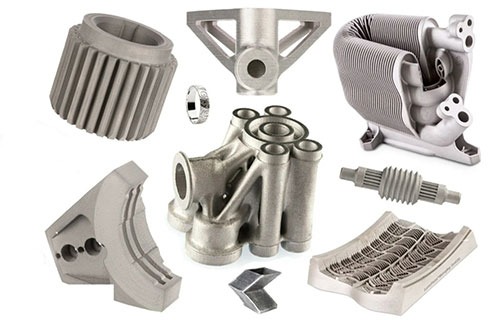
You’ve experienced it: the pressure points after an hour-long call, the constant readjustment during a workout, the frustration of choosing between sound quality and comfort. Traditional headset manufacturing, bound by rigid molds and one-size-fits-all economics, has long forced us to adapt to the product. But what if the product could adapt to you?
Key takeaways
- Beyond fit, 3D printing liberates industrial design from the constraints of injection molding, enabling form factors and internal structures that optimize both function and aesthetics.
- The material palette extends far beyond basic PLA. Each serves a specific engineering and user-experience purpose.
- While promising, the technology faces hurdles that are actively being addressed.
- 3D printing is not merely a new way to make headsets; it represents a fundamental rethinking of the relationship between user, device, and manufacturer.
How Does 3D Printing Achieve Unprecedented Personalization?
The most immediate and impactful benefit is biometric customization. Unlike mass-produced silicone tips or foam pads, 3D printing enables a true digital-to-physical translation of your unique anatomy.
What is the Workflow for a Perfect Fit?
The process leverages accessible technology to create a custom interface:
- Ear Scanning: Using a structured-light smartphone app or a dedicated scanner, a precise 3D point cloud of your ear or ear canal is captured in seconds.
- Algorithmic Design: Software processes the scan, automatically generating a perfectly conforming earpiece or cushion model. It can apply ergonomic principles, ensuring even pressure distribution.
- Digital Fabrication: This model is 3D printed, typically using a soft, flexible resin (like a medical-grade photopolymer) or a specially formulated TPU. The result is a component that matches your contours with sub-millimeter accuracy.
What Are the Tangible Benefits of This Custom Fit?
This precision translates into measurable performance gains:
- Superior Passive Noise Isolation (PNC): A perfect seal can block 15-25 dB more ambient noise than generic tips, rivaling active noise cancellation in some frequencies and improving sound clarity without extra electronics.
- Enhanced Comfort and Stability: Eliminating pressure points allows for extended wear without fatigue. For athletes or professionals, this means the headset stays securely in place during movement.
- Acoustic Consistency: A consistent seal ensures the speaker driver performs exactly as the audio engineer intended, providing reliable sound quality regardless of head shape or movement.
How Does It Enable Previously Impossible Designs?
Beyond fit, 3D printing liberates industrial design from the constraints of injection molding, enabling form factors and internal structures that optimize both function and aesthetics.
How Can Internal Acoustics Be Engineered?
The interior of an earcup is as critical as the exterior. 3D printing allows for the integration of complex internal waveguide channels, Helmholtz resonators, and tuned ports directly into the structure. These features can be used to fine-tune frequency response, manage driver back-pressure, and reduce distortion—tasks that typically require multiple molded parts and assembly.
What About Weight Reduction and Material Efficiency?
Through generative design and lattice structures, 3D printing can create parts that are 30-50% lighter while maintaining or increasing stiffness. A lighter headset drastically improves comfort for long sessions. Furthermore, the additive nature of the process means material is only deposited where needed, reducing plastic waste by up to 70% compared to subtractive CNC machining of a solid block.
Is 3D Printing Viable for Production, Not Just Prototypes?
This is the critical shift. Advances in print speed, material properties, and post-processing automation are moving 3D printing from the lab to the production floor for final products.
When Does It Make Economic Sense?
The following table compares scenarios to illustrate the strategic value of 3D printing for headset production:
| Production Scenario | Traditional Injection Molding | 3D Printing (Additive Mfg.) | Strategic Advantage |
|---|---|---|---|
| High-Volume Mass Production (>100,000 units) | Lowest per-part cost. Economies of scale dominate. | Higher per-part cost, slower. | Not the primary use case for full assembly. |
| Low-Volume & Custom Production (1 – 10,000 units) | Prohibitively high tooling costs ($20k-$100k+). Long lead time for molds. | No tooling cost. Per-part cost is consistent and competitive at low volumes. Ideal for custom/fit products. | Enables on-demand, made-to-order business models. Eliminates inventory risk. |
| Prototyping & Iterative Design | Each design change requires a new mold or costly mold modification. | Digital tooling. Design changes are made in software at near-zero cost. | Accelerates R&D cycles from months to weeks. Allows for extensive user testing of multiple designs. |
| Spare Parts & Legacy Support | Requires storage of physical molds and inventory. Often discontinued. | Digital inventory. Parts can be printed on-demand, anywhere. | Sustainable, endless lifecycle support. Eliminates warehousing costs for slow-moving parts. |
Real-World Application: A company like Audeze uses 3D printing to manufacture the intricate, open-back grilles and structural components for its high-end planar magnetic headphones, where the complexity and low volume make traditional tooling impractical.
What Are the Material Choices and Their Impact?
The material palette extends far beyond basic PLA. Each serves a specific engineering and user-experience purpose.
- Rigid Photopolymer Resins (SLA/DLP): Used for precise, detailed housings and internal brackets. Can be formulated for high stiffness or specific damping characteristics to reduce unwanted resonance.
- Flexible/Thermoplastic Polyurethanes (TPU): The go-to for custom eartips and comfort cushions. Offers a range of Shore hardness values to balance seal, comfort, and durability.
- Nylon-Based Powders (SLS): Excellent for creating complex, hinged, or snap-fit components in a single print without supports. Provides good impact resistance and a slightly textured finish.
- Multi-Material Printing: Advanced systems can print rigid and flexible materials in a single build, creating, for example, a monolithic headband with integrated rigid reinforcement and soft padding.
How to write a spec that gets priced correctly
A drawing is a contract. If it leaves a number open, the shop fills that number in with its own default. The default is rarely the one you had in mind. Put these five lines on every RFQ and most of the back-and-forth disappears before it starts.
- File format and units, with the model exported in millimetres
- Process and material grade, not a trade name
- Critical features and the tolerance each one needs
- Surface finish and the faces it applies to
- Quantity for the pilot build and for the year
The point is not paperwork. Each line removes a decision the shop would otherwise make for you. A complete RFQ comes back priced. An incomplete one comes back guessed.
What actually drives the price
Buyers usually push on material because it is the line they can see. In practice the material is rarely the biggest number on a quote. These five lines decide most of it:
- build volume and orientation
- layer height and support structure
- material grade and colour
- post-processing and hand finishing
- quantity per build plate
Ask for the quote split by line. A supplier who cannot break it down is guessing, and you will pay for the guess. The line you can usually renegotiate is the tolerance band, not the raw material.
Problems you will meet, and the fix
Every process has a failure mode it prefers. The same four show up again and again on this kind of work, and none of them are mysteries once you know what to look for.
- Warping on long flat faces where the part lifts off the plate
- Layer lines showing through a cosmetic surface
- Support scars on a mating face nobody flagged
- Dimensional drift on thin walls after cooling
Catch the fault on the first part, not the hundredth. A first-article check costs an hour. A bad batch costs the whole order. Write the check into the purchase order so nobody has to remember it.
What to check on the first article
The first article is the cheapest inspection you will ever buy. Use it properly and the rest of the run becomes boring, which is exactly what you want.
- Every dimension on the drawing, with the measured value written beside it.
- The material certificate, matched to the heat or lot number on the parts.
- The finish against the sample you approved, under the same light.
- Fit against the mating part, assembled rather than measured.
- Packaging, because parts that arrive damaged were never in tolerance.
Check in this order: datums, then mating features, then cosmetic faces. If the datums are wrong, every number after them is noise. Keep the report on file. When a problem shows up in month six, that document is the only thing that tells you what changed.
How to compare two quotes fairly
Two numbers are not comparable unless the scope matches. Line them up before you decide, because a low number with three gaps is not a low number.
Same drawing, same material, same finish, same inspection. Anything else is a different job wearing the same part number. Then look at what each quote leaves out. Freight, packaging, certificates and tooling are the usual gaps.
Ask each supplier to state their assumptions in writing. The one who does is usually the one who has run the process before.
Scaling from one part to a batch
The first part teaches you the process. The hundredth teaches you the process cost.
Watch three things as volume grows: setup amortisation, tool wear, and how much hand work the finish still needs. If the unit price barely moves between ten and a hundred, the cost sits in material or in hand work, not in setup. Ask which, because only one of them is negotiable.
Lead time behaves the same way. A one-off is scheduled around other jobs. A repeat order is scheduled around your forecast. Give the shop a forecast and the lead time gets shorter, not longer.
How to read a supplier's quote
A quote is a short document with a long shadow. Four things in it decide whether the job runs smoothly, and only one of them is the price.
- The scope line. It should name the process, the material and the finish, not just the part.
- The tolerance basis. General tolerance or the drawing, and which standard it follows.
- The exclusions. Tooling, freight, certificates and inspection are the usual omissions.
- The validity date. Material prices move, and an open-ended quote is a promise nobody can keep.
Read the exclusions before you read the total. A quote that leaves out tooling is not cheaper. It is a quote for a different job.
What to send with the first order
The first order sets the pattern for every order after it. Send a complete package once and the shop files it, and the second order takes a fraction of the time.
- A STEP or native model plus a PDF drawing carrying the same revision letter.
- The material callout by standard number, not by trade name.
- The finish and the exact faces it applies to.
- Any test the part must pass: fit, seal, drop, salt spray, dielectric.
- A contact who can answer a question inside one working day.
Then write down what was agreed. An email that confirms the material, the finish and the date is worth more than a longer purchase order that leaves them open.
What Challenges Remain on the Path to Adoption?
While promising, the technology faces hurdles that are actively being addressed.
How Do We Balance Speed with Quality?
While print speeds are increasing, producing a single custom earpiece can still take 30-60 minutes. For scalable custom manufacturing, parallel printing (multiple units in one build) and faster printing technologies like Continuous Liquid Interface Production (CLIP) are crucial developments.
Can Printed Parts Achieve True High-Fidelity Audio Standards?
The layer-by-layer construction can introduce microscopic inconsistencies that might affect acoustic damping. Post-processing techniques like vapor smoothing for resins and rigorous quality control are essential to ensure the acoustic properties are consistent and meet high-fidelity standards.
Is the Consumer Ready for the Workflow?
The requirement for an ear scan, while simple, adds a step to the purchasing process. Seamless integration into e-commerce platforms and clear user guidance are key to mainstream adoption.
3D printing is not merely a new way to make headsets; it represents a fundamental rethinking of the relationship between user, device, and manufacturer. By enabling true biometric personalization, it solves the perennial problem of fit, unlocking significant gains in comfort, noise isolation, and acoustic performance. By freeing design from traditional manufacturing constraints, it allows for previously impossible optimizations in weight, acoustics, and aesthetics. While challenges in production speed and consumer adoption workflows remain, the economic logic for low-volume, custom, and sustainable production is already compelling. For the audio industry, 3D printing is moving beyond a niche prototyping tool to become a core technology for creating the next generation of personalized, high-performance audio wearables that are as unique as the individuals who wear them.
FAQ: 3D Printing Headsets
Q: How durable are 3D-printed headsets compared to traditional ones?
A: Durability is highly material-dependent. A 3D-printed nylon or reinforced resin headband can be as durable as an injection-molded one. Flexible TPU eartips are designed to be replaceable and may wear out similarly to silicone tips. The key is that if a custom-printed part breaks, the digital file allows for an exact replacement to be printed on-demand, which is impossible with discontinued molded parts.
Q: Can I get a 3D-printed headset with active noise cancellation (ANC)?
A: Absolutely. 3D printing is primarily used for the mechanical and structural components—the housings, earcups, and custom tips. The electronics (drivers, ANC chips, batteries) are standard components that are integrated into the 3D-printed shell. In fact, the superior passive seal from custom tips can work in concert with ANC for even better overall noise reduction.
Q: What is the environmental impact of 3D printing custom headsets?
A: It presents a mixed but promising profile. On the positive side, additive manufacturing creates less waste, enables localized production (reducing shipping), and supports a longer product lifecycle through printable spare parts. However, the energy use of printers and the recyclability of some specialized photopolymer resins are ongoing challenges. Biodegradable materials like certain PLAs offer a greener path for non-critical components.
Q: Are there any health or safety concerns with materials used in 3D-printed earpieces?
A: For any product contacting skin for extended periods, material certification is crucial. Reputable manufacturers use skin-contact certified (ISO 10993 tested) or hypoallergenic resins and TPUs. It’s important to ensure the provider uses materials that are fully cured and approved for this application, not standard prototyping resins which may contain uncured monomers that can cause irritation.
Our solution for 3D Printing Headsets Truly Deliver
YiguProto runs 3D printing in house, from a single prototype to a production batch. We quote the process, the material and the finish as separate lines, so you can see where the money goes instead of arguing with one number.
Send a STEP file or a drawing and you get a DFM report in one to two business days. It flags the features that add cost and the features that will not hold tolerance on the process you picked.
Every order ships with an inspection report on the features you call out. If a part misses, we make it again. Ready to price a part? Start with a free quote and DFM review, or read more about our 3D printing. You can also talk to an engineer before you commit to a drawing.
FAQ about 3D Printing Headsets Truly Deliver
What is 3D Printing Headsets Truly Deliver used for?
3D Printing Headsets Truly Deliver turns up wherever the part has to do a real job at a predictable cost: brackets, housings, fixtures, covers and the fittings that hold them together. The honest test is whether the properties match the load and the environment, not whether the material is fashionable.
What should I check before approving the parts?
Datums first, then the features that mate, then the cosmetic faces. Ask for a dimensional report, a material certificate and a finish sample. A part can be inside every tolerance and still not fit, so assemble one before you sign.
What is the lead time for 3D Printing Headsets Truly Deliver?
Expect 2 to 5 business days for a first batch. Tooling, material stock and the finishing queue all move that number, so we confirm the date in writing before the run starts rather than after.
Does the process work for prototypes as well as production?
Yes, and that is usually the point. Running the prototype on the production process removes a whole class of surprises, because the part you test is made the same way as the part you sell.
How long does a first article take?
Usually a few business days once the drawing is frozen, and longer if tooling is involved. The date we give you is the date we confirm in writing, not the date we hope for.
Is there a minimum order quantity?
No hard minimum. One part is fine. What changes with volume is which costs dominate, so a single unit is priced mostly on setup and a thousand units are priced mostly on cycle time and material.
The short version
3D Printing Headsets Truly Deliver rewards the buyer who reads the data sheet and the drawing together. Pick the option for the property that matters, not for the price per kilo.
Tighten only what mates. Test a sample before the run. Then let the process do the rest.