
3D Printing
Can High-Temperature Resins Make Your 3D Printed Parts Truly Heat-Proof?
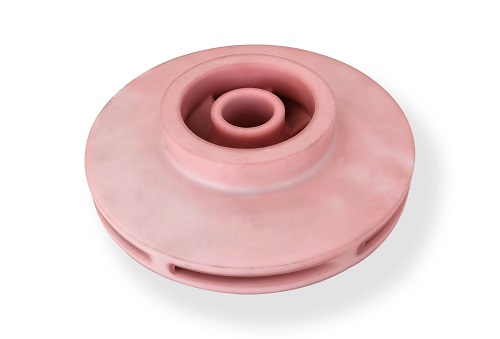
You’re designing a component for an engine bay, a fixture for a hot assembly line, or a tool that must survive autoclave sterilization. The environment is punishing, with temperatures exceeding 150°C—far beyond the limits of standard plastics and even many engineering resins. While metals are a traditional solution, they often mean high cost, long lead times, and design constraints.
Key takeaways
- In the world of 3D printing polymers, “high-temperature” is a relative term with a specific benchmark: Heat Deflection Temperature (HDT).
- These resins shine in scenarios where heat is a constant challenge, not an occasional event.
- High-temperature resins are powerful but not magical. Understanding their boundaries is crucial.
- High-temperature resistant 3D printing resins represent a significant leap forward in material science for additive manufacturing, effectively bridging the gap between standard plastics and metals for a wide range of demanding thermal applications.
What Exactly Defines a “High-Temperature” Resin?
In the world of 3D printing polymers, “high-temperature” is a relative term with a specific benchmark: Heat Deflection Temperature (HDT).
Why is HDT the Critical Metric?
HDT (measured at a standard load, typically 0.45 MPa or 1.82 MPa) indicates the temperature at which a plastic sample deforms under a defined stress. For a part to be functional, its maximum continuous use temperature is typically 15-30°C below its HDT.
- Standard Resins: HDT of 50-80°C. Suitable for room-temperature models.
- Engineering/Tough Resins: HDT of 80-120°C. Good for functional prototypes in mild environments.
- High-Temperature Resins: HDT starting at ~200°C and extending beyond 280°C. This is the threshold for entering demanding industrial applications.
What Gives These Resins Their Heat Resistance?
The secret lies in their advanced chemistry. Unlike standard resins with linear polymer chains, high-temperature resins are formulated with highly cross-linked, aromatic, or ceramic-like molecular structures. This creates a dense, rigid network that resists the molecular motion and softening that occur with heat. Post-processing is not optional; a thermal post-cure (often at 60-100°C) is essential to drive this cross-linking to completion and achieve the published HDT values.
How Do Leading High-Temperature Resins Compare?
Performance varies significantly between formulations. The choice depends on the balance of heat resistance, mechanical strength, and printability your application requires.
| Resin Type / Example | Typical HDT (at 0.45 MPa) | Key Mechanical & Chemical Traits | Ideal Application Sweet Spot | Primary Limitation |
|---|---|---|---|---|
| Standard High-Temp (e.g., Formlabs High Temp Resin) | 238°C – 250°C | Good balance of stiffness and detail. Compatible with desktop printers. | Functional prototypes, hot air/fluid jigs, sterilizable medical tools. Excellent for validating designs before metal production. | Brittleness. Good stiffness but lower impact resistance compared to toughened engineering resins. |
| Rigid/High-Strength High-Temp (e.g., LOCTITE EA 120HP, some Somos® resins) | 220°C – 260°C | Exceptional stiffness (High Modulus), excellent creep resistance, and high surface hardness. | Short-run injection mold inserts, precision gauges, high-load fixtures. Where dimensional stability under load at temperature is critical. | Can be more brittle and challenging to print with precise exposure settings. |
| Ultra-High Temp & Chemically Resistant (e.g., Ultracur3D® RG 3280) | >280°C – 300°C+ | Maximum thermal stability, outstanding resistance to fuels, oils, and solvents. | Aerospace ducting, under-hood automotive components, chemical processing parts. The top tier for the most severe environments. | Highest cost, often requires industrial-grade printers and strict process control. |
| Toughened High-Temp | 200°C – 230°C | Modified for improved impact resistance and elongation at break while maintaining good HDT. | Snap-fits, enclosures, or components subject to thermal cycling and minor impacts. | Slightly lower HDT and stiffness than rigid counterparts. |
What Are the Real-World Industrial Applications?
These resins shine in scenarios where heat is a constant challenge, not an occasional event.
Can They Be Used for Real Tooling?
Yes, this is one of the most valuable applications. Injection mold inserts for prototyping or low-volume production (50-500 parts) of plastics like PP or ABS are a prime example.
- Case Study: A consumer electronics firm needed to prototype 200 housings for a new thermostat. Machining aluminum molds was too costly and slow. They printed mold inserts using a rigid high-temperature resin (HDT 250°C).
- Process: The inserts were designed with conformal cooling channels (impossible in standard machining) and post-cured. They were then fitted into a mold base.
- Outcome: The resin inserts successfully produced over 300 ABS parts before showing wear, validating the design at a fraction of the cost and time of metal tooling, and accelerating the product launch by months.
How Do They Perform in Automotive and Aerospace?
These industries demand materials that can withstand under-hood temperatures, aerodynamic heating, and chemical exposure.
- Application: Engine compartment brackets, sensor housings, and ducting. A high-temp resin part can consolidate multiple metal components into a single, lightweight unit with complex geometry that improves airflow or packaging.
- Validation: Such parts undergo rigorous testing in thermal cycling chambers and chemical exposure baths to ensure they don’t warp, creep, or degrade when exposed to 150°C+ heat and splash fluids.
Are They Suitable for Medical and Dental Uses?
Absolutely, but with a different thermal profile. The requirement here is for repeated sterilization via autoclave (saturated steam at 121-134°C) or chemical vapor.
- Application: Surgical guides, drill guides, and sterilization trays. These tools must survive dozens of cycles without deformation. High-temp resins with HDTs above 150°C are perfect for this, offering a sterilizable, patient-specific solution that is more cost-effective and faster to produce than traditional methods.
What Are the Critical Printing and Post-Processing Requirements?
Success with these advanced materials demands a disciplined process.
Why is Printer Compatibility and Calibration Non-Negotiable?
- Wavelength & Power: The resin’s photoinitiator is tuned to a specific UV wavelength (usually 385nm or 405nm). Your printer’s light source must match.
- Exposure Settings: High-temp resins often require longer exposure times per layer due to their dense formulations. Underexposure leads to weak, under-cured parts that will fail at temperature.
- Heated Build Environment (Optional but Beneficial): A heated vat or build chamber (~30-40°C) can improve resin viscosity and layer adhesion, reducing stresses that lead to warping.
What is the Essential Post-Curing Protocol?
Post-curing is where the material achieves its final properties. It’s a two-step process:
- Initial UV Cure: Parts are washed (IPA or specialty solvent) and then cured in a UV light chamber to complete the photochemical reaction.
- Thermal Post-Cure: This is the critical differentiator. Parts are placed in a precision oven and baked at a specific temperature profile (e.g., 2 hours at 100°C, then 2 hours at 150°C). This thermal cycle drives additional cross-linking, dramatically increasing the HDT and overall thermal stability. Skipping this step means the resin will not meet its datasheet specifications.
How to write a spec that gets priced correctly
A drawing is a contract. If it leaves a number open, the shop fills that number in with its own default. The default is rarely the one you had in mind. Put these five lines on every RFQ and most of the back-and-forth disappears before it starts.
- File format and units, with the model exported in millimetres
- Process and material grade, not a trade name
- Critical features and the tolerance each one needs
- Surface finish and the faces it applies to
- Quantity for the pilot build and for the year
The point is not paperwork. Each line removes a decision the shop would otherwise make for you. A complete RFQ comes back priced. An incomplete one comes back guessed.
What actually drives the price
Buyers usually push on material because it is the line they can see. In practice the material is rarely the biggest number on a quote. These five lines decide most of it:
- build volume and orientation
- layer height and support structure
- material grade and colour
- post-processing and hand finishing
- quantity per build plate
Ask for the quote split by line. A supplier who cannot break it down is guessing, and you will pay for the guess. The line you can usually renegotiate is the tolerance band, not the raw material.
Problems you will meet, and the fix
Every process has a failure mode it prefers. The same four show up again and again on this kind of work, and none of them are mysteries once you know what to look for.
- Warping on long flat faces where the part lifts off the plate
- Layer lines showing through a cosmetic surface
- Support scars on a mating face nobody flagged
- Dimensional drift on thin walls after cooling
Catch the fault on the first part, not the hundredth. A first-article check costs an hour. A bad batch costs the whole order. Write the check into the purchase order so nobody has to remember it.
What to check on the first article
The first article is the cheapest inspection you will ever buy. Use it properly and the rest of the run becomes boring, which is exactly what you want.
- Every dimension on the drawing, with the measured value written beside it.
- The material certificate, matched to the heat or lot number on the parts.
- The finish against the sample you approved, under the same light.
- Fit against the mating part, assembled rather than measured.
- Packaging, because parts that arrive damaged were never in tolerance.
Check in this order: datums, then mating features, then cosmetic faces. If the datums are wrong, every number after them is noise. Keep the report on file. When a problem shows up in month six, that document is the only thing that tells you what changed.
How to compare two quotes fairly
Two numbers are not comparable unless the scope matches. Line them up before you decide, because a low number with three gaps is not a low number.
Same drawing, same material, same finish, same inspection. Anything else is a different job wearing the same part number. Then look at what each quote leaves out. Freight, packaging, certificates and tooling are the usual gaps.
Ask each supplier to state their assumptions in writing. The one who does is usually the one who has run the process before.
Scaling from one part to a batch
The first part teaches you the process. The hundredth teaches you the process cost.
Watch three things as volume grows: setup amortisation, tool wear, and how much hand work the finish still needs. If the unit price barely moves between ten and a hundred, the cost sits in material or in hand work, not in setup. Ask which, because only one of them is negotiable.
Lead time behaves the same way. A one-off is scheduled around other jobs. A repeat order is scheduled around your forecast. Give the shop a forecast and the lead time gets shorter, not longer.
How to read a supplier's quote
A quote is a short document with a long shadow. Four things in it decide whether the job runs smoothly, and only one of them is the price.
- The scope line. It should name the process, the material and the finish, not just the part.
- The tolerance basis. General tolerance or the drawing, and which standard it follows.
- The exclusions. Tooling, freight, certificates and inspection are the usual omissions.
- The validity date. Material prices move, and an open-ended quote is a promise nobody can keep.
Read the exclusions before you read the total. A quote that leaves out tooling is not cheaper. It is a quote for a different job.
What Are the Key Limitations and Considerations?
High-temperature resins are powerful but not magical. Understanding their boundaries is crucial.
How Does Long-Term Heat Aging Affect Them?
While they resist immediate deformation, prolonged exposure at high temperatures can lead to embrittlement and discoloration (yellowing) over time. This is different from a metal’s behavior. For permanent installations, consider this aging factor and plan for part inspection or replacement schedules.
Can They Handle Mechanical Load at Temperature?
Creep—the slow, permanent deformation of a material under constant load—is a significant factor. While much better than standard plastics, high-temperature resins can still creep under sustained stress at high temperatures. Design with generous safety factors, avoid constant high-stress applications, or consider the ultra-rigid resin formulations designed to minimize creep.
Are They Truly a Direct Metal Replacement?
For non-load-bearing, non-structural applications where heat resistance and complex geometry are the primary drivers, they are an excellent alternative. For primary structural components bearing high dynamic loads (e.g., a rotating turbine blade), metals or high-performance thermoplastics (PEEK, PEI) via FDM/SLS are still the preferred choice.
High-temperature resistant 3D printing resins represent a significant leap forward in material science for additive manufacturing, effectively bridging the gap between standard plastics and metals for a wide range of demanding thermal applications. They unlock the geometric freedom of 3D printing for parts that must survive in ovens, engine bays, and sterilizers. Success, however, hinges on a clear-eyed assessment of their properties: select the resin based on the specific HDT requirement and mechanical needs of your application, follow a meticulous printing and thermal post-curing process, and design with an understanding of their long-term behavior under thermal stress. When deployed strategically, these resins are not just a material choice but a strategic enabler, allowing for rapid innovation, lightweighting, and functional consolidation in some of the most challenging environments industry has to offer.
FAQ: 3D Printing with High-Temperature Resins
Q: Can I use these resins in a standard desktop MSLA/LCD printer?
A: Yes, but with important caveats. Many formulations are compatible with 405nm desktop printers. However, you must rigorously calibrate exposure times and ensure your printer’s build platform and resin tank can handle potentially more aggressive chemicals. The thermal post-cure requires a separate oven. For consistent, industrial results, printers with more stable, high-intensity light sources and heated vats are recommended.
Q: How do the costs compare to machining aluminum?
A: The economic advantage is strongest for complex geometry and low-to-medium volumes. While the resin itself is expensive per liter ($150-$400+), it eliminates all machining time and programming. For a complex, conformally-cooled mold insert, 3D printing in resin can be 5-10x faster and 3-5x cheaper than machining from aluminum billet for a single unit. For simple shapes or high volumes, machining may still be more economical.
Q: Are parts made with these resins safe for food contact or medical implantation?
A: Do not assume safety. “High-temperature” does not equal “biocompatible” or “food-safe.” You must select a resin that is specifically certified for your intended use. Look for resins with ISO 10993 (biocompatibility) or FDA CFR 21 compliance for medical applications, and NSF certification for food contact. Always verify the manufacturer’s certifications.
Q: What is the best way to bond or assemble parts made from high-temperature resins?
A: Standard cyanoacrylate (super glue) often fails at high temperatures. For strong, heat-resistant bonds, use a two-part epoxy adhesive rated for high temperatures (often up to 200°C). For the strongest possible joint, design for mechanical interlocking or use specialized resin-compatible adhesives recommended by the resin manufacturer.
Our solution for High-Temperature Resins Make
YiguProto runs 3D printing in house, from a single prototype to a production batch. We quote the process, the material and the finish as separate lines, so you can see where the money goes instead of arguing with one number.
Send a STEP file or a drawing and you get a DFM report in one to two business days. It flags the features that add cost and the features that will not hold tolerance on the process you picked.
Every order ships with an inspection report on the features you call out. If a part misses, we make it again. Ready to price a part? Start with a free quote and DFM review, or read more about our 3D printing. You can also talk to an engineer before you commit to a drawing.
FAQ about High-Temperature Resins Make
How long does a first article take?
Usually a few business days once the drawing is frozen, and longer if tooling is involved. The date we give you is the date we confirm in writing, not the date we hope for.
What is High-Temperature Resins Make used for?
High-Temperature Resins Make turns up wherever the part has to do a real job at a predictable cost: brackets, housings, fixtures, covers and the fittings that hold them together. The honest test is whether the properties match the load and the environment, not whether the material is fashionable.
What tolerance can you hold on High-Temperature Resins Make?
The working default is ±0.1 mm on small features, ±0.3% on long spans. Tighter than that the process changes and so does the price, because every step tighter adds inspection time. Call out only the faces that mate with something else and leave the rest on the general tolerance.
Can High-Temperature Resins Make be made in small quantities?
Yes, and small quantities are where a good supplier earns the next order. Setup dominates the price at low volume, so the cheapest route is usually the one with the fewest operations, not the cheapest material.
Is there a minimum order quantity?
No hard minimum. One part is fine. What changes with volume is which costs dominate, so a single unit is priced mostly on setup and a thousand units are priced mostly on cycle time and material.
What files do you need in order to quote?
A STEP file plus a PDF drawing that carries the same revision letter. The model carries the geometry and the drawing carries the intent. When the two disagree, the shop picks one, and it is never the one you meant.
The short version
High-Temperature Resins Make rewards the buyer who reads the data sheet and the drawing together. Pick the option for the property that matters, not for the price per kilo.
Tighten only what mates. Test a sample before the run. Then let the process do the rest.