
3D Printing
Is 3D Printing PA11 the Ultimate Choice for Durable, Eco-Friendly Parts?
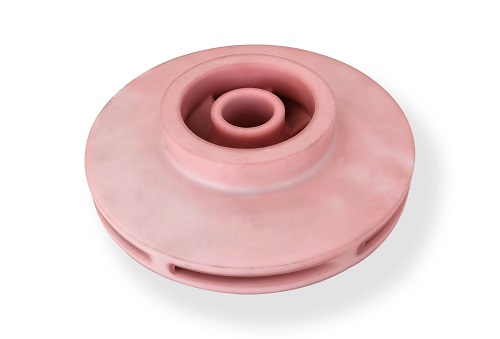
In the rapidly evolving world of additive manufacturing, selecting the right material often dictates the success or failure of a project. For engineers and product designers seeking a solution that doesn’t force a compromise between performance and sustainability, 3D printing PA11 (Polyamide 11) emerges as a frontrunner.
Key takeaways
- PA11, or Polyamide 11, is a high-performance thermoplastic belonging to the nylon family, but with a distinct and sustainable pedigree.
- PA11’s value proposition is built on a combination of mechanical, environmental, and chemical properties that solve specific design challenges.
- PA11 is primarily processed in powder form, making it ideal for two industrial additive manufacturing technologies:
- The “green” story of PA11 is compelling, but its real-world benefits are measured in both ecological impact and total cost of ownership.
What Exactly Is PA11 and Where Does It Come From?
PA11, or Polyamide 11, is a high-performance thermoplastic belonging to the nylon family, but with a distinct and sustainable pedigree. Unlike its more common cousins, PA6 and PA66, which are synthesized from petrochemicals, PA11 is derived from 100% renewable resources. Its primary building block is 11-aminoundecanoic acid, which is sourced from castor beans. This bio-based origin is not just a marketing point; it fundamentally influences the material’s lifecycle, offering a reduced carbon footprint from cradle to gate.
At the molecular level, PA11 features a long-chain polyamide structure. This chemistry grants it a superior balance of properties compared to other nylons, particularly in terms of impact resistance, flexibility, and dimensional stability in moist environments. To understand its position in the material landscape, consider how it compares to other standard 3D printing nylons:
Comparison of Common 3D Printing Nylons:
| Property | PA11 (Castor Oil-Based) | PA12 (Petroleum-Based) | PA6 (Petroleum-Based) |
|---|---|---|---|
| Source | Renewable (Castor Beans) | Fossil Fuels | Fossil Fuels |
| Toughness & Flexibility | Excellent (Very high impact strength, great for living hinges) | Good | Stiff, more brittle |
| Moisture Absorption | Lowest (~1.5%) (Excellent dimensional stability) | Low (~2%) | High (~10%) – Weakens when wet |
| UV & Weather Resistance | Excellent (Inherent resistance without additives) | Good (Often requires stabilizers) | Poor |
| Density | Low (~1.03 g/cm³) | Slightly higher (~1.01 g/cm³) | Higher (~1.13 g/cm³) |
| Cost | Higher raw material cost | Most common, cost-effective | Lower cost, but higher processing waste |
What Are the Standout Properties That Make PA11 Unique?
PA11’s value proposition is built on a combination of mechanical, environmental, and chemical properties that solve specific design challenges.
Unmatched Toughness and Fatigue Resistance
PA11 is renowned for its exceptional ductility and impact strength. It can undergo repeated deformation without cracking, a property measured by its high elongation at break (often over 300%). This makes it the premier choice for functional, snap-fit components and living hinges that must endure thousands of cycles. For instance, a consumer electronics company used SLS-printed PA11 to create a complex, integrated hinge for a ruggedized device case, eliminating the need for metal hardware and reducing assembly parts by 70%.
Superior Environmental Stability
This is where PA11 truly shines. Its low moisture absorption (roughly half that of PA6) means printed parts maintain their dimensional accuracy and mechanical integrity in humid or wet conditions. This is critical for end-use parts in automotive under-hood applications or outdoor equipment. Furthermore, PA11 possesses inherent resistance to UV radiation and weathering, preventing the embrittlement and color fade common in other plastics when exposed to sunlight. A study by a major materials supplier showed PA11 parts retained over 90% of their tensile strength after 1,000 hours of accelerated UV aging, outperforming stabilized PA12.
Biocompatibility and Regulatory Compliance
Certain grades of PA11 are USP Class VI certified and ISO 10993 compliant, making them suitable for prolonged human contact. This opens doors for custom medical devices, prosthetics, and wearable items. Its bio-based origin and ability to be sterilized (via gamma radiation or EtO) make it a responsible choice for the healthcare industry.
Which 3D Printing Technologies Are Best Suited for PA11?
PA11 is primarily processed in powder form, making it ideal for two industrial additive manufacturing technologies:
- Selective Laser Sintering (SLS): This is the most common method. A laser precisely sinters PA11 powder layer by layer. SLS is perfect for producing complex, durable parts with excellent isotropic mechanical properties. It requires no supports, allowing for highly optimized geometries. A leading hearing aid manufacturer, for example, uses SLS with a biocompatible PA11 to produce custom in-ear shells that are strong, skin-safe, and can incorporate intricate acoustic channels.
- Multi Jet Fusion (MJF): HP’s MJF technology uses a detailing agent and a fusing agent to selectively fuse PA11 powder. MJF typically offers faster build speeds and superior surface finish compared to SLS, along with excellent dimensional accuracy. It is ideal for producing larger batches of functional parts with consistent quality.
While Fused Deposition Modeling (FDM) with PA11 filament is possible, it is less common due to challenges with warping and achieving the same level of part consolidation and mechanical performance as the powder-based processes.
What Are the Tangible Economic and Environmental Advantages?
The “green” story of PA11 is compelling, but its real-world benefits are measured in both ecological impact and total cost of ownership.
The Sustainable and Economic Case for PA11:
| Aspect | Benefit | Practical Example & Impact |
|---|---|---|
| Renewable Sourcing | Reduces dependence on fossil fuels and lowers cradle-to-gate CO₂ footprint. | BASF’s Ultrasint® PA11 is derived from 100% renewable castor oil, offering a sustainable alternative without sacrificing performance. |
| Powder Reusability | In SLS/MJF processes, unsintered powder can be sieved and reused in subsequent builds (typically up to 70-80% refresh rates). | This drastically reduces material waste compared to subtractive machining, where over 50% of a block can become scrap. It turns a cost center (waste) into a valuable asset. |
| Part Consolidation | Enables the design of complex, single-piece assemblies that replace multi-part products. | An automotive client at our shop consolidated an 8-part duct assembly into one 3D-printed PA11 part, eliminating assembly labor, reducing weight by 15%, and improving airflow efficiency. |
| Performance Longevity | Superior UV and chemical resistance extends the service life of parts in harsh environments. | A PA11 fluid connector in a chemical sensing device outlasted a PA6 version by 3x, reducing maintenance downtime and replacement costs. |
What Advanced PA11 Formulations Are Pushing Boundaries?
Material science is rapidly advancing, leading to PA11 composites that target niche, high-performance applications:
- PA11 with Carbon Fiber (CF): Reinforcing PA11 with carbon fiber creates a composite with significantly increased stiffness, strength, and thermal resistance while retaining good toughness. This variant is ideal for lightweight structural components in drones, robotics, and automotive interiors.
- PA11 with Glass Beads (GB): This formulation focuses on enhancing dimensional stability and reducing weight and cost. It offers a superior surface finish and is excellent for large, rigid parts like housings and fixtures.
- Electrostatic Dissipative (ESD) PA11: Critical for electronics manufacturing, ESD-safe PA11 prevents static discharge that can damage sensitive components. It’s used for jigs, fixtures, and handling trays in the production of circuit boards and semiconductors.
How to write a spec that gets priced correctly
A drawing is a contract. If it leaves a number open, the shop fills that number in with its own default. The default is rarely the one you had in mind. Put these five lines on every RFQ and most of the back-and-forth disappears before it starts.
- File format and units, with the model exported in millimetres
- Process and material grade, not a trade name
- Critical features and the tolerance each one needs
- Surface finish and the faces it applies to
- Quantity for the pilot build and for the year
The point is not paperwork. Each line removes a decision the shop would otherwise make for you. A complete RFQ comes back priced. An incomplete one comes back guessed.
What actually drives the price
Buyers usually push on material because it is the line they can see. In practice the material is rarely the biggest number on a quote. These five lines decide most of it:
- build volume and orientation
- layer height and support structure
- material grade and colour
- post-processing and hand finishing
- quantity per build plate
Ask for the quote split by line. A supplier who cannot break it down is guessing, and you will pay for the guess. The line you can usually renegotiate is the tolerance band, not the raw material.
Problems you will meet, and the fix
Every process has a failure mode it prefers. The same four show up again and again on this kind of work, and none of them are mysteries once you know what to look for.
- Warping on long flat faces where the part lifts off the plate
- Layer lines showing through a cosmetic surface
- Support scars on a mating face nobody flagged
- Dimensional drift on thin walls after cooling
Catch the fault on the first part, not the hundredth. A first-article check costs an hour. A bad batch costs the whole order. Write the check into the purchase order so nobody has to remember it.
What to check on the first article
The first article is the cheapest inspection you will ever buy. Use it properly and the rest of the run becomes boring, which is exactly what you want.
- Every dimension on the drawing, with the measured value written beside it.
- The material certificate, matched to the heat or lot number on the parts.
- The finish against the sample you approved, under the same light.
- Fit against the mating part, assembled rather than measured.
- Packaging, because parts that arrive damaged were never in tolerance.
Check in this order: datums, then mating features, then cosmetic faces. If the datums are wrong, every number after them is noise. Keep the report on file. When a problem shows up in month six, that document is the only thing that tells you what changed.
How to compare two quotes fairly
Two numbers are not comparable unless the scope matches. Line them up before you decide, because a low number with three gaps is not a low number.
Same drawing, same material, same finish, same inspection. Anything else is a different job wearing the same part number. Then look at what each quote leaves out. Freight, packaging, certificates and tooling are the usual gaps.
Ask each supplier to state their assumptions in writing. The one who does is usually the one who has run the process before.
Scaling from one part to a batch
The first part teaches you the process. The hundredth teaches you the process cost.
Watch three things as volume grows: setup amortisation, tool wear, and how much hand work the finish still needs. If the unit price barely moves between ten and a hundred, the cost sits in material or in hand work, not in setup. Ask which, because only one of them is negotiable.
Lead time behaves the same way. A one-off is scheduled around other jobs. A repeat order is scheduled around your forecast. Give the shop a forecast and the lead time gets shorter, not longer.
How to read a supplier's quote
A quote is a short document with a long shadow. Four things in it decide whether the job runs smoothly, and only one of them is the price.
- The scope line. It should name the process, the material and the finish, not just the part.
- The tolerance basis. General tolerance or the drawing, and which standard it follows.
- The exclusions. Tooling, freight, certificates and inspection are the usual omissions.
- The validity date. Material prices move, and an open-ended quote is a promise nobody can keep.
Read the exclusions before you read the total. A quote that leaves out tooling is not cheaper. It is a quote for a different job.
What to send with the first order
The first order sets the pattern for every order after it. Send a complete package once and the shop files it, and the second order takes a fraction of the time.
- A STEP or native model plus a PDF drawing carrying the same revision letter.
- The material callout by standard number, not by trade name.
- The finish and the exact faces it applies to.
- Any test the part must pass: fit, seal, drop, salt spray, dielectric.
- A contact who can answer a question inside one working day.
Then write down what was agreed. An email that confirms the material, the finish and the date is worth more than a longer purchase order that leaves them open.
When this is the wrong choice
A good supplier tells you when the process does not fit. These are the cases where we say so.
- The volume is so low that setup costs more than the parts are worth.
- The tolerance is tighter than the process can hold without a second operation.
- The geometry cannot be made without a tool feature that will not pay back.
- The material you need is not available in the form the process requires.
- The schedule is shorter than the tooling or setup time, and nobody has said so yet.
None of these are refusals. They are reasons to look at a different route, and the earlier that conversation happens the cheaper it is. The most expensive mistake in manufacturing is a process chosen before the question was understood.
How Do You Design and Implement PA11 Successfully?
To harness PA11’s potential, follow a disciplined approach from design to post-processing.
- Design for Additive Manufacturing (DfAM): Leverage PA11’s freedom. Design organic, topology-optimized structures to minimize weight. Incorporate living hinges instead of assemblies. Ensure wall thicknesses are adequate for the application (typically a minimum of 1mm for SLS/MJF) but use lattice structures to save material in non-critical areas.
- Choose the Right Partner and Process: For consistent results, especially with advanced composites like PA11 CF, working with an experienced service bureau like our shop that has validated printing parameters and controlled powder handling is crucial.
- Plan for Post-Processing: PA11 parts straight from the printer have a slightly porous, granular surface. Common finishing steps include: Media Tumbling: For smoothing and matte finishing. Dyeing: PA11 absorbs dyes well for permanent coloring. Vapor Smoothing: Using solvents can create a glossy, sealed surface. Application of Protective Coatings: For enhanced chemical or UV resistance (though often unnecessary with PA11).
3D printing with PA11 represents a significant step forward in responsible, high-performance manufacturing. It successfully bridges the gap between the demanding mechanical requirements of industrial applications and the growing imperative for sustainable material choices. Its unique profile—combining exceptional toughness, environmental stability, and a bio-based origin—solves real-world problems in aerospace, automotive, medical, and consumer goods. While the initial material cost may be higher, the long-term value through part consolidation, reduced waste, and extended product life delivers a compelling total cost of ownership. For engineers and designers looking to future-proof their products, PA11 is not just an alternative; it is a strategic material choice that aligns performance with planetary responsibility.
Our solution for 3D Printing PA11
YiguProto runs 3D printing in house, from a single prototype to a production batch. We quote the process, the material and the finish as separate lines, so you can see where the money goes instead of arguing with one number.
Send a STEP file or a drawing and you get a DFM report in one to two business days. It flags the features that add cost and the features that will not hold tolerance on the process you picked.
Every order ships with an inspection report on the features you call out. If a part misses, we make it again. Ready to price a part? Start with a free quote and DFM review, or read more about our 3D printing. You can also talk to an engineer before you commit to a drawing.
FAQ about 3D Printing PA11
What files do you need in order to quote?
A STEP file plus a PDF drawing that carries the same revision letter. The model carries the geometry and the drawing carries the intent. When the two disagree, the shop picks one, and it is never the one you meant.
What tolerance can you hold on 3D Printing PA11?
The working default is ±0.1 mm on small features, ±0.3% on long spans. Tighter than that the process changes and so does the price, because every step tighter adds inspection time. Call out only the faces that mate with something else and leave the rest on the general tolerance.
How much does 3D Printing PA11 cost?
Price comes from five lines: material, machine or tool time, setup, finishing and inspection. The material itself is usually the smallest of them. Send a drawing and we will split the quote so you can see which line is doing the damage.
What should I check before approving the parts?
Datums first, then the features that mate, then the cosmetic faces. Ask for a dimensional report, a material certificate and a finish sample. A part can be inside every tolerance and still not fit, so assemble one before you sign.
Is there a minimum order quantity?
No hard minimum. One part is fine. What changes with volume is which costs dominate, so a single unit is priced mostly on setup and a thousand units are priced mostly on cycle time and material.
How do I compare two quotes fairly?
Match the scope first: same drawing, same material, same finish, same inspection. Then read the exclusions. Freight, tooling and certificates are the usual gaps, and a low number with three gaps is not a low number.
The short version
3D Printing PA11 rewards the buyer who reads the data sheet and the drawing together. Pick the option for the property that matters, not for the price per kilo.
Tighten only what mates. Test a sample before the run. Then let the process do the rest.