
3D Printing
What Can POM Material Do for 3D Printing?
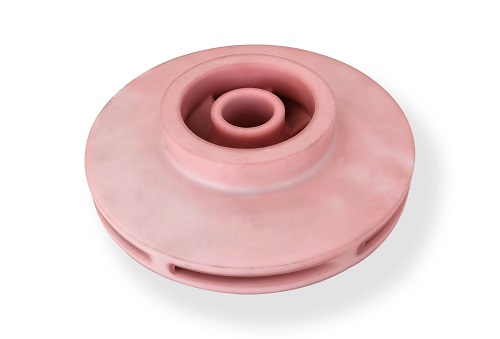
In the world of engineering-grade additive manufacturing, POM material stands out as a specialized solution for precision parts. Known as acetal or polyoxymethylene, this thermoplastic uniquely combines high stiffness, low friction, and excellent dimensional stability.
Key takeaways
- POM (polyoxymethylene) is an engineering thermoplastic prized for its mechanical prowess.
- To select the right material, engineers must compare performance metrics. POM excels in several areas where other plastics fall short.
- POM’s property profile makes it a first-choice material for demanding applications across several sectors.
- Printing with POM is considered advanced due to its specific thermal behavior. Awareness of these challenges is the first step to overcoming them.
What Makes POM Material Unique for 3D Printing?
POM (polyoxymethylene) is an engineering thermoplastic prized for its mechanical prowess. Unlike common 3D printing plastics like PLA or ABS, POM offers a rare combination of hardness and lubricity. This makes it ideal for functional prototypes and end-use parts that require smooth motion and wear resistance.
Its molecular structure provides high crystallinity, resulting in superior strength and rigidity. Parts printed with POM maintain their shape and tolerances under load, which is critical for assemblies. Furthermore, its inherent lubricity reduces the need for external lubricants, simplifying design and maintenance in moving assemblies.
How Do POM’s Key Properties Compare to Other Materials?
To select the right material, engineers must compare performance metrics. POM excels in several areas where other plastics fall short.
High Hardness & Dimensional Stability
POM has a high tensile strength and resists deformation under continuous load (creep resistance). This dimensional stability ensures parts like gears and bushings maintain precise fit and function over time. A robotics integrator, for instance, used POM for a critical camera gimbal joint. The part endured constant positioning forces for over 5,000 hours without measurable deviation, whereas an ABS prototype failed within 800 hours due to creep.
Low Friction & Superior Wear Resistance
With one of the lowest coefficients of friction among thermoplastics, POM parts slide smoothly against themselves, metals, or other plastics. This translates directly into longer service life and quieter operation. The following table compares wear performance, measured by material loss during abrasion testing:
| Material | Relative Wear Resistance | Key Limitation for Moving Parts |
|---|---|---|
| POM (Acetal) | Excellent | Can be challenging to print |
| Nylon (PA12) | Very Good | Higher moisture absorption |
| ABS | Good | Moderate friction, less wear-resistant |
| PLA | Poor | Brittle, poor thermal resistance |
A real-world case involved a manufacturer of automated packaging equipment. They switched from printed nylon guide rails to POM. The change resulted in a 60% reduction in wear debris and extended maintenance intervals from 6 months to over 2 years.
Good Elasticity & Chemical Resistance
Despite its rigidity, POM has a degree of toughness and elasticity, allowing it to absorb repetitive impacts without cracking. It also resists a wide range of chemicals, solvents, and hydrocarbons. This makes it suitable for parts exposed to fuels, cleaning agents, or lubricants. An automotive test lab successfully uses POM fixtures to hold components during fluid immersion tests, where parts are exposed to various automotive fluids without degrading.
What Are the Primary Applications of 3D Printed POM?
POM’s property profile makes it a first-choice material for demanding applications across several sectors.
Automotive and Mobility
The automotive industry leverages POM for low-volume custom parts and prototyping. Applications include fuel system components, window regulator gears, and snap-fit clips for interior panels. One electric vehicle startup used 3D printed POM to create custom cable management clips for wiring harnesses. The clips needed chemical resistance against interior cleaners and high stiffness to retain their clip force. POM met these needs where standard plastics failed.
Consumer Appliances and Electronics
In appliances, POM is used for functional internals like gear trains in mixers, latches, and hinge components. A leading appliance maker prototypes all new gear designs in POM before committing to injection molding. This allows them to test for noise, wear, and fit with real-world materials. In electronics, POM’s good dielectric strength and ability to hold fine detail make it useful for connectors, jigs, and test sockets.
Industrial Machinery
This is perhaps POM’s most traditional home. Engineers print custom bearings, bushings, seals, and gears for factory automation, conveyor systems, and custom machinery. A food processing plant, for example, printed a replacement POM star wheel for a packaging line. The low-friction, FDA-compliant material prevented product sticking and allowed the line to resume in 48 hours versus a 6-week lead time for a metal part.
What Are the Challenges of 3D Printing with POM?
Printing with POM is considered advanced due to its specific thermal behavior. Awareness of these challenges is the first step to overcoming them.
Warping and Adhesion Issues
POM has a high crystallization rate and significant thermal shrinkage as it cools. This leads to severe warping and part detachment from the build plate. Successful printing demands an enclosed chamber to maintain a high, stable ambient temperature (often above 60°C) to slow cooling and minimize internal stresses.
Fume Emission and Material Sensitivity
When overheated, POM can release formaldehyde gas. This necessitates good ventilation or a printer with a sealed chamber and filtration system. The material is also sensitive to thermal degradation if left at high temperatures in the nozzle for extended periods.
How Do You Successfully Print with POM Filament?
Mastering POM requires strict process control. Follow these steps for reliable results.
1. Printer and Environment Setup
- Essential Hardware: Use a printer with an all-metal hotend capable of at least 240°C, a heated bed that can reach 110-120°C, and a fully enclosed build chamber.
- Build Surface: The best adhesion comes from a garolite (G10/FR4) sheet. This composite surface provides a strong grip for POM when hot and allows parts to release cleanly once cooled. Other surfaces like PEI or glue sticks often fail.
2. Optimized Print Parameters
Dialing in settings is non-negotiable. Start with this baseline and adjust:
- Nozzle Temperature: 215-235°C (vary within this range based on specific filament)
- Bed Temperature: 110-120°C
- Chamber Temperature: Aim for >60°C (passively heated by the bed is often sufficient)
- Print Speed: Slow to moderate (30-50 mm/s)
- Cooling Fan: OFF completely. Any forced cooling will induce warping and layer separation.
- Bed Adhesion: Use a brim (10-15mm) for larger parts to increase holding force.
3. Drying and Post-Processing
- Material Drying: Though less hygroscopic than nylon, POM filament benefits from drying before use. Dry at 70-80°C for 4-6 hours to eliminate any surface moisture.
- Post-Processing: POM machines beautifully. You can drill, tap, mill, and sand it to achieve final tolerances or a smooth finish. Its low friction also makes it ideal for self-mating parts with minimal post-processing.
How to write a spec that gets priced correctly
A drawing is a contract. If it leaves a number open, the shop fills that number in with its own default. The default is rarely the one you had in mind. Put these five lines on every RFQ and most of the back-and-forth disappears before it starts.
- File format and units, with the model exported in millimetres
- Process and material grade, not a trade name
- Critical features and the tolerance each one needs
- Surface finish and the faces it applies to
- Quantity for the pilot build and for the year
The point is not paperwork. Each line removes a decision the shop would otherwise make for you. A complete RFQ comes back priced. An incomplete one comes back guessed.
What actually drives the price
Buyers usually push on material because it is the line they can see. In practice the material is rarely the biggest number on a quote. These five lines decide most of it:
- build volume and orientation
- layer height and support structure
- material grade and colour
- post-processing and hand finishing
- quantity per build plate
Ask for the quote split by line. A supplier who cannot break it down is guessing, and you will pay for the guess. The line you can usually renegotiate is the tolerance band, not the raw material.
Problems you will meet, and the fix
Every process has a failure mode it prefers. The same four show up again and again on this kind of work, and none of them are mysteries once you know what to look for.
- Warping on long flat faces where the part lifts off the plate
- Layer lines showing through a cosmetic surface
- Support scars on a mating face nobody flagged
- Dimensional drift on thin walls after cooling
Catch the fault on the first part, not the hundredth. A first-article check costs an hour. A bad batch costs the whole order. Write the check into the purchase order so nobody has to remember it.
What to check on the first article
The first article is the cheapest inspection you will ever buy. Use it properly and the rest of the run becomes boring, which is exactly what you want.
- Every dimension on the drawing, with the measured value written beside it.
- The material certificate, matched to the heat or lot number on the parts.
- The finish against the sample you approved, under the same light.
- Fit against the mating part, assembled rather than measured.
- Packaging, because parts that arrive damaged were never in tolerance.
Check in this order: datums, then mating features, then cosmetic faces. If the datums are wrong, every number after them is noise. Keep the report on file. When a problem shows up in month six, that document is the only thing that tells you what changed.
How to compare two quotes fairly
Two numbers are not comparable unless the scope matches. Line them up before you decide, because a low number with three gaps is not a low number.
Same drawing, same material, same finish, same inspection. Anything else is a different job wearing the same part number. Then look at what each quote leaves out. Freight, packaging, certificates and tooling are the usual gaps.
Ask each supplier to state their assumptions in writing. The one who does is usually the one who has run the process before.
Scaling from one part to a batch
The first part teaches you the process. The hundredth teaches you the process cost.
Watch three things as volume grows: setup amortisation, tool wear, and how much hand work the finish still needs. If the unit price barely moves between ten and a hundred, the cost sits in material or in hand work, not in setup. Ask which, because only one of them is negotiable.
Lead time behaves the same way. A one-off is scheduled around other jobs. A repeat order is scheduled around your forecast. Give the shop a forecast and the lead time gets shorter, not longer.
How to read a supplier's quote
A quote is a short document with a long shadow. Four things in it decide whether the job runs smoothly, and only one of them is the price.
- The scope line. It should name the process, the material and the finish, not just the part.
- The tolerance basis. General tolerance or the drawing, and which standard it follows.
- The exclusions. Tooling, freight, certificates and inspection are the usual omissions.
- The validity date. Material prices move, and an open-ended quote is a promise nobody can keep.
Read the exclusions before you read the total. A quote that leaves out tooling is not cheaper. It is a quote for a different job.
What is the Future of POM in Additive Manufacturing?
The use of POM in 3D printing is evolving beyond filament-based processes.
Advances in Powder-Based Printing
The development of POM powder for SLS (Selective Laser Sintering) technology is a significant frontier. This would unlock the ability to produce complex, unsupported geometries with the isotropic material properties of sintered nylon but with POM’s superior stiffness and lubricity. It could revolutionize the production of integrated gearboxes and complex fluidic devices.
Multi-Material and Hybrid Integration
Research is ongoing into co-printing POM with other materials. Imagine a single part with a rigid POM gear seamlessly bonded to a flexible TPU mounting or a POM bearing surface integrated into a carbon-fiber composite structure. This hybrid approach, likely first realized through advanced material jetting or separate print-and-overmold techniques, will enable unprecedented part design.
Sustainability and Circularity
As a high-performance plastic, POM’s recyclability is a focus. Closed-loop recycling programs for industrial scrap and end-of-life POM parts are becoming more viable. Grinding and re-compounding POM for 3D printing filament could significantly reduce waste and cost for large-scale users.
3D printing POM material is a gateway to manufacturing high-performance, self-lubricating, and dimensionally stable components. While presenting distinct printing challenges—primarily warping and adhesion—these are surmountable with the right equipment, settings, and expertise. The material’s unmatched balance of low friction, high stiffness, and chemical resistance makes it an essential tool for engineers in automotive, industrial, and consumer goods sectors. By mastering POM, you can create durable, precise parts that outperform those made from more common plastics and even replace metal in select applications.
FAQ: POM 3D Printing
Is 3D printing with POM material safe?
Safety requires caution. POM can emit low levels of formaldehyde when overheated (>240°C). Always print in a well-ventilated area or use a printer with a sealed chamber and HEPA/activated carbon filtration. Avoid skin contact with hot nozzles or beds.
Can I print POM on any 3D printer?
No. Successful POM printing requires a printer with specific features: an all-metal hotend, a heated bed capable of 120°C, and, most critically, a fully enclosed build chamber to maintain high ambient temperature and prevent drafts.
How does POM compare to nylon for gears?
Both are excellent. POM offers higher stiffness, lower friction, and better dimensional stability, leading to quieter, more precise gear operation. Nylon (PA12) offers better impact resistance and slightly easier printing. Choose POM for precision and wear, nylon for toughness and shock absorption.
What is the best bed surface for POM?
Garolite (G10/FR4) is widely considered the best surface. It provides exceptional adhesion when hot and allows for easy part removal when cool. Alternatives like PEI sheets with adhesives often fail, as POM tends to bond too strongly or not at all.
Are 3D printed POM parts food-safe?
The raw POM material itself is often certified for food contact. However, the 3D printing process creates microscopic pores that can harbor bacteria, making the final printed part unsuitable for prolonged food contact without a food-safe sealant coating.
Our solution for POM Material
YiguProto runs 3D printing in house, from a single prototype to a production batch. We quote the process, the material and the finish as separate lines, so you can see where the money goes instead of arguing with one number.
Send a STEP file or a drawing and you get a DFM report in one to two business days. It flags the features that add cost and the features that will not hold tolerance on the process you picked.
Every order ships with an inspection report on the features you call out. If a part misses, we make it again. Ready to price a part? Start with a free quote and DFM review, or read more about our 3D printing. You can also talk to an engineer before you commit to a drawing.
FAQ about POM Material
What tolerance can you hold on POM Material?
The working default is ±0.1 mm on small features, ±0.3% on long spans. Tighter than that the process changes and so does the price, because every step tighter adds inspection time. Call out only the faces that mate with something else and leave the rest on the general tolerance.
How do I compare two quotes fairly?
Match the scope first: same drawing, same material, same finish, same inspection. Then read the exclusions. Freight, tooling and certificates are the usual gaps, and a low number with three gaps is not a low number.
Does the process work for prototypes as well as production?
Yes, and that is usually the point. Running the prototype on the production process removes a whole class of surprises, because the part you test is made the same way as the part you sell.
What happens if a part is out of specification?
We measure it against the same drawing you approved and, if it misses, we make it again. What matters is that the report exists, because a disagreement without data is just an opinion.
How long does a first article take?
Usually a few business days once the drawing is frozen, and longer if tooling is involved. The date we give you is the date we confirm in writing, not the date we hope for.
What is the lead time for POM Material?
Expect 2 to 5 business days for a first batch. Tooling, material stock and the finishing queue all move that number, so we confirm the date in writing before the run starts rather than after.
The short version
POM Material rewards the buyer who reads the data sheet and the drawing together. Pick the option for the property that matters, not for the price per kilo.
Tighten only what mates. Test a sample before the run. Then let the process do the rest.