
3D Printing
Is PS Powder Safe for 3D Printing? Mastering Material Handling and Quality
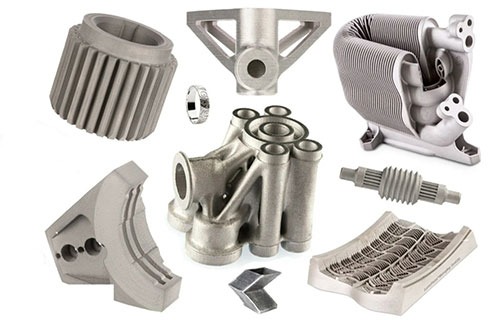
You’ve invested in a powder-based 3D printer like an SLS or HSS system, drawn by the promise of complex, durable parts without supports. You load up with Polystyrene (PS) powder—a popular, cost-effective choice—only to encounter clumping, weak parts, inconsistent surfaces, or worrying safety concerns. What went wrong?
Key takeaways
- Polystyrene (PS) powder for additive manufacturing is a fine, spherical-grade thermoplastic specifically engineered for processes like Selective Laser Sintering (SLS) and High-Speed Sintering (HSS).
- Safety is not an add-on; it is the foundation of working with any fine powder.
- Material quality upon loading dictates print success. This is a supply chain and logistics challenge.
- Moving from “it prints” to “it prints optimally” requires tuning key variables.
What Exactly Is 3D Printing PS Powder, and Why Use It?
Polystyrene (PS) powder for additive manufacturing is a fine, spherical-grade thermoplastic specifically engineered for processes like Selective Laser Sintering (SLS) and High-Speed Sintering (HSS). Unlike commodity polystyrene (like that in disposable cups), 3D printing-grade PS is characterized by:
- Controlled Particle Size Distribution: Typically 50-100 microns to ensure smooth recoating and consistent fusion.
- Low Melting Point (~160-180°C): Enables efficient energy use from lasers or infrared lamps.
- High Flowability: Critical for creating uniform powder layers.
Its primary advantages are low material cost, excellent dimensional stability with minimal warping, and good surface finish straight from the build chamber. It’s widely used for conceptual prototypes, form-and-fit models, and light-duty functional parts, especially in automotive styling and consumer goods packaging.
A Real-World Perspective: A medical device startup used PS powder to iterate dozens of ergonomic housing prototypes for a handheld scanner. The lack of support structures allowed them to test complex internal channels freely, and the low cost per part (~$5 in material for a 150g model) made rapid iteration financially viable. However, their initial batches suffered from brittle failures until they addressed powder moisture—a critical lesson in material conditioning.
What Are the Critical Safety Protocols for Handling PS Powder?
Safety is not an add-on; it is the foundation of working with any fine powder. PS powder presents specific hazards that must be managed systematically.
How Do You Mitigate Inhalation and Dust Exposure Risks?
The fine, inhalable particles are the primary concern. Chronic exposure to polymer dust can cause respiratory irritation.
- Engineering Controls Are Mandatory: Local Exhaust Ventilation (LEV): Use a downdraft table or enclosed powder handling station with integrated HEPA filtration for all sieving, mixing, and depowdering tasks. Printer Enclosure: Ensure your printer is a fully enclosed system with negative pressure or filtration to contain airborne powder during recoating.
- Personal Protective Equipment (PPE) is Non-Negotiable: Respiratory Protection: A properly fitted NIOSH-approved N95 respirator is the minimum for powder handling. For extended sessions or if any dust is visible, use a half-mask respirator with P100 filters. Eye Protection: Safety goggles with a seal prevent powder from getting behind glasses. Apparel: Wear a dedicated lab coat or coveralls and nitrile gloves. Change and laire separately from street clothes.
What Are the Fire and Explosion Hazards?
While PS is not the most combustible powder, any fine organic dust suspended in air can form an explosive mixture.
- Static Discharge is the Ignition Source: Powder flowing through hoppers or being sieved generates significant static charge.
- Mitigation Strategy: Use grounded, anti-static equipment (conductive hoses, containers, and tools). Maintain relative humidity between 40-60% in the printing environment to reduce static buildup. Never use compressed air for general cleaning; use a vacuum cleaner rated for combustible dust (with conductive hoses and grounded bins).
How Do You Source, Store, and Condition PS Powder for Optimal Results?
Material quality upon loading dictates print success. This is a supply chain and logistics challenge.
What Specifications Should You Look For When Sourcing?
Don’t just buy “PS powder.” Specify and verify:
- Particle Size Distribution (PSD): Request the D10, D50, and D90 values. A tight distribution (e.g., D50: 65μm, 90% between 55-75μm) ensures consistent layer density and fusion.
- Bulk Density and Flow Rate: These directly affect how the powder spreads in the recoater. Consistent values between batches are key for repeatable results.
- Virgin vs. Recycled Blend Ratio: Most processes use a blend of virgin and recycled (sieved) powder, typically 50/50 or 60/40. Know your supplier’s blend ratio, as it affects mechanical properties and surface finish.
What is the Correct Storage and Conditioning Workflow?
| Step | Procedure | Purpose & Rationale |
|---|---|---|
| 1. Receiving & Quarantine | Store new and in-use powder in sealed, moisture-barrier containers in a dry, temperature-stable area. | Prevents moisture absorption from ambient air, which is the #1 cause of voids, reduced strength, and poor surface finish. |
| 2. Pre-Processing Drying | Dry powder in a dedicated powder dryer or desiccating oven for 4-6 hours at 60-70°C before loading into the printer. | Removes absorbed moisture. PS can absorb >0.5% moisture by weight, which turns to steam during sintering, creating porosity. |
| 3. Sieving | Pass powder through a vibratory sieve (100-120 micron mesh) before loading into the feed hopper. | Removes agglomerates (clumps) and any foreign particles that could jam the recoater blade or cause defects. |
Pro Tip: Implement a Powder Life Tracking log. Record the number of build cycles and hours of heating exposure for each batch. PS powder degrades through thermal aging (oxidation and chain scission), leading to yellowing and reduced elongation at break. Establish a conservative refresh rate (e.g., refresh 50% of the bed volume with virgin powder after 3-4 builds).
What Are the Optimal Machine Parameters and Process Controls for PS?
Moving from “it prints” to “it prints optimally” requires tuning key variables.
How Do You Calibrate for Energy Input and Thermal Management?
The sintering window for PS is relatively wide, but precise control is needed for strength and detail.
- Laser Power & Scan Speed (SLS): These must be balanced to achieve full particle coalescence without over-sintering (which causes part growth and loss of fine features). A typical starting point is 0.2-0.3 J/mm³ volumetric energy density. Calculate with: Energy Density = Laser Power / (Scan Speed * Hatch Spacing * Layer Height).
- Bed Pre-Heating Temperature: The powder bed is typically pre-heated to just below the glass transition temperature (Tg) of PS (~90-100°C). This reduces the thermal differential the laser must provide, minimizing residual stress and warping.
- Cooling Cycle: A controlled, slow cool-down inside the build chamber is critical to prevent part warpage. Rushing this step by opening the chamber early is a common source of dimensional inaccuracy.
How Can You Troubleshoot Common PS Powder Printing Defects?
| Defect | Likely Cause | Corrective Action |
|---|---|---|
| Weak, Crumbly Parts | Insufficient Energy Input (low laser power, fast speed) or Wet Powder. | Increase energy density by 10-15%. Verify powder is thoroughly dried. |
| Part Growth & Loss of Detail | Over-Sintering (excessive energy input) or Over-Heated Bed. | Reduce laser power or increase scan speed. Lower bed pre-heat temperature by 5°C. |
| Powder Bed Streaks/Uneven Layers | Recoater Blade Wear, Clogged Sieve, or Poor Powder Flowability. | Inspect and replace recoater blade. Re-sieve powder. Check humidity; powder may be damp. |
| Orange Peel Surface Texture | Partial Sintering of powder adjacent to the part due to excessive bed temperature. | Slightly reduce bed pre-heat temperature. Ensure cooling cycle is active between layers. |
What Does Effective Post-Processing Entail?
The job isn’t done when the build finishes.
- Cooling & Depowdering: After the controlled cool-down, carefully extract the “cake” and move it to a dedicated, ventilated depowdering station. Use gentle brushes and low-pressure air to remove loose powder. Always wear full PPE during this step.
- Powder Recovery & Sieving: All recovered powder should be sieved immediately to remove any sintered agglomerates before being blended for reuse. This maintains the quality of your powder ecosystem.
- Part Cleaning & Finishing: For a clean finish, parts can be bead blasted with fine glass beads at low pressure. PS can also be easily sanded, primed, and painted for aesthetic prototypes. For functional parts, note that PS is susceptible to chemical attack by many solvents (e.g., acetone, gasoline).
How to write a spec that gets priced correctly
A drawing is a contract. If it leaves a number open, the shop fills that number in with its own default. The default is rarely the one you had in mind. Put these five lines on every RFQ and most of the back-and-forth disappears before it starts.
- File format and units, with the model exported in millimetres
- Process and material grade, not a trade name
- Critical features and the tolerance each one needs
- Surface finish and the faces it applies to
- Quantity for the pilot build and for the year
The point is not paperwork. Each line removes a decision the shop would otherwise make for you. A complete RFQ comes back priced. An incomplete one comes back guessed.
What actually drives the price
Buyers usually push on material because it is the line they can see. In practice the material is rarely the biggest number on a quote. These five lines decide most of it:
- build volume and orientation
- layer height and support structure
- material grade and colour
- post-processing and hand finishing
- quantity per build plate
Ask for the quote split by line. A supplier who cannot break it down is guessing, and you will pay for the guess. The line you can usually renegotiate is the tolerance band, not the raw material.
Problems you will meet, and the fix
Every process has a failure mode it prefers. The same four show up again and again on this kind of work, and none of them are mysteries once you know what to look for.
- Warping on long flat faces where the part lifts off the plate
- Layer lines showing through a cosmetic surface
- Support scars on a mating face nobody flagged
- Dimensional drift on thin walls after cooling
Catch the fault on the first part, not the hundredth. A first-article check costs an hour. A bad batch costs the whole order. Write the check into the purchase order so nobody has to remember it.
What to check on the first article
The first article is the cheapest inspection you will ever buy. Use it properly and the rest of the run becomes boring, which is exactly what you want.
- Every dimension on the drawing, with the measured value written beside it.
- The material certificate, matched to the heat or lot number on the parts.
- The finish against the sample you approved, under the same light.
- Fit against the mating part, assembled rather than measured.
- Packaging, because parts that arrive damaged were never in tolerance.
Check in this order: datums, then mating features, then cosmetic faces. If the datums are wrong, every number after them is noise. Keep the report on file. When a problem shows up in month six, that document is the only thing that tells you what changed.
How to compare two quotes fairly
Two numbers are not comparable unless the scope matches. Line them up before you decide, because a low number with three gaps is not a low number.
Same drawing, same material, same finish, same inspection. Anything else is a different job wearing the same part number. Then look at what each quote leaves out. Freight, packaging, certificates and tooling are the usual gaps.
Ask each supplier to state their assumptions in writing. The one who does is usually the one who has run the process before.
Scaling from one part to a batch
The first part teaches you the process. The hundredth teaches you the process cost.
Watch three things as volume grows: setup amortisation, tool wear, and how much hand work the finish still needs. If the unit price barely moves between ten and a hundred, the cost sits in material or in hand work, not in setup. Ask which, because only one of them is negotiable.
Lead time behaves the same way. A one-off is scheduled around other jobs. A repeat order is scheduled around your forecast. Give the shop a forecast and the lead time gets shorter, not longer.
How to read a supplier's quote
A quote is a short document with a long shadow. Four things in it decide whether the job runs smoothly, and only one of them is the price.
- The scope line. It should name the process, the material and the finish, not just the part.
- The tolerance basis. General tolerance or the drawing, and which standard it follows.
- The exclusions. Tooling, freight, certificates and inspection are the usual omissions.
- The validity date. Material prices move, and an open-ended quote is a promise nobody can keep.
Read the exclusions before you read the total. A quote that leaves out tooling is not cheaper. It is a quote for a different job.
The Professional Prototyping Perspective: PS Powder as a System, Not a Consumable
In an industrial setting, PS powder is not a simple feedstock; it’s a core component of a closed-loop manufacturing system. The goal is repeatability and cost-per-part optimization.
- Data-Driven Process Control: We instrument our SLS builds with infrared cameras to monitor bed temperature uniformity in real-time. For a client producing hundreds of identical cable clip prototypes, we discovered a 5°C gradient across the bed causing inconsistent flexibility. The fix wasn’t adjusting laser settings, but rebalancing the heating elements and adjusting powder packing density, achieving 99% part consistency.
- The True Cost Equation: The cheapest powder per kilogram can be the most expensive. We audited a client using an off-spec, “bargain” PS powder. The wider particle size distribution led to a 30% higher failure rate and required a 40% higher virgin powder refresh rate. Switching to a premium, consistent powder lowered their total cost per acceptable part by 22%, despite a 15% higher sticker price.
- The Safety Culture Imperative: We treat powder handling with the same rigor as a chemical lab. Our standard operating procedure includes a buddy system for powder changes, mandatory PPE checkpoints, and quarterly airborne dust monitoring. This isn’t just liability management; it’s essential for sustaining a skilled workforce and uninterrupted production.
Mastering 3D printing with PS powder requires a dual focus: rigorous process engineering for quality and unwavering commitment to safety for wellbeing. Success hinges on understanding the material’s hygroscopic nature, thermal behavior, and flow characteristics. By implementing systematic drying and sieving, calibrating energy input precisely, and establishing a disciplined powder management lifecycle, you unlock the true potential of PS for rapid, cost-effective prototyping. Remember, the powder in your hopper is the product of your care—or neglect—in the steps prior. Treat it as a precision engineering material, respect its associated hazards, and it will reliably translate your complex designs into tangible, high-quality parts.
Our solution for PS Powder Safe
YiguProto runs 3D printing in house, from a single prototype to a production batch. We quote the process, the material and the finish as separate lines, so you can see where the money goes instead of arguing with one number.
Send a STEP file or a drawing and you get a DFM report in one to two business days. It flags the features that add cost and the features that will not hold tolerance on the process you picked.
Every order ships with an inspection report on the features you call out. If a part misses, we make it again. Ready to price a part? Start with a free quote and DFM review, or read more about our 3D printing. You can also talk to an engineer before you commit to a drawing.
FAQ about PS Powder Safe
What is PS Powder Safe used for?
PS Powder Safe turns up wherever the part has to do a real job at a predictable cost: brackets, housings, fixtures, covers and the fittings that hold them together. The honest test is whether the properties match the load and the environment, not whether the material is fashionable.
Is there a minimum order quantity?
No hard minimum. One part is fine. What changes with volume is which costs dominate, so a single unit is priced mostly on setup and a thousand units are priced mostly on cycle time and material.
What material should I specify?
Specify by standard, not by trade name. A trade name can change under you between two orders; a standard number cannot. Then add the one property that actually decides the part, whether that is strength, heat resistance or chemical exposure.
How do I compare two quotes fairly?
Match the scope first: same drawing, same material, same finish, same inspection. Then read the exclusions. Freight, tooling and certificates are the usual gaps, and a low number with three gaps is not a low number.
How long does a first article take?
Usually a few business days once the drawing is frozen, and longer if tooling is involved. The date we give you is the date we confirm in writing, not the date we hope for.
What tolerance can you hold on PS Powder Safe?
The working default is ±0.1 mm on small features, ±0.3% on long spans. Tighter than that the process changes and so does the price, because every step tighter adds inspection time. Call out only the faces that mate with something else and leave the rest on the general tolerance.
The short version
PS Powder Safe rewards the buyer who reads the data sheet and the drawing together. Pick the option for the property that matters, not for the price per kilo.
Tighten only what mates. Test a sample before the run. Then let the process do the rest.